The Modern names to know

99 Famous Modern Painters You Should Know

If you remember one Modern painter, make it Pablo Picasso (1881–1973), the name behind The Old Guitarist and Saltimbanques (The Family of Saltimbanques). After that come Andy Warhol, Frida Kahlo, Salvador Dalí and Piet Mondrian. Our 99 picks go from Maurice Denis (born 1870) to Anselm Kiefer (born 1945), from 26 countries.

How we picked them. We list the artists our catalogue links to Modern, from the most famous down. Artists born after 1955 that we cannot yet check on Wikidata are left out. The Wikipedia number shows in how many of our 32 languages Wikipedia writes about them.

  1. The Old Guitarist by Pablo Picasso1Pablo Picasso
  2. Marilyn Diptych by Andy Warhol2Andy Warhol
  3. Self portrait with Thorn Necklace and Hummingbird by Frida Kahlo3Frida Kahlo

Quick facts

Modern in a nutshell

  • 99Artists
  • 1870–1945Years of birth
  • 26Countries of birth
  • 17Women
  • 3Living artists
  • 29,146Works in our catalogue
Cities with most births
Paris (4), New York City (3), Dresden (2), Manhattan (2)

Meet them one by one

The 99 famous Modern painters, from most famous down

1of 99

Pablo Picasso

Spanish From Málaga Cubism, Surrealism On Wikipedia in 32 of 32 languages

Pablo Picasso

In the city of Málaga, Spain, a boy named Pablo Picasso entered the world on October 25, 1881. The family's path eventually led them through A Coruña and into Barcelona, but these years of growth were shadowed by a quiet, heavy grief.

See them at To walk through the halls of the Musée Picasso in Paris is to enter a sanctuary where the artist's restless spirit remains palpable.

Works to know · Their 100 best-known works

2of 99

Andy Warhol

American From Pittsburgh Pop Art On Wikipedia in 32 of 32 languages

Andy Warhol

He was the youngest of three sons, born to Andrej Warhola and Julia Zavacky Warhola. His father worked in a coal mine, a job that defined the family's economic landscape until his death in 1942 from tubercular peritonitis.

See them at The Andy Warhol Museum in Pittsburgh holds the most significant concentration of his work, standing as the largest museum in the United States dedicated to a single artist.

Works to know · Their 100 best-known works

3of 99

Frida Kahlo

Mexican From Coyoacán Surrealism, Mexican folk art, Realism On Wikipedia in 32 of 32 languages

Frida Kahlo

Coyoacán, Mexico City, provides the setting for the birth of Magdalena Carmen Frieda Kahlo y Calderón on July 6, 1907. By 1922, she enters the National Preparatory School in Mexico City, one of only thirty-five female students in the institution.

Works to know · Their 100 best-known works

4of 99

Salvador Dalí

Spanish From Figueres Surrealism On Wikipedia in 32 of 32 languages

Salvador Dalí

Salvador Dalí entered the world at 8:45 am on May 11, 1904. He was born on the first floor of Carrer Monturiol, 20, in Figueres, Spain.

See them at To find his traces, one can travel to Figueres, Spain, where the Dalí Theatre-Museum sits.

Works to know · Their 100 best-known works

5of 99

Piet Mondrian

From Amersfoort On Wikipedia in 32 of 32 languages

Piet Mondrian

His father, Pieter Cornelius Mondriaan, Sr., works as a head teacher and amateur draftsman. Art is present in the household through his uncle, Frits Mondriaan, a landscape painter.

See them at The search for Mondrian’s visual logic leads to several key institutions across Europe and North America.

Works to know · Their 100 best-known works

6of 99

Joan Miró

Spanish From Barcelona ['Surrealism', 'Fauvism', 'Expressionism'] On Wikipedia in 32 of 32 languages

Joan Miró

While studying business, he concurrently enrolls in art classes at the Escuela Superior de Artes Industriales y Bellas Artes. His formal training deepens between 1912 and 1915, as he studies under Francesc Galí at the Escola d’Art.

See them at The most concentrated encounter with his creative output occurs on the Montjuïc hill in Barcelona, Spain.

Works to know · Their 100 best-known works

7of 99

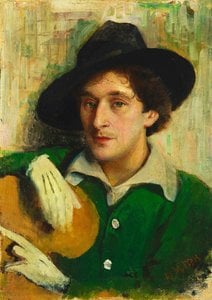
Marc Chagall

Russian-French From Liozna Expressionism, Cubism, Fauvism, Surrealism On Wikipedia in 32 of 32 languages

Marc Chagall

He enters Vitebsk’s official middle school to pursue a Russian education, a move that marks a departure from the strictly religious sphere of his childhood. Chagall receives his initial training at a local art school operated by Iouri Pen.

See them at The legacy of his vision remains anchored in several key institutions across the globe.

Works to know · Their 100 best-known works

8of 99

Marcel Duchamp

French American From Blainville-Crevon ['Cubism', 'Dadaism', 'Conceptual Art'] On Wikipedia in 31 of 32 languages

Marcel Duchamp

He sought out the Académie Julian in Paris, where he spent his time between 1904 and 1905, though his heart often wandered toward the billiards table rather than the studio.

See them at To follow the traces of his restless intellect, one might travel to the Philadelphia Museum of Art.

Works to know · Their 100 best-known works

9of 99

Paul Klee

German and Swiss From Münchenbuchsee Expressionism, Cubism, Surrealism On Wikipedia in 31 of 32 languages

Paul Klee

Born on December 18, 1879, in Münchenbuchsee, near Bern, Switzerland, Paul Klee grew up in a home defined by the discipline of music. Between 1898 and 1901, he trained under Heinrich Knirr and Franz von Stuck.

See them at To find the traces of his prolific output, one might travel to Bern, Switzerland.

Works to know · Their 100 best-known works

10of 99

Jackson Pollock

American From Cody Abstract Expressionism On Wikipedia in 31 of 32 languages

Jackson Pollock

The story of Paul Jackson Pollock begins in the rugged landscape of Cody, Wyoming, where he was born on January 28, 1912. From 1929 to 1942, he labored under the guidance of Thomas Hart Benton.

See them at In New York City, the Museum of Modern Art holds several of his canvases, allowing viewers to stand before the sprawling, uncentered compositions that defined his era.

Works to know · Their 100 best-known works

11of 99

Kazimir Malevich

From Kyiv On Wikipedia in 31 of 32 languages

Kazimir Malevich

His formal education in the visual arts began in Kiev, where he studied drawing between 1895 and 1896. It was here that his professional training took a more structured form at the Moscow School of Painting, Sculpture and Architecture.

See them at The physical presence of his radical geometry can be found in several major institutions across the globe.

Works to know · Their 100 best-known works

12of 99

Amedeo Modigliani

Italian From Livorno Expressionism On Wikipedia in 32 of 32 languages

Amedeo Modigliani

He was the fourth child of Flaminio Modigliani, a merchant, and Eugénie Garsin. These years of study in Florence and Venice helped shape the fundamental understanding of form that he would carry with him when he eventually left Italy.

See them at In the United States, the Metropolitan Museum of Art in New York holds significant pieces, including a portrait of Jeanne Hebuterne from 1918.

Works to know · Their 100 best-known works

14of 99

René Magritte

Belgian From Lessines Surrealism On Wikipedia in 32 of 32 languages

René Magritte

A profound shadow fell over his adolescence in 1912 when his mother, Régina Bertinchamps, died by suicide. His formal training began in earnest at the Académie Royale des Beaux-Arts in Brussels, where he studied from 1916 to 1918.

See them at The preservation of his visual puzzles is distributed across several major institutions, ensuring his presence remains felt in both Europe and the Americas.

Works to know · Their 100 best-known works

15of 99

David Hockney

British From Bradford On Wikipedia in 23 of 32 languages

David Hockney

Born in Bradford, United Kingdom, David Hockney grew up in a household of five children. His father, Kenneth Hockney, worked as an accountant's clerk and had been a conscientious objector during the Second World War, while his mother, Laura, was a Methodist and a strict vegetarian. His formal training began at the Bradford School of Art from 1953 to 1957, where he focused on drawing from life and portraiture.

Works to know · Their 100 best-known works

16of 99

Egon Schiele

Austrian From Tulln an der Donau Austrian Expressionism On Wikipedia in 32 of 32 languages

Egon Schiele

His father, Adolf Schiele, manages the local station as the station master for the Austrian Federal Railways. Within the family, Egon grows alongside his three sisters: Elvira, Melanie, and Gertrude.

See them at The weight of Schiele’s output is felt most heavily in Vienna.

Works to know · Their 100 best-known works

17of 99

Max Ernst

German From Brühl ['Dada', 'Surrealism'] On Wikipedia in 30 of 32 languages

Max Ernst

Max Ernst entered the world on April 2, 1891, in Brühl, Germany. By 1909, while he was a student at the University of Bonn, Max Ernst began to paint. Seeing the works of Pablo Picasso, Vincent van Gogh, and Paul Gauguin changed his perspective.

See them at Finding the traces of Max Ernst's restless imagination requires a trip through several major cultural hubs.

Works to know · Their 100 best-known works

18of 99

Francis Bacon

Irish From Dublin Expressionism, Cubism, Surrealism On Wikipedia in 30 of 32 languages

Francis Bacon

Francis Bacon was born on October 28, 1909, in Dublin, Ireland. He grew up in a house in the Irish countryside, the son of a racehorse trainer.

Works to know · Their 100 best-known works

20of 99

Willem de Kooning

Dutch-American From Rotterdam Abstract Expressionism On Wikipedia in 30 of 32 languages

Willem de Kooning

Willem de Kooning enters the world on April 24, born to Leendert de Kooning and Cornelia Nobel. His existence becomes a continuous negotiation between the structured world of his training and the chaotic energy of the New York School.

Taught Robert Rauschenberg #57

Works to know · Their 100 best-known works

21of 99

Jasper Johns

American From Augusta On Wikipedia in 24 of 32 languages

Jasper Johns

Jasper Johns was born on May 15, 1930, in Augusta, Georgia. Later, he spent time with his mother and stepfather in Columbia, and eventually lived with his Aunt Gladys on Lake Murray.

See them at To see his paintings and sculptures in person, one might travel to New York City.

Works to know · Their 100 best-known works

23of 99

Georgia O'Keeffe

American From Sun Prairie American modernism On Wikipedia in 31 of 32 languages

Georgia O'Keeffe

Her father, Francis Calyxtus O'Keeffe, and her mother, Ida Totto O'Keeffe, raised her in this rural setting. After a period of illness and time away from her studies, she moved to New York City in 1907.

See them at To see her paintings in person, one can travel to Santa Fe, New Mexico, where The Georgia O'Keeffe Museum holds a significant portion of her output.

Works to know · Their 100 best-known works

24of 99

Mark Rothko

American From Daugavpils ['Color Field painting', 'Abstract Expressionism']

Mark Rothko

Mark Rothko was born Markus Yakovlevich Rothkowitz in 1903. He was born in Dvinsk, Russia, in a place now known as Daugavpils, Latvia.

See them at To stand before his canvases is to experience the weight of color in a quiet room.

Works to know · Their 100 best-known works

25of 99

Edward Hopper

American From Upper Nyack American realism

Edward Hopper

Edward Hopper was born in Upper Nyack, United States of America. He studied at the New York School of Art under William Merritt Chase and Robert Henri. In House by the Railroad (1925), a simple composition reveals a sense of mystery and isolation.

Works to know · Their 100 best-known works

26of 99

Franz Marc

German From Kreuzstraße German Expressionism On Wikipedia in 31 of 32 languages

Franz Marc

Franz Marc was born in Munich, Germany, into a household where the visual language of landscape was already established. His father, Wilhelm Marc, worked as a professional landscape painter, providing a direct, if not entirely certain, introduction to the mechanics of art.

See them at The Franz Marc Museum in Kochel am See, Germany, functions as a primary site for his legacy, housing over 150 of his works.

Works to know · Their 100 best-known works

27of 99

Diego Rivera

Mexican From Guanajuato Mexican Muralism, Social Realism On Wikipedia in 31 of 32 languages

Diego Rivera

His early environment was marked by a significant loss when his twin brother, Carlos, died at the age of two. His formal education began in earnest at the Academy of San Carlos in Mexico City.

See them at Here, the Detroit Industry Murals occupy a central place, capturing the mechanical pulse of labor and the grit of the industrial era.

Works to know · Their 100 best-known works

28of 99

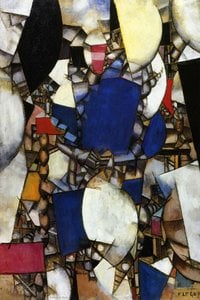
Fernand Léger

French From Argentan ['Cubism', 'Tubism', "Section d'Or", 'Purism', 'Dadaism', 'Constructivism'] On Wikipedia in 27 of 32 languages

Fernand Léger

The story of Fernand Léger begins in the village of Argentan, located in the Orne region of Lower Normandy. His early years were shaped by the quietude of the French countryside and the presence of his mother, Marie-Adèle Daunou.

See them at To encounter the physical presence of his vision, one might travel to the south of France, specifically to Biot in the Alpes-Maritimes.

Works to know · Their 100 best-known works

30of 99

Umberto Boccioni

From Reggio Calabria On Wikipedia in 28 of 32 languages

Umberto Boccioni

Born in Reggio Calabria, Italy, on October 19, 1882, his early development was defined by a rigorous technical education. Between 1898 and 1902, Boccioni operated within this specific environment, absorbing the Divisionist technique.

Works to know · Their 100 best-known works

31of 99

Oskar Kokoschka

Austrian, Czech, British From Pöchlarn Expressionism, Viennese Avant-Garde On Wikipedia in 29 of 32 languages

Oskar Kokoschka

Oskar Kokoschka entered the world in 1886 in Pöchlarn, Croatia. Growing up in a household shaped by the precision of her husband's craft, he shared his early years with his sister, Berta, and his brother, Bohuslav.

Works to know · Their 100 best-known works

33of 99

Ernst Ludwig Kirchner

German From Aschaffenburg German Expressionism On Wikipedia in 32 of 32 languages

Ernst Ludwig Kirchner

Ernst Ludwig Kirchner was born on 6 May 1880 in Aschaffenburg, Germany. This transient existence saw the family living in Frankfurt/Main from 1886, following a period spent in Perlen near Lucerne, Switzerland, between 1887 and 1889.

See them at The physical presence of Kirchner’s vision is scattered across several major institutions, reflecting the international reach of his influence.

Works to know · Their 100 best-known works

34of 99

Juan Gris

Spanish From Madrid Cubism, Synthetic Cubism, Analytical Cubism On Wikipedia in 31 of 32 languages

Juan Gris

Between 1904 and 1905, he began to formalize his artistic training by studying painting under the academic artist José Moreno Carbonero. By 1905, a shift in identity occurred when he adopted the name Juan Gris.

See them at Tracing the physical presence of his work requires a trip through several major collections.

Works to know · Their 100 best-known works

35of 99

Arshile Gorky

Armenian-American From Dilkaya Abstract Expressionism, Surrealism On Wikipedia in 24 of 32 languages

Arshile Gorky

His practice was not confined to the classroom; he spent much of his time at the Museums of Fine Arts, Boston, studying the old masters. His early paintings show the influence of Impressionism and Post-Impressionism.

See them at To see the physical traces of his hand, one might travel to Washington, D.C.

Works to know · Their 100 best-known works

37of 99

André Derain

French From Chatou ['Fauvism', 'New Classicism'] On Wikipedia in 28 of 32 languages

André Derain

In the year 1880, André Derain entered the world in Chatou, a village nestled within the Yvelines region of France. In 1898, he sought a more structured education, briefly studying to become an engineer at the Académie Camillo.

Works to know · Their 100 best-known works

38of 99

Robert Delaunay

French From Paris Orphism, Cubism On Wikipedia in 27 of 32 languages

Robert Delaunay

Robert Delaunay, born in Paris in 1885, emerged as a pivotal figure in the radical artistic shifts of the early twentieth century. He initially pursued decorative arts, but quickly gravitated towards painting, exhibiting at the Salon des Indépendants as early as 1904, demonstrating a burgeoning talent and ambition.

Taught Lyonel Feininger #87

Works to know · Their 100 best-known works

39of 99

Fernando Botero

Colombian From Medellín Boterismo On Wikipedia in 28 of 32 languages

Fernando Botero

Fernando Botero was born on April 19, 1932, in Medellín, Colombia. In 1948, his first illustrations were published in the Sunday supplement of El Colombiano, marking the beginning of his public presence through his visual work.

See them at His presence is felt in the quiet corners of Bogotá, specifically within the La Candelaria neighborhood.

Works to know · Their 100 best-known works

40of 99

Otto Dix

German From Untermhaus ['Neue Sachlichkeit', 'Dadaism', 'Expressionism'] On Wikipedia in 28 of 32 languages

Otto Dix

His father, Franz Dix, works in an iron foundry, a setting defined by heavy toil. The path toward professional training begins in 1906.

See them at The physical presence of Dix’s vision remains scattered across major international institutions.

Works to know · Their 100 best-known works

41of 99

Tamara de Lempicka

Polish From Warsaw Art Deco, Cubism On Wikipedia in 30 of 32 languages

Tamara de Lempicka

Born Maria Teresa Górska in Warsaw, Poland, the woman who would become known to the world as Tamara de Lempicka lived a life that mirrored the sharp, polished edges of her own canvases. This sheltered existence was upended by the tremors of the Russian Revolution, forcing her and her husband, Tadeusz Łempicki, to flee toward the promise of Paris.

Learned from Maurice Denis #73

Works to know · Their 100 best-known works

43of 99

Chaim Soutine

French From Smilavičy Expressionism On Wikipedia in 26 of 32 languages

Chaim Soutine

Born into a large, impoverished Jewish family in Smilovichi, Russia (present-day Belarus) in 1893, Chaim Soutine’s early life was steeped in hardship. He received formal training at an art academy in Vilna (now Vilnius, Lithuania) from 1910 to 1913, but it was his emigration to Paris in 1913 that proved truly pivotal.

Works to know · Their 100 best-known works

44of 99

Max Beckmann

German From Leipzig Expressionism, New Objectivity On Wikipedia in 27 of 32 languages

Max Beckmann

By 1912, he was already tackling ambitious subjects that required a command of large-scale composition. One such work was his painting of The Sinking of the Titanic, a piece that demonstrated his ability to handle complex, dramatic narratives.

See them at Finding the physical traces of Beckmann's life requires traveling through the cities that shaped his exile and his later years.

Works to know · Their 100 best-known works

47of 99

Victor Vasarely

Hungarian-French From Pécs Op Art, Kinetic Art, Geometric Abstraction On Wikipedia in 27 of 32 languages

Victor Vasarely

In 1925, he moved into the halls of Eötvös Loránd University in Budapest to study medicine. By 1927, he left his medical studies behind to pursue the study of traditional academic painting at the Podolini-Volkmann Academy.

See them at Tracing the physical presence of his work requires traveling across several locations in France and Hungary.

Works to know · Their 100 best-known works

49of 99

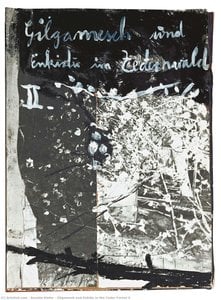
Anselm Kiefer

German From Donaueschingen Neo-Expressionism On Wikipedia in 23 of 32 languages

Anselm Kiefer

Anselm Kiefer stands as one of the most profound and distinctive voices within Neo-Expressionism, an artistic movement that emerged in the late 1970s and early 1980s as a powerful reaction against the austerity of Minimalism and Conceptual Art. Born in Donaueschingen, Germany, in 1945, Kiefer’s very existence is inextricably linked to the aftermath of World War II.

Learned from Joseph Beuys #60

Works to know · Their 100 best-known works

51of 99

H.R. Giger

Swiss From Chur Biomechanical Surrealism On Wikipedia in 24 of 32 languages

H.R. Giger

Giger (1940-2014) remains one of the most distinctive and unsettling figures in 20th-century art. Born in Chur, Switzerland, Giger’s artistic journey began not with brushes and canvas, but with a fascination for architecture and industrial design, disciplines he studied before dedicating himself fully to his singular, intensely personal style. He was profoundly affected by the 1979 film Alien, specifically Ridley Scott’s vision for the creature itself.

Works to know · Their 100 best-known works

52of 99

Louise Bourgeois

French-American From 6th arrondissement of Paris Abstract Expressionism, Surrealism On Wikipedia in 27 of 32 languages

Louise Bourgeois

Louise Joséphine Bourgeois, a name synonymous with emotionally charged sculpture and deeply personal artistic exploration, stands as one of the most influential figures in 20th and 21st-century art. Born in Paris in 1911 into a family steeped in the tradition of tapestry restoration, her life was a complex interplay of intellectual rigor, familial trauma, and an unwavering commitment to translating inner experience into tangible form.

Works to know · Their 100 best-known works

53of 99

Zdzisław Beksiński

Polish From Sanok Surrealism On Wikipedia in 25 of 32 languages

Zdzisław Beksiński

To step into the canvas of Zdzisław Beksiński is to wander through a landscape where the boundaries between dreams and nightmares dissolve into a singular, haunting reality. Born in 1929 in Sanok, Poland, Beksiński emerged as one of the most profound architects of the subconscious, crafting a visual language that transcends mere horror to touch upon the existential dread of the human condition.

Works to know · Their 100 best-known works

54of 99

Lucian Freud

British From Berlin Realism, Figurative art On Wikipedia in 23 of 32 languages

Lucian Freud

Lucian Michael Freud, born in Berlin in 1922, carried a lineage steeped in intellectual weight—the grandson of the pioneering psychoanalyst Sigmund Freud. The looming shadow of Nazism forced his family to flee Germany in 1933, settling in London, a relocation that profoundly shaped both his life and the often somber, unsettling tone defining his artistic vision.

Works to know · Their 100 best-known works

55of 99

Henry Moore

British From Castleford Modernism, Abstract sculpture On Wikipedia in 29 of 32 languages

Henry Moore

Henry Spencer Moore, born in the Yorkshire mining town of Castleford in 1898, emerged as one of Britain’s most significant and internationally celebrated sculptors of the twentieth century. He later attended Leeds School of Art and then the Royal College of Art in London, immersing himself in the study of classical sculpture and modern movements like Cubism.

Works to know · Their 100 best-known works

56of 99

Man Ray

American From Philadelphia Dada, Surrealism

Man Ray

Born in 1890 in Philadelphia to Russian Jewish immigrant parents, his journey from aspiring painter to pioneering photographer and filmmaker embodies the radical artistic ferment of the early 20th century. Early influences included the European avant-garde showcased at Alfred Stieglitz's 291 gallery, and the gritty realism of the Ashcan School – a blend that would subtly inform his later work.

Works to know · Their 100 best-known works

57of 99

Robert Rauschenberg

American From Port Arthur Pop Art, Neo-Dada On Wikipedia in 25 of 32 languages

Robert Rauschenberg

Robert Rauschenberg, born Milton Ernest Rauschenberg in 1925 amidst the oil-rich landscapes of Port Arthur, Texas, was an artist whose very existence seemed to echo the dynamic energy and transformative spirit he brought to the art world.

Learned from Willem de Kooning #20, Josef Albers #93

Works to know · Their 100 best-known works

58of 99

Balthus

French-Polish From Paris Classical, Figurative On Wikipedia in 20 of 32 languages

Balthus

Born in Paris on February 29, 1908, into a family steeped in intellectual and artistic circles, his life was marked by an early immersion in culture and a deliberate rejection of prevailing artistic trends. He absorbed influences from diverse sources—pre- Renaissance Italian painters like Piero della Francesca and Simone Martini, as well as literary figures such as Emily Brontë and Lewis Carroll—creating a unique artistic language that defied easy categorization.

Works to know · Their 100 best-known works

59of 99

Alberto Giacometti

Swiss From Borgonovo Surrealism, Existentialism

Alberto Giacometti

Alberto Giacometti, a name synonymous with the hauntingly elongated figures that define much of 20th-century sculpture, was born in 1901 amidst the breathtaking landscapes of Borgonovo, Switzerland. His father, Giovanni Giacometti, was a respected Post-Impressionist painter, and this familial immersion provided both encouragement and a foundation upon which young Alberto could build.

Works to know · Their 100 best-known works

60of 99

Joseph Beuys

German From Krefeld Fluxus, Performance Art On Wikipedia in 28 of 32 languages

Joseph Beuys

From a childhood marked by relocation and early exposure to both natural sciences and the burgeoning darkness of Nazism—an event crystallized by rescuing Carl Linnaeus’s Systema Naturae from a book burning—Beuys developed a sensitivity to the fragility of existence and the power of symbolic action.

Taught Anselm Kiefer #49

Works to know · Their 100 best-known works

61of 99

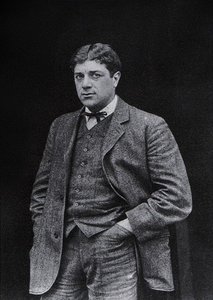
George Grosz

German From Berlin Berlin Dada, New Objectivity On Wikipedia in 28 of 32 languages

George Grosz

Born Georg Ehrenfried Groß on July 26, 1893, in Berlin, Germany, the man who would become George Grosz entered a world of structured tradition. He was the third child born to a pub owner and a woman of devout Lutheran faith.

Works to know · Their 100 best-known works

62of 99

Jean Arp

German-French From Strasbourg Dada, Surrealism On Wikipedia in 29 of 32 languages

Jean Arp

Born Hans Peter Wilhelm Arp in 1886 in the contested city of Strasbourg, a place oscillating between French and German identity, the artist who would become known as Jean Arp embodied a fascinating duality from his very beginnings.

Works to know · Their 100 best-known works

63of 99

Francis Picabia

French From Paris Cubism, Dada, Surrealism On Wikipedia in 26 of 32 languages

Francis Picabia

He painted Parisian landscapes and riverbanks with a technical proficiency that nonetheless left him feeling unfulfilled. This dissatisfaction spurred him to seek new avenues of expression, leading him towards the revolutionary ideas brewing within the Cubist movement around 1909.

Works to know · Their 100 best-known works

65of 99

Remedios Varo

Spanish-Mexican From Anglès Para-Surrealism On Wikipedia in 19 of 32 languages

Remedios Varo

In the quiet corners of her studio, Remedios Varo worked with a meticulousness that mirrored the technical drawings of her father, a hydraulic engineer. Her upbringing in Anglès, Spain, provided a foundation of duality. She moved through the world with a curious eye, absorbing the landscapes of her frequent relocations and the formal training she received at the Real Academia de Bellas Artes de San Fernando in Madrid.

Works to know · Their 100 best-known works

66of 99

Theo van Doesburg

Dutch From Utrecht De Stijl, Neoplasticism On Wikipedia in 27 of 32 languages

Theo van Doesburg

Theo van Doesburg, born Christian Emil Marie Küpper in 1883 in Utrecht, Netherlands, was more than a painter; he was a revolutionary force who reshaped the very foundations of modern art. A pivotal moment arrived in 1913 with his encounter with Wassily Kandinsky’s Rückblicke. Study for Simultaneous Compositions XXII (1922): A quintessential example of Neoplasticism, showcasing the movement’s signature geometric forms and limited color palette.

Works to know · Their 100 best-known works

67of 99

Andrew Wyeth

American From Chadds Ford Township Regionalism, Realism On Wikipedia in 23 of 32 languages

Andrew Wyeth

Birth and Background: Andrew Newell Wyeth was born on July 12, 1917, in Chadds Ford, Pennsylvania, to illustrator N.C. His father was a renowned illustrator, and several of his siblings also pursued artistic careers including Henriette Wyeth Hurd, Carolyn Wyeth, and Nathaniel Wyeth.

Works to know · Their 100 best-known works

68of 99

Vladimir Tatlin

Ukrainian/Russian From Moscow Constructivism On Wikipedia in 26 of 32 languages

Vladimir Tatlin

Vladimir Yevgrafovich Tatlin, born in Kharkiv, Ukraine in 1885, was more than just an artist; he was a philosophical architect of a new world order, a pivotal figure who shattered the conventions of early 20th-century art and laid the foundations for Constructivism.

Works to know · Their 100 best-known works

69of 99

Georges Rouault

French From 19th arrondissement of Paris Expressionism, Fauvism On Wikipedia in 23 of 32 languages

Georges Rouault

Georges Rouault, born in Paris in 1871 amidst the turmoil of the Commune, lived a life deeply etched by hardship and spiritual seeking. He simultaneously pursued formal training at the École des Beaux-Arts, where he became a devoted pupil of Gustave Moreau, whose Symbolist leanings further nurtured Rouault's inclination towards emotionally charged subject matter.

Works to know · Their 100 best-known works

70of 99

László Moholy-Nagy

Hungarian From Bácsborsód Constructivism, Bauhaus On Wikipedia in 29 of 32 languages

László Moholy-Nagy

Early Years & Family: Born László Weisz to a Jewish family in Bacsborsód, Hungary, he later adopted the surname Moholy-Nagy. Education and War Service: He initially studied law in Budapest before serving in World War I, sustaining a serious injury.

Works to know · Their 100 best-known works

73of 99

Maurice Denis

French From Granville Nabis, Symbolism On Wikipedia in 26 of 32 languages

Maurice Denis

Maurice Denis, born in the coastal town of Granville, France, in 1870, occupies a fascinating position in art history —a pivotal figure straddling the waning days of Impressionism and the burgeoning currents of modern art. Alongside figures like Paul Sérusier and Pierre Bonnard, Denis rejected the naturalism of Impressionism in favor of flattened perspectives, bold colors, and evocative patterns.

Taught Tamara de Lempicka #41

Works to know · Their 100 best-known works

74of 99

Frank Stella

American From Malden ['Minimalism', 'Post-Painterly Abstraction'] On Wikipedia in 22 of 32 languages

Frank Stella

Born in Malden, Massachusetts, in 1936 to first-generation Italian-American parents, Stella’s artistic journey began with an early exposure to the visual world through his mother's landscape paintings and a formative education at Phillips Academy Andover, where he encountered the rigorous color theories of Josef Albers and the expressive power of Hans Hofmann.

Works to know · Their 100 best-known works

75of 99

Leonora Carrington

British-Mexican From Clayton-le-Woods Surrealism On Wikipedia in 22 of 32 languages

Leonora Carrington

Born Mary Leonora Carrington in 1917 amidst the verdant landscapes of Clayton Woods, Lancashire, England, the artist who would become a pivotal figure in Surrealism was, from her earliest years, an individual set apart. Expulsions from two schools – including New Hall School in Chelmsford – signaled a rebellious streak, a refusal to be molded by conventional norms.

Works to know · Their 100 best-known works

76of 99

Maria Prymachenko

Ukrainian From Bolotnia Naive art, Folk art On Wikipedia in 26 of 32 languages

Maria Prymachenko

Maria Aksentievna Primachenko, born in the small village of Bolotnya near Kyiv in 1908, emerged as one of Ukraine’s most celebrated and distinctive artists—a true visionary whose work transcends categorization. In the 1930s, after being discovered by artist Tetiana Floru, Maria joined the Kyiv Cooperative Embroidery Association, where her talent quickly became apparent.

Works to know · Their 100 best-known works

77of 99

David Alfaro Siqueiros

Mexican From Chihuahua City Social Realism, Muralism On Wikipedia in 24 of 32 languages

David Alfaro Siqueiros

David Alfaro Siqueiros, born José de Jesús Alfaro Siqueiros in 1896 – though later research pinpointed his birthplace as Chihuahua City rather than Camargo – was more than just a painter; he was a force of nature, an embodiment of the tumultuous spirit of post-revolutionary Mexico. The years between 1919 and 1923 proved pivotal as Siqueiros embarked on an extended sojourn to Europe.

Works to know · Their 100 best-known works

78of 99

Sonia Delaunay

French From Odesa Orphism & Abstract Art On Wikipedia in 24 of 32 languages

Sonia Delaunay

Sonia Delaunay, born Sarah Ilinitchna Stern in 1885 within the vibrant atmosphere of Kiev, Ukraine, remains a monumental figure whose brushstrokes helped redefine the boundaries of modern art. While her marriage to Robert Delaunay in 1912 is often cited as a pivotal moment of artistic partnership, Sonia was far more than a collaborator; she was a visionary architect of color.

Works to know · Their 100 best-known works

79of 99

Sigmar Polke

German From Oleśnica ['Capitalist Realism', 'Neo-Expressionism'] On Wikipedia in 22 of 32 languages

Sigmar Polke

His early life was marked by displacement; as a child, he fled with his family first to Thuringia and then, seeking refuge from Communist rule, to West Germany in 1953. Before dedicating himself fully to painting, Polke underwent an apprenticeship as a stained-glass worker in Düsseldorf (1959-1960), a formative experience that honed his technical skill and introduced him to the possibilities of manipulating light and color.

Works to know · Their 100 best-known works

82of 99

Helen Frankenthaler

American From Manhattan Abstract Expressionism, Color Field On Wikipedia in 19 of 32 languages

Helen Frankenthaler

Helen Frankenthaler, born in 1928 in Manhattan, emerged as a pivotal figure in postwar American painting, bridging the fervent energy of Abstract Expressionism with the serene expanses of Color Field painting. From an early age, Frankenthaler received rigorous art education, studying under Rufino Tamayo at the Dalton School and later honing her skills at Bennington College with Paul Feeley, alongside brief mentorship from Hans Hofmann.

Works to know · Their 100 best-known works

83of 99

Natalia Goncharova

Russian From Nagaevo-Karbonier Rayonism, Cubo-Futurism On Wikipedia in 22 of 32 languages

Natalia Goncharova

Natalia Sergeevna Goncharova, born in 1881 amidst the vast landscapes of Russia, stands as a pivotal figure in the exhilarating world of early 20th-century art. From her beginnings studying sculpture in Moscow to her eventual embrace of Rayonism, Cubo-Futurism, and ultimately, a celebrated career as a stage designer for Sergei Diaghilev's Ballets Russes, Goncharova consistently challenged conventions and redefined artistic boundaries.

Works to know · Their 100 best-known works

84of 99

Yves Tanguy

French-American From 8th arrondissement of Paris Surrealism On Wikipedia in 26 of 32 languages

Yves Tanguy

A pivotal moment arrived in 1923 when, while riding a bus through Paris, he glimpsed paintings by Giorgio de Chirico. Works like “ Slowly Toward The North ” (1942) exemplify this haunting quality, drawing the viewer into a desolate yet strangely compelling world. Tanguy's life took another significant turn in 1939 when he fled Europe with his first wife, Jeannette Ducrocq, escaping the looming shadow of World War II.

Works to know · Their 100 best-known works

86of 99

Cy Twombly

American From Lexington Abstract Expressionism, Postmodern On Wikipedia in 21 of 32 languages

Cy Twombly

Early studies under Pierre Daura at Washington and Lee University were followed by formative experiences at the Arts Students League of New York and Black Mountain College, where he encountered pivotal figures like Robert Rauschenberg, John Cage, and Merce Cunningham. However, it was a 1952 voyage to Italy and North Africa with Rauschenberg —funded by a grant from the Virginia Museum of Fine Arts —that proved truly transformative.

Works to know · Their 100 best-known works

88of 99

Amrita Sher-Gil

Hungarian-Indian From Budapest Modern Indian art, Avant-garde On Wikipedia in 20 of 32 languages

Amrita Sher-Gil

Born in Budapest in 1913 to a fascinatingly diverse parentage – Umrao Singh Sher-Gil Majithia, a Sikh aristocrat and scholar, and Marie Antoinette Gottesmann, a Hungarian Jewish opera singer – her life was destined to be one of compelling contrasts.

Works to know · Their 100 best-known works

89of 99

Karel Appel

Dutch From Amsterdam CoBrA, Expressionism

Karel Appel

Studying at the Rijksakademie van Beeldende Kunsten in Amsterdam during the German occupation proved challenging, yet it was there he forged lifelong bonds with fellow artists Corneille and Constant, friendships that would prove crucial to his artistic evolution. Alongside Corneille, Constant, Jan Nieuwenhuys, and Christian Dotremont, Appel spearheaded a radical departure from established artistic norms.

Works to know · Their 100 best-known works

90of 99

Barnett Newman

American From New York City Abstract Expressionism On Wikipedia in 23 of 32 languages

Barnett Newman

Barnett Newman, born in 1905 in New York City to Jewish immigrant parents from Poland, emerged as a pivotal figure in the landscape of American art. Initially studying at the Art Students League and later at the City College of New York, Newman absorbed the influences of his time – the burgeoning Cubism of Picasso and the vibrant color palettes of Matisse were early touchstones.

Works to know · Their 100 best-known works

93of 99

Josef Albers

German-American From Bottrop Geometric abstraction On Wikipedia in 27 of 32 languages

Josef Albers

Formal artistic training commenced at the Königliche Kunstschule in Berlin between 1913 and 1915, where he explored printmaking, painting, and, crucially, stained glass. His early commission, “Rosa Mystica Ora Pro Nobis” (1918), a stunning stained-glass window, foreshadowed his lifelong fascination with the interplay of light and color, hinting at the abstract explorations to come.

Works to know · Their 100 best-known works

94of 99

František Kupka

Czech From Opočno ['Realism', 'Symbolism', 'Orphism', 'Cubism', 'Abstraction'] On Wikipedia in 24 of 32 languages

František Kupka

Between 1889 and 1892, he spent his time at the Academy of Fine Arts in Prague. He became involved with theosophy and Eastern philosophy, looking for meaning beyond the physical surface of a canvas.

See them at To see his canvases in person, one might travel to New York City.

Works to know · Their 100 best-known works

95of 99

Paula Modersohn-Becker

German From Dresden Expressionism On Wikipedia in 24 of 32 languages

Paula Modersohn-Becker

Born Minna Hermine Paula Becker on February 8, 1876, in Dresden, Germany, her life was tragically short – she passed away November 30, 1907, in Worpswede – yet within those three decades, she forged a path of remarkable artistic innovation and personal courage. A pivotal moment came with her travels to Paris in 1899 and subsequent visits in 1903 and 1905.

Works to know · Their 100 best-known works

96of 99

Kurt Schwitters

From Hanover On Wikipedia in 25 of 32 languages

Kurt Schwitters

Schwitters was the only child of Eduard and Henriette Schwitters. The family’s financial situation improved after selling the business in 1898, allowing them to live off rental income from properties they acquired.

Works to know · Their 100 best-known works

97of 99

José Clemente Orozco

Mexican From Ciudad Guzmán Mexican Muralism On Wikipedia in 25 of 32 languages

José Clemente Orozco

José Clemente Orozco, born November 23, 1883, in the small town of Zapotlán el Grande (now Ciudad Guzmán), Jalisco, Mexico, stands as a monumental figure in the pantheon of Mexican muralists. Orozco's formal training began at the Academy of San Carlos in 1906, where he encountered David Alfaro Siqueiros, a fellow student who would become another key player in the burgeoning Mexican mural movement.

Works to know · Their 100 best-known works

98of 99

Carlo Carrà

Italian From Quargnento Futurism, Metaphysical art On Wikipedia in 23 of 32 languages

Carlo Carrà

This exposure was followed by a brief period in London, where he encountered exiled Italian anarchists—a political undercurrent subtly informing his early work with themes of social unrest and rebellion.

Works to know · Their 100 best-known works

99of 99

Maria Helena Vieira da Silva

Portuguese-French From Lisbon Abstract Art, Art Informel On Wikipedia in 17 of 32 languages

Maria Helena Vieira da Silva

Maria Helena Vieira da Silva, born in Lisbon in 1908, was an artist whose life and work were defined by a constant negotiation between abstraction and figuration, a dance between the seen and the imagined. These formative years weren't confined to studios; a cosmopolitan upbringing exposed her to avant-garde movements like Futurism and the Ballets Russes, sparking an early curiosity for innovative forms of expression.

Works to know · Their 100 best-known works

Pictures worth knowing

Famous Modern works to recognise

  1. The Old Guitarist by Pablo Picasso

    The Old Guitarist

    Pablo Picasso

    Art Institute of Chicago

  2. Marilyn Diptych by Andy Warhol

    Marilyn Diptych

    Andy Warhol

    1962

  3. Self portrait with Thorn Necklace and Hummingbird by Frida Kahlo

    Self portrait with Thorn Necklace and Hummingbird

    Frida Kahlo

  4. Rainy Taxi (Mannequin Rotting in a Taxi-Cab) by Salvador Dalí

    Rainy Taxi (Mannequin Rotting in a Taxi-Cab)

    Salvador Dalí

    1938

  5. Broadway Boogie Woogie by Piet Mondrian

    Broadway Boogie Woogie

    Piet Mondrian

    1943 · MOMA - Museum of Modern Art, New York City

  6. The Farm by Joan Miró

    The Farm

    Joan Miró

    1922

  7. I and the Village by Marc Chagall

    I and the Village

    Marc Chagall

    1911 · MOMA - Museum of Modern Art, New York City

  8. Fountain by Marcel Duchamp

    Fountain

    Marcel Duchamp

    1917 · Tate Modern, London

When it happened

Modern, step by step

  1. 1908
  2. 1910
  3. 1911
  4. 1912
  5. 1915
  6. 1917
  7. 1922
  8. 1927
  9. 1936
  10. 1942
  11. 1943
  12. 1944
  13. 1952
  14. 1960

Fun figures

The numbers behind the list

Just the names

List of 99 famous Modern painters to know

  1. 1Pablo PicassoPablo PicassoSpanish · 1881–1973
  2. 2Andy WarholAndy WarholAmerican · 1928–1987
  3. 3Frida KahloFrida KahloMexican · 1907–1954
  4. 4Salvador DalíSalvador DalíSpanish · 1904–1989
  5. 5Piet MondrianPiet Mondrian1872–1944
  6. 6Joan MiróJoan MiróSpanish · 1893–1983
  7. 7Marc ChagallMarc ChagallRussian-French · 1887–1985
  8. 8Marcel DuchampMarcel DuchampFrench American · 1887–1968
  9. 9Paul KleePaul KleeGerman and Swiss · 1879–1940
  10. 10Jackson PollockJackson PollockAmerican · 1912–1956
  11. 11Kazimir MalevichKazimir Malevich1879–1935
  12. 12Amedeo ModiglianiAmedeo ModiglianiItalian · 1884–1920
  13. 13Georges BraqueGeorges BraqueFrench · 1882–1963
  14. 14René MagritteRené MagritteBelgian · 1898–1967
  15. 15David HockneyDavid HockneyBritish · 1937–2026
  16. 16Egon SchieleEgon SchieleAustrian · 1890–1918
  17. 17Max ErnstMax ErnstGerman · 1891–1976
  18. 18Francis BaconFrancis BaconIrish · 1909–1992
  19. 19Gerhard RichterGerhard RichterGerman · born 1932
  20. 20Willem de KooningWillem de KooningDutch-American · 1904–1997
  21. 21Jasper JohnsJasper JohnsAmerican · born 1930
  22. 22Roy LichtensteinRoy LichtensteinAmerican · 1923–1997
  23. 23Georgia O'KeeffeGeorgia O'KeeffeAmerican · 1887–1986
  24. 24Mark RothkoMark RothkoAmerican · 1903–1970
  25. 25Edward HopperEdward HopperAmerican · 1882–1967
  26. 26Franz MarcFranz MarcGerman · 1880–1916
  27. 27Diego RiveraDiego RiveraMexican · 1886–1957
  28. 28Fernand LégerFernand LégerFrench · 1881–1955
  29. 29Giorgio de ChiricoGiorgio de ChiricoItalian · 1888–1978
  30. 30Umberto BoccioniUmberto Boccioni1882–1916
  31. 31Oskar KokoschkaOskar KokoschkaAustrian, Czech, British · 1886–1980
  32. 32Yayoi KusamaYayoi KusamaJapanese · 1929–2026
  33. 33Ernst Ludwig KirchnerErnst Ludwig KirchnerGerman · 1880–1938
  34. 34Juan GrisJuan GrisSpanish · 1887–1927
  35. 35Arshile GorkyArshile GorkyArmenian-American · 1904–1948
  36. 36Jean DubuffetJean DubuffetFrench · 1901–1985
  37. 37André DerainAndré DerainFrench · 1880–1954
  38. 38Robert DelaunayRobert DelaunayFrench · 1885–1941
  39. 39Fernando BoteroFernando BoteroColombian · 1932–2023
  40. 40Otto DixOtto DixGerman · 1891–1969
  41. 41Tamara de LempickaTamara de LempickaPolish · 1898–1980
  42. 42Maurice de VlaminckMaurice de VlaminckFrench · 1876–1958
  43. 43Chaim SoutineChaim SoutineFrench · 1893–1943
  44. 44Max BeckmannMax BeckmannGerman · 1884–1950
  45. 45Norman RockwellNorman RockwellAmerican · 1894–1978
  46. 46Raoul DufyRaoul DufyFrench · 1877–1953
  47. 47Victor VasarelyVictor VasarelyHungarian-French · 1906–1997
  48. 48Friedensreich HundertwasserFriedensreich HundertwasserAustrian · 1928–2000
  49. 49Anselm KieferAnselm KieferGerman · born 1945
  50. 50Niki de Saint PhalleNiki de Saint PhalleFrench-American · 1930–2002
  51. 51H.R. GigerH.R. GigerSwiss · 1940–2014
  52. 52Louise BourgeoisLouise BourgeoisFrench-American · 1911–2010
  53. 53Zdzisław BeksińskiZdzisław BeksińskiPolish · 1929–2005
  54. 54Lucian FreudLucian FreudBritish · 1922–2011
  55. 55Henry MooreHenry MooreBritish · 1898–1986
  56. 56Man RayMan RayAmerican · 1890–1976
  57. 57Robert RauschenbergRobert RauschenbergAmerican · 1925–2008
  58. 58BalthusBalthusFrench-Polish · 1908–2001
  59. 59Alberto GiacomettiAlberto GiacomettiSwiss · 1901–1966
  60. 60Joseph BeuysJoseph BeuysGerman · 1921–1986
  61. 61George GroszGeorge GroszGerman · 1893–1959
  62. 62Jean ArpJean ArpGerman-French · 1886–1966
  63. 63Francis PicabiaFrancis PicabiaFrench · 1879–1953
  64. 64Claes OldenburgClaes OldenburgSwedish-American · 1929–2022
  65. 65Remedios VaroRemedios VaroSpanish-Mexican · 1908–1963
  66. 66Theo van DoesburgTheo van DoesburgDutch · 1883–1931
  67. 67Andrew WyethAndrew WyethAmerican · 1917–2009
  68. 68Vladimir TatlinVladimir TatlinUkrainian/Russian · 1885–1953
  69. 69Georges RouaultGeorges RouaultFrench · 1871–1958
  70. 70László Moholy-NagyLászló Moholy-NagyHungarian · 1895–1946
  71. 71Aubrey BeardsleyAubrey BeardsleyBritish · 1872–1898
  72. 72Alexander CalderAlexander CalderScottish-American · 1898–1976
  73. 73Maurice DenisMaurice DenisFrench · 1870–1943
  74. 74Frank StellaFrank StellaAmerican · 1936–2024
  75. 75Leonora CarringtonLeonora CarringtonBritish-Mexican · 1917–2011
  76. 76Maria PrymachenkoMaria PrymachenkoUkrainian · 1908–1997
  77. 77David Alfaro SiqueirosDavid Alfaro SiqueirosMexican · 1896–1974
  78. 78Sonia DelaunaySonia DelaunayFrench · 1885–1979
  79. 79Sigmar PolkeSigmar PolkeGerman · 1941–2010
  80. 80Giacomo BallaGiacomo BallaItalian · 1871–1958
  81. 81Richard HamiltonRichard HamiltonBritish · 1922–2011
  82. 82Helen FrankenthalerHelen FrankenthalerAmerican · 1928–2011
  83. 83Natalia GoncharovaNatalia GoncharovaRussian · 1881–1962
  84. 84Yves TanguyYves TanguyFrench-American · 1900–1955
  85. 85Dorothea TanningDorothea TanningAmerican · 1910–2012
  86. 86Cy TwomblyCy TwomblyAmerican · 1928–2011
  87. 87Lyonel FeiningerLyonel FeiningerGerman-American · 1871–1956
  88. 88Amrita Sher-GilAmrita Sher-GilHungarian-Indian · 1913–1941
  89. 89Karel AppelKarel AppelDutch · 1921–2006
  90. 90Barnett NewmanBarnett NewmanAmerican · 1905–1970
  91. 91Aleksandr RodchenkoAleksandr Rodchenko1891–1956
  92. 92Paula RegoPaula RegoPortuguese · 1935–2022
  93. 93Josef AlbersJosef AlbersGerman-American · 1888–1976
  94. 94František KupkaFrantišek KupkaCzech · 1871–1957
  95. 95Paula Modersohn-BeckerPaula Modersohn-BeckerGerman · 1876–1907
  96. 96Kurt SchwittersKurt Schwitters1887–1948
  97. 97José Clemente OrozcoJosé Clemente OrozcoMexican · 1883–1949
  98. 98Carlo CarràCarlo CarràItalian · 1881–1966
  99. 99Maria Helena Vieira da SilvaMaria Helena Vieira da SilvaPortuguese-French · 1908–1992

Good questions

What people ask about Modern

Read more

More stories on ArtsDot.com

Other styles

Famous artists of other styles

Other eras

Famous artists of other eras

Famous paintings

Famous art, style by style

Keep exploring

Where to go next