New to Expressionist? Start here

Famous Expressionist Painters: Our Top 100

If you remember one Expressionist painter, make it Wassily Kandinsky (1866–1944), the name behind Composition VIII and Several Circles, Solomon R. G. After that come Edvard Munch, Jean Michel Basquiat, Paul Klee and Jackson Pollock. Our 100 picks go from Christian Rohlfs (born 1849) to Jean Michel Basquiat (born 1960), from 31 countries.

How we picked them. We list the artists our catalogue links to Expressionist, from the most famous down. Artists born after 1955 that we cannot yet check on Wikidata are left out. The Wikipedia number shows in how many of our 32 languages Wikipedia writes about them.

  1. Composition VIII by Wassily Kandinsky1Wassily Kandinsky
  2. The Scream by Edvard Munch2Edvard Munch
  3. Hollywood Africans in Front of the Chinese by Jean Michel Basquiat3Jean Michel Basquiat

Quick facts

Expressionist in a nutshell

  • 100Artists
  • 1849–1960Years of birth
  • 31Countries of birth
  • 10Women
  • 6Living artists
  • 16,739Works in our catalogue
Cities with most births
Vienna (3), Berlin (3), New York City (3), Dresden (2)

Meet them one by one

The 100 famous Expressionist painters, from most famous down

1of 100

Wassily Kandinsky

Russian From Moscow ['Expressionism', 'Abstract painting', 'Der Blaue Reiter'] On Wikipedia in 32 of 32 languages

Wassily Kandinsky

Wassily Wassilyevich Kandinsky was born in Moscow to Lidia Ticheeva and Vassily Silvestrovich Kandinsky. His early years were shaped by the sounds of music, as he spent time studying the piano and the cello.

See them at His canvases are scattered across several major institutions, inviting a close look at how his use of color and form evolved.

Works to know · Their 100 best-known works

2of 100

Edvard Munch

Norwegian From Ådalsbruk ['Expressionism', 'Symbolism']

Edvard Munch

Edvard Munch was born in 1863 amidst the stark landscapes of Norway. This sense of fragility deepened in 1877 when his sister, Johanne Sophie, also succumbed to tuberculosis at the age of 15.

See them at The Munch Museum is the primary guardian of his legacy, housing a vast collection that spans the full range of his artistic output.

Works to know · Their 100 best-known works

3of 100

Jean Michel Basquiat

American From Park Slope Neo-Expressionism On Wikipedia in 29 of 32 languages

Jean Michel Basquiat

Born on December 22, 1960, in Brooklyn, New York, to a Haitian father and Puerto Rican mother, his upbringing was a vibrant tapestry woven with diverse cultures and languages—Spanish, English, and French filled his childhood home. This multilingual environment, coupled with his mother’s dedication to artistic pursuits—she enrolled him as a Junior Member of the Brooklyn Museum at age six—laid an early foundation for his creative journey.

Works to know · Their 100 best-known works

4of 100

Paul Klee

German and Swiss From Münchenbuchsee Expressionism, Cubism, Surrealism On Wikipedia in 31 of 32 languages

Paul Klee

Born on December 18, 1879, in Münchenbuchsee, near Bern, Switzerland, Paul Klee grew up in a home defined by the discipline of music. Between 1898 and 1901, he trained under Heinrich Knirr and Franz von Stuck.

See them at To find the traces of his prolific output, one might travel to Bern, Switzerland.

Works to know · Their 100 best-known works

5of 100

Jackson Pollock

American From Cody Abstract Expressionism On Wikipedia in 31 of 32 languages

Jackson Pollock

The story of Paul Jackson Pollock begins in the rugged landscape of Cody, Wyoming, where he was born on January 28, 1912. From 1929 to 1942, he labored under the guidance of Thomas Hart Benton.

See them at In New York City, the Museum of Modern Art holds several of his canvases, allowing viewers to stand before the sprawling, uncentered compositions that defined his era.

Works to know · Their 100 best-known works

6of 100

Amedeo Modigliani

Italian From Livorno Expressionism On Wikipedia in 32 of 32 languages

Amedeo Modigliani

He was the fourth child of Flaminio Modigliani, a merchant, and Eugénie Garsin. These years of study in Florence and Venice helped shape the fundamental understanding of form that he would carry with him when he eventually left Italy.

See them at In the United States, the Metropolitan Museum of Art in New York holds significant pieces, including a portrait of Jeanne Hebuterne from 1918.

Works to know · Their 100 best-known works

7of 100

Egon Schiele

Austrian From Tulln an der Donau Austrian Expressionism On Wikipedia in 32 of 32 languages

Egon Schiele

His father, Adolf Schiele, manages the local station as the station master for the Austrian Federal Railways. Within the family, Egon grows alongside his three sisters: Elvira, Melanie, and Gertrude.

See them at The weight of Schiele’s output is felt most heavily in Vienna.

Works to know · Their 100 best-known works

8of 100

Francis Bacon

Irish From Dublin Expressionism, Cubism, Surrealism On Wikipedia in 30 of 32 languages

Francis Bacon

Francis Bacon was born on October 28, 1909, in Dublin, Ireland. He grew up in a house in the Irish countryside, the son of a racehorse trainer.

Works to know · Their 100 best-known works

10of 100

Willem de Kooning

Dutch-American From Rotterdam Abstract Expressionism On Wikipedia in 30 of 32 languages

Willem de Kooning

Willem de Kooning enters the world on April 24, born to Leendert de Kooning and Cornelia Nobel. His existence becomes a continuous negotiation between the structured world of his training and the chaotic energy of the New York School.

Works to know · Their 100 best-known works

11of 100

Jasper Johns

American From Augusta On Wikipedia in 24 of 32 languages

Jasper Johns

Jasper Johns was born on May 15, 1930, in Augusta, Georgia. Later, he spent time with his mother and stepfather in Columbia, and eventually lived with his Aunt Gladys on Lake Murray.

See them at To see his paintings and sculptures in person, one might travel to New York City.

Works to know · Their 100 best-known works

12of 100

Mark Rothko

American From Daugavpils ['Color Field painting', 'Abstract Expressionism']

Mark Rothko

Mark Rothko was born Markus Yakovlevich Rothkowitz in 1903. He was born in Dvinsk, Russia, in a place now known as Daugavpils, Latvia.

See them at To stand before his canvases is to experience the weight of color in a quiet room.

Works to know · Their 100 best-known works

13of 100

Franz Marc

German From Kreuzstraße German Expressionism On Wikipedia in 31 of 32 languages

Franz Marc

Franz Marc was born in Munich, Germany, into a household where the visual language of landscape was already established. His father, Wilhelm Marc, worked as a professional landscape painter, providing a direct, if not entirely certain, introduction to the mechanics of art.

See them at The Franz Marc Museum in Kochel am See, Germany, functions as a primary site for his legacy, housing over 150 of his works.

Works to know · Their 100 best-known works

14of 100

Oskar Kokoschka

Austrian, Czech, British From Pöchlarn Expressionism, Viennese Avant-Garde On Wikipedia in 29 of 32 languages

Oskar Kokoschka

Oskar Kokoschka entered the world in 1886 in Pöchlarn, Croatia. Growing up in a household shaped by the precision of her husband's craft, he shared his early years with his sister, Berta, and his brother, Bohuslav.

Works to know · Their 100 best-known works

15of 100

Ernst Ludwig Kirchner

German From Aschaffenburg German Expressionism On Wikipedia in 32 of 32 languages

Ernst Ludwig Kirchner

Ernst Ludwig Kirchner was born on 6 May 1880 in Aschaffenburg, Germany. This transient existence saw the family living in Frankfurt/Main from 1886, following a period spent in Perlen near Lucerne, Switzerland, between 1887 and 1889.

See them at The physical presence of Kirchner’s vision is scattered across several major institutions, reflecting the international reach of his influence.

Works to know · Their 100 best-known works

16of 100

Arshile Gorky

Armenian-American From Dilkaya Abstract Expressionism, Surrealism On Wikipedia in 24 of 32 languages

Arshile Gorky

His practice was not confined to the classroom; he spent much of his time at the Museums of Fine Arts, Boston, studying the old masters. His early paintings show the influence of Impressionism and Post-Impressionism.

See them at To see the physical traces of his hand, one might travel to Washington, D.C.

Works to know · Their 100 best-known works

17of 100

Emil Nolde

German-Danish From Nolde German Expressionism On Wikipedia in 28 of 32 languages

Emil Nolde

Born Hans Emil Hansen, he grew up on a farm in the Duchy of Schleswig. His parents were Danish and Frisian peasants, and the rhythms of rural life shaped his early years.

See them at Tracing his presence in public collections reveals a scattered but significant trail.

Works to know · Their 100 best-known works

18of 100

Otto Dix

German From Untermhaus ['Neue Sachlichkeit', 'Dadaism', 'Expressionism'] On Wikipedia in 28 of 32 languages

Otto Dix

His father, Franz Dix, works in an iron foundry, a setting defined by heavy toil. The path toward professional training begins in 1906.

See them at The physical presence of Dix’s vision remains scattered across major international institutions.

Works to know · Their 100 best-known works

19of 100

James Ensor

Belgian From Ostend ['Symbolism', 'Expressionism'] On Wikipedia in 25 of 32 languages

James Ensor

His identity was shaped by a specific cultural intersection: his father, James Frederic Ensor, was born in Brussels to English parents, while his mother, Maria Catherina Haegheman, was Belgian.

See them at Ensor’s presence in major international collections confirms his lasting impact on the development of modernism.

Works to know · Their 100 best-known works

20of 100

Chaim Soutine

French From Smilavičy Expressionism On Wikipedia in 26 of 32 languages

Chaim Soutine

Born into a large, impoverished Jewish family in Smilovichi, Russia (present-day Belarus) in 1893, Chaim Soutine’s early life was steeped in hardship. He received formal training at an art academy in Vilna (now Vilnius, Lithuania) from 1910 to 1913, but it was his emigration to Paris in 1913 that proved truly pivotal.

Works to know · Their 100 best-known works

21of 100

Max Beckmann

German From Leipzig Expressionism, New Objectivity On Wikipedia in 27 of 32 languages

Max Beckmann

By 1912, he was already tackling ambitious subjects that required a command of large-scale composition. One such work was his painting of The Sinking of the Titanic, a piece that demonstrated his ability to handle complex, dramatic narratives.

See them at Finding the physical traces of Beckmann's life requires traveling through the cities that shaped his exile and his later years.

Works to know · Their 100 best-known works

23of 100

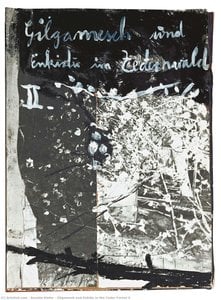
Anselm Kiefer

German From Donaueschingen Neo-Expressionism On Wikipedia in 23 of 32 languages

Anselm Kiefer

Anselm Kiefer stands as one of the most profound and distinctive voices within Neo-Expressionism, an artistic movement that emerged in the late 1970s and early 1980s as a powerful reaction against the austerity of Minimalism and Conceptual Art. Born in Donaueschingen, Germany, in 1945, Kiefer’s very existence is inextricably linked to the aftermath of World War II.

Works to know · Their 100 best-known works

24of 100

Lucian Freud

British From Berlin Realism, Figurative art On Wikipedia in 23 of 32 languages

Lucian Freud

Lucian Michael Freud, born in Berlin in 1922, carried a lineage steeped in intellectual weight—the grandson of the pioneering psychoanalyst Sigmund Freud. The looming shadow of Nazism forced his family to flee Germany in 1933, settling in London, a relocation that profoundly shaped both his life and the often somber, unsettling tone defining his artistic vision.

Works to know · Their 100 best-known works

26of 100

Georges Rouault

French From 19th arrondissement of Paris Expressionism, Fauvism On Wikipedia in 23 of 32 languages

Georges Rouault

Georges Rouault, born in Paris in 1871 amidst the turmoil of the Commune, lived a life deeply etched by hardship and spiritual seeking. He simultaneously pursued formal training at the École des Beaux-Arts, where he became a devoted pupil of Gustave Moreau, whose Symbolist leanings further nurtured Rouault's inclination towards emotionally charged subject matter.

Works to know · Their 100 best-known works

28of 100

David Alfaro Siqueiros

Mexican From Chihuahua City Social Realism, Muralism On Wikipedia in 24 of 32 languages

David Alfaro Siqueiros

David Alfaro Siqueiros, born José de Jesús Alfaro Siqueiros in 1896 – though later research pinpointed his birthplace as Chihuahua City rather than Camargo – was more than just a painter; he was a force of nature, an embodiment of the tumultuous spirit of post-revolutionary Mexico. The years between 1919 and 1923 proved pivotal as Siqueiros embarked on an extended sojourn to Europe.

Works to know · Their 100 best-known works

29of 100

Helen Frankenthaler

American From Manhattan Abstract Expressionism, Color Field On Wikipedia in 19 of 32 languages

Helen Frankenthaler

Helen Frankenthaler, born in 1928 in Manhattan, emerged as a pivotal figure in postwar American painting, bridging the fervent energy of Abstract Expressionism with the serene expanses of Color Field painting. From an early age, Frankenthaler received rigorous art education, studying under Rufino Tamayo at the Dalton School and later honing her skills at Bennington College with Paul Feeley, alongside brief mentorship from Hans Hofmann.

Learned from Hans Hofmann #72

Works to know · Their 100 best-known works

30of 100

Cy Twombly

American From Lexington Abstract Expressionism, Postmodern On Wikipedia in 21 of 32 languages

Cy Twombly

Early studies under Pierre Daura at Washington and Lee University were followed by formative experiences at the Arts Students League of New York and Black Mountain College, where he encountered pivotal figures like Robert Rauschenberg, John Cage, and Merce Cunningham. However, it was a 1952 voyage to Italy and North Africa with Rauschenberg —funded by a grant from the Virginia Museum of Fine Arts —that proved truly transformative.

Learned from Franz Kline #42, Robert Motherwell #41

Works to know · Their 100 best-known works

32of 100

Barnett Newman

American From New York City Abstract Expressionism On Wikipedia in 23 of 32 languages

Barnett Newman

Barnett Newman, born in 1905 in New York City to Jewish immigrant parents from Poland, emerged as a pivotal figure in the landscape of American art. Initially studying at the Art Students League and later at the City College of New York, Newman absorbed the influences of his time – the burgeoning Cubism of Picasso and the vibrant color palettes of Matisse were early touchstones.

Works to know · Their 100 best-known works

33of 100

František Kupka

Czech From Opočno ['Realism', 'Symbolism', 'Orphism', 'Cubism', 'Abstraction'] On Wikipedia in 24 of 32 languages

František Kupka

Between 1889 and 1892, he spent his time at the Academy of Fine Arts in Prague. He became involved with theosophy and Eastern philosophy, looking for meaning beyond the physical surface of a canvas.

See them at To see his canvases in person, one might travel to New York City.

Works to know · Their 100 best-known works

34of 100

Paula Modersohn-Becker

German From Dresden Expressionism On Wikipedia in 24 of 32 languages

Paula Modersohn-Becker

Born Minna Hermine Paula Becker on February 8, 1876, in Dresden, Germany, her life was tragically short – she passed away November 30, 1907, in Worpswede – yet within those three decades, she forged a path of remarkable artistic innovation and personal courage. A pivotal moment came with her travels to Paris in 1899 and subsequent visits in 1903 and 1905.

Works to know · Their 100 best-known works

35of 100

Julian Schnabel

American From Brooklyn Neo-Expressionism

Julian Schnabel

Born in Brooklyn in 1951, his early life took an unexpected turn when his family relocated to Brownsville, Texas, in 1965—a formative experience that instilled within him a sense of outsider status and a fascination with raw, untamed environments.

Works to know · Their 100 best-known works

36of 100

Georg Baselitz

German From Deutschbaselitz Neo-Expressionism On Wikipedia in 26 of 32 languages

Georg Baselitz

Born Hans-Georg Bruno Kern on January 23, 1938, in the small German village of Deutschbaselitz, the artist who would become known to the world as Georg Baselitz was a child of profound transition and upheaval.

Works to know · Their 100 best-known works

37of 100

Lee Krasner

American From Brooklyn Abstract Expressionism On Wikipedia in 17 of 32 languages

Lee Krasner

Born Lena Krassner on October 27, 1908, in the vibrant streets of Brooklyn, New York, the woman who would become Lee Krasner emerged as a transformative force within the landscape of American modernism.

Works to know · Their 100 best-known works

38of 100

Karl Schmidt-Rottluff

German From Rottluff Expressionism On Wikipedia in 25 of 32 languages

Karl Schmidt-Rottluff

Karl Schmidt-Rottluff, born Karl Schmidt in 1884 in the small German town of Rottenflut (later Rottluff), stands as a monumental figure in the tumultuous world of early 20th-century art. Initially drawn to architecture at the Technical University of Dresden, Schmidt-Rottluff quickly found himself captivated by a more urgent calling – one that resonated with fellow students Ernst Ludwig Kirchner, Fritz Bleyl, and Erich Heckel.

Works to know · Their 100 best-known works

39of 100

Hans Hartung

German-French From Leipzig Gestural Abstract Expressionism On Wikipedia in 15 of 32 languages

Hans Hartung

Born in 1904 in the historic city of Leipzig, Germany, Hartung’s early consciousness was shaped by a deep reverence for the masters of light and shadow. His formative years were steeped in the emotive power of European Expressionism, drawing strength from the works of Rembrandt and the raw, visceral energy of German painters such as Lovis Corinth and Emil Nolde.

Works to know · Their 100 best-known works

40of 100

Frank Auerbach

British From Berlin School of London On Wikipedia in 17 of 32 languages

Frank Auerbach

Settling in Britain, Auerbach attended Bunce Court School in Kent, where he displayed a natural aptitude for both art and drama—a path that nearly led him to the stage.

Works to know · Their 100 best-known works

41of 100

Robert Motherwell

American From Aberdeen Abstract Expressionism On Wikipedia in 16 of 32 languages

Robert Motherwell

Robert Motherwell (January 24, 1915 – July 16, 1991) stands as one of the most influential figures in American Abstract Expressionism, a movement that irrevocably altered the course of twentieth-century art. Early Education & Influences: Motherwell’s formative years were spent at Stanford University where he immersed himself in philosophy alongside fellow modernist Arthur Oncken Lovejoy and David Wite Prall.

Taught Cy Twombly #30

Works to know · Their 100 best-known works

42of 100

Franz Kline

American From Wilkes-Barre Abstract Expressionism On Wikipedia in 17 of 32 languages

Franz Kline

Born in Wilkes-Barre, Pennsylvania, in 1910, his life was marked by early hardship – the suicide of his father when he was just seven years old cast a long shadow, influencing a sensibility that would later find expression in the stark contrasts defining his art.

Taught Cy Twombly #30

Works to know · Their 100 best-known works

43of 100

Peter Doig

Scottish From Edinburgh Figurative painting

Peter Doig

Early moves took him from Scotland to Trinidad in 1962, followed by Canada in 1966, each shift imprinting upon his developing sensibility a sense of displacement and a fascination with the way places linger within us long after we’ve left them. Doig’s formal artistic training began in London, attending Wimbledon School of Art, Saint Martin’s School of Art, and finally Chelsea School of Art where he earned his MA.

Works to know · Their 100 best-known works

44of 100

M.F. Husain

Indian From Pandharpur Cubist narrative paintings On Wikipedia in 14 of 32 languages

M.F. Husain

Born in 1915 in the small town of Pandharpur, Maharashtra, his early years were steeped in the vibrant cultural textures of rural India. As his artistic consciousness matured, Husain became a central protagonist in the Bombay Progressive Artists' Group (BPAG). Within this crucible of creativity, Husain developed his signature aesthetic—a breathtaking fusion of European Cubism and indigenous narrative depth.

Works to know · Their 100 best-known works

45of 100

August Macke

German From Meschede Expressionism, Fauvism, Orphism, Cubism On Wikipedia in 28 of 32 languages

August Macke

He was the only son born to August Friedrich Hermann Macke, a building contractor and amateur artist, and Maria Florentine. His formal education in the arts began in earnest when he arrived at the Düsseldorf Academy, where he studied from 1904 to 1906.

See them at To walk through the rooms where his spirit remains, one might travel to Bonn, Germany.

Works to know · Their 100 best-known works

46of 100

Alexej von Jawlensky

Russian From Torzhok Expressionism On Wikipedia in 23 of 32 languages

Alexej von Jawlensky

Alexej von Jawlensky was born on 13 March 1864 in Torzhok, Russia. During his time in Saint Petersburg, Alexej von Jawlensky came under the influence of the Russian realist painter Ilya Repin.

See them at Finding the traces of Jawlensky's life requires traveling through several European cities where his presence remains felt.

Works to know · Their 100 best-known works

47of 100

Philip Guston

Canadian-American From Montreal ['Abstract Expressionism', 'Neo-Expressionism'] On Wikipedia in 15 of 32 languages

Philip Guston

Vrain Schwankovsky, who introduced him to European modern art, Eastern philosophy, Theosophy, and mystic literature. Early Connections: Met Jackson Pollock, with whom he published a paper opposing the high school's policies.

Works to know · Their 100 best-known works

48of 100

Lovis Corinth

German From Gvardeysk Impressionism & Expressionism On Wikipedia in 24 of 32 languages

Lovis Corinth

Lovis Corinth, born Franz Heinrich Louis on July 21, 1858, in the Prussian province of East Prussia, was a figure who embodied the tumultuous transition from the 19th to the early 20th-century art world. He initially pursued studies at the Academy of Königsberg in 1876, but quickly realized that academic tradition alone wouldn’t satisfy his artistic ambitions.

Works to know · Their 100 best-known works

50of 100

Zao Wou-Ki

From Beijing ['1920s Art Deco', 'Expressionism', 'Abstract art'] On Wikipedia in 12 of 32 languages

Zao Wou-Ki

Furthermore, the burgeoning interest in psychology, spearheaded by figures like Sigmund Freud, fueled explorations into the hidden depths of the human psyche—a theme that would become increasingly prominent in their work.

Works to know · Their 100 best-known works

51of 100

Johannes Itten

Swiss From Wachseldorn Expressionism, Bauhaus On Wikipedia in 21 of 32 languages

Johannes Itten

Though briefly attempting formal training at Geneva’s École des Beaux-Arts, he found its methods stifling, returning to Bern where studies with Ernst Schneider proved pivotal. Itten's arrival at Walter Gropius’ newly founded Bauhaus in Weimar in 1919 marked a turning point not only in his career but also in the history of art education.

Works to know · Their 100 best-known works

52of 100

Stanisław Ignacy Witkiewicz

Polish From Warsaw Symbolism, Surrealism On Wikipedia in 27 of 32 languages

Stanisław Ignacy Witkiewicz

Born in Warsaw in 1885 into an artistic family—his father, Stanisław Witkiewicz, was a noted painter, architect, and theorist—the younger Witkiewicz inherited not only a creative lineage but also a fertile intellectual environment that would profoundly shape his multifaceted career. A formative experience was an anthropological expedition to Australia in 1914 alongside Bronisław Malinowski.

Works to know · Their 100 best-known works

53of 100

Erich Heckel

German From Döbeln German Expressionism On Wikipedia in 22 of 32 languages

Erich Heckel

He studied architecture in Dresden but left after three terms. Early influences included Friedrich Nietzsche and Henrik Ibsen, reflecting a burgeoning intellectual curiosity.

Works to know · Their 100 best-known works

55of 100

Marianne von Werefkin

Russian-German-Swiss From Tula Expressionism, Symbolism On Wikipedia in 21 of 32 languages

Marianne von Werefkin

Marianne von Werefkin, born Marianna Wladimirowna Werewkina in Tula, Russia, in 1860, stands as a pivotal yet often overlooked figure in the genesis of Expressionism. Born into a family steeped in military tradition – her father, General Vladimir Werefkin, and her mother, Yelizaveta Daragan, an amateur painter herself – young Marianna displayed an early inclination towards art, beginning to paint at the age of fourteen following a period of illness.

Works to know · Their 100 best-known works

56of 100

Max Pechstein

Spanish From Zwickau Cubism, Surrealism On Wikipedia in 21 of 32 languages

Max Pechstein

Born in the industrial heart of Zwickau in 1881, Hermann Max Pechstein emerged from a working-class background to become one of the most commanding figures of the early twentieth-century avant-garde.

Works to know · Their 100 best-known works

57of 100

Vilmos Aba-Novak

Hungarian From Budapest Modern Hungarian art On Wikipedia in 18 of 32 languages

Vilmos Aba-Novak

He initially studied at the Budapest Art School until 1912, laying the groundwork for his future career. Following World War I, he briefly served in the Austro-Hungarian Army before dedicating himself fully to his artistic pursuits.

Works to know · Their 100 best-known works

58of 100

Nadežda Petrović

Serbian From Čačak Expressionism & Fauvism On Wikipedia in 27 of 32 languages

Nadežda Petrović

Growing up in Čačak, she experienced the hardships of Serbian life under Austro-Hungarian rule, fostering resilience and shaping her worldview. Recognizing her talent for art early on, her parents encouraged her pursuit of education beyond the conventional roles expected of women at the time.

Works to know · Their 100 best-known works

59of 100

Otto Mueller

German From Lubawka Expressionism On Wikipedia in 19 of 32 languages

Otto Mueller

Born in 1874 in Liebau, Silesia – now Lubawka, Poland – his journey began amidst a landscape that would forever imprint itself upon his artistic vision. He continued his studies at the prestigious academies of Dresden and Munich, though a dismissive assessment from Franz von Stuck at the latter led to a period of self-directed exploration.

Works to know · Their 100 best-known works

60of 100

Constant Permeke

Belgian From Antwerp Flemish Expressionism On Wikipedia in 16 of 32 languages

Constant Permeke

Constant Permeke, born in Antwerp in 1886, stands as a monumental figure in Belgian art history – not merely as a painter and sculptor, but as the very embodiment of Flemish Expressionism. He initially pursued formal studies at the Bruges Academy (1903-1906) and later at the Ghent Academy (1906-1908), but found himself increasingly stifled by traditional methods.

Works to know · Their 100 best-known works

61of 100

Jules Pascin

From Vidin On Wikipedia in 18 of 32 languages

Jules Pascin

Birth and Family: Julius Mordecai Pincas, known as Jules Pascin, was born on March 31, 1885, in Vidin, Bulgaria. Early Influences: The family moved to Bucharest in 1892, where young Julius first showed an interest in art, even sketching at a local brothel. Education and Pseudonym: He studied art in Vienna (1902) and Munich (1903), where he connected with artists like Paul Klee and Wassily Kandinsky.

Works to know · Their 100 best-known works

62of 100

Christian Rohlfs

German From Groß Niendorf Expressionism On Wikipedia in 15 of 32 languages

Christian Rohlfs

Born in 1849 in Gross Niendorf, Germany, his path was irrevocably altered at age twenty-five when illness necessitated the amputation of his leg. A turning point arrived in 1901 with Rohlfs’s relocation to Hagen, an invitation extended by the discerning art collector Karl Ernst Osthaus. The collection assembled by Osthaus included groundbreaking works by Monet, Cézanne, Gauguin, and Van Gogh —artists who were challenging conventional artistic boundaries.

Works to know · Their 100 best-known works

63of 100

Wilhelm Lehmbruck

German From Duisburg Expressionism

Wilhelm Lehmbruck

Wilhelm Lehmbruck (1881-1919) stands as a pivotal figure in German sculpture, embodying the spirit of Expressionism while retaining an undeniable connection to Naturalistic principles. Lehmbruck’s journey into art began with studies at the School of Applied Arts in Düsseldorf, fueled by a generous municipal stipend, allowing him to pursue his passion for sculpture alongside broader artistic explorations.

Works to know · Their 100 best-known works

65of 100

Clyfford Still

American From Grandin Abstract Expressionism On Wikipedia in 12 of 32 languages

Clyfford Still

Clyfford Still, born in 1904 amidst the vast landscapes of Grandin, North Dakota, stands as a pivotal figure in the evolution of American art. His early life, spent moving between North Dakota, Washington, and Alberta, Canada, instilled in him a deep connection to the natural world – a resonance that would echo throughout his artistic career.

Works to know · Their 100 best-known works

66of 100

Richard Gerstl

Austrian From Vienna Expressionism On Wikipedia in 15 of 32 languages

Richard Gerstl

After struggling in the traditional Viennese Piaristengymnasium and being expelled for disciplinary issues, Gerstl received private tutoring while pursuing his artistic ambitions. Gerstl quickly grew disillusioned with the academic style and the prevailing trends of the Vienna Secession, famously provoking a harsh rebuke from Griepenkerl.

Works to know · Their 100 best-known works

67of 100

Richard Diebenkorn

American From Portland ['Abstract Expressionism', 'Bay Area Figurative', 'Lyrical Abstraction'] On Wikipedia in 9 of 32 languages

Richard Diebenkorn

Richard Diebenkorn, born in Portland, Oregon, in 1922, embarked on a journey that would establish him as one of the most significant American painters of the postwar era.

Works to know · Their 100 best-known works

69of 100

Charles Henry Sims

British From Islington Outsider art, Impressionism

Charles Henry Sims

Charles Henry Sims, born in Islington, London, in 1873, remains a compelling figure in British art —a painter whose journey traversed the elegance of Edwardian society to the unsettling depths of personal turmoil and ultimately, outsider artistry.

Works to know · Their 100 best-known works

70of 100

Yannis Tsarouchis

Greek From Piraeus Surrealism

Yannis Tsarouchis

Born in Piraeus, Tsaroychis’s formative years were steeped in the traditions of Greek art history. He studied at the Athens School of Fine Arts, absorbing influences from Impressionism and Symbolism before gravitating towards Surrealism in the mid-1930s.

Works to know · Their 100 best-known works

71of 100

Aaron Siskind

American From New York Abstract Expressionism

Aaron Siskind

Aaron Siskind, born in the vibrant heart of New York City in 1903, stands as a pivotal figure in American photography—a bridge between the documentary impulse and the burgeoning world of Abstract Expressionism. The project Harlem Document (1935-1940) stands as a powerful example, a collaborative effort alongside interviews and stories collected by members of the Federal Writers' Project.

Works to know · Their 100 best-known works

73of 100

Arthur Segal

Romanian From Iași ['Expressionism', 'Dadaism']

Arthur Segal

Arthur Segal (1875 – 1944) stands as a compelling figure in the turbulent landscape of early 20th-century European art, a Romanian artist whose career unfolded across multiple continents and artistic movements.

Works to know · Their 100 best-known works

74of 100

Albin Egger-Lienz

From Stribach On Wikipedia in 13 of 32 languages

Albin Egger-Lienz

He later adopted his father’s surname combined with his birthplace. He continued his studies at the Academy in Munich, where he was profoundly influenced by artists like Franz Defregger and Jean-François Millet.

Works to know · Their 100 best-known works

75of 100

Adolph Gottlieb

American From New York City Abstract Expressionism On Wikipedia in 12 of 32 languages

Adolph Gottlieb

Adolph Gottlieb, born in New York City in 1903, emerged as a pivotal figure in the burgeoning landscape of American Abstract Expressionism. He received foundational training at the Art Students League and Parsons The New School for Design, but it was his subsequent travels through Europe during the 1920s that truly ignited his aesthetic sensibilities.

Works to know · Their 100 best-known works

76of 100

Jean-Paul Riopelle

Canadian From Montreal Lyrical Abstraction On Wikipedia in 14 of 32 languages

Jean-Paul Riopelle

Later, he attended the École des beaux-arts de Montréal but transitioned to the École du meuble, graduating in 1945. This shift proved pivotal as it led him to Paul-Émile Borduas.

Works to know · Their 100 best-known works

77of 100

Gabriele Münter

German From Berlin Expressionism On Wikipedia in 18 of 32 languages

Gabriele Münter

From early training to her pivotal role in Der Blaue Reiter (The Blue Rider), Münter’s life was inextricably linked with artistic exploration and a commitment to pushing the boundaries of what painting could be. Münter's artistic education began with private tutoring, followed by formal studies at the Düsseldorf studio of Ernst Bosch and later at the Damenschule (Women’s School) in Munich.

Learned from Wassily Kandinsky #1

Works to know · Their 100 best-known works

78of 100

Yoo Youngkuk

Korean From Ulchin Abstract painting

Yoo Youngkuk

Born in 1916 in the coastal town of Uljin, South Korea, his artistic journey was one of relentless exploration and unwavering dedication to forging a new visual language for a nation grappling with identity and modernity. Yoo’s path toward abstraction began with formal training at Bunka Gakuin University in Tokyo, graduating from the oil painting department in 1938.

Works to know · Their 100 best-known works

79of 100

Wojciech Weiss

Polish From Leorda Expressionism On Wikipedia in 11 of 32 languages

Wojciech Weiss

Early Life and Education: Born in Bukovina to Stanisław Weiss and Maria Kopaczyńska, Wojciech’s musical inclinations gave way to a fervent passion for painting after encountering Stanisław Przybyszewski. He pursued his artistic studies at Kraków's Academy of Fine Arts under Leon Wyczółkowski, initially focusing on historical or mythological subjects before embracing Expressionism as a profound response to Przybyszewski’s influence.

Works to know · Their 100 best-known works

81of 100

Karl Blossfeldt

German From Schlēde German Expressionism

Karl Blossfeldt

Karl Blossfeldt (1865 – 1932) stands as a singular figure in the history of photography and sculpture, recognized primarily for his groundbreaking approach to botanical representation. Born in Schlēde, Germany, Blossfeldt’s artistic vision was profoundly shaped by his father's unwavering fascination with the natural world—a connection that would become the cornerstone of Blossfeldt’s own creative endeavors.

Works to know · Their 100 best-known works

82of 100

Max Kurzweil

Austrian From Bzenec Vienna Secession On Wikipedia in 13 of 32 languages

Max Kurzweil

Born amidst the evocative landscapes of Bisenz, Bohemia, Maximilian Franz Viktor Zdenko Marie Kurzweil carried the romantic sensibilities of his youth into the heart of the Austro-Hungarian Empire. His relocation to Vienna in 1879 marked the beginning of a transformative era for both the artist and the city itself, as he moved from the quietude of his Czech origins toward the vibrant, pulsing energy of a burgeoning metropolis.

Works to know · Their 100 best-known works

83of 100

Bernard Buffet

French From Paris Expressionism

Bernard Buffet

Bernard Buffet (1928–1999) remains one of the most evocative and polarizing figures in twentieth-century French art. Born in Paris during a period of profound global upheaval, his very existence was shaped by the shadows of the Second World War.

Works to know · Their 100 best-known works

84of 100

Heinrich Campendonk

German/Dutch From Krefeld Der Blaue Reiter On Wikipedia in 13 of 32 languages

Heinrich Campendonk

Born in Krefeld, Germany, in 1889, into a family connected to the textile industry – a world of intricate patterns and vibrant hues – Campendonk’s artistic journey began not with formal training but with an apprenticeship, a grounding in craft that would later inform his deeply symbolic approach.

Works to know · Their 100 best-known works

85of 100

Mark Tobey

American From Centerville Abstract Expressionism On Wikipedia in 14 of 32 languages

Mark Tobey

Mark George Tobey, born in Centerville, Wisconsin, in 1890, was more than just a painter; he was a spiritual seeker whose artistic journey mirrored his lifelong exploration of faith, philosophy, and the delicate balance between Eastern and Western aesthetics.

Works to know · Their 100 best-known works

86of 100

John Bellany

Scottish Expressionism; Surrealism

John Bellany

Born in 1942 amidst the salt-sprayed fishing traditions of Port Seton, near Edinburgh, John Bellany CBE, RA emerged as one of Scotland’s most profound and evocative visual storytellers. During his formative years at the Edinburgh College of Art, he forged lasting bonds with contemporaries such as Alan Bold and Alexander Moffat, contributing to a movement dedicated to revitalizing Scottish art through a blend of local heritage and international influence.

Works to know · Their 100 best-known works

87of 100

Jan Sluijters

Dutch From 's-Hertogenbosch Expressionism, Luminism On Wikipedia in 8 of 32 languages

Jan Sluijters

Johannes Carolus Bernardus (Jan) Sluijters, born in ‘s-Hertogenbosch, Netherlands, in 1881, and passing away in Amsterdam in 1957, remains a captivating figure within the landscape of Dutch art. A pivotal moment in Sluijters’ career arrived in 1904 when he secured a prestigious Prix de Rome scholarship – an honor typically reserved for established artists.

Works to know · Their 100 best-known works

89of 100

Paul Jenkins

American From Kansas City Abstract Expressionism

Paul Jenkins

Born in Kansas City, Missouri, in 1923, his artistic journey began with formal training at the Art Students League of New York under the guidance of Yasuo Kuniyoshi. The trajectory of his career was irrevocably altered in 1953 during a transformative journey through Europe.

Works to know · Their 100 best-known works

90of 100

Kerry James Marshall

American From Birmingham Neo-Expressionism On Wikipedia in 8 of 32 languages

Kerry James Marshall

Born on October 17, 1955, in Birmingham, Alabama, Marshall’s early life was shaped by the profound social tremors of the American South and the subsequent migration to Los Angeles. Growing up in South Central Los Angeles, near the headquarters of the Black Panther Party, Marshall was immersed in an environment where social responsibility and visual identity were inextricably linked.

Works to know · Their 100 best-known works

91of 100

Gustave De Smet

Belgian From Ghent Flemish Expressionism On Wikipedia in 10 of 32 languages

Gustave De Smet

Gustave De Smet was a Belgian painter and printmaker who emerged as a central figure in the development of Flemish Expressionism. While he attended the Royal Academy of Fine Arts in Ghent, he often preferred to work in nature rather than following strict academic instruction. His artistic journey led him to the Sint-Martens-Latem artists' colony, where he initially encountered the influence of Luminism.

Works to know · Their 100 best-known works

92of 100

Armand Schonberger

French Cubism

Armand Schonberger

Armand Schonberger (1885–1974) stands as a captivating figure in the tapestry of early 20th-century modernism, a painter whose brush bridged the delicate light of Impressionism with the fractured, rhythmic energy of Cubism. Born in Galgóc and later finding his artistic soul within the vibrant bohemian circles of Munich and Budapest, Schonberger’s life was a continuous dialogue between tradition and the avant-garde.

Works to know · Their 100 best-known works

93of 100

Werner Peiner

German From Dusseldorf New Objectivity & Realism

Werner Peiner

Werner Peiner (20 July 1897 – 19 August 1984) was a German painter whose artistic journey spanned from the expressive currents of early Expressionism to the increasingly formalized aesthetic dictated by the Third Reich, ultimately cementing his position as one of its most prominent official artists.

Works to know · Their 100 best-known works

94of 100

Mary Ascher

British Biblical scenes, female figures

Mary Ascher

Mary Ascher (1900-1988) wasn’t merely a painter; she was an emotional archaeologist, meticulously excavating the hidden depths of biblical narratives and translating them into powerfully resonant visual experiences. Ascher rejected the prevailing detachment of much 20th-century art, instead embracing a deeply personal and often unsettling approach to depicting scenes from the Old Testament. Early influences on Ascher’s style were rooted in Expressionism and German Romanticism.

Works to know · Their 100 best-known works

95of 100

Frits Van Den Berghe

Belgian From Ghent Expressionism, Surrealism On Wikipedia in 10 of 32 languages

Frits Van Den Berghe

Born in Ghent, Belgium, in 1883, Frits Van den Berghe’s life was a tapestry woven from artistic passion, personal turmoil, and a profound engagement with the shifting currents of early 20th-century European art. Van den Berghe’s journey began within the established framework of the Royal Academy of Fine Arts, where he studied under Jean Delvin, absorbing the foundational principles of academic painting.

Works to know · Their 100 best-known works

98of 100

Lynd Ward

American From Chicago Wood engraving, Graphic novel

Lynd Ward

Ward's formal training at Teachers College, Columbia University, culminated in graduation in 1926 and marriage to May Yonge McNeer—a partnership that would prove creatively fertile, yielding some of the most beloved children’s books of their era. A pivotal journey to Europe followed, where he honed his skills in wood engraving at the National Academy of Graphic Arts in Leipzig, Germany, under the tutelage of Hans Alexander Mueller.

Works to know · Their 100 best-known works

99of 100

Mstislav Dobuzhinsky

Russian-Lithuanian From Novgorod Expressionism, Cityscapes

Mstislav Dobuzhinsky

Dobuzhinsky's artistic journey began modestly, attending the Drawing School of the Society for the Promotion of Artists in Novgorod before pursuing law at Saint Petersburg Imperial University while simultaneously studying privately. This dual pursuit reflects a restless intellectual curiosity that would inform his later work.

Works to know · Their 100 best-known works

100of 100

Heinrich Nauen

German From Krefeld Expressionism On Wikipedia in 10 of 32 languages

Heinrich Nauen

Born in Krefeld, Germany, in 1880, Heinrich Nauen’s artistic journey was one of quiet observation and profound emotional resonance. Nauen’s formal training began at the Kunstakademie Düsseldorf in 1898, where he honed his skills under the tutelage of established masters. However, it was his subsequent studies at the Staatliche Akademie der Bildenden Künste Stuttgart from 1900 to 1902 that truly ignited his artistic fire.

Works to know · Their 100 best-known works

Pictures worth knowing

Famous Expressionist works to recognise

  1. Composition VIII by Wassily Kandinsky

    Composition VIII

    Wassily Kandinsky

    1923 · Solomon R. Guggenheim Museum, New York City

  2. The Scream by Edvard Munch

    The Scream

    Edvard Munch

    1893 · Nasjonalgalleriet, Oslo

  3. Hollywood Africans in Front of the Chinese by Jean Michel Basquiat

    Hollywood Africans in Front of the Chinese

    Jean Michel Basquiat

    1983

  4. With the Egg by Paul Klee

    With the Egg

    Paul Klee

    1917

  5. Convergence by Jackson Pollock

    Convergence

    Jackson Pollock

  6. Reclining Nude with Loose Hair by Amedeo Modigliani

    Reclining Nude with Loose Hair

    Amedeo Modigliani

    1917

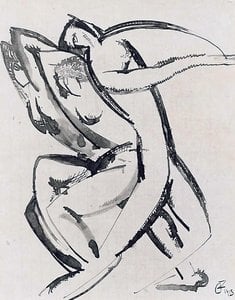
  7. Couple Embracing by Egon Schiele

    Couple Embracing

    Egon Schiele

When it happened

Expressionist, step by step

  1. 1887
  2. 1908
  3. 1911
  4. 1917
  5. 1917
  6. 1921
  7. 1923
  8. 1936
  9. 1949
  10. 1951
  11. 1952
  12. 1965
  13. 1971
  14. 1995

Fun figures

The numbers behind the list

Just the names

List of 100 famous Expressionist painters to know

  1. 1Wassily KandinskyWassily KandinskyRussian · 1866–1944
  2. 2Edvard MunchEdvard MunchNorwegian · 1863–1944
  3. 3Jean Michel BasquiatJean Michel BasquiatAmerican · 1960–1988
  4. 4Paul KleePaul KleeGerman and Swiss · 1879–1940
  5. 5Jackson PollockJackson PollockAmerican · 1912–1956
  6. 6Amedeo ModiglianiAmedeo ModiglianiItalian · 1884–1920
  7. 7Egon SchieleEgon SchieleAustrian · 1890–1918
  8. 8Francis BaconFrancis BaconIrish · 1909–1992
  9. 9Gerhard RichterGerhard RichterGerman · born 1932
  10. 10Willem de KooningWillem de KooningDutch-American · 1904–1997
  11. 11Jasper JohnsJasper JohnsAmerican · born 1930
  12. 12Mark RothkoMark RothkoAmerican · 1903–1970
  13. 13Franz MarcFranz MarcGerman · 1880–1916
  14. 14Oskar KokoschkaOskar KokoschkaAustrian, Czech, British · 1886–1980
  15. 15Ernst Ludwig KirchnerErnst Ludwig KirchnerGerman · 1880–1938
  16. 16Arshile GorkyArshile GorkyArmenian-American · 1904–1948
  17. 17Emil NoldeEmil NoldeGerman-Danish · 1867–1956
  18. 18Otto DixOtto DixGerman · 1891–1969
  19. 19James EnsorJames EnsorBelgian · 1860–1949
  20. 20Chaim SoutineChaim SoutineFrench · 1893–1943
  21. 21Max BeckmannMax BeckmannGerman · 1884–1950
  22. 22Friedensreich HundertwasserFriedensreich HundertwasserAustrian · 1928–2000
  23. 23Anselm KieferAnselm KieferGerman · born 1945
  24. 24Lucian FreudLucian FreudBritish · 1922–2011
  25. 25Käthe KollwitzKäthe KollwitzGerman · 1867–1945
  26. 26Georges RouaultGeorges RouaultFrench · 1871–1958
  27. 27Alexander CalderAlexander CalderScottish-American · 1898–1976
  28. 28David Alfaro SiqueirosDavid Alfaro SiqueirosMexican · 1896–1974
  29. 29Helen FrankenthalerHelen FrankenthalerAmerican · 1928–2011
  30. 30Cy TwomblyCy TwomblyAmerican · 1928–2011
  31. 31Lyonel FeiningerLyonel FeiningerGerman-American · 1871–1956
  32. 32Barnett NewmanBarnett NewmanAmerican · 1905–1970
  33. 33František KupkaFrantišek KupkaCzech · 1871–1957
  34. 34Paula Modersohn-BeckerPaula Modersohn-BeckerGerman · 1876–1907
  35. 35Julian SchnabelJulian SchnabelAmerican · born 1951
  36. 36Georg BaselitzGeorg BaselitzGerman · 1938–2026
  37. 37Lee KrasnerLee KrasnerAmerican · 1908–1984
  38. 38Karl Schmidt-RottluffKarl Schmidt-RottluffGerman · 1884–1976
  39. 39Hans HartungHans HartungGerman-French · 1904–1989
  40. 40Frank AuerbachFrank AuerbachBritish · 1931–2024
  41. 41Robert MotherwellRobert MotherwellAmerican · 1915–1991
  42. 42Franz KlineFranz KlineAmerican · 1910–1962
  43. 43Peter DoigPeter DoigScottish · born 1959
  44. 44M.F. HusainM.F. HusainIndian · 1915–2011
  45. 45August MackeAugust MackeGerman · 1887–1914
  46. 46Alexej von JawlenskyAlexej von JawlenskyRussian · 1864–1941
  47. 47Philip GustonPhilip GustonCanadian-American · 1913–1980
  48. 48Lovis CorinthLovis CorinthGerman · 1858–1925
  49. 49Alice NeelAlice NeelAmerican · 1900–1984
  50. 50Zao Wou-KiZao Wou-Ki1920–2013
  51. 51Johannes IttenJohannes IttenSwiss · 1888–1967
  52. 52Stanisław Ignacy WitkiewiczStanisław Ignacy WitkiewiczPolish · 1885–1939
  53. 53Erich HeckelErich HeckelGerman · 1883–1970
  54. 54Arnold SchoenbergArnold SchoenbergAustrian-American · 1874–1951
  55. 55Marianne von WerefkinMarianne von WerefkinRussian-German-Swiss · 1860–1938
  56. 56Max PechsteinMax PechsteinSpanish · 1881–1955
  57. 57Vilmos Aba-NovakVilmos Aba-NovakHungarian · 1894–1941
  58. 58Nadežda PetrovićNadežda PetrovićSerbian · 1873–1915
  59. 59Otto MuellerOtto MuellerGerman · 1874–1930
  60. 60Constant PermekeConstant PermekeBelgian · 1886–1952
  61. 61Jules PascinJules Pascin1885–1930
  62. 62Christian RohlfsChristian RohlfsGerman · 1849–1938
  63. 63Wilhelm LehmbruckWilhelm LehmbruckGerman · 1881–1919
  64. 64Ossip ZadkineOssip ZadkineRussian-French · 1888–1967
  65. 65Clyfford StillClyfford StillAmerican · 1904–1980
  66. 66Richard GerstlRichard GerstlAustrian · 1883–1908
  67. 67Richard DiebenkornRichard DiebenkornAmerican · 1922–1993
  68. 68John MarinJohn MarinAmerican · 1870–1953
  69. 69Charles Henry SimsCharles Henry SimsBritish · 1873–1928
  70. 70Yannis TsarouchisYannis TsarouchisGreek · 1910–1989
  71. 71Aaron SiskindAaron SiskindAmerican · 1903–1991
  72. 72Hans HofmannHans HofmannGerman-American · 1880–1966
  73. 73Arthur SegalArthur SegalRomanian · 1875–1944
  74. 74Albin Egger-LienzAlbin Egger-Lienz1868–1926
  75. 75Adolph GottliebAdolph GottliebAmerican · 1903–1974
  76. 76Jean-Paul RiopelleJean-Paul RiopelleCanadian · 1923–2002
  77. 77Gabriele MünterGabriele MünterGerman · 1877–1962
  78. 78Yoo YoungkukYoo YoungkukKorean · 1916–2002
  79. 79Wojciech WeissWojciech WeissPolish · 1875–1950
  80. 80Ad ReinhardtAd ReinhardtAmerican · 1913–1967
  81. 81Karl BlossfeldtKarl BlossfeldtGerman · 1865–1932
  82. 82Max KurzweilMax KurzweilAustrian · 1867–1916
  83. 83Bernard BuffetBernard BuffetFrench · 1928–1999
  84. 84Heinrich CampendonkHeinrich CampendonkGerman/Dutch · 1889–1957
  85. 85Mark TobeyMark TobeyAmerican · 1890–1976
  86. 86John BellanyJohn BellanyScottish · 1942–2013
  87. 87Jan SluijtersJan SluijtersDutch · 1881–1957
  88. 88Wilhelm MorgnerWilhelm MorgnerGerman · 1891–1917
  89. 89Paul JenkinsPaul JenkinsAmerican · 1923–2012
  90. 90Kerry James MarshallKerry James MarshallAmerican · born 1955
  91. 91Gustave De SmetGustave De SmetBelgian · 1877–1943
  92. 92Armand SchonbergerArmand SchonbergerFrench · 1885–1974
  93. 93Werner PeinerWerner PeinerGerman · 1897–1984
  94. 94Mary AscherMary AscherBritish · 1900–1988
  95. 95Frits Van Den BergheFrits Van Den BergheBelgian · 1883–1939
  96. 96Ernst BarlachErnst Barlach1870–1938
  97. 97Etel AdnanEtel AdnanAmerican · 1925–2021
  98. 98Lynd WardLynd WardAmerican · 1905–1985
  99. 99Mstislav DobuzhinskyMstislav DobuzhinskyRussian-Lithuanian · 1875–1957
  100. 100Heinrich NauenHeinrich NauenGerman · 1880–1940

Good questions

What people ask about Expressionist

Read more

More stories on ArtsDot.com

Other styles

Famous artists of other styles

Other eras

Famous artists of other eras

Famous paintings

Famous art, style by style

Keep exploring

Where to go next