The Realist names to know

100 Famous Realist Painters You Should Know

If you remember one Realist painter, make it Gustave Courbet (1819–1877), the name behind The Stone Breakers and The Painter's Studio. After that come Jean-François Millet, Gerhard Richter, Winslow Homer and Edward Hopper. Our 100 picks go from Jacques Laurent Agasse (born 1767) to Peter Doig (born 1959), from 28 countries.

How we picked them. We list the artists our catalogue links to Realist, from the most famous down. Artists born after 1955 that we cannot yet check on Wikidata are left out. The Wikipedia number shows in how many of our 32 languages Wikipedia writes about them.

  1. The Stone Breakers by Gustave Courbet1Gustave Courbet
  2. The Angelus by Jean-François Millet2Jean-François Millet
  3. Motorboat by Gerhard Richter3Gerhard Richter

Quick facts

Realist in a nutshell

  • 100Artists
  • 1767–1959Years of birth
  • 28Countries of birth
  • 8Women
  • 5Living artists
  • 20,627Works in our catalogue
Cities with most births
Moscow (5), Paris (4), Saint Petersburg (2), Lyon (2)
Museums holding the most key works
Tretyakov Gallery (11), Musée d'Orsay (8), Metropolitan Museum of Art (8), The State Russian Museum (4)

Meet them one by one

The 100 famous Realist painters, from most famous down

1of 100

Gustave Courbet

French From Ornans Realism On Wikipedia in 31 of 32 languages

Gustave Courbet

The quiet village of Ornans, France, provided the backdrop for his beginnings. He grew up in a household alongside his sisters, Zoé, Zélie, and Juliette.

See them at His canvases are scattered across several major collections, inviting a close look at the textures of his paint.

Works to know · Their 100 best-known works

2of 100

Jean-François Millet

French From Gréville-Hague Realism, Barbizon school On Wikipedia in 30 of 32 languages

Jean-François Millet

Born on October 4, 1814, he did not enter the world of art through a gilded door. His parents, Jean-Louis-Nicolas and Aimée-Henriette-Adélaïde Henry Millet, were farmers.

See them at Paris remains the primary destination for his work.

Works to know · Their 100 best-known works

4of 100

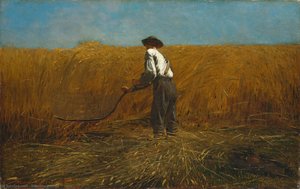
Winslow Homer

American From Boston American Realism On Wikipedia in 24 of 32 languages

Winslow Homer

Growing up in the rural stretches of Cambridge, Massachusetts, provided a quiet backdrop to his early years. During this time, he also spent a brief period studying with Frederic Rondel.

See them at Tracing the physical presence of his work requires visiting several major institutions across the United States.

Works to know · Their 100 best-known works

5of 100

Edward Hopper

American From Upper Nyack American realism

Edward Hopper

Edward Hopper was born in Upper Nyack, United States of America. He studied at the New York School of Art under William Merritt Chase and Robert Henri. In House by the Railroad (1925), a simple composition reveals a sense of mystery and isolation.

Works to know · Their 100 best-known works

6of 100

William-Adolphe Bouguereau

French From La Rochelle Academic realism On Wikipedia in 29 of 32 languages

William-Adolphe Bouguereau

The household is a structured one, including an elder brother, Alfred, and a younger sister, Marie. The pull of Paris eventually draws him away from the coastal life of La Rochelle.

See them at The physical presence of his canvases remains scattered across major international institutions.

Works to know · Their 100 best-known works

7of 100

Diego Rivera

Mexican From Guanajuato Mexican Muralism, Social Realism On Wikipedia in 31 of 32 languages

Diego Rivera

His early environment was marked by a significant loss when his twin brother, Carlos, died at the age of two. His formal education began in earnest at the Academy of San Carlos in Mexico City.

See them at Here, the Detroit Industry Murals occupy a central place, capturing the mechanical pulse of labor and the grit of the industrial era.

Works to know · Their 100 best-known works

8of 100

Ilya Repin

Ukrainian-born Russian From Chuhuiv Realism On Wikipedia in 32 of 32 languages

Ilya Repin

Ilya Yefimovich Repin entered the world on August 5, 1844, in Chuguev, located within the Kharkov Governorate of the Russian Empire. In 1863, driven by an ambition to refine his talent, he traveled to Saint Petersburg.

See them at The physical presence of Repin's oeuvre is scattered across several major institutions, reflecting the breadth of his influence.

Learned from Ivan Kramskoi #27 · Taught Valentin Serov #36, Boris Kustodiev #52

Works to know · Their 100 best-known works

9of 100

Honoré Daumier

French From Marseille Realism, Satire On Wikipedia in 29 of 32 languages

Honoré Daumier

Born in Marseille in 1808, Honoré-Victorin Daumier’s journey was one deeply intertwined with the tumultuous currents of 19th-century France. His early life, marked by his father's poetic aspirations and subsequent relocation to Paris in 1814, immersed him in a city brimming with artistic energy. He apprenticed under Alexandre Lenoir, absorbing classical influences alongside an appreciation for the dramatic chiaroscuro of Rubens, and further honed his skills at the Académie Suisse.

Works to know · Their 100 best-known works

10of 100

Carl Larsson

Swedish From Storkyrkoförsamlingen Arts and Crafts movement On Wikipedia in 28 of 32 languages

Carl Larsson

Carl Larsson was born on 28 May 1853 in the Gamla stan neighborhood of Stockholm, Sweden. He was sent to Principskolan, which functioned as a sub-division of the Royal Academy of Fine Arts.

Works to know · Their 100 best-known works

11of 100

Ivan Shishkin

Russian From Yelabuga Realism, Peredvizhniki On Wikipedia in 30 of 32 languages

Ivan Shishkin

He grew up in a family of merchants, the son of Ivan Vasilyevich Shishkin, a grain merchant who lived until 1872. After his time in Kazan, he moved toward professional artistic study, entering the Moscow School of Painting, Sculpture and Architecture in 1852.

See them at To experience the quiet presence of Shishkin’s forests, one can visit several significant collections across Russia.

Works to know · Their 100 best-known works

12of 100

Lucian Freud

British From Berlin Realism, Figurative art On Wikipedia in 23 of 32 languages

Lucian Freud

Lucian Michael Freud, born in Berlin in 1922, carried a lineage steeped in intellectual weight—the grandson of the pioneering psychoanalyst Sigmund Freud. The looming shadow of Nazism forced his family to flee Germany in 1933, settling in London, a relocation that profoundly shaped both his life and the often somber, unsettling tone defining his artistic vision.

Works to know · Their 100 best-known works

13of 100

Andrew Wyeth

American From Chadds Ford Township Regionalism, Realism On Wikipedia in 23 of 32 languages

Andrew Wyeth

Birth and Background: Andrew Newell Wyeth was born on July 12, 1917, in Chadds Ford, Pennsylvania, to illustrator N.C. His father was a renowned illustrator, and several of his siblings also pursued artistic careers including Henriette Wyeth Hurd, Carolyn Wyeth, and Nathaniel Wyeth.

Learned from N.C. Wyeth #99

Works to know · Their 100 best-known works

14of 100

David Alfaro Siqueiros

Mexican From Chihuahua City Social Realism, Muralism On Wikipedia in 24 of 32 languages

David Alfaro Siqueiros

David Alfaro Siqueiros, born José de Jesús Alfaro Siqueiros in 1896 – though later research pinpointed his birthplace as Chihuahua City rather than Camargo – was more than just a painter; he was a force of nature, an embodiment of the tumultuous spirit of post-revolutionary Mexico. The years between 1919 and 1923 proved pivotal as Siqueiros embarked on an extended sojourn to Europe.

Works to know · Their 100 best-known works

15of 100

Sigmar Polke

German From Oleśnica ['Capitalist Realism', 'Neo-Expressionism'] On Wikipedia in 22 of 32 languages

Sigmar Polke

His early life was marked by displacement; as a child, he fled with his family first to Thuringia and then, seeking refuge from Communist rule, to West Germany in 1953. Before dedicating himself fully to painting, Polke underwent an apprenticeship as a stained-glass worker in Düsseldorf (1959-1960), a formative experience that honed his technical skill and introduced him to the possibilities of manipulating light and color.

Works to know · Their 100 best-known works

16of 100

Adolph von Menzel

German From Wrocław Realism On Wikipedia in 24 of 32 languages

Adolph von Menzel

Adolph Friedrich Erdmann von Menzel, a name synonymous with German Realism, was more than just a painter; he was a visual chronicler of 19th-century life. Born on December 8, 1815, in Breslau (now Wrocław, Poland), his journey began not amidst the hallowed halls of artistic academies, but within the practical world of his father’s lithographic workshop.

Works to know · Their 100 best-known works

18of 100

Thomas Eakins

American From Philadelphia Realism On Wikipedia in 24 of 32 languages

Thomas Eakins

While his interests often led him abroad for study, the geography of his existence remained largely centered in Philadelphia. He died in Philadelphia on June 25, 1916.

See them at The physical presence of Eakins's vision remains scattered across several major institutions, primarily concentrated in the American Northeast.

Learned from Léon Bonnat #49

Works to know · Their 100 best-known works

19of 100

Henri Fantin-Latour

French From Grenoble Realism and Symbolism On Wikipedia in 25 of 32 languages

Henri Fantin-Latour

Born in Grenoble, France, on January 14, 1836, Ignace Henri Jean Theodore Fantin-Latour grew up in an environment where art was a daily presence. During these formative years, he studied under Louis-Alexandre Péron and Horace Lecoq de Boisbaudran.

See them at His presence is felt in the quiet halls of the Musée d'Orsay in Paris, where his canvases reside among the great shifts of nineteenth-century art.

Works to know · Their 100 best-known works

21of 100

José Clemente Orozco

Mexican From Ciudad Guzmán Mexican Muralism On Wikipedia in 25 of 32 languages

José Clemente Orozco

José Clemente Orozco, born November 23, 1883, in the small town of Zapotlán el Grande (now Ciudad Guzmán), Jalisco, Mexico, stands as a monumental figure in the pantheon of Mexican muralists. Orozco's formal training began at the Academy of San Carlos in 1906, where he encountered David Alfaro Siqueiros, a fellow student who would become another key player in the burgeoning Mexican mural movement.

Works to know · Their 100 best-known works

22of 100

Antonio López García

Spanish From Tomelloso Realism, Hyperrealism On Wikipedia in 14 of 32 languages

Antonio López García

Early Training: His uncle, Antonio López Torres, a local landscape painter, recognized and nurtured his nephew's burgeoning skill, providing initial lessons.

Works to know · Their 100 best-known works

23of 100

Raja Ravi Varma

Indian From Kilimanoor Academic & Indian fusion On Wikipedia in 22 of 32 languages

Raja Ravi Varma

Raja Ravi Varma, a name that resonates with artistic innovation in India, emerged from the royal lineage of Kilimanoor Palace in Kerala during the mid-19th century. Recognizing that original paintings were inaccessible to most Indians, he established the Raja Ravi Varma Fine Arts Lithographic Press in 1894.

Works to know · Their 100 best-known works

24of 100

Peter Doig

Scottish From Edinburgh Figurative painting

Peter Doig

Early moves took him from Scotland to Trinidad in 1962, followed by Canada in 1966, each shift imprinting upon his developing sensibility a sense of displacement and a fascination with the way places linger within us long after we’ve left them. Doig’s formal artistic training began in London, attending Wimbledon School of Art, Saint Martin’s School of Art, and finally Chelsea School of Art where he earned his MA.

Works to know · Their 100 best-known works

26of 100

Akseli Gallen-Kallela

Finnish From Pori National Romanticism On Wikipedia in 26 of 32 languages

Akseli Gallen-Kallela

Akseli Gallen-Kallela, born Axel Waldemar Gallén in 1865 in Pori, Finland, wasn’t merely a painter; he was a visual poet of a nation finding its voice. His early years were marked by a tension between familial expectations and artistic ambition, leading him to Paris in 1884 to study at the Académie Julian.

Works to know · Their 100 best-known works

27of 100

Ivan Kramskoi

Russian From Ostrogozhsk Realism On Wikipedia in 28 of 32 languages

Ivan Kramskoi

Ivan Nikolaevich Kramskoy, born on May 27, 1837, in the quiet town of Ostrogozhsk, stands as a monumental figure within the landscape of Russian art history. Under the guidance of mentors like Mikhail Borisovich Tulinov, who recognized his burgeoning genius, Kramskoy began to forge a path that would eventually lead him to become a cornerstone of the Peredvizhniki, or the Wanderers movement.

Works to know · Their 100 best-known works

28of 100

Vasily Vereshchagin

Russian From Cherepovets Peredvizhniki On Wikipedia in 28 of 32 languages

Vasily Vereshchagin

To gaze upon a canvas by Vasily Vasilievich Vereshchagin is to step directly into the heat, dust, and harrowing reality of the nineteenth century’s most turbulent frontiers. Born in 1842 in Cherepovets, Russia, Vereshchagin possessed a unique lineage that blended the scientific with the martial. During the Russo-Turkish War of 1877–1878, serving as a medic, he experienced the visceral horrors of siege warfare firsthand.

Works to know · Their 100 best-known works

29of 100

Marlene Dumas

South African, Dutch From Cape Town Romanticism, Figurative painting On Wikipedia in 16 of 32 languages

Marlene Dumas

Marlene Dumas, born in 1953 in Cape Town, South Africa, is a painter whose work resonates with an emotional depth rarely encountered in contemporary art. Dumas’s formal artistic journey began at the University of Cape Town in 1972, where she pursued a Bachelor of Fine Arts degree alongside studies in ethics.

Works to know · Their 100 best-known works

30of 100

George Bellows

American From Columbus Ashcan School, Realism On Wikipedia in 17 of 32 languages

George Bellows

Arriving in New York in 1904, Bellows quickly found mentorship under Robert Henri, a leading figure of the Ashcan School. This group of artists – including John Sloan, William Glackens, and George Luks – deliberately turned away from academic conventions, choosing instead to depict the gritty realities of urban life: crowded tenements, bustling streets, and the everyday struggles of working-class Americans.

Works to know · Their 100 best-known works

32of 100

Arkhip Kuindzhi

Russian/Ukrainian/Greek From Mariupol uyezd Realism, Impressionism On Wikipedia in 27 of 32 languages

Arkhip Kuindzhi

Born in 1842, or perhaps 1841 – the exact date shrouded in some mystery – in Mariupol, Ukraine, his origins were humble, steeped in the multicultural tapestry of the region. Of Greek descent, a lineage tracing back to ancestors who sought refuge near the Azov Sea during Catherine II’s reign, Kuindzhi's early life was marked by hardship.

Works to know · Their 100 best-known works

34of 100

Vasily Perov

Russian From Tobolsk Critical Realism On Wikipedia in 28 of 32 languages

Vasily Perov

Vasily Grigoryevich Perov, born Vasily Vasiliev in 1834 in the remote Siberian town of Tobolsk, emerged as a pivotal figure in Russian art, a painter whose work became synonymous with critical realism. Born out of wedlock to Baron Grigory Kridener and Akulina Ivanova, Perov’s early years were marked by an unconventional upbringing that instilled within him a keen sensitivity to societal inequalities.

Works to know · Their 100 best-known works

35of 100

Isaac Levitan

Russian From Kybartai Mood landscape On Wikipedia in 25 of 32 languages

Isaac Levitan

Isaak Ilyich Levitan was born on August 30, 1860, in a shtetl called Kibarty, located in the Augustów Governorate of Congress Poland, which was then part of the Russian Empire.

Works to know · Their 100 best-known works

36of 100

Valentin Serov

Russian From Saint Petersburg Impressionism, Art Nouveau On Wikipedia in 27 of 32 languages

Valentin Serov

Valentin Alexandrovich Serov, born into a world already resonating with artistic brilliance on January 19, 1865, in Saint Petersburg, was destined to become one of Russia’s most celebrated portraitists. His lineage itself spoke volumes – the son of composer Alexander Serov and Valentina Bergman, also a gifted musician, young Valentin grew up enveloped by creativity.

Learned from Ilya Repin #8

Works to know · Their 100 best-known works

37of 100

James Tissot

French From Nantes Impressionism, Realism, Japonisme On Wikipedia in 26 of 32 languages

James Tissot

Around 1854, he moved to Paris to begin his formal training at the École des Beaux-Arts.

See them at Though his later years were consumed by a profound devotion to religious subjects, it is his depictions of Victorian life that remain his most significant contribution to the art of the nineteenth century.

Learned from Hippolyte Flandrin #84

Works to know · Their 100 best-known works

39of 100

Peder Severin Krøyer

Danish From Stavanger Realism, Impressionism On Wikipedia in 24 of 32 languages

Peder Severin Krøyer

Born in 1851 in Stavanger, Norway, Krøyer’s early life was marked by an unusual upbringing; raised not by his biological mother but by her sister and brother-in-law, the Danish zoologist Henrik Nikolai Krøyer, he found himself transplanted to Copenhagen and immersed in a world of scientific inquiry alongside artistic cultivation. Krøyer became central to this community, forging close friendships with artists like Michael and Anna Ancher, and writer Holger Drachmann.

Learned from Léon Bonnat #49

Works to know · Their 100 best-known works

40of 100

Constantin Meunier

Belgian From Etterbeek Social Realism On Wikipedia in 16 of 32 languages

Constantin Meunier

Initially drawn to sculpture, studying at the Academy of Fine Arts in Brussels under Louis Jehotte and Charles-Auguste Fraikin, Meunier’s artistic path took an unexpected turn after encountering Gustave Courbet's groundbreaking realism. Works like “The Salle St Roch” (1857) and “A Trappist Funeral” (1860) demonstrate his ability to capture the atmosphere of ordinary moments, but it was his immersion into the world of industry that truly ignited his artistic vision.

Works to know · Their 100 best-known works

41of 100

Carl Bloch

Danish From Copenhagen Realism & Romanticism On Wikipedia in 20 of 32 languages

Carl Bloch

Carl Heinrich Bloch, born in Copenhagen on May 23rd, 1834, was a Danish painter whose name became synonymous with profoundly moving depictions of biblical narratives and the quiet dignity of everyday life. However, Bloch's unwavering passion for art proved irresistible, leading him to enroll at the Royal Danish Academy of Art in 1855 under the tutelage of Wilhelm Marstrand.

Works to know · Their 100 best-known works

42of 100

Vasily Surikov

Russian From Krasnoyarsk Realism On Wikipedia in 26 of 32 languages

Vasily Surikov

Born in 1848 in Krasnoyarsk, Siberia, Surikov's early life was marked by hardship and familial struggles—a formative experience that instilled within him an unwavering dedication to portraying the realities of rural Russian society with unflutched honesty. Recognizing Surikov’s talent, his father secured him admission to the St Petersburg Academy of Arts, where he honed his skills under the guidance of masters like Konstantin Dmitrievich Makovsky and Ivan Alekseyevich Kramskoy.

Works to know · Their 100 best-known works

43of 100

Albert Edelfelt

Finnish From Kiala manor Realism On Wikipedia in 25 of 32 languages

Albert Edelfelt

Albert Edelfelt was born on July 21, 1854, in Porvoo, Finland. Between 1873 and 1874, he spent time at the Antwerp Academy of Art, where he focused on the mechanics of history painting.

See them at To see his brushwork in person, one might travel to Helsinki.

Works to know · Their 100 best-known works

44of 100

Jean-Louis Ernest Meissonier

French From Lyon Academic art On Wikipedia in 23 of 32 languages

Jean-Louis Ernest Meissonier

Early training under Léon Cogniet provided a foundational grounding, but it was through diligent study of the Dutch masters at the Louvre – painters like Gabriel Metsu and Gerard Douw – that Meissonier truly discovered his artistic voice. Meissonier’s breakthrough arrived in 1831 with Les Bourgeois Flamands (Dutch Burghers), exhibited at the Salon.

Taught Édouard Detaille #85

Works to know · Their 100 best-known works

45of 100

Jules Bastien-Lepage

French From Damvillers Naturalism On Wikipedia in 22 of 32 languages

Jules Bastien-Lepage

Formal training followed at the École des Beaux-Arts in Paris, beginning in 1867, where he studied under Alexandre Cabanel – a prominent academic painter known for his polished technique and historical subjects.

Works to know · Their 100 best-known works

46of 100

Nikolai Ge

Russian From Voronezh Realism, Symbolism On Wikipedia in 20 of 32 languages

Nikolai Ge

Academy Years: Ge studied under master painter Pyotr Basin at the Imperial Academy of Arts, receiving a gold medal in 1857 for "The Witch of Endor Invoking the Spirit of the Prophet Samuel.".

Works to know · Their 100 best-known works

47of 100

Émile Friant

French From Dieuze Realism On Wikipedia in 20 of 32 languages

Émile Friant

His early Salon submissions, including “The Prodigal Son” and “Studio Interior,” demonstrated a burgeoning talent for narrative painting and an ability to capture the nuances of human emotion.

Works to know · Their 100 best-known works

48of 100

George Caleb Bingham

American From Utrecht Luminism, Realism On Wikipedia in 22 of 32 languages

George Caleb Bingham

George Caleb Bingham, born in 1811 amidst the rolling landscapes of Virginia, wasn’t destined for a life steeped in artistic convention. This is strikingly evident in works like Order at the Border (1850), where the golden hues of the setting sun illuminate a tense negotiation between settlers and Native Americans, imbuing the scene with both beauty and underlying tension.

Works to know · Their 100 best-known works

49of 100

Léon Bonnat

From Bayonne On Wikipedia in 23 of 32 languages

Léon Bonnat

His early life took an interesting turn when his family moved to Madrid in 1846, where his father established a bookshop. He received formal training under Madrazo in Madrid before returning to Paris.

Taught Peder Severin Krøyer #39

Works to know · Their 100 best-known works

50of 100

Constant Troyon

French From Sèvres Barbizon School, Naturalism On Wikipedia in 20 of 32 languages

Constant Troyon

Constant Troyon's early years were shaped by his family’s connection to the porcelain manufactory in Sèvres. He received mentorship from Camille Roqueplan, who introduced him to other prominent Barbizon artists like Rousseau and Jules Dupré.

Works to know · Their 100 best-known works

52of 100

Boris Kustodiev

Russian From Astrakhan Realism, Art Nouveau On Wikipedia in 24 of 32 languages

Boris Kustodiev

The story of Boris Mikhailovich Kustodiev begins in Astrakhan, Russia, where he was born on March 7, 1878.

See them at In the city of Saint Petersburg, the Brodsky House Museum preserves his presence, offering a glimpse into the intimate atmosphere he once inhabited.

Works to know · Their 100 best-known works

53of 100

Jules Breton

French From Courrières Realism On Wikipedia in 18 of 32 languages

Jules Breton

Jules Breton (1827–1906) stands as a cornerstone of French Realism, an artistic movement dedicated to portraying life accurately and truthfully without embellishment—a mission he embraced wholeheartedly in his canvases. Born in the small village of Courrières in the Pas-de-Calais region of northern France, Breton’s early life was marked by modest circumstances but fueled by an unwavering passion for observation and representation.

Works to know · Their 100 best-known works

54of 100

Michael Ancher

Danish From Bornholm Realism On Wikipedia in 22 of 32 languages

Michael Ancher

Michael Peter Ancher stands as one of Denmark’s most celebrated realist painters, a master whose brushstrokes are inextricably linked to the artistic fervor of Skagen. This remote fishing village, nestled where the Baltic and North Seas converge in Jutland’s far north, served as more than just a subject for Ancher; it was the very heartbeat of his creative existence.

Works to know · Their 100 best-known works

55of 100

Vasily Polenov

Russian From Saint Petersburg Peredvizhniki, Lyrical Realism On Wikipedia in 22 of 32 languages

Vasily Polenov

Vasily Dmitrievich Polenov (1844–1927) stands as a cornerstone figure in Russian landscape painting and the Peredvizhniki movement—a collective of realist artists who championed artistic freedom and social reform. Often dubbed “the Knight of Beauty,” Polenov embodied both European artistic sensibilities and deep roots within Russian culture, reflecting a vision where art served not merely for aesthetic pleasure but actively fostered happiness and moral upliftment.

Works to know · Their 100 best-known works

56of 100

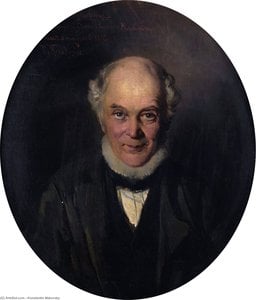
William Salter

British Portrait painting

William Salter

In the heart of the nineteenth century, as Britain navigated the profound shifts of the Industrial Revolution and the expansion of its global influence, William Salter emerged as a painter capable of capturing the very soul of Victorian grandeur. Born in 1804 in the quiet town of Honiton, Devon, Salter’s early life was rooted in the traditional English landscape, yet his artistic spirit was destined for much larger stages.

Works to know · Their 100 best-known works

57of 100

Franz Defregger

Austrian From Iselsberg-Stronach Munich School, Genre painting On Wikipedia in 17 of 32 languages

Franz Defregger

His beginnings were steeped in the realities of rural life; his parents, Michael and Maria Defregger, were farmers who instilled in him a deep connection to the land. Despite these sorrows, a spark of creativity ignited within him.

Works to know · Their 100 best-known works

58of 100

Alexey Venetsianov

Russian From Moscow Romanticism, Realism On Wikipedia in 18 of 32 languages

Alexey Venetsianov

Early Career: Venetsianov initially pursued a career in civil service before dedicating himself to art. Early Struggles: Despite demonstrating talent, Venetsianov faced difficulties securing commissions as a freelance portraitist, highlighting the challenges artists encountered outside formal academic institutions.

Works to know · Their 100 best-known works

59of 100

Eero Järnefelt

Finnish From Vyborg ['Naturalism', 'Realism'] On Wikipedia in 17 of 32 languages

Eero Järnefelt

Beyond his landscapes, Järnefelt was a masterful portraitist, often capturing the leading figures of Finnish society, from politicians to academics. His accolades reflect a career of international significance, including winning gold medals at the Paris Exposition Universelle in both 1889 and 1900.

Works to know · Their 100 best-known works

61of 100

Konstantin Makovsky

Russian From Moscow Realism, Academic art On Wikipedia in 22 of 32 languages

Konstantin Makovsky

From an early age, Makovsky demonstrated exceptional aptitude, entering the Moscow School of Painting, Sculpture, and Architecture at just twelve years old, where he flourished under the tutelage of Karl Bryullov and Vasily Tropinin. Makovsky continued his artistic education at the Imperial Academy of Arts in Saint Petersburg, beginning in 1858.

Works to know · Their 100 best-known works

62of 100

Cass Gilbert

American From Zanesville Beaux-Arts On Wikipedia in 17 of 32 languages

Cass Gilbert

Born in Troy, New York, his formative years were steeped in a deep appreciation for classical tradition and meticulous craftsmanship. Through his formal training at Rensselaer Polytechnic Institute, Gilbert developed a philosophy that would become his hallmark: the seamless synthesis of Beaux-Arts principles with the cutting-edge engineering techniques of a burgeoning nation.

Works to know · Their 100 best-known works

63of 100

Franz von Lenbach

German From Schrobenhausen Portraiture On Wikipedia in 20 of 32 languages

Franz von Lenbach

Born in Schrobenhausen, Bavaria, in 1836, his journey from a mason’s son to the celebrated “Malerfürst” (Painter Prince) is a testament to ambition, talent, and a keen understanding of societal currents.

Works to know · Their 100 best-known works

64of 100

Alexei Savrasov

Russian From Moscow Lyric Landscape Painting On Wikipedia in 21 of 32 languages

Alexei Savrasov

In the vast, sweeping expanse of nineteenth-century Russian art, few names evoke the quiet, melancholic beauty of the natural world as poignantly as Alexei Kondratyevich Savrasov. Born in Moscow in 1830, Savrasov did not merely paint landscapes; he captured the very breath of the Russian earth.

Works to know · Their 100 best-known works

65of 100

Walker Evans

American From St. Louis Documentary photography

Walker Evans

Louis in 1903, emerged as a pivotal figure in American photography, his name inextricably linked with the visual record of the Great Depression. Evans’s upbringing, marked by frequent moves between cities like Toledo, Chicago, and New York, instilled in him an early awareness of the diverse facets of American life.

Works to know · Their 100 best-known works

66of 100

Mihály Munkácsy

Hungarian From Mukachevo Realism On Wikipedia in 18 of 32 languages

Mihály Munkácsy

Mihály Munkácsy, born Michael Leo Lieb on February 20, 1844, in the small town of Munkács (now Mukachevo, Ukraine), emerged from a childhood steeped in adversity to become one of Hungary’s most celebrated and internationally recognized artists. A pivotal moment arrived with a state grant enabling Munkácsy to broaden his horizons through study abroad, first in Vienna (1865), then Munich (1866), and finally Düsseldorf (1868).

Taught Fritz von Uhde #94

Works to know · Their 100 best-known works

67of 100

Philip de László

From Pest On Wikipedia in 18 of 32 languages

Philip de László

His parents, Adolf and Johanna Laub, were a tailor and seamstress respectively, of Jewish origin. Further studies in Munich and Paris broadened his artistic horizons.

Works to know · Their 100 best-known works

68of 100

Nikolaos Gyzis

Greek From Tinos Munich School, Impressionism On Wikipedia in 20 of 32 languages

Nikolaos Gyzis

He began his studies at the School of Fine Arts in 1854, initially as an auditor, eagerly absorbing knowledge before officially enrolling and benefiting from the tutelage of Philippos Margaritis, Agathangelos Triantafyllou, and others who instilled in him a solid foundation in draftsmanship and composition.

Works to know · Their 100 best-known works

69of 100

László Mednyánszky

Hungarian-Slovak From Beckov Impressionism, Realism On Wikipedia in 14 of 32 languages

László Mednyánszky

Born into the waning aristocracy of the Austro-Hungarian Empire in 1852, Baron László Mednyánszky was a figure perpetually poised between worlds – nobility and peasantry, Hungary and Slovakia, tradition and modernity. The art of Baron László Mednyánszky is characterized by a distinctive blend of styles and subject matter.

Works to know · Their 100 best-known works

70of 100

Jozef Israëls

Dutch From Groningen Hague School, Realism On Wikipedia in 16 of 32 languages

Jozef Israëls

He initially pursued formal education at the Minerva Academy in Groningen from 1835 to 1842, laying the groundwork for his artistic journey. His studies continued at the Royal Academy for Fine Arts in Amsterdam, where he honed his skills under the guidance of Jan Kruseman.

Works to know · Their 100 best-known works

71of 100

Peder Mørk Mønsted

Danish From Grenaa Realism On Wikipedia in 14 of 32 languages

Peder Mørk Mønsted

Born on December 10, 1859, in the pastoral surroundings of Balle Mølle near Grenå, Denmark, Mønsted’s formative years were shaped by a sense of familial prosperity and a deep-rooted connection to the Danish countryside. His artistic journey began in earnest at the Aarhus Art School in 1875, where he honed his foundational skills under the guidance of Andries Fritz.

Learned from Peder Severin Krøyer #39, William-Adolphe Bouguereau #6

Works to know · Their 100 best-known works

72of 100

Jean-Jacques Henner

French From Bernwiller Academic realism On Wikipedia in 16 of 32 languages

Jean-Jacques Henner

Born in the tranquil Alsatian village of Bernwiller in 1829, Jean-Jacques Henner emerged as a pivotal figure in 19th-century French painting. His early education at the College of Altkirch revealed a burgeoning aptitude for drawing, prompting his parents to support further studies with Gabriel-Christophe Guérin in Strasbourg before he ventured to Paris.

Works to know · Their 100 best-known works

74of 100

L. S. Lowry

British From Stretford Industrial Painting On Wikipedia in 13 of 32 languages

L. S. Lowry

Laurence Stephen Lowry, born in the heart of Stretford, Cheshire, in 1887, remains one of Britain’s most beloved and distinctive voices in twentieth-century art. While his name is now synonymous with the gritty, evocative landscapes of Northern England, his journey to international acclaim was a slow, poignant ascent.

Works to know · Their 100 best-known works

75of 100

Józef Chełmoński

Polish From Boczki Realism, Positivism On Wikipedia in 15 of 32 languages

Józef Chełmoński

Józef Chełmoński, born in 1849 in the small village of Łowicz, Poland, was an artist whose life and work became inextricably linked to the soul of his nation’s countryside. Formal studies followed at the Warsaw Drawing Class from 1867 to 1871, where he benefited from private lessons under the esteemed Wojciech Gerson.

Works to know · Their 100 best-known works

76of 100

Nicolas François Octave Tassaert

WahooArt From Paris 19th Century Art

Nicolas François Octave Tassaert

Lutkin’s early life remains somewhat shrouded in mystery, though it is known he received his initial artistic training from his father, William Lutkin Sr., a landscape painter who instilled in him a deep appreciation for the beauty of the English countryside.

Works to know · Their 100 best-known works

77of 100

John Fraser

British Realistic Landscape Painting

John Fraser

John Arthur Fraser began his days in London, England, born on January 9th, 1838. His father, a tailor from Portsoy, Scotland, carried the political weight of the Chartist movement into their home, while his maternal grandparents had settled in Stanstead, Lower Canada, years earlier. His paintings of the Rockies, such as Fishing Camp, the Rockies, captured the heavy presence of mountains like Mt.

Works to know · Their 100 best-known works

78of 100

Uroš Predić

Serbian From Orlovat Realism painting On Wikipedia in 17 of 32 languages

Uroš Predić

Born in 1857 in Paraćin, Serbia, Predić emerged during a transformative era defined by the shifting borders and cultural tensions of the Austro-Hungarian influence. His life, spanning nearly a century until his death in 1953, served as a living bridge between the traditionalist roots of the Balkans and the rigorous academic standards of the Western art world.

Works to know · Their 100 best-known works

79of 100

Jean-François Raffaelli

From Paris On Wikipedia in 15 of 32 languages

Jean-François Raffaelli

Before dedicating himself to art, Raffaëlli explored interests in music and theatre. His formal artistic training was brief but impactful – three months under Jean-Léon Gérôme at the École des Beaux-Arts in Paris.

Works to know · Their 100 best-known works

80of 100

Bertha Wegmann

Danish/Swiss From Soglio Realism, Portraiture On Wikipedia in 15 of 32 languages

Bertha Wegmann

This delayed start perhaps fueled her intense focus and determination once she did embark on her artistic education, studying under Frederik Ferdinand Helsted, Heinrich Buntzen, and Frederik Christian Lund – foundational figures who laid the groundwork for her developing style. The pursuit of artistic refinement led Wegmann to Munich in 1875, initially under the tutelage of historical painter Wilhelm von Lindenschmit the Younger, followed by genre painter Eduard Kurzbauer.

Works to know · Their 100 best-known works

81of 100

Georgios Jakobides

Greek From Chidira Munich School, Academic Realism On Wikipedia in 8 of 32 languages

Georgios Jakobides

Georgios Jakobides stands as a monumental figure in the annals of Greek art, a painter whose brush captured the tender nuances of human existence through the rigorous lens of the Munich School. Born in 1853 in Chidira, Lesbos, within the Ottoman Empire, Jakobides’ early life was shaped by a landscape of profound tradition and cultural transition.

Works to know · Their 100 best-known works

82of 100

Vladimir Makovsky

Russian From Moscow Realism On Wikipedia in 15 of 32 languages

Vladimir Makovsky

Vladimir Yegorovich Makovsky (1846-1920) stands as a pivotal figure in the history of Russian realist painting, serving as a profound voice for the Peredvizhniki movement. As the son of Yegor Ivanovich Makovsky, a renowned collector and founder of the Moscow Art School, Vladimir was raised within an environment that prioritized artistic excellence and social responsibility.

Works to know · Their 100 best-known works

83of 100

Lionel Walden

American From Norwich Impressionism, Realism, Seascapes

Lionel Walden

Born in Norwich, Connecticut, his early life took him through the landscapes of Minnesota, where his family had moved following his father's appointment as a rector. Walden became a celebrated figure in the salons of Paris, earning medals and eventually being inducted into the French Legion of Honor.

Works to know · Their 100 best-known works

84of 100

Hippolyte Flandrin

French From Lyon Neoclassical On Wikipedia in 16 of 32 languages

Hippolyte Flandrin

Jean-Hippolyte Flandrin (1809–1864) remains a luminous figure in the pantheon of French Neoclassicism, an artist whose brush captured the profound intersection of spiritual devotion and classical grace. The trajectory of Fland_rin’s talent took a decisive turn in 1829 when he arrived in Paris to enter the legendary studio of Jean Auguste Dominique Ingres.

Taught James Tissot #37

Works to know · Their 100 best-known works

85of 100

Édouard Detaille

French From Paris ['Post-Impressionism', 'Symbolism', 'Synthetism'] On Wikipedia in 15 of 32 languages

Édouard Detaille

Gustave Caillebotte, born in Paris in 1848 and tragically passing away in 1894, remains a pivotal figure in the transition from Realism to Impressionism within French art. Often overshadowed by his more flamboyant contemporaries like Monet or Renoir, Caillebotte’s unique perspective—a meticulous observation of everyday Parisian life filtered through a distinctly modern sensibility—offers a compelling window into the burgeoning urban landscape of late 19th-century France.

Learned from Jean-Louis Ernest Meissonier #44

Works to know · Their 100 best-known works

86of 100

Pavel Filonov

Russian From Moscow Analytical Realism On Wikipedia in 15 of 32 languages

Pavel Filonov

Pavel Nikolayevich Filonov, born in Moscow in 1883, remains a profoundly compelling and often enigmatic figure within the landscape of Russian avant-garde art. His life wasn’t merely a chronicle of artistic creation but a philosophical quest—a relentless pursuit to dissect and reveal the very essence of reality through his unique method of Analytical Realism. The rigorous logic of Bertrand Russell, the epistemological inquiries of G.E.

Works to know · Their 100 best-known works

87of 100

Hendrik Willem Mesdag

Dutch From Groningen Marine Painting On Wikipedia in 14 of 32 languages

Hendrik Willem Mesdag

Born in the historic city of Groningen in 1831, Hendrik Willem Mesdag was destined for a life shaped by both commerce and creativity. As the son of the banker Klaas Mesdag and Johanna Wilhelmina van Giffen, his early path seemed predestined for the world of finance; however, the gentle influence of his father, an amateur painter himself, planted the seeds of an artistic vocation.

Works to know · Their 100 best-known works

88of 100

Pascal Dagnan-Bouveret

French From Paris Naturalism On Wikipedia in 14 of 32 languages

Pascal Dagnan-Bouveret

Formal Education: From 1869, he studied at the École des Beaux-Arts in Paris under renowned instructors Alexandre Cabanel and Jean-Léon Gérôme. Early Influences: His early works reflect the academic style prevalent during his studies, but he soon developed a distinct naturalist sensibility.

Works to know · Their 100 best-known works

90of 100

Herman Herzog

German/American From Bremen Düsseldorf School, Hudson River School (influenced)

Herman Herzog

Hermann Ottomar Herzog (1832-1932) stands as a quietly significant figure in the history of American art, often overshadowed by his more flamboyant Hudson River School contemporaries but possessing a unique and compelling vision. In 1871, seeking new opportunities and perhaps escaping the political turmoil of Germany, Herzog immigrated to the United States, declaring his intention for naturalization in Philadelphia.

Works to know · Their 100 best-known works

91of 100

Carl Vilhelm Holsoe

Danish Golden Age

Carl Vilhelm Holsoe

Born in the historic city of Aarhus in 1863, Carl Vilhelm Holsoe was a child of architectural lineage, the son of the respected architect N.P.C. His journey through the Royal Danish Academy of Fine Arts and the Kunstnernes Frie Studieskoler—studying under luminaries such as Peder Severin Krøyer —provided him with more than just technical prowess; it instilled a profound sensitivity to how light interacts with the boundaries of a room.

Works to know · Their 100 best-known works

93of 100

Ignacio Zuloaga

Spanish From Eibar Realism On Wikipedia in 15 of 32 languages

Ignacio Zuloaga

Ignacio Zuloaga y Zabala, born in the Basque town of Eibar in 1870, stands as a pivotal figure in late 19th and early 20th-century Spanish painting. This period wasn’t about imitation, but absorption; he observed the innovations of artists like Ramon Casas, Gauguin, and Toulouse-Lautrec, yet steadfastly maintained a distinct focus on his Spanish heritage.

Works to know · Their 100 best-known works

94of 100

Fritz von Uhde

German From Wolkenburg Impressionism On Wikipedia in 15 of 32 languages

Fritz von Uhde

Fritz von Uhde (born Friedrich Hermann Carl Uhde; 22 May 1848 – 25 February 1911) was a German painter of genre and religious subjects.

Learned from Mihály Munkácsy #66

Works to know · Their 100 best-known works

95of 100

Gwen John

Welsh From Haverfordwest Modernist On Wikipedia in 17 of 32 languages

Gwen John

Born Gwendolen Mary John in Haverfordwest, Wales, in 1876, her life unfolded as a deliberate counterpoint to the flamboyant artistic circles of her time. Unlike her celebrated brother, Augustus Edwin John, whose charismatic personality often overshadowed his work, Gwen carved a path defined by solitude, spiritual seeking, and an unwavering commitment to capturing the inner lives of her subjects.

Works to know · Their 100 best-known works

96of 100

Jacques Laurent Agasse

Swiss From Geneva Romanticism On Wikipedia in 16 of 32 languages

Jacques Laurent Agasse

Jacques Laurent Agasse (1767-1849) stands as a singular figure in the annals of Swiss art history, celebrated primarily for his unparalleled dedication to capturing the essence of equine anatomy and portraying animals with breathtaking realism. Born in Geneva amidst the burgeoning Enlightenment, Agasse’s artistic journey began with formal training at the École des Beaux-Arts de Genève, establishing him firmly within the classical tradition.

Works to know · Their 100 best-known works

97of 100

Luke Fildes

British From Liverpool Social Realism On Wikipedia in 11 of 32 languages

Luke Fildes

This foundational period led him to South Kensington (later the Royal College of Art) and the prestigious Royal Academy Schools, where he forged lasting connections with fellow artists like Hubert von Herkomer and Frank Holl.

Works to know · Their 100 best-known works

98of 100

George Harvey

Scottish From Stirling Victorian Art

George Harvey

Born on February 1st, 1806, in Saint Ninians, Stirling, Harvey emerged from the rugged beauty of his homeland to become one of the most distinguished figures of the Victorian era. His early years were shaped by the meticulous traditions of Scottish Romanticism, having studied under the guidance of William Laidlaw.

Works to know · Their 100 best-known works

99of 100

N.C. Wyeth

American From Needham Realism, Illustration On Wikipedia in 15 of 32 languages

N.C. Wyeth

Newell Convers Wyeth, born October 22, 1882, in Needham, Massachusetts, emerged as a pivotal figure in the Golden Age of American illustration. This early support proved crucial, leading him to formal training at Mechanics Arts School and later, Massachusetts Normal Art School, where he was advised to embrace the path of illustration.

Taught Andrew Wyeth #13

Works to know · Their 100 best-known works

100of 100

Francis Davis Millet

American From Mattapoisett Academic classical painting On Wikipedia in 17 of 32 languages

Francis Davis Millet

Born in Mattapoisett, Massachusetts, in either 1846 or 1848 – conflicting accounts exist, a diary suggesting the latter date – Millet’s journey from a young drummer boy in the Civil War to a celebrated artist and influential figure in American art circles is a testament to his multifaceted talent and unwavering dedication.

Works to know · Their 100 best-known works

Pictures worth knowing

Famous Realist works to recognise

  1. The Stone Breakers by Gustave Courbet

    The Stone Breakers

    Gustave Courbet

    1849 · Staatliche Kunstsammlungen Dresden

  2. The Angelus by Jean-François Millet

    The Angelus

    Jean-François Millet

    Musée d'Orsay, Paris

  3. Motorboat by Gerhard Richter

    Motorboat

    Gerhard Richter

    1965

  4. The Gulf Stream by Winslow Homer

    The Gulf Stream

    Winslow Homer

    1906 · Metropolitan Museum of Art, new york

  5. Nighthawks, The Art Institute of Chicago, Chica by Edward Hopper

    Nighthawks, The Art Institute of Chicago, Chica

    Edward Hopper

    1942 · Art Institute of Chicago

  6. Faneuse by William-Adolphe Bouguereau

    Faneuse

    William-Adolphe Bouguereau

    1869 · Carnegie Museum of Art, Pittsburgh

  7. Creation by Diego Rivera

    Creation

    Diego Rivera

    1923

When it happened

Realist, step by step

  1. 1834
  2. 1849
  3. 1869
  4. 1871
  5. 1873
  6. 1878
  7. 1878
  8. 1887
  9. 1897
  10. 1902
  11. 1906
  12. 1923
  13. 1942
  14. 1956

Fun figures

The numbers behind the list

Just the names

List of 100 famous Realist painters to know

  1. 1Gustave CourbetGustave CourbetFrench · 1819–1877
  2. 2Jean-François MilletJean-François MilletFrench · 1814–1875
  3. 3Gerhard RichterGerhard RichterGerman · born 1932
  4. 4Winslow HomerWinslow HomerAmerican · 1836–1910
  5. 5Edward HopperEdward HopperAmerican · 1882–1967
  6. 6William-Adolphe BouguereauWilliam-Adolphe BouguereauFrench · 1825–1905
  7. 7Diego RiveraDiego RiveraMexican · 1886–1957
  8. 8Ilya RepinIlya RepinUkrainian-born Russian · 1844–1930
  9. 9Honoré DaumierHonoré DaumierFrench · 1808–1879
  10. 10Carl LarssonCarl LarssonSwedish · 1853–1919
  11. 11Ivan ShishkinIvan ShishkinRussian · 1831–1898
  12. 12Lucian FreudLucian FreudBritish · 1922–2011
  13. 13Andrew WyethAndrew WyethAmerican · 1917–2009
  14. 14David Alfaro SiqueirosDavid Alfaro SiqueirosMexican · 1896–1974
  15. 15Sigmar PolkeSigmar PolkeGerman · 1941–2010
  16. 16Adolph von MenzelAdolph von MenzelGerman · 1815–1905
  17. 17Paula RegoPaula RegoPortuguese · 1935–2022
  18. 18Thomas EakinsThomas EakinsAmerican · 1844–1916
  19. 19Henri Fantin-LatourHenri Fantin-LatourFrench · 1836–1904
  20. 20Rosa BonheurRosa BonheurFrench · 1822–1899
  21. 21José Clemente OrozcoJosé Clemente OrozcoMexican · 1883–1949
  22. 22Antonio López GarcíaAntonio López GarcíaSpanish · born 1936
  23. 23Raja Ravi VarmaRaja Ravi VarmaIndian · 1848–1906
  24. 24Peter DoigPeter DoigScottish · born 1959
  25. 25Viktor VasnetsovViktor Vasnetsov1848–1926
  26. 26Akseli Gallen-KallelaAkseli Gallen-KallelaFinnish · 1865–1931
  27. 27Ivan KramskoiIvan KramskoiRussian · 1837–1887
  28. 28Vasily VereshchaginVasily VereshchaginRussian · 1842–1904
  29. 29Marlene DumasMarlene DumasSouth African, Dutch · born 1953
  30. 30George BellowsGeorge BellowsAmerican · 1882–1925
  31. 31Kiki SmithKiki SmithGerman-American · born 1954
  32. 32Arkhip KuindzhiArkhip KuindzhiRussian/Ukrainian/Greek · 1841–1910
  33. 33Candido PortinariCandido PortinariBrazilian · 1903–1962
  34. 34Vasily PerovVasily PerovRussian · 1833–1882
  35. 35Isaac LevitanIsaac LevitanRussian · 1860–1900
  36. 36Valentin SerovValentin SerovRussian · 1865–1911
  37. 37James TissotJames TissotFrench · 1836–1902
  38. 38Alice NeelAlice NeelAmerican · 1900–1984
  39. 39Peder Severin KrøyerPeder Severin KrøyerDanish · 1851–1909
  40. 40Constantin MeunierConstantin MeunierBelgian · 1831–1905
  41. 41Carl BlochCarl BlochDanish · 1834–1890
  42. 42Vasily SurikovVasily SurikovRussian · 1848–1916
  43. 43Albert EdelfeltAlbert EdelfeltFinnish · 1854–1905
  44. 44Jean-Louis Ernest MeissonierJean-Louis Ernest MeissonierFrench · 1815–1891
  45. 45Jules Bastien-LepageJules Bastien-LepageFrench · 1848–1884
  46. 46Nikolai GeNikolai GeRussian · 1831–1894
  47. 47Émile FriantÉmile FriantFrench · 1863–1932
  48. 48George Caleb BinghamGeorge Caleb BinghamAmerican · 1811–1879
  49. 49Léon BonnatLéon Bonnat1833–1922
  50. 50Constant TroyonConstant TroyonFrench · 1810–1865
  51. 51Albert AnkerAlbert AnkerSwiss · 1831–1910
  52. 52Boris KustodievBoris KustodievRussian · 1878–1927
  53. 53Jules BretonJules BretonFrench · 1827–1906
  54. 54Michael AncherMichael AncherDanish · 1849–1927
  55. 55Vasily PolenovVasily PolenovRussian · 1844–1927
  56. 56William SalterWilliam SalterBritish · 1804–1875
  57. 57Franz DefreggerFranz DefreggerAustrian · 1835–1921
  58. 58Alexey VenetsianovAlexey VenetsianovRussian · 1780–1847
  59. 59Eero JärnefeltEero JärnefeltFinnish · 1863–1937
  60. 60Nikolai YaroshenkoNikolai YaroshenkoRussian/Ukrainian · 1846–1898
  61. 61Konstantin MakovskyKonstantin MakovskyRussian · 1839–1915
  62. 62Cass GilbertCass GilbertAmerican · 1859–1934
  63. 63Franz von LenbachFranz von LenbachGerman · 1836–1904
  64. 64Alexei SavrasovAlexei SavrasovRussian · 1830–1897
  65. 65Walker EvansWalker EvansAmerican · 1903–1975
  66. 66Mihály MunkácsyMihály MunkácsyHungarian · 1844–1900
  67. 67Philip de LászlóPhilip de László1869–1937
  68. 68Nikolaos GyzisNikolaos GyzisGreek · 1842–1901
  69. 69László MednyánszkyLászló MednyánszkyHungarian-Slovak · 1852–1919
  70. 70Jozef IsraëlsJozef IsraëlsDutch · 1824–1911
  71. 71Peder Mørk MønstedPeder Mørk MønstedDanish · 1859–1941
  72. 72Jean-Jacques HennerJean-Jacques HennerFrench · 1829–1905
  73. 73Elin Danielson-GambogiElin Danielson-GambogiFinnish · 1861–1919
  74. 74L. S. LowryL. S. LowryBritish · 1887–1976
  75. 75Józef ChełmońskiJózef ChełmońskiPolish · 1849–1914
  76. 76Nicolas François Octave TassaertNicolas François Octave TassaertWahooArt · 1800–1874
  77. 77John FraserJohn FraserBritish · 1838–1898
  78. 78Uroš PredićUroš PredićSerbian · 1857–1953
  79. 79Jean-François RaffaelliJean-François Raffaelli1850–1924
  80. 80Bertha WegmannBertha WegmannDanish/Swiss · 1847–1926
  81. 81Georgios JakobidesGeorgios JakobidesGreek · 1853–1932
  82. 82Vladimir MakovskyVladimir MakovskyRussian · 1846–1920
  83. 83Lionel WaldenLionel WaldenAmerican · 1861–1933
  84. 84Hippolyte FlandrinHippolyte FlandrinFrench · 1809–1864
  85. 85Édouard DetailleÉdouard DetailleFrench · 1848–1912
  86. 86Pavel FilonovPavel FilonovRussian · 1883–1941
  87. 87Hendrik Willem MesdagHendrik Willem MesdagDutch · 1831–1915
  88. 88Pascal Dagnan-BouveretPascal Dagnan-BouveretFrench · 1852–1929
  89. 89Alfred Émile Léopold StevensAlfred Émile Léopold Stevens1823–1906
  90. 90Herman HerzogHerman HerzogGerman/American · 1832–1932
  91. 91Carl Vilhelm HolsoeCarl Vilhelm HolsoeDanish · 1863–1935
  92. 92Samuel WaltersSamuel WaltersBritish · 1811–1882
  93. 93Ignacio ZuloagaIgnacio ZuloagaSpanish · 1870–1945
  94. 94Fritz von UhdeFritz von UhdeGerman · 1848–1911
  95. 95Gwen JohnGwen JohnWelsh · 1876–1939
  96. 96Jacques Laurent AgasseJacques Laurent AgasseSwiss · 1767–1849
  97. 97Luke FildesLuke FildesBritish · 1844–1927
  98. 98George HarveyGeorge HarveyScottish · 1806–1876
  99. 99N.C. WyethN.C. WyethAmerican · 1882–1945
  100. 100Francis Davis MilletFrancis Davis MilletAmerican · 1848–1912

Good questions

What people ask about Realist

Read more

More stories on ArtsDot.com

Other styles

Famous artists of other styles

Other eras

Famous artists of other eras

Famous paintings

Famous art, style by style

Keep exploring

Where to go next