

Understanding Art Styles: A Historical Overview
The story of art is, fundamentally, a story of evolving perspectives. From the earliest cave paintings at Lascaux to the digital creations of today, humanity has consistently sought ways to interpret and represent the world around us – and within us. Artistic style isn’t merely about *how* something is painted or sculpted; it's a reflection of the cultural, philosophical, and technological forces shaping an era. Consider the monumental grandeur of Ancient Egyptian art, born from a deeply ingrained belief in the afterlife and the divine power of pharaohs. Its rigid formality, symbolic imagery, and enduring materials were designed not for fleeting aesthetic pleasure but for eternal preservation. This contrasts sharply with the Classical Greek ideal, which prioritized human form, balance, and harmony – a testament to their philosophical pursuit of perfection and rational understanding. The contrapposto pose, perfected by Greek sculptors, embodies this striving for naturalism and idealized beauty, influencing artistic representation for centuries.
As civilizations rose and fell, so too did artistic styles transform. The Medieval period saw art largely devoted to religious expression, with Byzantine mosaics shimmering with gold and Romanesque architecture conveying a sense of awe-inspiring power. The Renaissance, however, marked a pivotal turning point – a rediscovery of classical learning and a renewed focus on humanism. Artists like Leonardo da Vinci and Michelangelo didn’t simply replicate reality; they sought to understand it through meticulous observation, anatomical study, and masterful technique. This period witnessed an explosion of innovation in perspective, chiaroscuro (the dramatic use of light and shadow), and composition, laying the groundwork for centuries of artistic development.
Key Art Movements & Their Characteristics
The subsequent centuries saw a proliferation of art movements, each reacting against or building upon its predecessors. Baroque art, with its opulent drama and emotional intensity, emerged as a response to the Reformation, serving as a powerful tool for the Catholic Church’s Counter-Reformation. Rococo followed, embracing lightness, elegance, and playful ornamentation – a style favored by the French aristocracy. But beneath the surface of these refined aesthetics lay growing social unrest, which would eventually fuel the revolutionary spirit of Romanticism.
Romanticism rejected the Enlightenment’s emphasis on reason in favor of emotion, imagination, and individualism. Artists like Eugène Delacroix and J.M.W. Turner explored themes of nature's sublime power, human passion, and historical drama. This paved the way for Realism, which sought to depict everyday life with unflinching honesty – a direct response to the idealized visions of Romanticism. The late 19th century then witnessed the birth of Impressionism, a radical departure from traditional painting techniques. Artists like Claude Monet and Edgar Degas abandoned precise representation in favor of capturing fleeting moments of light and color, prioritizing *impression* over exact detail.
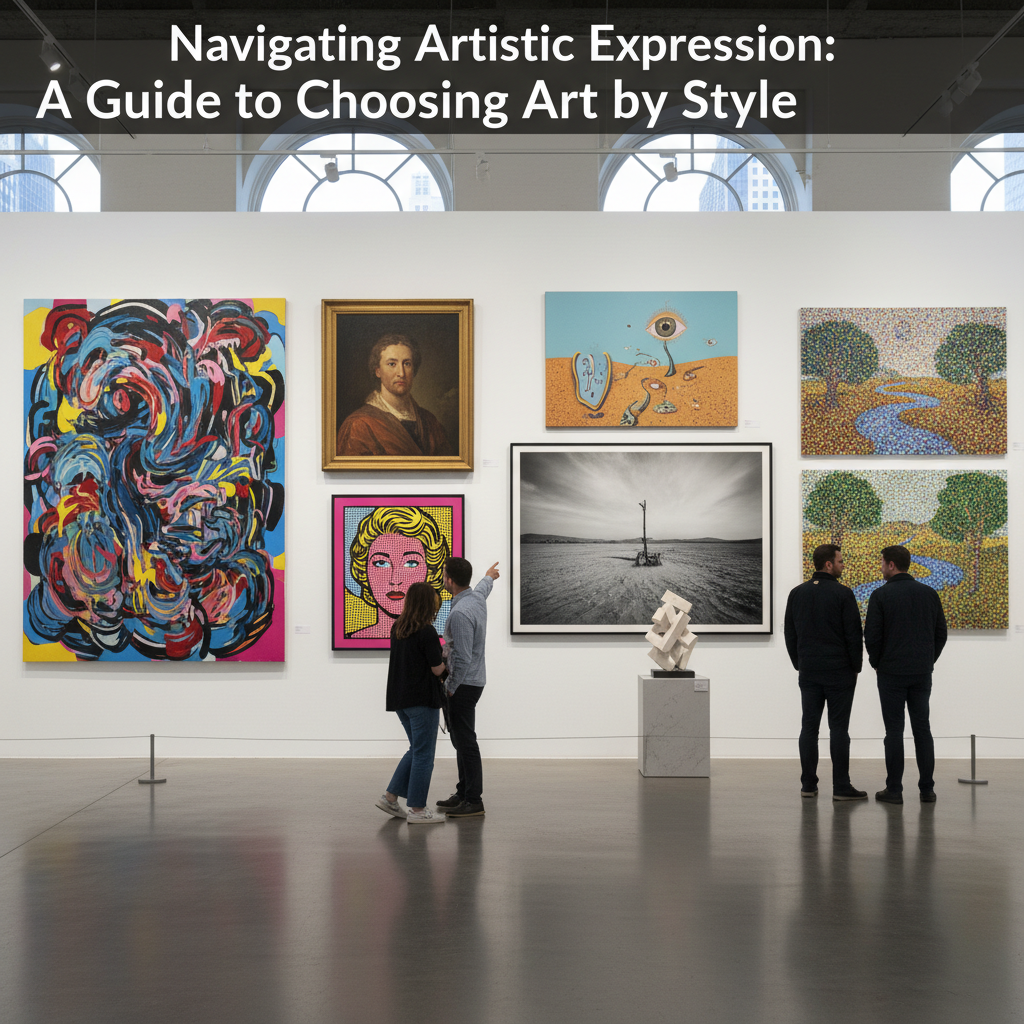
The 20th century brought an unprecedented acceleration of artistic innovation. From the fragmented forms of Cubism (Picasso, Braque) to the dreamlike imagery of Surrealism (Dalí, Magritte), artists challenged conventional notions of reality and representation. Abstract Expressionism, with its spontaneous gestures and emotional intensity (Pollock, Rothko), further pushed the boundaries of art, while Pop Art embraced popular culture and consumerism (Warhol, Lichtenstein). Each movement was a response to the changing world – technological advancements, political upheavals, and shifting social values.
Finding Your Aesthetic: Matching Style to Personal Taste
Choosing art is deeply personal. It’s about connecting with something that resonates with your emotions, intellect, and individual sensibility. Do you gravitate towards the serene landscapes of Impressionism, finding solace in their soft light and atmospheric effects? Or are you drawn to the bold colors and dynamic compositions of Abstract Expressionism, experiencing a visceral response to their raw energy? Perhaps the meticulous detail and symbolic richness of Renaissance art appeal to your intellectual curiosity.
Consider the atmosphere you want to create in your space. A calming bedroom might benefit from muted tones and tranquil scenes, while a vibrant living room could be enlivened by bold colors and abstract forms. Think about the stories you want your art to tell – memories of travels, expressions of personal values, or simply reflections of your aesthetic preferences. Don’t be afraid to experiment with different styles and mediums until you find what truly speaks to you.
Customization Options: Tailoring Art to Your Vision
The beauty of contemporary art reproduction lies in its flexibility. You are no longer limited to choosing from existing works; you can commission a custom piece tailored precisely to your specifications. Imagine having a cherished family photograph transformed into an oil painting in the style of Rembrandt, capturing the warmth and intimacy of a Dutch Master portrait. Or perhaps recreating a favorite landscape in the vibrant hues of Van Gogh, imbuing it with his signature swirling brushstrokes.
At , we offer unparalleled customization options. We can adjust colors, compositions, and even entire styles to match your vision. Our skilled artists are adept at replicating the techniques of various masters, ensuring an authentic and captivating result. Whether you desire a faithful reproduction or a unique interpretation, our team will work closely with you throughout the process, providing mockups and updates until you are completely satisfied.
's Expertise: Guidance and Quality Assurance
Navigating the world of art can be daunting, but is here to guide you. Our commitment extends beyond simply offering reproductions; we strive to provide an exceptional experience from start to finish. Our team of art experts is available to offer personalized consultations, helping you select the perfect style, size, and framing options for your space.
We pride ourselves on the quality of our materials and craftsmanship. Each oil painting reproduction is meticulously hand-painted by skilled artists using high-quality oils and 100% cotton canvas. Our giclée prints utilize archival inks that resist fading, ensuring lasting beauty. We also offer a range of framing options to complement your artwork and enhance its presentation. With , you’re not just acquiring a piece of art; you're investing in a legacy of artistry and enduring quality.