

The Dawn of a 'Rebirth': Historical Context & Key Influences
The Renaissance, meaning “rebirth,” wasn’t a sudden explosion of creativity but rather a gradual unfolding—a rediscovery of classical antiquity interwoven with burgeoning new ideas that swept across Europe from the 14th through the 16th centuries. Emerging initially in Italy, particularly Florence, this period marked a pivotal transition from the medieval world to modernity. The seeds of change were sown by several factors: increased trade and wealth, fostering patronage of the arts; the rediscovery of lost classical texts thanks to scholars traveling to Constantinople and beyond; and a growing emphasis on human potential and achievement – a philosophy known as Humanism. Prior to this era, artistic expression was largely focused on religious iconography, serving primarily didactic purposes within the Church. While faith remained central, Renaissance artists began to explore secular themes, portraiture, and classical mythology with newfound freedom.
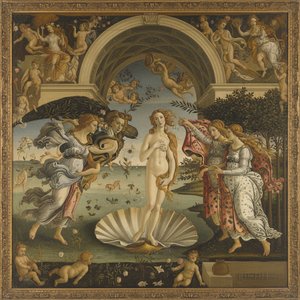
The political landscape of Italy at the time—a patchwork of independent city-states like Florence, Venice, and Milan—also played a crucial role. Competition between these states fueled artistic innovation as rulers sought to outdo one another in commissioning grand works that would enhance their prestige. The Medici family in Florence, for example, became renowned patrons, supporting artists like Donatello and Botticelli and transforming the city into a cultural hub. This environment fostered an atmosphere of intellectual curiosity and experimentation, laying the groundwork for the artistic revolution that was to come. The rediscovery of mathematical principles and perspective, influenced by ancient Greek and Roman texts, provided artists with new tools to represent the world realistically – a departure from the more stylized representations of the medieval period.
Humanism at the Heart: A New Vision of Humanity in Renaissance Art
At the core of the Renaissance lay Humanism—a philosophical stance that emphasized human agency, reason, and individual worth. This wasn’t a rejection of religion but rather a shift in focus towards celebrating human potential *within* a religious framework. Renaissance artists reflected this humanist spirit by portraying individuals with greater realism and psychological depth. Portraits became increasingly popular, not merely as representations of status but as explorations of personality and character. Figures were no longer simply symbolic types; they possessed individual identities and emotions.
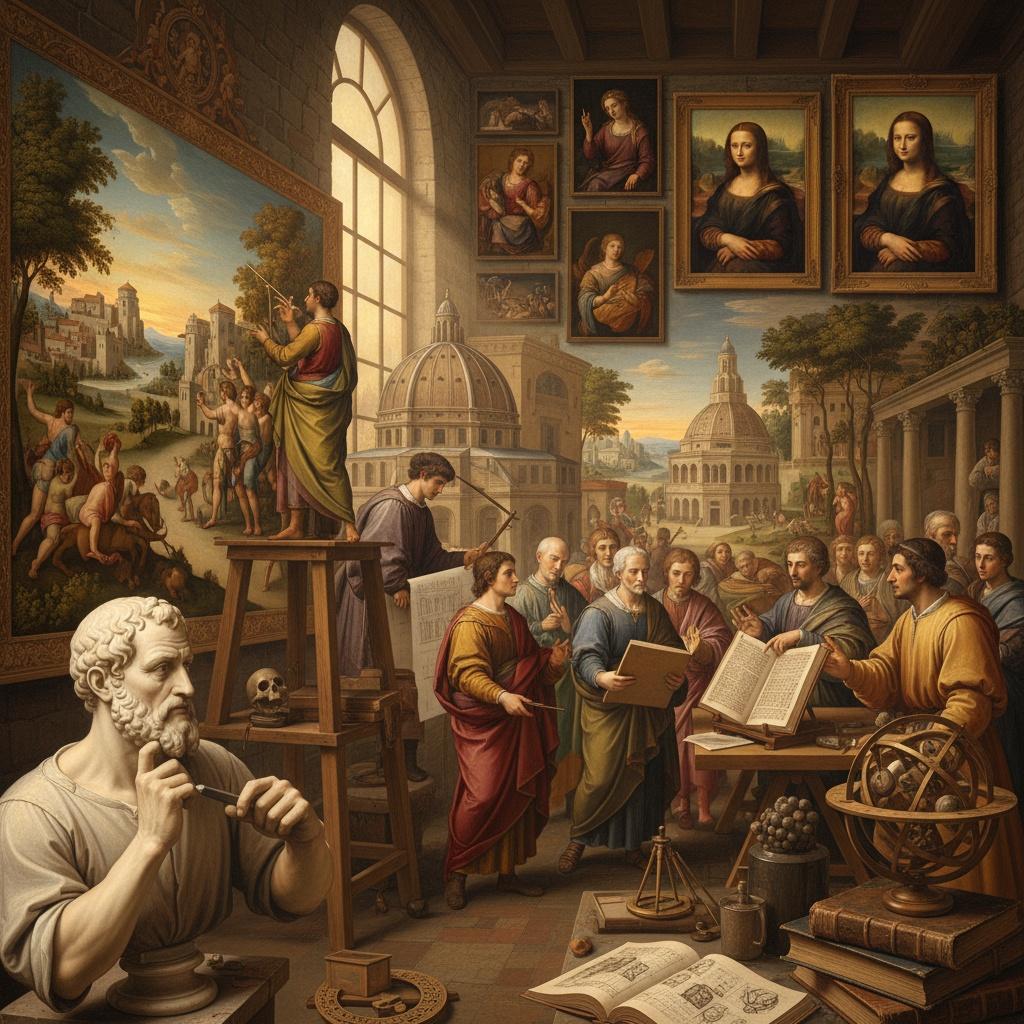
Leonardo da Vinci’s Mona Lisa is perhaps the most iconic example of this humanist approach. Her enigmatic smile, subtle expression, and lifelike rendering capture a sense of inner life that was unprecedented in earlier portraiture. Similarly, Michelangelo’s sculptures, such as David, celebrated the beauty and strength of the human form, drawing inspiration from classical Greek ideals but imbuing them with a new sense of vitality and emotional power. The emphasis on anatomy, achieved through meticulous study of the human body, was not merely about technical skill; it was an expression of reverence for God’s creation – humanity itself. This focus extended beyond individual portraits to depictions of biblical scenes, where figures were rendered with greater naturalism and emotional resonance.
Masterpieces & Movements: Exploring Iconic Works and Styles
The Renaissance wasn't a monolithic movement; it evolved through distinct phases, each characterized by unique stylistic features. The Early Renaissance (roughly 1400-1495) saw artists like Masaccio pioneering the use of linear perspective and chiaroscuro – the dramatic contrast between light and shadow – to create a sense of depth and realism in their paintings. The Holy Trinity by Masaccio, with its mathematically precise perspective, is a landmark achievement of this period.
The High Renaissance (approximately 1495-1527) represents the pinnacle of artistic achievement, embodied in the works of Leonardo da Vinci, Michelangelo, and Raphael. Da Vinci’s mastery of sfumato – a technique that creates soft, hazy outlines – is evident in paintings like The Last Supper and Virgin of the Rocks. Michelangelo's frescoes on the ceiling of the Sistine Chapel are breathtaking displays of anatomical knowledge, dramatic composition, and narrative power. Raphael, known for his harmonious compositions and graceful figures, exemplified classical ideals in works such as The School of Athens. Later, Mannerism emerged (roughly 1520-1600), characterized by elongated forms, exaggerated poses, and a more stylized approach to representation – a reaction against the perceived perfection of the High Renaissance.
Technological Innovation & Artistic Techniques of the Renaissance
The artistic breakthroughs of the Renaissance weren’t solely due to inspiration; they were also driven by technological innovation. The development of oil paint, borrowed from Northern Europe, allowed artists to achieve greater detail, richer colors, and more subtle gradations of tone than previously possible with tempera or fresco. This medium enabled them to build up layers of paint gradually, creating a sense of depth and luminosity.
The rediscovery of classical texts on perspective revolutionized the way artists represented space. Linear perspective, based on mathematical principles, allowed them to create illusions of three-dimensional depth on a two-dimensional surface. Chiaroscuro, the use of strong contrasts between light and shadow, added drama and realism to their compositions. Artists also meticulously studied anatomy, often through dissection, to accurately depict the human form. The integration of these techniques – oil paint, perspective, chiaroscuro, and anatomical study – transformed painting and sculpture, creating works that were both visually stunning and intellectually engaging.
The Enduring Impact: Legacy and Influence on Western Art
The Renaissance wasn’t merely a historical period; it was a cultural watershed that profoundly shaped the course of Western art. The emphasis on humanism, realism, and classical ideals continued to influence artists for centuries after the Renaissance ended. Baroque artists built upon the dramatic use of light and shadow pioneered by Renaissance masters. Neoclassical artists consciously emulated the forms and themes of ancient Greece and Rome. Even modern and contemporary artists have drawn inspiration from the Renaissance’s spirit of innovation and experimentation.
The legacy of the Renaissance extends beyond painting, sculpture, and architecture. It fostered a new way of thinking about the world—one that valued human reason, observation, and creativity. This intellectual revolution laid the foundation for the Scientific Revolution and the Enlightenment, shaping modern society in countless ways. The masterpieces created during this period continue to inspire awe and wonder, reminding us of the enduring power of art to illuminate the human condition.