

The Genesis of Baroque: Historical Context & Influences
The 17th century dawned on a Europe grappling with profound shifts – religious upheaval, burgeoning scientific inquiry, and the consolidation of powerful monarchies. From this dynamic crucible emerged the Baroque, an artistic movement that rejected the measured restraint of the Renaissance in favor of drama, exuberance, and emotional intensity. It wasn’t merely a stylistic shift; it was a visual manifestation of a world in flux. The Protestant Reformation had fractured the religious landscape, prompting the Catholic Church to launch the Counter-Reformation – a strategic effort to reaffirm its authority and inspire renewed faith. Art became a crucial weapon in this ideological battle, tasked with conveying the power and glory of the Church in ways that resonated deeply with the faithful.
This period also witnessed the rise of absolutism, where monarchs like Louis XIV of France wielded unprecedented control. These rulers weren’t simply heads of state; they were patrons of the arts, commissioning lavish works to project their power and magnificence. The Baroque aesthetic – its grandeur, opulence, and theatricality – perfectly suited this purpose. The scientific revolution, with figures like Galileo challenging established dogma, also played a role. While not directly influencing style, it fostered an environment of questioning and exploration that subtly permeated artistic expression. Artists began to explore new perspectives, dramatic lighting effects, and dynamic compositions, mirroring the era’s spirit of discovery.
Defining Characteristics: Drama, Grandeur, and Artistic Techniques
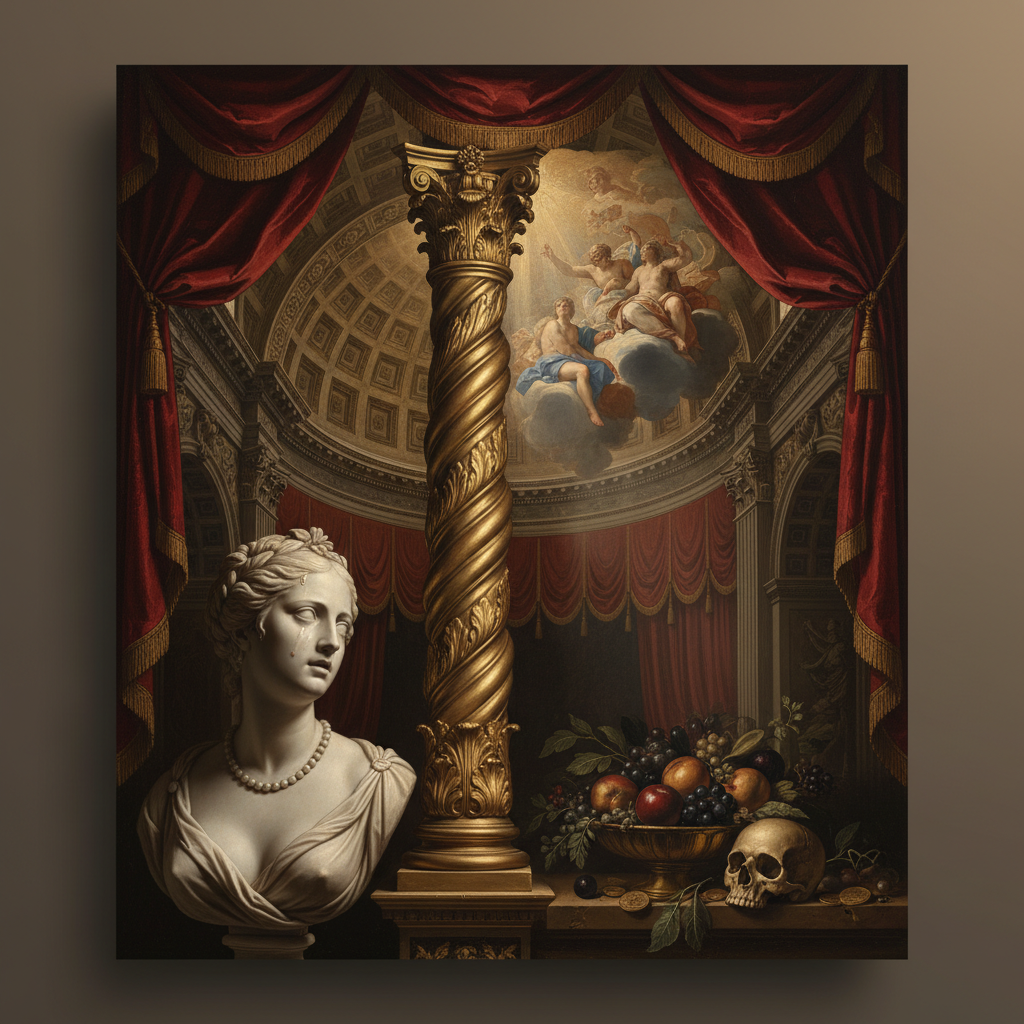
To understand Baroque art is to embrace its inherent contradictions. It's a style simultaneously characterized by intense realism and theatrical illusion, profound spirituality and worldly extravagance. Grandeur is perhaps the most immediately recognizable trait – a sense of scale and ambition that overwhelms the senses. This wasn’t simply about size; it was about creating an immersive experience for the viewer, drawing them into a world of heightened emotion and spiritual significance.
Central to this effect were innovative artistic techniques. The mastery of *chiaroscuro* – the dramatic contrast between light and shadow – became a hallmark of Baroque painting. Artists like Caravaggio pushed this technique to its limits, employing *tenebrism*, an even more extreme form where darkness dominates, spotlighting key figures and intensifying their emotional impact. This wasn’t merely about creating visual drama; it was about symbolizing the struggle between good and evil, faith and doubt. Beyond painting, Baroque sculpture embraced movement and dynamism. Artists like Gian Lorenzo Bernini sculpted figures caught in moments of intense action, often with swirling drapery and expressive gestures. In architecture, the emphasis shifted from classical symmetry to complex curves, ornate decoration, and a sense of theatrical space.
Baroque in Practice: Painting, Sculpture, and Architecture
The impact of Baroque principles is vividly apparent across various artistic disciplines. In painting, artists moved away from the idealized forms of the Renaissance towards more realistic depictions of human emotion and experience. Caravaggio’s *The Calling of Saint Matthew* exemplifies this shift – its gritty realism, dramatic lighting, and psychological intensity were revolutionary for their time. Peter Paul Rubens, another master of the Baroque, favored dynamic compositions, vibrant colors, and a sensuous depiction of the human form.
Sculpture reached new heights of expressiveness under Bernini. His *Ecstasy of Saint Teresa* is a masterpiece of theatricality – a swirling composition depicting the saint’s mystical experience with an angel. The sculpture isn't merely visually stunning; it evokes a powerful sense of spiritual fervor. Baroque architecture, perhaps most visibly, transformed cities across Europe. The Palace of Versailles in France stands as a testament to this style’s grandeur and opulence – its vast scale, ornate decoration, and meticulously landscaped gardens were designed to impress and intimidate. Churches like San Carlo alle Quattro Fontane in Rome showcase the Baroque penchant for complex curves, dramatic lighting, and an overall sense of theatrical space.
The influence extended beyond these iconic examples. Dutch Masters such as Rembrandt van Rijn explored psychological depth through masterful use of light and shadow, while Spanish painters like Diego Velázquez captured the dignity and complexity of their subjects with remarkable realism. Each region developed its own unique interpretation of Baroque principles, reflecting local traditions and cultural contexts.
The Enduring Legacy: Baroque's Influence on Subsequent Art Movements
Though the Baroque period eventually gave way to Rococo and Neoclassicism, its influence continues to resonate in art today. The emphasis on emotional intensity, dramatic lighting, and dynamic composition laid the groundwork for Romanticism in the 19th century. Artists like Eugène Delacroix drew inspiration from Baroque masters, embracing their passion and theatricality. Even beyond painting and sculpture, the Baroque aesthetic has left its mark on music, literature, and theater.
The legacy of Baroque art isn’t simply about replicating its style; it's about understanding its underlying principles – the power of emotion, the beauty of drama, and the ability to create immersive experiences that captivate and inspire. By studying the works of Caravaggio, Bernini, Rubens, and their contemporaries, we gain a deeper appreciation for the complexities of human experience and the enduring power of art to shape our perceptions of the world.