


Which is the most famous Surrealism painting?
No. 1 is Salvador Dalí's The Disintegration of Persistence of Memory (n.d.). Next come René Magritte's False Mirror (1928), Frida Kahlo's The Two Fridas (1939) and René Magritte's The Son of Man (1964).
Discover · Surrealism
1913 – 1967
The most famous Surrealism paintings are Salvador Dalí's The Disintegration of Persistence of Memory (n.d.), René Magritte's False Mirror (1928) and Frida Kahlo's The Two Fridas (1939). The list runs to 100 paintings by 25 artists, from 1913 to 1967, each with the collection that holds it today.

The list
No jargon: the painting, who made it, where it lives today and one thing to look for — scroll until one speaks to you.
Oil on canvas
The coast stretches out in muted ochre and brown, a desolate expanse where the solid world begins to fray. In this scene, time does not pass; it leaks. A fish lies scattered among the debris, its form caught in the same slow decay as the landscape itself. The brushwork is precise, rendering every texture with a photographic clarity that makes the impossible feel tangible.

René MagritteSurrealism
1928Oil on canvas (presumed)
The eye itself can be seen as representing consciousness or the self, while the sky symbolizes limitless imagination, inner thoughts, or even the vastness of existence.
Spotdark circular shapeeye reflecting a landscapesky within the iris

Frida KahloSurrealism
1939Oil on canvas173.5 × 173 cm
Bold lines define forms, while delicate strokes capture intricate details like lace and veins. One Frida, adorned in traditional Tehuana attire – representing her connection to Mexican culture and Rivera's preference – appears resolute.
Spotbloodstainsstormy backdroptwo Fridas

René MagritteSurrealism
1964Oil on canvas116 × 89 cm
At its heart, this artwork is rich in symbolism. The anonymity of the figure further amplifies this sense of mystery – he could be anyone, representing all of humanity caught in a state of veiled existence.
Spotapple obscuring the face

Salvador DalíSurrealism
1948Oil on canvas
These elements stand within a vast, barren landscape under a fiery red sky, creating a dramatic verticality and emphasizing the figures’ isolation. The desolate landscape and diminutive human figures further emphasize themes of loneliness, insignificance, and humanity’s relationship to power.
Spotdreamlike atmospherelong-legged elephants carrying obelisksbarren landscape

Frida KahloSurrealism
Collection of Jacques - Natasha Gelman, Mexico City1943Oil on canvas82 × 63 cm
The 1940s also saw increasing recognition of Mexicanidad – a nationalistic movement celebrating indigenous culture – which deeply influenced Kahlo’s artistic identity.
Spotjungle foliagemonkeysbird of paradise flower

Joan MiróSurrealism
MOMA - Museum of Modern Art, New York City1924Oil on canvas65 × 100 cm
Emerging during a pivotal moment in art history, this piece exemplifies the burgeoning Surrealist movement’s exploration of the subconscious. The title, “The Hunter,” adds another layer of intrigue, hinting at a narrative element that remains elusive yet compelling.
Spotbiomorphic formsabstract shapessymbolic imagery

1940Oil on canvas
Kahlo presents herself frontally, meeting the viewer's gaze with unwavering intensity. The composition is deliberately symmetrical, lending a sense of formality that belies the turbulent emotions simmering beneath the surface.
Spotblack catlush foliagethorn necklace

René MagritteSurrealism
Art Institute of Chicago1938Oil on canvas147 × 99 cm
The composition is strikingly symmetrical, anchored by the central fireplace mantelpiece. Commissioned by Edward James, a prominent Surrealist patron, the painting was intended to create a specific effect within his home – Magritte envisioned it “stabbing” guests ascending a staircase.
Spotclockmirrorlocomotive emerging from fireplace

Kelvingrove Art Gallery and Museum, Glasgow1951Oil on canvas205 × 116 cm
High above the tranquil waters of Catalonia, a figure of Christ floats, suspended in an extreme angle that defies the usual perspective of the crucifixion. Every line in this 1951 oil painting follows a deliberate, almost clinical precision.

Marc ChagallSurrealism
1918Oil on canvas45 × 56 cm
This work is deeply rooted in the modernist movement, specifically drawing from elements of Surrealism, Expressionism, and Chagall’s own unique artistic vision. Created during a period of significant upheaval following the Russian Revolution, this painting can be interpreted as an expression of hope and liberation amidst turmoil. Chagall’s personal life at the time—his recent marriage to Bella Rosenfeld—likely informed the depiction of two figures united in flight.
Spotflightconnection between figuresdreamlike quality

Los Angeles County Museum of Art1948Oil on canvas60.3 × 81.1 cm
Magritte's style in this piece is a unique blend of realism and surrealism. "The Treachery of Images" was created in 1948 during Magritte's mature period. By this time, he had already established himself as a leading figure in the Surrealist movement.
Spotits representation

Max ErnstSurrealism
Tate Modern, London1921Painting125 × 107 cm
The central figure, seated on a stool and holding a red baton or conductor's stick, dominates the composition, creating a sense of intrigue and wonder.
Spotsurreal and whimsical scene with vintage aesthetic

Salvador DalíSurrealism
1937Oil on canvas
Swans Reflecting Elephants (1937) is a quintessential example of Salvador Dalí's surrealist genius. Created in 1937, Swans Reflecting Elephants is part of Dalí's paranoiac-critical period, a time when he was at the height of his creative powers.
Spotdistorted formssurreal landscapedouble images

Joan MiróSurrealism
Buffalo AKG Art Museum1924–1925Oil painting66 × 93 cm
The painting is bustling with a variety of objects, figures, and abstract elements, creating a dynamic and playful atmosphere. Created between 1924 and 1925, "Harlequin's Carnival" is one of Miró's best-known pieces and a prime example of surrealist art.
Spotanthropomorphized objects like a ladder with an ear and eyegreen sphere representing the globecat symbolizing Miró's pet

René MagritteSurrealism
1953Oil on canvas (presumed)38 × 46 cm
Though firmly rooted in Surrealism, this piece displays elements reminiscent of naive art – a deliberate simplification of form and a bold application of color. Created in 1953, this work reflects Magritte's ongoing fascination with challenging perceptions of reality.
Spotsimplified ship designimpasto texturemonochromatic blue palette

Frida KahloSurrealism
Collection of Daniel Filipacchi, Paris1946Oil on canvas56 × 41 cm
The artwork features intricate patterns, bold outlines, and vivid colors, reflecting the artist's deep connection to her cultural heritage. Painted in oil, "Tree of Hope" showcases Kahlo's meticulous technique and attention to detail.
Spotreclining figure on a bedsurreal landscape with sunmoon

René MagritteSurrealism
Museum of Modern Art, New York City1928Oil on canvas (presumed)54 × 73 cm
Executed during Magritte’s pivotal Surrealist period, this work exemplifies his signature style: a meticulous rendering of ordinary objects placed in unexpected contexts. The red pillar could represent passion, confinement, or even danger – adding layers of complexity to the narrative.
Spotred architectural elementveiled facesanonymous figures

Salvador DalíSurrealism
Kunstmuseum Basel1937Oil painting
Dalí's meticulous technique and vivid imagination create a composition that is both intriguing and thought-provoking. The opened drawers in the blue female figure, known as "Femme-coccyx," are inspired by Sigmund Freud's psychoanalytical methods, which Dalí admired.
Spotphallic shapesburning giraffefemale figures with drawers

Francis PicabiaSurrealism
1927Oil on canvas99 × 75 cm
At first glance, the viewer is confronted by a striking figure: a woman with skin of an ethereal blue hue, her gaze framed by glasses that lend her an intellectual, yet otherworldly, presence.
Spotdogsa birdblue skin

Max ErnstSurrealism
Kunsthaus, Zürich1936Oil on canvas60 × 81 cm
The central focus of "The Entire City" is a towering, stepped pyramid-like structure bathed in the soft glow of a full moon. The composition is meticulously balanced, with the pyramid dominating the vertical space and drawing the eye upward toward the celestial body. "The Entire City" was created during a tumultuous period in Max Ernst's life. The pyramid in "The Entire City" symbolizes knowledge, mystery, and the passage of time.
Spotfull moonintricate vines and flowers in the foregrounddeep blues, warm browns, and vibrant greens

Francis BaconSurrealism
MOMA - Museum of Modern Art, New York City1946Oil on linen
Surrounding these figures are abstracted, insect-like or mechanical forms, suggesting intrusion, decay, or transformation. Created in 1946, this work emerges in the aftermath of World War II, a period marked by societal upheaval and existential questioning.
Spotbold brushworksymbolic motifscrucifixion scene

1922Oil on canvas132 × 147 cm
This piece occupies a pivotal position in Miró’s artistic development, showcasing his unique ability to synthesize diverse influences. Created during a period of significant artistic experimentation following World War I, this work reflects Miró’s deep connection to his native Catalonia.
Spotsymbolic objects (hatpitchershoe

René MagritteSurrealism
MOMA - Museum of Modern Art, New York City1927Oil on canvas150 × 195 cm
The composition unfolds within a pale peach-colored room, presenting five figures arranged in a deliberately staged manner. A nude woman reclines on a striking red chaise lounge, seemingly unaware – or perhaps resigned to – her situation.
Spotgramophone hornmen in bowler hatsshadowy figures

Paul DelvauxSurrealism
Tate Gallery, London1944Oil on canvas173 × 199 cm
Executed with oil on canvas (173 x 199 cm), Delvaux employs a refined technique characterized by smooth blending and meticulous detail. Created during World War II in Brussels, a city under bombardment, this work reflects the psychological turmoil of the era.
Spotskeletonred-dressed figureclassical architecture

Salvador DalíSurrealism
1954Oil on canvas
Following World War II and the dawn of the atomic age, Dalí sought to reconcile spirituality with the complexities of the universe.
Spothypercubegeometric abstractiondeconstruction of traditional iconography

Max ErnstSurrealism
Tate Gallery, London1923Oil on canvas81 × 64 cm
Created in 1923 during his first French period, this oil on canvas painting exemplifies Ernst's innovative approach to art, blending dreamlike imagery with symbolic depth. The artwork presents a surreal scene dominated by elongated humanoid figures suspended in mid-air, connected by strings to celestial bodies.
Spotfigure lying on the groundmuted color palette with earthy tones and blue spheresuse of vertical lines and organic shapes

H.R. GigerSurrealism
Oil painting
The composition is vertically oriented, centering on a circular aperture. A sickly color palette dominates the work, primarily utilizing various shades of green. Visible brushstrokes disrupt the surface, contributing to a sense of raw, gestural movement.

Octavio OcampoSurrealism
Oil
Surrealism is an art movement that emerged in the early 20th century, characterized by its exploration of the unconscious mind and dreamlike imagery. Forever Always depicts a life well-lived, with the faces of an elderly couple facing each other.

Frida KahloSurrealism
1938Oil on masonite60 × 49 cm
Kahlo's distinctive style blends elements of Surrealism with her signature folk art influences. The artwork employs a mix of sharp, geometric lines for the building's structure and softer, flowing lines for the clouds and figures.
Spotarchitectural elementshuman figures in a cloudy atmospheredreamlike imagery

Marc ChagallSurrealism
1924Oil on canvas198 × 108 cm
The violinist, with his green face, appears to float or dance above the rooftops of a misty village, creating a sense of weightlessness and otherworldliness. The deep purples, bright oranges, and vivid greens create a striking contrast against the more muted tones of the background. The composition is equally dynamic, with the central figure dominating the space and drawing the viewer's eye upward and around the canvas.
Spotvibrant colorsdynamic compositionfloating figures

Giorgio de ChiricoSurrealism
1917Oil on canvas90 × 60 cm
The central focus is the elongated human form, which dominates the vertical space of the canvas. The use of sharp, angular lines defines both the figure's anatomy and the mechanical structure it carries. These colors create a warm yet somewhat somber atmosphere.
Spotearthy tones with muted highlightssurreal and abstract depictionfusion of organic and inorganic forms

Joan MiróSurrealism
MOMA - Museum of Modern Art, New York City1937Oil on canvas81 × 117 cm
Miró presents a seemingly commonplace arrangement – bottles, fruit resembling a squash or pumpkin, and most notably, an aged and worn shoe. However, these familiar forms are far from traditionally rendered. This artwork exemplifies Miró’s unique position within 20th-century art.
Spotbottlesfruitvibrant colors

Salvador DalíSurrealism
Tate Gallery, London1937Oil on canvas51 × 78 cm
In the mid-ground, spectral figures representing Narcissus's rejected suitors stand as silent witnesses to his self-absorption. In fact, Dalí met Freud in 1938 specifically to discuss this painting and its connection to narcissism.

Frida KahloSurrealism
Museo Dolores Olmedo, Mexico City1944Oil on masonite33 × 43 cm
The central image – Kahlo's body split open to reveal a crumbling Ionic column in place of her spine – is a potent metaphor for her fractured physical state. Yet, despite this visible suffering, Kahlo maintains a stoic gaze, suggesting an unwavering determination to endure.
Spotnails piercing bodybarren landscapebroken spinal column

Tate Gallery, London1913Oil paint106 × 94 cm
The sky has a bluish-gray hue with hints of white clouds, adding to the overall somber mood. The technique appears to be a combination of detailed rendering for the main subjects (statue and bananas) and more loose, expressive brushwork for the background.
Spotpile of bananasarchitectural elements and landscape backgroundstatue of a woman with a blank circular head

René MagritteSurrealism
National Gallery of Art, Washington1933–1945Oil on canvas100 × 81 cm
This enigmatic painting presents a dreamlike scene of an open window revealing a serene landscape beyond. "The Human Condition" was created during Magritte's surrealist period, a time when he explored themes of perception, reality, and the subconscious mind.
Spotserene landscape with rolling hills and a solitary treemuted yet vibrant color palettelarge arched window as the central focus

1940Oil and tempera on canvas
The canvas titled Goethe or the metamorphosis of plants was brought into being by the hand of André Masson. In 1940, the artist captured a vision of organic change, translating the concept of botanical transformation into a visual language.

Salvador DalíSurrealism
1938Oil on canvas51 × 79 cm
Dalí's signature surrealist style is evident in this piece, blending realistic elements with fantastical ones to challenge perception. The painting employs meticulous detail and precise draftsmanship, characteristic of Dalí's technique. The background features a cloudy sky, adding to the surreal atmosphere.
Spotumbrella, lightbulb, hat, fish or sea creaturemuted color palette with shades of gray, black, and whitefluid lines and organic shapes

Pablo PicassoSurrealism
MoMA, New York City1939Oil on canvas205 × 345 cm
Picasso skillfully employs a technique rooted in Cubism’s fragmentation of form, yet infused with the fluidity characteristic of Surrealist exploration. Picasso deliberately layered symbolism into “Night Fishing at Antibes,” reflecting his preoccupation with existential themes.

Joan MiróSurrealism
MOMA - Museum of Modern Art, New York City1928Oil on canvas92 × 73 cm
Painted in 1928, this artwork exemplifies Miró's unique ability to merge bold colors, intricate shapes, and imaginative symbolism into a cohesive and emotionally resonant composition. The artwork is a vibrant and complex composition that exudes movement and energy. Miró's use of bold primary colors —red, blue, and yellow—contrasted with earthy tones like green, brown, and beige, adds to the overall vibrancy and energy of the piece. The vibrant colors and dynamic shapes create an emotional response that is both engaging and uplifting.
Spotvibrant color palettedynamic shapes and lineslarge white shape with red accents

Tarsila do AmaralSurrealism
1928Oil on canvas
Following the death of the artist in 1973, the painting passed to the art gallery of Pietro Maria Bardi. The ownership changed again in 1995 when the painting was auctioned at Christie's in New York City.

Frida KahloSurrealism
1949Oil on canvas
Within her form resides another woman cradling an infant – a potent image of nested generations, birth, and the cyclical nature of life. The lack of traditional perspective further enhances the surreal quality, drawing the viewer into an intimate and otherworldly space.
Spotmaternal figurecelestial bodies (moon & sun)hands

Marc ChagallSurrealism Surrealism
1960Oil on canvas48 × 59 cm
At the heart of this celestial dance stands a man and a woman, their presence anchoring a scene populated by figures that drift through an otherworldly landscape.

Max ErnstSurrealism
1937Oil on canvas114 × 146 cm
Measuring 114 x 146 cm, the expansive scale of “The Angel of Hearth and Home” contributes to its dramatic impact and reinforces Ernst’s desire to convey a sense of overwhelming presence.

René MagritteSurrealism
San Francisco Museum of Modern Art1952Oil on canvas80 × 100 cm
The composition features both horizontal and vertical lines that create structure, guiding the viewer's eye through the intricate scene. "Personal Values" is a prime example of Magritte's ability to transform ordinary objects into extraordinary compositions.
Spotbrush resting on top of the mirrorsky-filled ceiling with cloudslarge comb leaning against the wall

Remedios VaroSurrealism
Oil on fiberboard
Varo’s genius lies in her ability to weave together disparate elements—the mundane object placed beside the impossible structure, the everyday figure engaged in an arcane ritual.

Giorgio de ChiricoSurrealism
Moderna Museum, Stockholm1917Oil on canvas
Born in Greece but deeply rooted in Italian culture, de Chirico's art is a fusion of his Mediterranean heritage and European influences. The open book in the foreground symbolizes knowledge, learning, or the passage of time, adding layers of meaning to the composition.
Spotopen book with an orange covershirtless man with closed eyesarchitectural columns and walls

Joan MiróSurrealism
MACBA, Barcelona1953Oil painting reproduction
Composition and Symbolism The painting features a large red circle at its center, reminiscent of a sun, surrounded by various shapes and colors that create a sense of movement and energy.

Neue Nationalgalerie, Berlin1967Oil on canvas
Isabel Rawsthorne was a pivotal figure in Bacon’s life and work. It builds upon his earlier explorations of figure-in-space compositions but introduces a new element – a sense of Rawsthorne’s engagement with her surroundings.
Spotdistorted figuresabstracted backgroundgeometric shapes

George GroszSurrealism
1928Oil on canvas108 × 81 cm
The color palette of "The Agitator" is predominantly pastel, featuring soft hues of pinks, blues, and yellows, contrasted with more vivid colors like red and green. Created during the Weimar Republic era, "The Agitator" reflects the social and political turmoil of the time. Grosz was a key figure in the Berlin Dada and New Objectivity movements, known for his satirical paintings that critiqued society, politics, and the rise of fascism.
Spotdense and intricate detailingsurreal and dreamlike atmospherevibrant and chaotic composition

Max ErnstSurrealism
1943Oil on canvas108 × 141 cm
The Eye of Silence is a painting by German dadaist and surrealist Max Ernst, created in 1943-44. Born in 1891, Max Ernst was a pioneering figure in the dada and surrealist movements.

Paul DelvauxSurrealism
1947153 × 210 cm
Measuring an impressive 153 x 210 cm, the piece draws viewers into a dreamlike world brimming with psychological tension and ambiguous narratives. The scene unfolds within what appears to be a luxurious train station waiting room or parlor car.
Spottrain stationreclining nude figuresambiguous atmosphere

Frida KahloSurrealism
Frida Kahlo Museum, Mexico City1954Oil on masonite51 × 60 cm
Understanding “Viva la Vida” requires acknowledging the extraordinary circumstances surrounding its creation. Watermelons, particularly in Mexican culture, hold deep significance, often associated with fertility, abundance, and the cyclical nature of life and death—themes intimately linked to the Day of the Dead celebrations.
Spotwatermelon inscription

National Gallery of Art, Washington1955Oil on canvas167 × 268 cm
The artist’s careful blending of light and shadow amplifies the emotional intensity, drawing viewers into a contemplative, almost spiritual experience. The landscape in the background, reminiscent of Catalonia, grounds the scene in Dalí’s personal and cultural heritage, adding layers of meaning and emotional resonance.
Spotemotional depthluminous central figuresymbolic landscape

Pablo PicassoSurrealism
WikiArt.org1929Oil on canvas46 × 61 cm
Emerging in the early 1920s, this artistic movement sought to liberate art from the constraints of rational thought and objective representation. The composition itself is laden with symbolic weight. The red blanket, often associated with passion and desire, adds a layer of sensual intrigue.
Spoteveryday objects

Remedios VaroSurrealism
The scene unfolds within the surreal realm of The other clock 3, a painting that pulls the viewer into a dreamlike state. The composition pulls the eye toward the central figure, where the boundary between the physical and the mystical seems to blur.

Musée National d'Art Moderne, Centre Pompidou1961Oil on canvas270 × 355 cm
The artwork features a striking minimalist composition dominated by a vast expanse of vivid blue background. Against this serene backdrop, an elongated red shape on the left side and a series of black circles create a dynamic interplay of color and form.
Spotvast expanse of blue backgroundelongated red shape on the left sideseries of black circles receding into the distance

René MagritteSurrealism
1963Oil on canvas
In "The Big Family," he employs a technique that appears to involve painting, possibly with oils or acrylics, to achieve smooth blends and textured brushstrokes. Created in 1963, "The Big Family" reflects Magritte's mature period as a Surrealist artist.
Spotcloud-filled bird as the central focusgradient green skytextured waves or ocean foam

Max ErnstSurrealism
1945Oil on canvas
Birds circle overhead and perch precariously on branches, while a colossal, dragon-like beast dominates the periphery, creating an asymmetrical composition that pulls the eye through a landscape of psychological turbulence.

H.R. GigerSurrealism
Painting
The painting titled hr giger pII the great beast p13 presents a large creature characterized by multiple limbs and appendages. The structure of this entity includes various arms and legs that appear integrated into its primary mass. The composition focuses on the intricate details of the creature's physical form and its textured surfaces. The use of light and shadow emphasizes the depth of the open mouth and the protrusion of the tongue, creating a sense of physical volume within the scene.

BalthusSurrealism
Art Institute of Chicago1937Oil on canvas88 × 78 cm
Balthus's style in this piece is a harmonious fusion of realism and subtle surrealism. The girl's relaxed posture and direct gaze create an engaging connection with the viewer, evoking feelings of nostalgia and serenity.
Spotpresence of a catmuted yet vibrant color paletterelaxed pose of the girl

Paul KleeSurrealism
Kunstmuseum St. Gallen1934Oil painting62 × 48 cm
A prominent parasol anchors the composition, sheltering the woman as if protecting her from the turbulent winds of change. Technique & Texture Klee’s distinctive approach to painting is evident in the layering of brushstrokes that create an astonishingly textured surface.

Octavio OcampoSurrealism
Oil on canvas
A woman sits beneath a massive, circular object, her hands raised as if to shield herself from an unseen force. The colors are deep and saturated, casting a surreal glow over the entire scene.

Giorgio de ChiricoSurrealism
1917Oil on canvas
De Chirico's work blends elements of Cubism and Futurism, characterized by its emphasis on geometric abstraction and fragmented forms. The towering abstract figure may represent modernity, fragmentation, or the dehumanizing effects of urban life.
Spotgeometric shapestall, geometric figureurban backdrop

1943Oil on canvas
A child gazes intently at this scene of birth, while other figures populate the background, adding depth and narrative complexity. The figure emerging from the egg is often interpreted as symbolizing America, seen by Dalí as a land of opportunity and growth during this period.

1925Oil on canvas115 × 88 cm
The genesis of Dancer lies in Miró’s fascination with a performance he witnessed at Eden Concert in Barcelona. Miró’s influence extends far beyond Surrealism, impacting generations of artists working in Abstract Expressionism and Color Field painting.

Yves TanguySurrealism
1932Oil on canvas35 × 45 cm
Created in 1932, "The Ribbon of Excess" reflects the Surrealist movement's exploration of the unconscious mind and dream imagery. This openness makes "The Ribbon of Excess" a fascinating conversation starter and a source of personal reflection.
Spotearthy tones with splashes of bright colorsrough, textured surface with visible brushstrokeschaotic arrangement of abstract shapes

Ricardo MartínezSurrealism
Oil on canvas30 × 40 cm
The background remains indistinct, a muted expanse that pushes the figures toward the viewer, ensuring the focus remains entirely on the tension between the two faces. The color language here is deliberate and stark.

Max ErnstSurrealism
Solomon R. Guggenheim Museum, New York City1940Oil on canvas129 × 96 cm
At its core, two nude women engage in an intimate yet confrontational interaction, their contrasting appearances emphasizing themes of identity, transformation, and societal roles. The background features a reflective, abstracted mirror or painting, adding layers of introspection and alternate realities to the composition.
Spotfantastical imagerymythic birdsymbolic figures

Frida KahloSurrealism
Museo Dolores Olmedo, Mexico City1932Oil on masonite31 × 38 cm
Created during a period of immense emotional turmoil following a devastating miscarriage, this oil-on-Masonite canvas offers a rare and unfiltered glimpse into Kahlo's inner world – a world marked by physical suffering, artistic expression, and an unwavering determination to confront her pain. The painting immediately commands attention with its stark realism juxtaposed against the surreal arrangement of symbolic objects floating around the central figure, creating a visual narrative that is both unsettling and deeply affecting.
Spotfetusmiscarriage

Marc ChagallExpressionism/Surrealism
Kunstmuseum, Basel1947Oil or tempera on canvas148 × 189 cm
Central to the composition is a fiery, winged figure that appears to be falling or ascending, evoking themes of spiritual conflict, transformation, and divine intervention. Created in 1947, this work exemplifies a powerful blend of expressionism and surrealism.
Spotallegorical figuressymbolic imagerydynamic composition

Pablo PicassoSurrealism
Museum Santa Maria del Parto1930Oil on canvas50 × 65 cm
Pablo Ruiz y Picasso, born October 25, 1881, in Málaga, Spain, demonstrated artistic talent from infancy. Analytical Cubism focused on dissecting forms using monochrome colors, while Synthetic Cubism reintroduced color and texture through collage elements—a bold step toward abstraction.

Salvador DalíSurrealism
1929Oil painting110 × 151 cm
The central focus of this artwork is an oversized, yellow rock formation with intricate cut-out patterns that dominate the composition. The rock's lace-like appearance contrasts sharply with the smaller elements in the background: a figure lying on the sand and another small rock formation.
Spotsmall figure lying on the sand

Man RaySurrealism
MOMA - Museum of Modern Art, New York City1922Photogram
Unlike traditional painting, where artists meticulously render form and color, Ray embraced chance and spontaneity, trusting the unpredictable interplay of light and shadow to reveal hidden truths about human experience.

Wifredo LamSurrealism
1947Oil on canvas77 × 102 cm
The Dream is a surrealist artwork by Wifredo Lam. Created in 1947, this oil on canvas captures a fractured reality through its specific dimensions of 77 x 102 cm. The paint sits upon the fabric in layers, forming a window into a subconscious landscape.

René MagritteSurrealism
Oil on canvas, gouache
Inspired by the works of John Atkinson Grimshaw and William Degouve de Nuncques, this artwork is part of a series that explores the paradoxical image of a nocturnal landscape beneath a sunlit sky.
Spotbalanced compositioncontrast between light and darkreflections on the ground

Joan MiróSurrealism
MOMA - Museum of Modern Art, New York City1925Oil on canvas251 × 200 cm
Miró's "The Birth of the World" is a prime example of his surrealist style, characterized by its dreamlike quality and playful use of geometric shapes. The black triangle could symbolize stability or direction, while the white and red circles might represent opposing forces or elements.
Spotred circleyellow lineblack triangle

Yves TanguySurrealism
Albright-Knox Art Gallery, New York City1942Oil on canvas
As a piece by a prominent surrealist artist, it holds significant cultural and artistic value, representing a pivotal moment in 20th-century art history.
Spotabstract landscapedreamlike compositionbiomorphic forms

Francis BaconExpressionist Surrealism
1944Oil on canvas
The interplay of light, shadow, and the heavy texture of the brushwork provides a rich visual experience that can anchor a sophisticated gallery wall or serve as a daring centerpiece in a modern, minimalist setting.

Marc ChagallSurrealism
1945Oil on canvas122 × 120 cm
The inclusion of various figures engaged in diverse activities—dancing, playing instruments, conversing—reflects the richness and complexity of Jewish life and community. The painting’s composition also subtly references traditional Jewish wedding customs, incorporating elements of ritual and ceremony into its visual narrative. Chagall’s unique blend of dreamlike imagery, symbolic language, and emotional intensity distinguishes his work from other Surrealists, establishing him as a singular voice within the artistic landscape.
Spotbirdschandelier

Max ErnstSurrealism
1942Oil on canvas195 × 233 cm
Through these figures, Ernst explores the capacity for the irrational to take flight, much like the human imagination itself.

Frida KahloSurrealism
Hoover Gallery, San Francisco1933Oil painting and collage46 × 55 cm
The artwork is a feast for the eyes with its dense, intricate details and vivid color palette. Warm earth tones dominate the scene, creating a sense of warmth and nostalgia, while cooler blues and greys in the sky and water add depth and balance.

Salvador DalíSurrealism
Tate Gallery, London1936Oil painting60 × 60 cm
The color palette is dominated by earthy tones of brown, beige, and yellow, creating a warm and familiar atmosphere. The landscape in the background might represent the external world, contrasting with the internal chaos of the foreground.
Spotdistorted face or head in the foregroundhands, rocks, and other organic shapeslandscape background with rolling hills and a cloudy sky

Marcel DuchampSurrealism
1914Oil on canvas
The artwork presents a flattened perspective of a chocolate mill, reduced to its essential geometric components: cylinders and basket-like structures. Created on the eve of World War I, Chocolate Grinder reflects a period of rapid industrialization and societal upheaval.
Spotbasket-like formsgeometric abstractionflattened perspective

Fundació Joan Miró, Barcelona1933Oil on canvas130 × 163 cm
Fluid lines guide the eye through the composition, while sharp angles add contrast and depth. The rich and varied color palette is a feast for the senses, featuring bold primaries like red, yellow, and blue, as well as secondary colors such as green and orange.
Spotgeometric formsdynamic compositionbold use of color

Pablo PicassoSurrealism
Musée National Picasso, Paris1925Oil on canvas130 × 97 cm
The influence of Proto- Cubism is evident in the fragmented planes of color and form that characterize “The Kiss,” foreshadowing the fully realized Cubist style that would emerge shortly thereafter.

MOMA - Museum of Modern Art, New York City1917Oil on canvas
De Chirico's unique style merges elements of surrealism with abstract expressionism, resulting in a composition that is both chaotic and deliberate. The artwork features multiple layers and frames within the painting, each containing different images and objects.

Paul KleeExpressionist Surrealism
Zentrum Paul Klee, Bern1940Oil44 × 46 cm
Using a technique reminiscent of ancient hieroglyphics, he cleverly wove the German word "Tod" —meaning death—into the composition's structural elements. The central figure, a stylized death’s head, emerges from the earth, brandishing a golden ring or sun that seems to both beckon and warn.

Salvador DalíSurrealism
1954Oil on canvas
At first glance, "Melting Watch" presents a bizarre scene: a pocket watch seemingly draped over a branch or ledge, appearing to melt and droop like soft cheese. The distant figures add a sense of scale and isolation, further emphasizing the painting’s themes of existentialism.

Pablo PicassoSurrealism
1938Oil on canvas
Bold lines delineate forms with precision yet simultaneously convey dynamism, while vibrant hues pulsate with energy. The Berardo Collection Museum in Lisbon, Portugal, houses an impressive assemblage of modern and contemporary art —a space dedicated to showcasing groundbreaking movements like Cubism.

Max ErnstSurrealism
Museum Folkwang, EssenOil on canvas
The composition centers around two distinct yet interconnected figures. A colossal, shadowy form dominates the scene – vaguely humanoid but rendered with an unsettling ambiguity. Max Ernst (1891-1976) was a restless innovator who experimented with various techniques throughout his career, including frottage and collage.
Spotimpasto textureradiating linesdeep blues

Claude CahunSurrealism
Tate Britain, London1928Gelatin silver print
Untitled is a photograph created in 1928 by Claude Cahun and Marcel Moore. The surface exhibits a grainy texture characteristic of early 20th-century photographic processes. This is seen in the photomontage Untitled and the 1926 work Entre nous.

Giorgio de ChiricoSurrealism
1914Oil on canvas124 × 99 cm
The prominent clock tower acts as a silent sentinel, representing the relentless march of time and the inevitable approach of mortality—themes deeply rooted in the philosophical influences of Nietzsche and Schostakovich that shaped de Chirico’s formative years.

René MagritteSurrealism
Oil on canvas (presumed)
Magritte is, of course, a cornerstone of the Surrealist movement, and Clairvoyance exemplifies his signature style. The cluttered table—strewn with paint tubes and brushes—hints at the chaotic process underlying artistic endeavor. Born in 1898, René Magritte navigated a period of immense social and artistic upheaval.
Spotdistorted perspectivedramatic lightingdark bird

H.R. GigerSurrealism
Painting
The structure is composed of cold, interlocking metal pipes and industrial tubing, creating a landscape where flesh has been replaced by machinery. By utilizing a stark black-and-white palette, the work strips away the distractions of color to focus the eye on texture, light, and shadow.

Frida KahloMexican Surrealism
1940Masonite60 × 40 cm
The painting utilizes masonite as its substrate, reflecting Kahlo's preference for economical materials that allowed her to focus entirely on conveying emotion rather than technical prowess—a hallmark of her primitivist style. The flower delicately placed in Frida's hair is another potent symbol.

BalthusSurrealism
1934Oil on canvas161 × 138 cm
The painting depicts a provocative encounter between a music teacher, a woman in her early twenties, and a student, a girl thought to be about twelve years old. The composition features a muted palette and focuses on the depiction of human anatomy and form.


Max ErnstSurrealism
1941Oil on canvas
The overall composition stirs a sense of curiosity and introspection, making it an ideal centerpiece for inspiring creativity and conversation in any space.
Spotmythical motifssymbolic imageryorganic forms
Styles
Surrealism95 · 1913–1967
Expressionist Surrealism2 · 1940–1944
Surrealism Surrealism1 · 1960–1960
Expressionism/Surrealism1 · 1947–1947
Mexican Surrealism1 · 1940–1940
See them for real
Planning a trip? New York City has 12 of them, 8 at the MOMA - Museum of Modern Art.
Museum of Modern Art
Tate Modern
Kunstmuseum Basel
Meet the artists

1904–1989 · Spain · 13
Spanish Surrealist of melting pocket watches and paranoiac-critical imagery, rendered with precise draftsmanship and dreamlike detail.
1. The Disintegration of Persistence of Memory, 5. The Elephants, 10. Christ of Saint John of the Cross, 14. Swans Reflecting Elephants, 19. The Burning Giraffe, 26. Crucifixion (Corpus Hypercubus), 34. The Metamorphosis of Narcissus, 39. The Enigma of Hitler, 55. The Sacrament of the Last Supper, 66. Geopolitical Child Watching the Birth of the New Man, 74. The Enigma of Desire, My Mother, 84. Autumn Cannibalism, 90. Melting Watch

1898–1967 · Belgium · 12
Belgian Surrealist known for placing ordinary objects in unexpected contexts, creating dreamlike tension through unsettling juxtapositions.
2. False Mirror, 4. The Son of Man, 9. Time Transfixed, 12. The treachery of images (This is not a pipe), 16. The seductive, 18. The Lovers, 24. The Menaced Assassin, 37. The Human Condition, 46. Personal Values, 59. The Big Family, 77. The Empire of Light, 95. Clairvoyance

1907–1954 · Mexico · 11
Mexican Surrealist known for symbolic self-portraits blending folk art with raw personal pain and medical imagery.
3. The Two Fridas, 6. Self-Portrait with Monkeys, 8. Self-Portrait with Thorn Necklace and Hummingbird, 17. Tree of Hope, 30. The Suicide of Dorothy Hale, 35. The Broken Column, 43. The Love Embrace of the Universe, 54. Viva la Vida, 71. Henry Ford Hospital, 83. My Dress Hangs There, 97. Self Portrait Dedicated to Dr Eloesser

1893–1983 · Spain · 10
Spanish Surrealist known for biomorphic shapes and a symbolic, dreamlike visual language that bridges the gap between the seen and the imagined.
7. Catalan Landscape (The Hunter), 15. Harlequin's Carnival, 23. The Farm, 33. Still Life with Old Shoe, 41. Dutch Interior I, 49. The Smile of the Flamboyant Wings, 58. Blue II, 67. Dancer, 78. The Birth of the World, 86. Painting

1891–1976 · Germany · 10
German Surrealist pioneer of frottage and collage who explored the irrational through texture.
13. The Elephant Celebes, 21. The Entire City, 27. Of This Men Shall Know Nothing, 45. The Angel of Hearth & Home, 52. The Eye of Silence, 60. Temptation of St. Anthony, 70. The Robing of the Bride, 82. Surrealism and Painting, 92. Les dieux obscurs, 100. Napoleón en el desierto

1888–1978 · Greece · 6
Greek-born Italian founder of Metaphysical art known for haunting, dreamlike town squares.
32. Hector and Andromache, 36. The Uncertainty of the Poet, 48. The Child's Brain, 65. The Great Metaphysician, 88. Great Metaphysical Interior, 94. Turin Spring
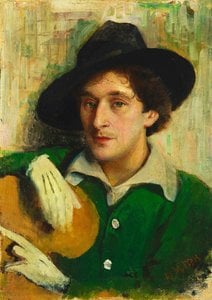
1887–1985 · Belarus · 5
Russian-born modernist of dreamlike symbolism and vibrant colors, featuring flying lovers and scenes from Jewish folklore in a poetic style.
11. Over the town, 31. The Green Violinist, 44. Song of Songs III, 72. The Falling Angel, 81. The Wedding Candles
Good to know
Hover a card to see the answer.
No. 1 is Salvador Dalí's The Disintegration of Persistence of Memory (n.d.). Next come René Magritte's False Mirror (1928), Frida Kahlo's The Two Fridas (1939) and René Magritte's The Son of Man (1964).
In order: The Disintegration of Persistence of Memory (Salvador Dalí), False Mirror (René Magritte), The Two Fridas (Frida Kahlo), The Son of Man (René Magritte), The Elephants (Salvador Dalí), Self-Portrait with Monkeys (Frida Kahlo), Catalan Landscape (The Hunter) (Joan Miró), Self-Portrait with Thorn Necklace and Hummingbird (Frida Kahlo), Time Transfixed (René Magritte) and Christ of Saint John of the Cross (Salvador Dalí).
Start with New York City (12), London (7) and Mexico City (4): together they hold 23 of the 100, at the MOMA - Museum of Modern Art, the Tate Gallery and the Art Institute of Chicago.
Ranked by the number of their works among the 100 most famous Surrealism paintings: Salvador Dalí (13), René Magritte (12), Frida Kahlo (11), Joan Miró (10) and Max Ernst (10).
Yes: 19 of the 100 can be ordered as a hand-painted oil reproduction, from $175, and 19 as a canvas print, from $42.
The MOMA - Museum of Modern Art holds 8 of the 100, followed by the Tate Gallery (5) and the Art Institute of Chicago (2). New York City is the city with the most: 12.
Joan Miró's Blue II (1961, Musée National d'Art Moderne), 270 × 355 cm. The smallest is Frida Kahlo's Henry Ford Hospital (1932, Museo Dolores Olmedo), 31 × 38 cm.
Giorgio de Chirico's The Uncertainty of the Poet (1913, Tate Gallery), dated 1913. The most recent is Francis Bacon's Portrait of Isabel Rawsthorne standing in a street in Soho (1967, Neue Nationalgalerie), dated 1967.
91 of the 100 are oil paintings, 2 use tempera and 0 are frescoes; 0 are painted on wood and 74 on canvas.
Salvador Dalí leads the ranking with 13 of the 100 paintings, including The Disintegration of Persistence of Memory, The Elephants and Christ of Saint John of the Cross.
By recognition: Wikipedia articles in the most languages (Wikidata sitelinks), our manual ranking and page visits. Several records of one painting count once; details, copies and studies are excluded.
Fall in love?
Choose your size and frame: 19 of them are painted by hand for you, from $175.


We looked at all the Surrealism paintings in our collection and put the best-known first: the ones Wikipedia writes about in the most languages, the ones our team rates highest and the ones our visitors open most. Each painting is listed once — no details or copies.
 Famous Impressionism paintings
Water Lilies · Claude Monet
 Famous Baroque paintings
Las Meninas · Diego Velázquez
 Famous Romanticism paintings
Liberty Leading the People · Eugène Delacroix
 Famous Realism paintings
Nighthawks · Edward Hopper
 Famous Post-Impressionism paintings
Starry Night · Vincent van Gogh
 Famous Expressionism paintings
The Scream · Edvard Munch
 Famous Neoclassicism paintings
Napoleon at the St. Bernard Pass · Jacques-Louis David
 Famous Renaissance paintings
Mona Lisa · Leonardo da Vinci
 Famous Symbolism paintings
The Birth of Venus · William-Adolphe Bouguereau
 Famous Mannerism paintings
Burial of the Count of Orgaz · El Greco
 Famous Rococo paintings
The Swing · Jean-Honoré Fragonard
 Famous Art Nouveau paintings
The kiss · Gustav Klimt
 500–1000
Famous Early Medieval paintings
The Night Revels of Han Xizai · Gu Hongzhong
 1000–1300
Famous High Medieval paintings
Crucifix · Cimabue
 1300–1400
Famous Late Medieval paintings
Our Lady of the Don · Theophanes the Greek
1400–1600
Famous Renaissance paintings
Mona Lisa · Leonardo da Vinci
 1600–1800
Famous Early Modern paintings
The Girl with a Pearl Earring · Johannes Vermeer
1800–1900
Famous 19th Century paintings
Starry Night · Vincent van Gogh
 1900–1980
Famous Modern paintings
Guernica · Pablo Picasso
 1980–
Famous Contemporary paintings
Girl with Balloon · Banksy