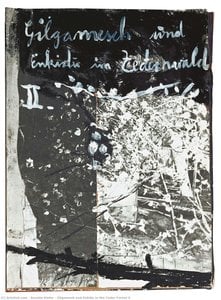
The Weight of Memory: The Art of Anselm Kiefer
Anselm Kiefer stands as one of the most profound and distinctive voices within Neo-Expressionism, an artistic movement that emerged in the late 1970s and early 1980s as a powerful reaction against the austerity of Minimalism and Conceptual Art. Born in Donaueschingen, Germany, in 1945, Kiefer’s very existence is inextricably linked to the aftermath of World War II. His oeuvre transcends mere representation; it is an immersive, visceral exploration of German history—particularly its profound trauma—expressed through monumental canvases and sculptures that demand a physical confrontation from the viewer. His artistic journey began with rigorous studies under Peter Dreher and Horst Antes at the Hochschule für Gestaltung Weinheim-Basel, where he established a foundation for his famously experimental approach to artmaking.
The soul of Kiefer’s work is deeply rooted in the literary shadows of the past, most notably through the haunting poetry of Paul Celan. The fragmented language and preoccupation with loss found in Celan's verse profoundly impacted Kiefer’s thematic concerns, specifically regarding the Holocaust and its lingering, often silent, effects on German collective memory. Through his art, Kiefer seeks to give form to this silence, exploring themes of absence, destruction, and the heavy burden of historical legacy. His work does not merely depict history; it attempts to excavate it from the layers of time and debris.
Materiality and the Alchemy of Destruction
What truly distinguishes Kiefer from his contemporaries is his deliberate and masterful use of materials that carry immense symbolic weight. He treats the canvas not as a flat surface, but as a site of geological and historical transformation. By incorporating unconventional elements such as ash, straw, clay, lead, and shellac, he creates works that feel less like paintings and much more like artifacts recovered from a scorched earth. Each material serves a narrative purpose:
- Ash: Derived from burned forests, ash acts as a poignant reminder of ecological devastation and the literal and metaphorical destruction wrought by war.
- Straw: This element introduces a sense of fragility, representing the vulnerability of human life against the overwhelming forces of nature and history.
- Lead: A heavy, somber medium that provides a sense of permanence and the crushing weight of the past.
Kiefer’s technique is characterized by an intense, thick impasto layering. He applies paint in multiple, dense coats to create textured surfaces that resemble scorched earth or ancient geological formations. This tactile approach is not merely decorative; it actively engages the viewer, forcing them to confront the sheer physicality of his process. The scale of his canvases often mirrors the monumental scale of the historical events he addresses, creating an environment where the viewer is swallowed by the texture and gravity of the work.
Legacy and Historical Significance
As his career progressed, Kiefer’s international recognition grew through works that challenged the boundaries between painting, sculpture, and installation. His ability to weave together myth, alchemy, and historical catastrophe has secured his place as a titan of contemporary art. Whether he is depicting the brooding shadows of Roman emperors or the desolate landscapes of post-war Europe, his work remains a continuous dialogue with the concept of time itself. Through his mastery of texture and symbolism, Anselm Kiefer has created a visual language capable of articulating the most difficult aspects of human history, ensuring that the scars of the past are never truly erased, but rather transformed into profound works of enduring significance.
Questions & Answers
How many artworks by Anselm Kiefer are available to browse?
You can browse 39 artworks by Anselm Kiefer on the All Artworks page.
Can I browse Anselm Kiefer's works by mood?
The Mood Room of Anselm Kiefer is a page that arranges the artist's artworks by mood.
How is Anselm Kiefer's career divided into periods?
A chronological account of Anselm Kiefer's work is available on the artist's Chronicle page, where the artworks pass in order of creation, chapter by chapter.