The History and Origins of Lenbachhaus
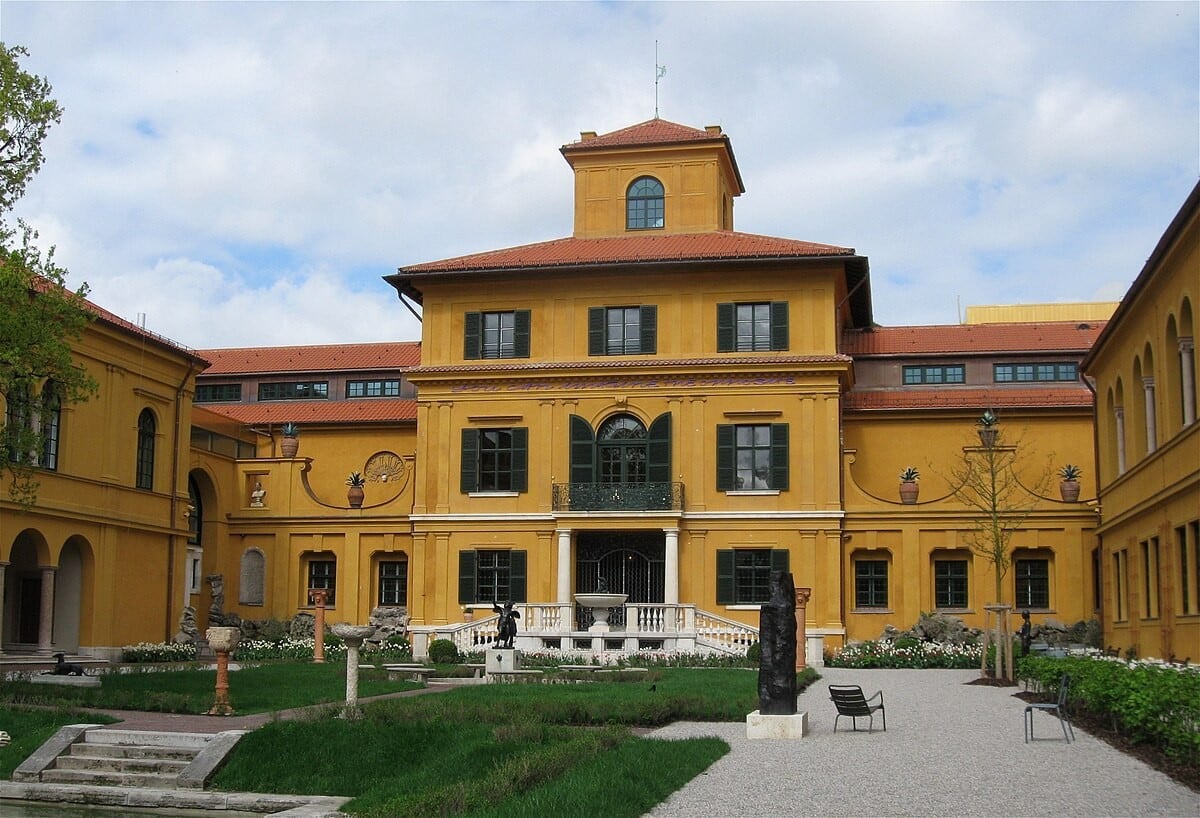
The Lenbachhaus is located in Munich, Germany, within the Kunstareal district. The building was established in 1887. Originally designed as a private residence, the structure was built for the painter Franz von Lenbach. It functioned as a villa before its transition into a public institution. The city of Munich acquired the property in 1924. Following this acquisition, the museum opened to the public in 1929.
The institution's development is tied to the evolution of the building from a domestic space to a municipal gallery. The site has undergone several stages of expansion and renovation to accommodate its growing collections. These changes have allowed the museum to house works from the 19th century through to contemporary art. The history of the site reflects the broader cultural shifts in Munich during the early 20th century.
The Architecture of the Historic Villa
The building originated as a Florentine-style villa for the painter Franz von Lenbach. Gabriel von Seidl designed the structure between 1887 and 1891. The architecture reflects the specific tastes of a successful portrait painter, maintaining an intimate scale that distinguishes it from larger public institutions. This domestic character remains a defining feature of the site.
The museum underwent several structural changes over the decades. Hans Grässel managed expansions between 1927 and 1929. Later, the 1972 extension was demolished to make way for a new building. In 2009, the latest wing was closed to the public to facilitate a significant expansion and restoration project led by Norman Foster. This modern addition features a facade clad in metal tubes that subtly shift in color over time, creating a dialogue between the historical villa and contemporary design.
The Blue Rider Art Collection
The Lenbachhaus holds the largest collection of works by the Blue Rider artists. This group, which sought to develop an increasingly abstract visual language, was founded by Wassily Kandinsky, Franz Marc, Gabriele Münter, Alexej von Jawlensky, and Marianne von Werefkin. Their shared belief in a spiritual dimension of art informed the diverse formal modes of expression found within the collection.
The movement's presence in Munich was established through early exhibitions. The group mounted its first exhibition at Galerie Thannhauser in the winter of 1911. A second exhibition followed in the spring of 1912 at Galerie Goltz. These gatherings helped define the group's trajectory from the nascent modernism of early oil studies to the more developed works of the period.
The collection includes significant paintings that illustrate the evolution of the movement. Notable examples include:
- Blue Horse I, 1911 - Marc Franz Moritz Wilhelm
- Murnau with church 1, 1910 - Wassily Wassilyevich Kandinsky
- Rose Garden, 1920 - Paul Klee
Masterpieces of the Museum Collection
The collection is anchored by the works of the Blue Rider group. Wassily Kandinsky’s explorations of abstraction are central to this assembly, alongside the symbolic animal paintings of Franz Marc. Gabriele Münter and August Macke are also represented, providing insight into the shared aesthetic of this movement. These works reflect a departure from traditional representation toward a new visual language.
Beyond the Blue Rider, the museum holds significant pieces by members of the Munich Secession. The holdings include thought-provoking sculptures and installations by Joseph Beuys. The museum also preserves the output of significant Munich artists, such as Jan Polack and Christoph Schwarz, which provides a foundation for the later modern movements on display.
- Blue Horse I, 1911 - Marc Franz Moritz Wilhelm
- Rose Garden, about 1920 - Paul Klee
- Salome, 1906 - Franz Ritter von Stuck
- Childhood Friends, about 1855 - Spitzweg, Carl Friedrich
- Family von Lenbach, 1903 - Franz Seraph von Lenbach
Major Donations and Artistic Legacies
The depth of the collection is largely defined by significant contributions from the artists themselves. In 1957, Gabriele Münter provided the institution with 1000 Exponate. This substantial gift fundamentally shaped the museum's holdings, ensuring that the visual language of the Blue Rider movement remained central to the permanent collection. The donation included approximately 330 of Wassily Kandinsky's watercolors and drawings, alongside 90 oil paintings by her partner. These works provide a direct link to the creative processes of the early 20th century.
Beyond the Münter donation, the museum maintains a significant presence of works by other key figures of the era. The collection includes various pieces by August Macke and Alexej von Jawlensky. These additions allow for a continuous study of the evolution of abstraction and the development of the Munich school of painting. The presence of these works ensures the institution remains a primary site for examining the transition from traditional representation to modern expression.
- Blue Horse I, 1911 - Marc Franz Moritz Wilhelm
- Rose Garden, 1920 - Paul Klee
- Botanical Theater, 1934 - Paul Klee
- Salome, 1906 - Franz Ritter von Stuck