The Cubist names to know

Famous Cubist Painters: Our Top 47

If you remember one Cubist painter, make it Pablo Picasso (1881–1973), the name behind The Old Guitarist and Saltimbanques (The Family of Saltimbanques). After that come Georges Braque, Fernand Léger, Juan Gris and Robert Delaunay. Our 47 picks go from Carl Newman (born 1858) to Dia al-Azzawi (born 1939), from 20 countries.

How we picked them. We list the artists our catalogue links to Cubist, from the most famous down. Artists born after 1955 that we cannot yet check on Wikidata are left out. The Wikipedia number shows in how many of our 32 languages Wikipedia writes about them.

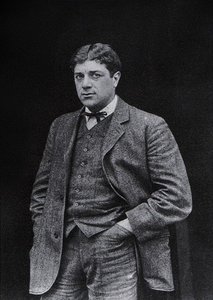
  1. The Old Guitarist by Pablo Picasso1Pablo Picasso
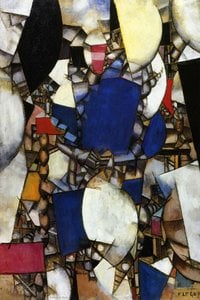
  2. The Patience by Georges Braque2Georges Braque
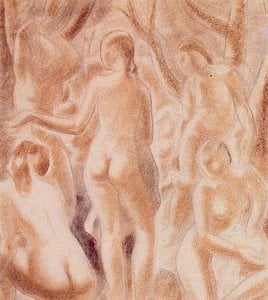
  3. Nudes in the Forest by Fernand Léger3Fernand Léger

Quick facts

Cubist in a nutshell

  • 47Artists
  • 1858–1939Years of birth
  • 20Countries of birth
  • 4Women
  • 1Living artists
  • 7,389Works in our catalogue
Cities with most births
New York City (2), London (2), Málaga (1), Argenteuil (1)

Meet them one by one

The 47 famous Cubist painters, from most famous down

1of 47

Pablo Picasso

Spanish From Málaga Cubism, Surrealism On Wikipedia in 32 of 32 languages

Pablo Picasso

In the city of Málaga, Spain, a boy named Pablo Picasso entered the world on October 25, 1881. The family's path eventually led them through A Coruña and into Barcelona, but these years of growth were shadowed by a quiet, heavy grief.

See them at To walk through the halls of the Musée Picasso in Paris is to enter a sanctuary where the artist's restless spirit remains palpable.

Works to know · Their 100 best-known works

3of 47

Fernand Léger

French From Argentan ['Cubism', 'Tubism', "Section d'Or", 'Purism', 'Dadaism', 'Constructivism'] On Wikipedia in 27 of 32 languages

Fernand Léger

The story of Fernand Léger begins in the village of Argentan, located in the Orne region of Lower Normandy. His early years were shaped by the quietude of the French countryside and the presence of his mother, Marie-Adèle Daunou.

See them at To encounter the physical presence of his vision, one might travel to the south of France, specifically to Biot in the Alpes-Maritimes.

Works to know · Their 100 best-known works

4of 47

Juan Gris

Spanish From Madrid Cubism, Synthetic Cubism, Analytical Cubism On Wikipedia in 31 of 32 languages

Juan Gris

Between 1904 and 1905, he began to formalize his artistic training by studying painting under the academic artist José Moreno Carbonero. By 1905, a shift in identity occurred when he adopted the name Juan Gris.

See them at Tracing the physical presence of his work requires a trip through several major collections.

Works to know · Their 100 best-known works

5of 47

Robert Delaunay

French From Paris Orphism, Cubism On Wikipedia in 27 of 32 languages

Robert Delaunay

Robert Delaunay, born in Paris in 1885, emerged as a pivotal figure in the radical artistic shifts of the early twentieth century. He initially pursued decorative arts, but quickly gravitated towards painting, exhibiting at the Salon des Indépendants as early as 1904, demonstrating a burgeoning talent and ambition.

Taught Lyonel Feininger #7

Works to know · Their 100 best-known works

6of 47

Vladimir Tatlin

Ukrainian/Russian From Moscow Constructivism On Wikipedia in 26 of 32 languages

Vladimir Tatlin

Vladimir Yevgrafovich Tatlin, born in Kharkiv, Ukraine in 1885, was more than just an artist; he was a philosophical architect of a new world order, a pivotal figure who shattered the conventions of early 20th-century art and laid the foundations for Constructivism.

Works to know · Their 100 best-known works

9of 47

Alexander Archipenko

Ukrainian-American From Kyiv Cubism, Avant-Garde On Wikipedia in 30 of 32 languages

Alexander Archipenko

Born in Kyiv, Ukraine, in 1887, Alexander Porfyrovych Archipenko emerged as a revolutionary force in the world of sculpture, boldly challenging conventional notions of form and space. His journey began amidst a vibrant artistic milieu in his native city, where he received early training at the Kyiv Art School from 1902 to 1905, followed by studies with Serhiy Svetoslavsky.

Works to know · Their 100 best-known works

10of 47

Jacques Lipchitz

Lithuanian-French-American From Druskininkai Cubism, Crystal Cubism On Wikipedia in 17 of 32 languages

Jacques Lipchitz

Born Chaim Jacob Lipschitz in 1891 in the Lithuanian town of Druskininkai, Jacques Lipchitz’s artistic path was one dramatically shaped by displacement and innovation. He enrolled at the École des Beaux-Arts and the Académie Julian, immersing himself in the vibrant communities of Montmartre and Montparnasse.

Works to know · Their 100 best-known works

11of 47

Ben Nicholson

British From Buckinghamshire ['Abstract art', 'Cubism', 'Constructivism'] On Wikipedia in 13 of 32 languages

Ben Nicholson

Ben Nicholson was born into an artistic family; his father, Sir William Nicholson, and mother, Mabel Pryde, were both accomplished painters.

Works to know · Their 100 best-known works

12of 47

Marie Laurencin

French From 10ᵗʰ arrondissement of Paris Cubism, Art Deco On Wikipedia in 23 of 32 languages

Marie Laurencin

Raised primarily by her mother following her father’s early death, Laurencin received a foundational education in technique at Sèvres porcelain manufactory before gravitating towards oil painting and enrolling at the Académie Humbert. Laurencin quickly found herself drawn to the revolutionary ideas circulating within the circles of Pablo Picasso and Guillaume Apollinaire.

Works to know · Their 100 best-known works

13of 47

Olga Rozanova

Russian From Melenki ['Suprematism', 'Cubo-Futurism', 'Neo-Primitivism'] On Wikipedia in 17 of 32 languages

Olga Rozanova

Born in 1886 in Melenki, Russia, to a family steeped in both civic duty – her father was a district police officer – and religious tradition through her Orthodox priest grandfather, Rozanova’s path diverged from convention as she pursued the burgeoning world of modern art in Moscow.

Works to know · Their 100 best-known works

14of 47

Jean Metzinger

French From Nantes ['Neo-Impressionism', 'Fauvism', 'Cubism', 'Crystal Cubism'] On Wikipedia in 22 of 32 languages

Jean Metzinger

Divisionism and Fauvism: Between 1904 and 1907, he explored Divisionist and Fauvist styles, incorporating elements of Cézanne's work. He also associated with prominent artists like Robert Delaunay and later Max Jacob, Guillaume Apollinaire, Georges Braque, and Pablo Picasso.

Works to know · Their 100 best-known works

15of 47

Lyubov Popova

Russian From Krasnovidovo Avant-Garde, Constructivism On Wikipedia in 19 of 32 languages

Lyubov Popova

Lyubov Sergeyevna Popova, born in 1889 in the burgeoning textile town of Ivanovo, Russia, was more than just a painter; she was a visionary architect of form and color, a dedicated theorist, and a fervent believer in art’s power to reshape society.

Works to know · Their 100 best-known works

16of 47

Carl Newman

American Figurative art, Cubism

Carl Newman

Carl Newman (1858-1932) remains a compelling, if often overlooked, figure in the landscape of late 19th and early 20th century American art. Born in Germany – though details surrounding his earliest life are somewhat elusive – Newman’s artistic journey took root in Philadelphia, where he became a student at the prestigious Pennsylvania Academy of the Fine Arts in both 1876 and 1879.

Works to know · Their 100 best-known works

17of 47

Roger de La Fresnaye

French From Le Mans Cubism, Symbolism On Wikipedia in 15 of 32 languages

Roger de La Fresnaye

Roger de la Fresnaye, born into the aristocratic lineage of the La Fresnayes in 1885, was a painter whose brief but incandescent career illuminated the burgeoning landscape of early 20th-century art. Studying under Maurice Denis and Paul Sérusier at the Académie Ranson, he absorbed their emphasis on flattened forms, decorative patterns, and evocative color palettes – qualities evident in works like Woman with Chrysanthemums.

Works to know · Their 100 best-known works

18of 47

Amadeo de Souza-Cardoso

Portuguese From Mancelos Cubism, Futurism, Modernism On Wikipedia in 16 of 32 languages

Amadeo de Souza-Cardoso

Born on November 14, 1887, in Manhufe, a picturesque parish of Amarante in Portugal, his brief but intensely creative life was marked by a restless spirit and an unwavering dedication to artistic innovation.

Works to know · Their 100 best-known works

19of 47

Rufino Tamayo

Mexican From Oaxaca de Juárez Figurative Abstraction, Surrealism On Wikipedia in 16 of 32 languages

Rufino Tamayo

Rufino del Carmen Arellanes Tamayo, born in Oaxaca City, Mexico, in 1899, emerged as a pivotal figure in 20th-century Mexican art —a painter who dared to forge his own path amidst the fervent nationalism and political fervor of his time. In 1917, Tamayo enrolled at the Escuela Nacional de Artes Plásticas at San Carlos, a prestigious institution that exposed him to European artistic movements like Cubism, Impressionism, and Fauvism.

Works to know · Their 100 best-known works

20of 47

Arthur Segal

Romanian From Iași ['Expressionism', 'Dadaism']

Arthur Segal

Arthur Segal (1875 – 1944) stands as a compelling figure in the turbulent landscape of early 20th-century European art, a Romanian artist whose career unfolded across multiple continents and artistic movements.

Works to know · Their 100 best-known works

22of 47

Joaquín Torres García

Uruguayan-Spanish From Montevideo Constructivism, Abstraction On Wikipedia in 13 of 32 languages

Joaquín Torres García

Immersing himself in the vibrant Catalan art scene, he studied at the School of Fine Arts, Baixas Academy, and Saint Lluc Artists’ Circle. It was here he encountered a generation of artists who would become titans of modernism: Pablo Picasso, Ricard Canals, Manolo Hugue, Joaquim Mir, and Isidre Nonell.

Works to know · Their 100 best-known works

23of 47

Nathan Altman

Ukrainian, Russian, Soviet From Vinnytsia Cubism, Cubo-Futurism, Constructivism On Wikipedia in 12 of 32 languages

Nathan Altman

Nathan Isaachevich Altman stands as a monumental figure in the annals of Russian avant-garde art, embodying a unique confluence of Jewish heritage, Cubist experimentation, and fervent engagement with the shifting tides of Soviet ideology. His early studies at Odessa Art College laid the groundwork for a burgeoning talent, culminating in his debut exhibition in 1906 where he immediately established himself as a promising artist of his generation.

Works to know · Their 100 best-known works

24of 47

André Lhote

French From Bordeaux Cubism, Section d'Or

André Lhote

This self-directed learning, combined with the influence of Gauguin and Cézanne, laid the groundwork for his distinctive Cubist vision. Leaving Bordeaux in 1905, Lhote moved to Paris, determined to establish himself as an artist.

Works to know · Their 100 best-known works

25of 47

María Blanchard

Spanish From Santander Cubism, Expressionism On Wikipedia in 14 of 32 languages

María Blanchard

María Gutiérrez-Cueto y Blanchard, born in Santander, Spain, in 1881, was an artist whose life and work were inextricably linked by a profound sense of adversity. The year 1903 marked a turning point as Blanchard moved to Madrid to enroll at the Real Academia de Bellas Artes de San Fernando.

Works to know · Their 100 best-known works

26of 47

Julio González

Spanish From Barcelona Cubism On Wikipedia in 15 of 32 languages

Julio González

Born in Barcelona on September 21st, 1876, González was destined for a life intertwined with metal. He descended from a lineage steeped in the meticulous traditions of craftsmanship; his grandfather was a goldsmith in Galicia, and his father, Concordio González, operated a workshop specializing in the fabrication of gold, silver, and iron.

Works to know · Their 100 best-known works

27of 47

Louis Marcoussis

Polish-French From Warsaw Cubism, School of Paris, Impressionism On Wikipedia in 11 of 32 languages

Louis Marcoussis

Louis Marcoussis, born Ludwik Kazimierz Wladyslaw Markus or Ludwig Casimir Ladislas Markus in Łódź, Poland around 1878 or 1883, stands as a singular figure within the vibrant School of Paris movement. His artistic journey spanned from Kraków Academy of Fine Arts to establishing himself as a respected artist in France, where he embraced Cubism alongside fellow luminaries like Joan Miró and Pablo Picasso.

Works to know · Their 100 best-known works

28of 47

Raymond Duchamp-Villon

French From Damville Cubism On Wikipedia in 18 of 32 languages

Raymond Duchamp-Villon

Raymond Duchamp - Villon, born Pierre-Maurice-Raymond Duchamp in 1876 in Damville, France, stands as a pivotal figure in the dramatic shift from traditional sculpture to the dynamic language of modernism. Coming from a remarkably creative family—brothers Jacques Villon, Marcel Duchamp, and sister Suzanne Duchamp -Crotti all achieved prominence as artists—Raymond initially pursued medicine at the Sorbonne.

Works to know · Their 100 best-known works

29of 47

Armand Schonberger

French Cubism

Armand Schonberger

Armand Schonberger (1885–1974) stands as a captivating figure in the tapestry of early 20th-century modernism, a painter whose brush bridged the delicate light of Impressionism with the fractured, rhythmic energy of Cubism. Born in Galgóc and later finding his artistic soul within the vibrant bohemian circles of Munich and Budapest, Schonberger’s life was a continuous dialogue between tradition and the avant-garde.

Works to know · Their 100 best-known works

30of 47

Gabriel Portillo Del Toro

Mexican Cubism

Gabriel Portillo Del Toro

In the grand tapestry of Mexican modernism, few artists managed to weave together the structural rigor of European avant-garde with the soulful warmth of regional tradition as masterfully as Gabriel Portly Del Toro. Born in 1927 in the culturally rich landscape of Colima, Mexico, his life and work served as a bridge between the monumental social realism of the muralist movement and the fragmented, rhythmic beauty of Cubism.

Works to know · Their 100 best-known works

32of 47

Alfred Maurer

From New York City On Wikipedia in 9 of 32 languages

Alfred Maurer

Born: April 21, 1868, New York City, United States of America. Self-Portrait from his early Parisian period reflects a youthful optimism and burgeoning artistic confidence.

Works to know · Their 100 best-known works

33of 47

Dia al-Azzawi

Iraqi From Baghdad Hurufiyya, Abstract Expressionism

Dia al-Azzawi

Dia al-Azzawi, born in Baghdad in 1939, is more than just a painter; he’s a visual poet of the Arab world, an artist whose life and work are inextricably linked to the turbulent history and enduring cultural heritage of Iraq.

Works to know · Their 100 best-known works

34of 47

Emilio Pettoruti

Argentine From La Plata ['Cubism', 'Futurism', 'Constructivism'] On Wikipedia in 8 of 32 languages

Emilio Pettoruti

Mentorship with Emilio Coutaret: He studied caricature portraits under architect and drawing instructor Emilio Coutaret at the Museum of Natural History's drawing school. Italian Renaissance Influence: In Florence, Pettoruti immersed himself in the study of Renaissance masters like Fra Angelico, Masaccio, and Giotto.

Works to know · Their 100 best-known works

37of 47

Lajos Vajda

Hungarian From Zalaegerszeg Avant-garde, Cubism, Surrealism On Wikipedia in 7 of 32 languages

Lajos Vajda

Born in 1908 in Zalaegerszeg, Hungary, into a humble Jewish family, Vajda’s early life was marked by both movement and the shadows of hardship. His artistic journey began under the rigorous tutelage of István Csók at the Hungarian Academy of Fine Arts in Budapest, a period that established his foundational mastery of composition.

Works to know · Their 100 best-known works

38of 47

István Farkas

Hungarian From Budapest École de Paris, Cubism On Wikipedia in 5 of 32 languages

István Farkas

Born in Budapest in 1887 into a family deeply rooted in publishing—his father, József Wolfner, was the founder of Singer and Wolfner – Farkas’s early life was marked by both privilege and profound loss. Farkas’s artistic education began under the guidance of László Mednyánszky in Budapest, an early exposure to the burgeoning Hungarian art scene.

Works to know · Their 100 best-known works

39of 47

William Roberts

British From London English Cubism On Wikipedia in 6 of 32 languages

William Roberts

In the turbulent landscape of early twentieth-century British art, few figures navigated the tension between tradition and the avant-garde as uniquely as William Patrick Roberts.

Works to know · Their 100 best-known works

40of 47

Vilhelm Lundstrøm

Norwegian From Sundby ['Symbolism', 'Expressionism'] On Wikipedia in 4 of 32 languages

Vilhelm Lundstrøm

vilhelm henry lundstrøm, a prominent figure in early danish experimental art, left an indelible mark on the world of modernism. born on may 26th, 1893, in copenhagen, denmark, lundstrøm's life was a testament to his passion for innovation and artistic expression.

Works to know · Their 100 best-known works

41of 47

William Dobell

From Cooks Hill On Wikipedia in 6 of 32 languages

William Dobell

Gillies initially enrolled at the Edinburgh College of Art but his studies were interrupted by service in World War I with the Royal Engineers.

Works to know · Their 100 best-known works

42of 47

Karl Knaths

American From Eau Claire Cubism, Modernism On Wikipedia in 3 of 32 languages

Karl Knaths

Karl Knaths, born in Eau Claire, Wisconsin, in 1891, emerged as a pivotal figure in the development of American Modernism. Gale facilitated an introduction to Dudley Crafts Watson at the Milwaukee Art Institute, providing Knaths with formal training and setting him on a course toward professional artistry. The watershed moment in his development arrived with the 1913 Armory Show in Chicago.

Works to know · Their 100 best-known works

43of 47

Nikos Hadjikyriakos-Ghikas

Greek From Athens Cubism On Wikipedia in 6 of 32 languages

Nikos Hadjikyriakos-Ghikas

nikos hadjikyriakos-ghika, a renowned greek painter, sculptor, engraver, writer, and academic, was born on february 26, 1906, in athens, greece. his family's legacy in the greek war of independence of 1821 significantly influenced his early life. between 1918-1922, his family recognized his artistic potential, leading to his study under the artist parthenis.

Works to know · Their 100 best-known works

44of 47

Franco Gentilini

Italian From Faenza Roman School; Archaic Style On Wikipedia in 5 of 32 languages

Franco Gentilini

Franco Gentilini (1909-1981) stands as a significant figure in Italian modernist art, particularly within the Roman School movement—a collective dedicated to reviving classical artistic principles while embracing contemporary sensibilities. Early Life & Education: Gentilini’s formative years were spent honing his craft as a ceramicist in Faenza, Italy—a region renowned for its rich tradition of artisanal pottery.

Works to know · Their 100 best-known works

45of 47

Robert Colquhoun

Scottish From Kilmarnock Expressionism On Wikipedia in 3 of 32 languages

Robert Colquhoun

Robert Colquhoun (1914–1962) stands as a pivotal figure in British art of the mid-century, recognized for his distinctive expressionist style —characterized by stark contrasts of color, simplified forms, and an unflinching portrayal of human emotion. Born in Kilmarnock, Scotland, he possessed an innate artistic sensibility nurtured by early exposure to the landscapes of Ayrshire, which would profoundly inform his visual vocabulary.

Works to know · Their 100 best-known works

46of 47

Cliff Rowe

British Socialist Realism; New Realism On Wikipedia in 1 of 32 languages

Cliff Rowe

His early years were defined by a dual education: the formal training at the Wimbledon School of Art and the Royal College of Art, which sharpened his technical draughtsmanship, and the raw, lived experience of London’s streets, which forged his political soul. A pivotal moment occurred in 1930 when he traveled to the Soviet Union.

Works to know · Their 100 best-known works

47of 47

Emilio Tadini

Spanish From Milan Catalan Modernisme On Wikipedia in 1 of 32 languages

Emilio Tadini

Emilio Tadini was far more than a painter; he was a profound architect of meaning within the Italian cultural landscape. Born in Milan in 1927, his journey began not with a brush, but with the written word. A poet, novelist, and essayist, Tadini first emerged onto the prestigious literary stage in 1947 through Elio Vittorini's magazine, Politecnico.

Works to know · Their 100 best-known works

Pictures worth knowing

Famous Cubist works to recognise

  1. The Old Guitarist by Pablo Picasso

    The Old Guitarist

    Pablo Picasso

    Art Institute of Chicago

  2. The Patience by Georges Braque

    The Patience

    Georges Braque

    1942

  3. Nudes in the Forest by Fernand Léger

    Nudes in the Forest

    Fernand Léger

    1910 · Kröller-Müller Museum, Otterlo

  4. Still Life with Flowers by Juan Gris

    Still Life with Flowers

    Juan Gris

    1912 · MOMA - Museum of Modern Art, New York City

  5. Simultaneous Contrasts Sun and Moon by Robert Delaunay

    Simultaneous Contrasts Sun and Moon

    Robert Delaunay

    MOMA - Museum of Modern Art, New York City

  6. Monument to commemorate the Third International by Vladimir Tatlin

    Monument to commemorate the Third International

    Vladimir Tatlin

    1920

  7. The honeymooners by Lyonel Feininger

    The honeymooners

    Lyonel Feininger

When it happened

Cubist, step by step

  1. 1900
  2. 1908
  3. 1910
  4. 1910
  5. 1911
  6. 1911
  7. 1911
  8. 1912
  9. 1912
  10. 1913
  11. 1913
  12. 1914
  13. 1914
  14. 1915

Fun figures

The numbers behind the list

Just the names

List of 47 famous Cubist painters to know

  1. 1Pablo PicassoPablo PicassoSpanish · 1881–1973
  2. 2Georges BraqueGeorges BraqueFrench · 1882–1963
  3. 3Fernand LégerFernand LégerFrench · 1881–1955
  4. 4Juan GrisJuan GrisSpanish · 1887–1927
  5. 5Robert DelaunayRobert DelaunayFrench · 1885–1941
  6. 6Vladimir TatlinVladimir TatlinUkrainian/Russian · 1885–1953
  7. 7Lyonel FeiningerLyonel FeiningerGerman-American · 1871–1956
  8. 8Gino SeveriniGino SeveriniItalian · 1883–1966
  9. 9Alexander ArchipenkoAlexander ArchipenkoUkrainian-American · 1887–1964
  10. 10Jacques LipchitzJacques LipchitzLithuanian-French-American · 1891–1973
  11. 11Ben NicholsonBen NicholsonBritish · 1894–1982
  12. 12Marie LaurencinMarie LaurencinFrench · 1883–1956
  13. 13Olga RozanovaOlga RozanovaRussian · 1886–1918
  14. 14Jean MetzingerJean MetzingerFrench · 1883–1956
  15. 15Lyubov PopovaLyubov PopovaRussian · 1889–1924
  16. 16Carl NewmanCarl NewmanAmerican · 1858–1932
  17. 17Roger de La FresnayeRoger de La FresnayeFrench · 1885–1925
  18. 18Amadeo de Souza-CardosoAmadeo de Souza-CardosoPortuguese · 1887–1918
  19. 19Rufino TamayoRufino TamayoMexican · 1899–1990
  20. 20Arthur SegalArthur SegalRomanian · 1875–1944
  21. 21Max WeberMax WeberAmerican · 1881–1961
  22. 22Joaquín Torres GarcíaJoaquín Torres GarcíaUruguayan-Spanish · 1874–1949
  23. 23Nathan AltmanNathan AltmanUkrainian, Russian, Soviet · 1889–1970
  24. 24André LhoteAndré LhoteFrench · 1885–1962
  25. 25María BlanchardMaría BlanchardSpanish · 1881–1932
  26. 26Julio GonzálezJulio GonzálezSpanish · 1876–1942
  27. 27Louis MarcoussisLouis MarcoussisPolish-French · 1878–1941
  28. 28Raymond Duchamp-VillonRaymond Duchamp-VillonFrench · 1876–1918
  29. 29Armand SchonbergerArmand SchonbergerFrench · 1885–1974
  30. 30Gabriel Portillo Del ToroGabriel Portillo Del ToroMexican · 1927–2013
  31. 31C. R. W. NevinsonC. R. W. NevinsonBritish · 1889–1946
  32. 32Alfred MaurerAlfred Maurer1868–1932
  33. 33Dia al-AzzawiDia al-AzzawiIraqi · born 1939
  34. 34Emilio PettorutiEmilio PettorutiArgentine · 1892–1971
  35. 35Aurelio Arteta ErrastiAurelio Arteta ErrastiSpanish · 1879–1940
  36. 36Morris KantorMorris KantorRussian · 1896–1974
  37. 37Lajos VajdaLajos VajdaHungarian · 1908–1941
  38. 38István FarkasIstván FarkasHungarian · 1887–1944
  39. 39William RobertsWilliam RobertsBritish · 1895–1980
  40. 40Vilhelm LundstrømVilhelm LundstrømNorwegian · 1893–1950
  41. 41William DobellWilliam Dobell1899–1970
  42. 42Karl KnathsKarl KnathsAmerican · 1891–1971
  43. 43Nikos Hadjikyriakos-GhikasNikos Hadjikyriakos-GhikasGreek · 1906–1994
  44. 44Franco GentiliniFranco GentiliniItalian · 1909–1981
  45. 45Robert ColquhounRobert ColquhounScottish · 1914–1962
  46. 46Cliff RoweCliff RoweBritish · 1904–1988
  47. 47Emilio TadiniEmilio TadiniSpanish · 1927–2002

Good questions

What people ask about Cubist

Read more

More stories on ArtsDot.com

Other styles

Famous artists of other styles

Other eras

Famous artists of other eras

Famous paintings

Famous art, style by style

Keep exploring

Where to go next