New to Gothic? Start here

38 Famous Gothic Artists You Should Know

If you remember one Gothic artist, make it Duccio di Buoninsegna (1255–1319), the name behind Rucellai Madonna and Polyptych No. 28 (The Holy Virgin with the Christ Child and Four Saints). After that come Simone Martini, Gentile da Fabriano, Pisanello and Stefan Lochner. Our 38 picks go from Master Mateo (born 1161) to Jan Baegert (born 1465), from 5 countries.

How we picked them. We list the artists our catalogue links to Gothic, from the most famous down. Artists born after 1955 that we cannot yet check on Wikidata are left out. The Wikipedia number shows in how many of our 32 languages Wikipedia writes about them.

  1. Rucellai Madonna by Duccio di Buoninsegna1Duccio di Buoninsegna
  2. The Annunciation with St. Margaret and St. Ansanus by Simone Martini2Simone Martini
  3. Adoration of the Magi Altarpiece, left hand predella panel depicting the Nativity by Gentile da Fabriano3Gentile da Fabriano

Quick facts

Gothic in a nutshell

  • 38Artists
  • 1161–1465Years of birth
  • 5Countries of birth
  • 0Women
  • 1,687Works in our catalogue
Cities with most births
Florence (8), Siena (4), Nijmegen (2), Venice (2)

Meet them one by one

The 38 famous Gothic artists, from most famous down

1of 38

Duccio di Buoninsegna

Italian From Siena Sienese School, Trecento Gothic On Wikipedia in 31 of 32 languages

Duccio di Buoninsegna

Born in Siena, Italy, around 1255, Duccio di Buoninsegna lived a life deeply intertwined with the religious and civic pulse of Tuscany. His professional output was extensive, spanning from his first documented references in 1278 until his death around 1319.

See them at The physical remnants of Duccio's career are scattered across several major institutions, offering a way to encounter his specific approach to light and form.

Works to know · Their 100 best-known works · Duccio di Buoninsegna reproductions

2of 38

Simone Martini

Italian From Siena International Gothic On Wikipedia in 28 of 32 languages

Simone Martini

He was likely a pupil of Duccio di Buoninsegna, the leading artist of Siena, whose influence helped shape the early sensibilities of the young man who would eventually redefine the Sienese style. In 1324, he wed Giovanna, the daughter of Memmo di Filippuccio.

See them at In Siena, the Palazzo Pubblico holds the Maestà fresco, a work that has occupied its space since 1315.

Taught Lippo Memmi #11

Works to know · Their 100 best-known works · Simone Martini reproductions

3of 38

Gentile da Fabriano

Italian From Fabriano International Gothic On Wikipedia in 23 of 32 languages

Gentile da Fabriano

Gentile da Fabriano, a name synonymous with the opulent grace of the International Gothic style, emerged from the artistic landscape of late 14th-century Italy. We know his mother passed away before 1380 and that his father, Niccolò di Giovanni Massi, sought solace within a monastery by 1385 – events that likely shaped the young Gentile’s formative years.

Works to know · Their 100 best-known works · Gentile da Fabriano reproductions

4of 38

Pisanello

Italian From Pisa Early Renaissance, Int'l Gothic On Wikipedia in 28 of 32 languages

Pisanello

Born Antonio di Puccio Pisano in Pisa around 1395, Pisanello emerged as a pivotal figure in the transition from the International Gothic style to the burgeoning Renaissance. Around 1415-1420, a crucial apprenticeship with Gentile da Fabriano commenced, solidifying Pisanello's artistic trajectory.

Works to know · Their 100 best-known works · Pisanello reproductions

5of 38

Stefan Lochner

German From Meersburg Late Gothic, International Gothic On Wikipedia in 19 of 32 languages

Stefan Lochner

Born around 1410 in the picturesque town of Meersburg, Germany – a location steeped in legend and nestled amongst the stunning Lake Constance – Stephan Lochner’s life was tragically cut short in Cologne around 1451.

Works to know · Their 100 best-known works · Stefan Lochner reproductions

6of 38

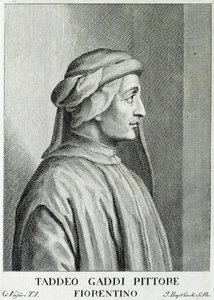
Taddeo Gaddi

Italian From Florence Early Renaissance On Wikipedia in 23 of 32 languages

Taddeo Gaddi

In the vibrant, burgeoning atmosphere of 14th-century Florence, a period defined by the transition from the medieval to the early Renaissance, Taddeo Gaddi emerged as a master of light, narrative, and architectural grandeur. As one of the most distinguished pupils of the legendary Giotto di Bondone, Gaddi did not merely inherit a style; he expanded the visual vocabulary of his era.

Taught Agnolo Gaddi #9

Works to know · Their 100 best-known works · Taddeo Gaddi reproductions

7of 38

Lorenzo Monaco

Italian From Siena Gothic, Early Renaissance On Wikipedia in 22 of 32 languages

Lorenzo Monaco

Lorenzo Monaco, born Piero di Giovanni around 1370 in Siena, occupies a fascinating and pivotal position in the transition from the Gothic grace of the Trecento to the burgeoning Renaissance ideals of the Quattrocento. Apprenticed in Florence, he absorbed the lessons of masters like Giotto, Spinello Aretino, and Agnolo Gaddi – artists who established a foundation of narrative clarity and emotional resonance.

Works to know · Their 100 best-known works · Lorenzo Monaco reproductions

8of 38

Limbourg Brothers

Dutch From Nijmegen International Gothic On Wikipedia in 21 of 32 languages

Limbourg Brothers

In the twilight of the Middle Ages, a trio of brothers from the Dutch city of Nijmegen emerged to redefine the boundaries of visual storytelling. Herman, Paul, and Jean de Limbourg, known collectively as the Limbourg Brothers, were not merely painters but architects of miniature worlds. Born into a lineage of skilled craftsmen, their early lives were shaped by the vibrant artistic currents flowing between the Netherlands, France, and Burgundy.

Works to know · Their 100 best-known works · Limbourg Brothers reproductions

9of 38

Agnolo Gaddi

Italian From Florence Gothic, Early Renaissance On Wikipedia in 20 of 32 languages

Agnolo Gaddi

Agnolo Gaddi, born in Florence around 1350, occupies a fascinating, pivotal position in the history of Italian painting. The Last Supper, painted in 1395, exemplifies this blend of Giottesque solidity with Gothic refinement – a scene imbued with both solemnity and exquisite detail.

Learned from Taddeo Gaddi #6

Works to know · Their 100 best-known works · Agnolo Gaddi reproductions

10of 38

Paolo Veneziano

Italian From Venice Byzantine influence & Gothic art On Wikipedia in 15 of 32 languages

Paolo Veneziano

Paolo Veneziano (c. 1333 – 1358) stands as a monumental figure in the history of Venetian art, recognized universally as the most important Venetian painter of the fourteenth century. Born into an artistic lineage within the heart of Venice—his father being a renowned artist himself—Veneziano’s brief but brilliant career coincided with a transformative period in European painting.

Works to know · Their 100 best-known works · Paolo Veneziano reproductions

11of 38

Lippo Memmi

Italian From Siena International Gothic On Wikipedia in 17 of 32 languages

Lippo Memmi

Lippo Memmi, born around 1291 in the heart of Siena, Italy, stands as a pivotal figure in the transition from the Byzantine -rooted traditions of medieval painting towards the burgeoning elegance of the International Gothic style. Ansanus (1333), created in collaboration with Simone Martini for the Uffizi Gallery.

Learned from Simone Martini #2

Works to know · Their 100 best-known works · Lippo Memmi reproductions

12of 38

Bernardo Daddi

Italian From Florence Early Renaissance On Wikipedia in 17 of 32 languages

Bernardo Daddi

Daddi’s precise birthdate remains shrouded in some mystery, though records indicate he was first mentioned in 1312. Giotto’s emphasis on naturalism and emotional expression undoubtedly shaped Daddi’s early style.

Works to know · Their 100 best-known works · Bernardo Daddi reproductions

13of 38

Spinello Aretino

Italian From Arezzo Link between Giotto and Sienese School On Wikipedia in 16 of 32 languages

Spinello Aretino

Born into a family of Florentine goldsmiths, his true name was Spinello Di Luca Spinelli, but he became known to history by the moniker "Aretino," signifying his connection to Arezzo.

Works to know · Their 100 best-known works · Spinello Aretino reproductions

14of 38

Andrea Pisano

Italian From Pontecorvo Gothic

Andrea Pisano

Andrea Pisano (c. 1290 – 1348 Orvieto) stands as a monumental figure in Italian Renaissance sculpture, yet his artistic legacy is inextricably linked to the preceding Gothic era and profoundly shaped by the revolutionary influence of Giotto di Bondone.

Works to know · Their 100 best-known works · Andrea Pisano reproductions

15of 38

Andrea Di Cione Di Arcangelo (Orcagna)

Italian From Florence Gothic-Late Gothic

Andrea Di Cione Di Arcangelo (Orcagna)

Andrea di Cione, known to history by the evocative moniker Orcagna, stands as one of the most influential figures in Florentine art during the mid-14th century—a period marked by a fascinating confluence of Gothic and Late Gothic artistic traditions. Born around 1308 in the heart of Florence, he emerged from a family deeply rooted in the city's prestigious artisan culture.

Works to know · Their 100 best-known works · Andrea Di Cione Di Arcangelo (Orcagna) reproductions

16of 38

Master Mateo

Spanish Romanesque Sculpture

Master Mateo

Master Mateo, a sculptor whose name remains shrouded in mystery despite his monumental contribution to the Catedral de Santiago de Compostela Cathedral, stands as one of the most revered figures of Romanesque art in Spain. Born around 1161 in Galicia, though precise details about his life are scarce, Mateo’s legacy rests primarily on his unparalleled achievement: the Portico de la Gloria.

Works to know · Their 100 best-known works · Master Mateo reproductions

17of 38

Bernat Martorell

Italian From Sant Celoni International Gothic On Wikipedia in 11 of 32 languages

Bernat Martorell

In the shadowy corridors of art history, where names have been swallowed by the passage of centuries, the Master of the Codex of Saint George remains one of the most captivating enigmas of the fourteenth century. Active approximately between 1320 and 1330, this anonymous creator breathed life into sacred texts, transforming vellum into a window of divine revelation.

Works to know · Their 100 best-known works · Bernat Martorell reproductions

18of 38

Jean Malouel

Netherlandish (Dutch) From Nijmegen International Gothic On Wikipedia in 16 of 32 languages

Jean Malouel

Jean Malouel, or Jan Maelwael as he was known in his native Netherlands, occupies a fascinating, pivotal position in the transition from Gothic to Renaissance art. Malouel’s career took its first significant turn in 1396-97 when he found himself working in Paris, tasked with painting armorial decorations for Isabelle of Bavaria, the Queen of France.

Works to know · Their 100 best-known works · Jean Malouel reproductions

19of 38

Tilman Riemenschneider

German From Heiligenstadt Late Gothic & Renaissance

Tilman Riemenschneider

His journey toward mastery began with extensive travels throughout Swabia and the Upper Rhine around 1478/79, immersing himself in diverse workshops and absorbing the stylistic nuances of the region. In 1483, he settled in Würzburg, a city that would become synonymous with his name, joining the Saint Luke's Guild and initially working as a painter’s assistant before establishing himself as an independent master craftsman.

Works to know · Their 100 best-known works · Tilman Riemenschneider reproductions

20of 38

Master Francke

Dutch From Lower Rhine Gothic Renaissance On Wikipedia in 14 of 32 languages

Master Francke

Johannes Francke, known as Frater Francke, stands as a pivotal figure in the burgeoning artistic landscape of 15th-century Germany – specifically within the vibrant Gothic tradition of Hamburg. Early Life and Training: Precise information regarding Francke's formative years is scarce.

Works to know · Their 100 best-known works · Master Francke reproductions

21of 38

Claus Sluter

Dutch From Haarlem Northern Realism

Claus Sluter

Claus Sluter (c. 1350-1406) stands as one of the most influential sculptors of his era, marking a crucial juncture between Gothic and Renaissance artistic traditions in Northern Europe. The inscription of his name in the Brussels stonemasons' guild register around 1379/1380 confirms his professional engagement and underscores the importance of craftsmanship within medieval artistic culture.

Works to know · Their 100 best-known works · Claus Sluter reproductions

22of 38

Jacopo di Cione

Italian From Florence Gothic On Wikipedia in 7 of 32 languages

Jacopo di Cione

Born in Florence sometime between 1320 and 1330, he emerged from a family deeply rooted in artistic tradition—his three elder brothers, Andrea di Cione (Orcagna), Nardo di Cione, and Matteo di Cione—were themselves accomplished painters, establishing a lineage of creative excellence.

Works to know · Their 100 best-known works · Jacopo di Cione reproductions

23of 38

Jaume Huguet

Catalan From Valls Late Gothic, Flemish influence On Wikipedia in 10 of 32 languages

Jaume Huguet

Between 1440 and 1445, his hand reached into the workshops of Zaragoza and Tarragona, where he encountered the influential Flemish style brought by Luis Dalmau. His ability to command both scale and detail is evident in his diverse body of work: The Archangel St Michael: A celestial sentinel rendered with heroic posture, framed by stylized foliage and a radiant, textured gold leaf that seems to emanate an inner light.

Works to know · Their 100 best-known works · Jaume Huguet reproductions

24of 38

Lucas Moser

German From Weil der Stadt Late Gothic Art On Wikipedia in 10 of 32 languages

Lucas Moser

Lukas Moser, a name perhaps unfamiliar to many outside the circles of art history, represents a pivotal figure in the transition from the International Gothic style to the burgeoning realism that would characterize early Renaissance painting.

Works to know · Their 100 best-known works · Lucas Moser reproductions

25of 38

Master Bertram

German From Minden International Gothic On Wikipedia in 13 of 32 languages

Master Bertram

Born in Minden, Germany, around 1345 and passing away in Hamburg circa 1415, Master Bertram remains a captivating figure within the history of European art. Often referred to as Meister Bertram or Master of Minden, he stands as a pivotal artist bridging the International Gothic style with the nascent trends of the early Renaissance in Northern Europe.

Works to know · Their 100 best-known works · Master Bertram reproductions

26of 38

Pere Serra

Spanish Gothic-Italian

Pere Serra

Pere Serra, also known as Jaume Serra, stands as a compelling figure in the transition from the International Gothic style to the burgeoning Renaissance aesthetic within Catalonia. Born around 1357 and passing away in 1406, his life coincided with a period of significant artistic and cultural change across Europe, yet he maintained a distinctly Catalan sensibility throughout his career.

Works to know · Their 100 best-known works · Pere Serra reproductions

27of 38

Paolo Di Giovanni Fei

Italian From San Quirico d'Orcia Naturalism, Proto-Renaissance On Wikipedia in 10 of 32 languages

Paolo Di Giovanni Fei

Pietro Lorenzetti, born around 1280 and tragically dying in 1348 during the devastating Black Death pandemic, remains a pivotal figure in the evolution of Italian painting.

Works to know · Their 100 best-known works · Paolo Di Giovanni Fei reproductions

28of 38

Giovannino De' Grassi

Italian From Milan Gothic Illuminations

Giovannino De' Grassi

Giovannino de’ Grassi remains one of the most captivating enigmas of the late medieval period, a figure whose brushstrokes breathed life into the prestigious Visconti court of Milan. He operated in an era where the transition from the rigid structures of the Middle Ages to the burgeoning naturalism of the early Renaissance was beginning to stir, and de’ Grassim stood at the very heart of this aesthetic evolution.

Works to know · Their 100 best-known works · Giovannino De' Grassi reproductions

29of 38

Lluís Borrassà

Catalan From Girona International Gothic On Wikipedia in 8 of 32 languages

Lluís Borrassà

A pioneer who fundamentally reshaped the visual language of Catalonia, Borrassà emerged from the historic streets of Girona to become a master of the International Gothic style. The foundations of Borrassá’s mastery were laid in his youth, likely under the guidance of his father, Honorat Borrassà, a fellow painter.

Works to know · Their 100 best-known works · Lluís Borrassà reproductions

30of 38

Michele Giambono

Italian From Venice International Gothic On Wikipedia in 10 of 32 languages

Michele Giambono

In the heart of fifteenth-century Venice, a city defined by its shimmering lagoons and unparalleled maritime wealth, the artistry of Michele Giambono emerged as a luminous bridge between the medieval past and the dawning Renaissance. As a follower of luminaries such as Jacobello del Fiore and Gentile da Fabriano, Giambono inherited a fascination with delicate line work and the use of precious materials to evoke the celestial realm.

Works to know · Their 100 best-known works · Michele Giambono reproductions

31of 38

Giovanni dal Ponte

Italian From Florence Late Gothic/Renaissance On Wikipedia in 7 of 32 languages

Giovanni dal Ponte

Born around 1385 in the heart of Tuscany, his life unfolded during a period where the graceful lines of the Gothic tradition were beginning to yield to the burgeoning naturalism championed by artists like Masaccio.

Works to know · Their 100 best-known works · Giovanni dal Ponte reproductions

32of 38

Theodoric of Prague

Czech From Italy Gothic On Wikipedia in 16 of 32 languages

Theodoric of Prague

Master Theoderic, known in Latin as Magister Theodoricus, was a Czech painter who left a clear mark on the Gothic era. He was active between approximately 1360 and 1380, a period when his presence in the Bohemian court was well-documented. He served as the favourite court painter of Charles IV, the Holy Roman Emperor.

See them at This space holds the weight of his most significant decorative program.

Works to know · Their 100 best-known works

33of 38

Niccolò di Pietro Gerini

Italian From Florence Late Gothic On Wikipedia in 6 of 32 languages

Niccolò di Pietro Gerini

Born around 1368 in Florence and passing away circa 1415, Gerini’s career unfolded against a backdrop of artistic ferment, where tradition and experimentation danced a delicate balance. His father, Pietro Geri, was himself a member of the Guild of Saint Luke, suggesting an upbringing steeped in artistic practice—a familial legacy that would continue with Niccolò's son, Bindo, also becoming a painter.

Works to know · Their 100 best-known works · Niccolò di Pietro Gerini reproductions

34of 38

Pacino di Buonaguida

Italian From Florence Gothic Art On Wikipedia in 4 of 32 languages

Pacino di Buonaguida

Pacino di Bonaguida, a name resonating softly through the annals of 14th-century Italian art, represents a pivotal figure in the transition from the Byzantine -rooted traditions to the burgeoning Renaissance aesthetic. Active primarily in Florence between approximately 1303 and 1347, Pacino’s life remains shrouded in mystery—a common fate for many artists of his era.

Works to know · Their 100 best-known works · Pacino di Buonaguida reproductions

35of 38

Master Of The Life Of The Virgin

German Late Gothic On Wikipedia in 11 of 32 languages

Master Of The Life Of The Virgin

The earliest evidence of his workshop dates back to around 1463, with the completion of a series of eight panels for the Ursulakirche (Ursuline Church) in Cologne. These scenes – including the Annunciation, Visitation, Nativity, Presentation in the Temple, Flight into Egypt, and various episodes from Mary’s childhood and later life – quickly established his reputation.

Works to know · Their 100 best-known works

36of 38

Jan Baegert

From Wesel Late Gothic On Wikipedia in 3 of 32 languages

Jan Baegert

By 1492, Jan Baegert was recognized as a master in Kalkar, a significant milestone that confirmed his ability to manage large-scale commissions independently. Following the death of his father in 1502, Jan Baegert took over the family business in Wesel.

See them at Tracing the physical remains of Jan Baegert’s output requires looking toward the Westphalian and Lower Rhine regions.

Works to know · Their 100 best-known works · Jan Baegert reproductions

37of 38

Master Of The Osservanza

Italian Late Gothic On Wikipedia in 8 of 32 languages

Master Of The Osservanza

He was born around 1405 in Siena, likely into a family involved in the production of dyes—a profession reflected in his surname, “ di Pietro ” (of Peter).

Works to know · Their 100 best-known works

38of 38

Master of Heiligenkreuz Abbey

Austrian International Gothic On Wikipedia in 5 of 32 languages

Master of Heiligenkreuz Abbey

The earliest known works attributed to the Master are diptychs – two-panel paintings – discovered at the Cistercian Abbey of Heiligenkreuz in southeastern Austria. The left panel depicts the Annunciation, showcasing the Virgin Mary receiving the news of her divine conception, while the reverse portrays the Madonna and Child – a tender scene brimming with serenity.

Works to know · Their 100 best-known works

Pictures worth knowing

Famous Gothic works to recognise

  1. Rucellai Madonna by Duccio di Buoninsegna

    Rucellai Madonna

    Duccio di Buoninsegna

    1285 · Galleria degli Uffizi, Florence

  2. The Annunciation with St. Margaret and St. Ansanus by Simone Martini

    The Annunciation with St. Margaret and St. Ansanus

    Simone Martini

    1333 · Galleria degli Uffizi, Florence

  3. Adoration of the Magi Altarpiece, left hand predella panel depicting the Nativity by Gentile da Fabriano

    Adoration of the Magi Altarpiece, left hand predella panel depicting the Nativity

    Gentile da Fabriano

    1423 · Galleria degli Uffizi, Florence

  4. Sigismondo Pandolfo Malatesta, Lord of Rimini by Pisanello

    Sigismondo Pandolfo Malatesta, Lord of Rimini

    Pisanello

    1445 · Calouste Gulbenkian Foundation, Lisbon

  5. Madonna of the Rose Bush by Stefan Lochner

    Madonna of the Rose Bush

    Stefan Lochner

    1440 · Wallraf-Richartz-Museum, Cologne

  6. Nativity by Taddeo Gaddi

    Nativity

    Taddeo Gaddi

    1325 · Fundación Colección Thyssen-Bornemisza, Barcelona

  7. The Coronation of the Virgin by Lorenzo Monaco

    The Coronation of the Virgin

    Lorenzo Monaco

    1414 · Galleria degli Uffizi, Florence

  8. Les très riches heures du Duc de Berry: Avril (April) by Limbourg Brothers

    Les très riches heures du Duc de Berry: Avril (April)

    Limbourg Brothers

    1412 · Condé Museum, Chantilly

When it happened

Gothic, step by step

  1. 1285
  2. 1320
  3. 1325
  4. 1333
  5. 1333
  6. 1336
  7. 1339
  8. 1375
  9. 1383
  10. 1385
  11. 1387
  12. 1393
  13. 1394
  14. 1395

Fun figures

The numbers behind the list

Just the names

List of 38 famous Gothic artists to know

  1. 1Duccio di BuoninsegnaDuccio di BuoninsegnaItalian · 1255–1319
  2. 2Simone MartiniSimone MartiniItalian · 1284–1344
  3. 3Gentile da FabrianoGentile da FabrianoItalian · 1370–1427
  4. 4PisanelloPisanelloItalian · 1395–1455
  5. 5Stefan LochnerStefan LochnerGerman · 1410–1451
  6. 6Taddeo GaddiTaddeo GaddiItalian · 1300–1366
  7. 7Lorenzo MonacoLorenzo MonacoItalian · 1370–1425
  8. 8Limbourg BrothersLimbourg BrothersDutch · 1385–1416
  9. 9Agnolo GaddiAgnolo GaddiItalian · 1350–1396
  10. 10Paolo VenezianoPaolo VenezianoItalian · 1333–1358
  11. 11Lippo MemmiLippo MemmiItalian · 1291–1356
  12. 12Bernardo DaddiBernardo DaddiItalian · 1290–1348
  13. 13Spinello AretinoSpinello AretinoItalian · 1350–1410
  14. 14Andrea PisanoAndrea PisanoItalian · 1290–1348
  15. 15Andrea Di Cione Di Arcangelo (Orcagna)Andrea Di Cione Di Arcangelo (Orcagna)Italian · 1308–1368
  16. 16Master MateoMaster MateoSpanish · 1161–1217
  17. 17Bernat MartorellBernat MartorellItalian · 1390–1452
  18. 18Jean MalouelJean MalouelNetherlandish (Dutch) · 1370–1415
  19. 19Tilman RiemenschneiderTilman RiemenschneiderGerman · 1460–1531
  20. 20Master FranckeMaster FranckeDutch · 1380–1435
  21. 21Claus SluterClaus SluterDutch · 1355–1406
  22. 22Jacopo di CioneJacopo di CioneItalian · 1325–1399
  23. 23Jaume HuguetJaume HuguetCatalan · 1445–1492
  24. 24Lucas MoserLucas MoserGerman · 1390–1443
  25. 25Master BertramMaster BertramGerman · 1345–1415
  26. 26Pere SerraPere SerraSpanish · 1357–1406
  27. 27Paolo Di Giovanni FeiPaolo Di Giovanni FeiItalian · 1345–1411
  28. 28Giovannino De' GrassiGiovannino De' GrassiItalian · 1350–1398
  29. 29Lluís BorrassàLluís BorrassàCatalan · 1360–1425
  30. 30Michele GiambonoMichele GiambonoItalian · 1400–1462
  31. 31Giovanni dal PonteGiovanni dal PonteItalian · 1385–1438
  32. 32Theodoric of PragueTheodoric of PragueCzech ·
  33. 33Niccolò di Pietro GeriniNiccolò di Pietro GeriniItalian · 1368–1415
  34. 34Pacino di BuonaguidaPacino di BuonaguidaItalian · 1280–1340
  35. 35Master Of The Life Of The VirginMaster Of The Life Of The VirginGerman ·
  36. 36Jan BaegertJan Baegert1465–1535
  37. 37Master Of The OsservanzaMaster Of The OsservanzaItalian ·
  38. 38Master of Heiligenkreuz AbbeyMaster of Heiligenkreuz AbbeyAustrian ·

Good questions

What people ask about Gothic

Read more

More stories on ArtsDot.com

Other styles

Famous artists of other styles

Other eras

Famous artists of other eras

Famous paintings

Famous art, style by style

Keep exploring

Where to go next