Preview
 Send
Send Share
Share
 Details
 Guide
Guide

 Download
 Similars
 X-Ray
X-Ray Diaporama
 Stats
StatsA Witch


 Read More
Giclée / Art Print
Museum-quality giclée or canvas print with fast production and flexible finish options. ( Buy Hand Made Painting Switch to Digital Image)




P118B $10

P118H $10

P118W $10

P438Z $10

P508JH $12

P508YH $12

P805H $10

P805Z $10

P919BZ $10

P919G $10

P919XJ $10

P959ZH $10

P968JZ $12

W106C $8

W218G $10

W218JH $8

W218Y $10

W307PJ $10

W316G $10

W316PJ $8

W316Y $10

W398PJ $8

W4111J $10

W500HY $15

W500JH $15

W692G $12

W849H $8

W940BG $15

W953PJ $8




Pick from our preset sizes that match the artwork's original proportions.

Type the width and the height you need, to fit your frame or your wall. A print can only be cut, never made bigger than the picture, so a size with a different shape loses a part of the image. We send you a digital mockup to approve before we print anything. The picture shown on this page does not show the real cut — only the mockup does.
Worldwide Delivery () in 2 weeks instead of standard 4/5 weeks. (19 October)

Free Worldwide Express Shipping

High-Quality Linen Canvas

Full Shipping Insurance

Customs Tax Refund Guarantee

True Color Matching Guarantee

100-Day Return Policy (Defects Only)

100% Money-Back Guarantee

Bulk Discount Offer
 Glass option is only available in size under 110 CM

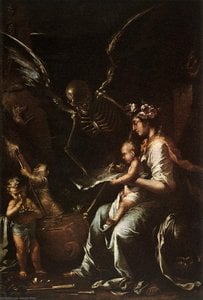
A Witch
Giclée / Art Print
Reproduction Size
-


Total Price
$ 63
A Dramatic Encounter with Darkness: Salvator Rosa’s “Witches’ Sabbath”
Salvator Rosa’s “Witches’ Sabbath,” executed in pen and ink on paper, stands as a testament to the Baroque period's fascination with dramatic realism and psychological intensity. Created around 1646, this drawing transcends mere depiction; it plunges viewers into a scene brimming with unsettling energy and symbolic resonance—a visual distillation of fear, superstition, and the confrontation between reason and primal instinct. Rosa’s masterful use of monochrome contributes powerfully to the artwork's emotive impact, stripping away color to amplify the starkness of the composition and heighten its psychological depth.- Subject Matter: The drawing portrays a chaotic gathering of figures engaged in what appears to be a ritualistic celebration – a witches’ sabbath. These individuals are depicted amidst a desolate landscape, emphasizing isolation and vulnerability against the backdrop of an ominous supernatural presence.
- Style & Technique: Rosa's style aligns perfectly with Baroque principles, prioritizing expressive gesture and dynamic movement over idealized beauty. The artist employs meticulous pen and ink detailing to capture the grotesque expressions and contorted postures of the participants. Visible brushstrokes—though subtle—lend texture to the paper surface, conveying a palpable sense of immediacy and capturing the frenzied atmosphere of the scene.
- Composition: Rosa skillfully arranges the figures within a confined space, creating a claustrophobic effect that underscores the characters’ predicament. The central group is positioned prominently against a dark, rocky outcrop, directing the viewer's gaze towards the unsettling core of the narrative.
Rosa Serrano Sánchez: Bridging Art and Civic Duty
Rosa Serrano Sánchez (1646-1708), born in Valencia, Spain, emerged as a prominent figure during the Baroque era—a period characterized by opulent grandeur and profound spiritual contemplation. Her artistic endeavors weren’t solely driven by aesthetic considerations; Sánchez actively engaged in political life, serving as a diplomat and advocating for reform within her homeland. This dual commitment informs her oeuvre, blending artistic innovation with intellectual engagement and social responsibility.- Notable Works: Sánchez's artistic legacy includes “No se puede ver lo que no se mira,” a captivating painting exploring themes of perception and illusion—a hallmark of Baroque visual culture. Her canvases often depict biblical narratives infused with humanist sensibilities, reflecting the era’s burgeoning interest in philosophical inquiry and moral reflection.
- Influence & Legacy: Sánchez's work resonates across centuries, demonstrating the enduring power of art to communicate complex ideas and emotions. She stands as an exemplar of Baroque artists who sought to elevate artistic expression beyond mere ornamentation, aiming instead for a transformative impact on viewers’ understanding of humanity and its relationship with divinity.
João Artur Rosa Alves: From Football Star to Painter's Vision
João Artur Rosa Alves (born 1983), Portugal—a former professional footballer—transformed his passion for sport into an equally compelling artistic vocation. Alves’s paintings explore themes of nature and emotion, blending abstract expressionism with vivid color palettes and evocative imagery. His artistic journey represents a fascinating intersection between personal experience and creative exploration—a testament to the transformative potential of pursuing multiple passions.- Distinctive Style: Alves's canvases are characterized by bold brushstrokes and textured surfaces, conveying dynamism and spontaneity. He draws inspiration from landscapes and natural forms, translating their beauty and grandeur into emotionally resonant compositions.
- Recognition & Exhibitions: Alves’s artwork has garnered critical acclaim and been showcased in prestigious UK museums—a remarkable achievement for an artist who embarked on his artistic pursuits after a successful career in professional football. His paintings exemplify the contemporary Baroque aesthetic, blending tradition with innovation to create visually arresting and intellectually stimulating experiences.
Salvator Rosa: A Baroque Master's Enduring Impact
Salvator Rosa’s influence extends far beyond his own lifetime—solidifying his position as one of the most significant figures in Baroque art history. His uncompromising artistic vision challenged conventions, prioritizing psychological realism and dramatic intensity over idealized beauty. He championed a humanist perspective that embraced both intellectual curiosity and emotional vulnerability—a legacy that continues to inspire artists today.- Key Characteristics: Rosa’s paintings are distinguished by their masterful use of chiaroscuro—creating striking contrasts between light and shadow—to heighten emotional impact and convey a sense of mystery. His landscapes capture the grandeur and sublime beauty of nature, reflecting the Baroque fascination with exploring the limits of human perception and confronting existential anxieties.
- Continuing Relevance: Rosa’s artistic principles resonate powerfully in contemporary art practice—demonstrating the enduring relevance of Baroque aesthetics to addressing fundamental questions about human experience and artistic expression. Reproductions of his masterpieces are available at ArtsDot, allowing viewers worldwide to appreciate his visionary artistry.
Questions & Answers
Are the colors of "A Witch" by Salvator Rosa saturated or muted?
"A Witch" by Salvator Rosa is recorded with a muted saturation.
What mood and emotion does "A Witch" by Salvator Rosa express?
The recorded mood of "A Witch" by Salvator Rosa is dramatic, and its emotional tone is melancholic.
In what year was "A Witch" by Salvator Rosa created?
"A Witch" by Salvator Rosa was created in 1646.
Related Artworks


Artist Biography
**early life and training**
salvator rosa, an italian baroque painter, poet, and printmaker, was born in arenella, naples, on either june 20 or july 21, 1615. his mother, giulia greca rosa, was a member of one of the greek families of sicily. despite his father's wishes for him to become a lawyer or priest, salvator showed a preference for the arts from an early age.**artistic career**
salvator rosa's artistic career was marked by his unorthodox and extravagant style, which set him apart from his contemporaries. he was active in naples, rome, and florence, and his work was influenced by the naturalism of ribera and the classicism of poussin. however, he refused to be tied down by any particular style or movement.- pythagoras emerging from the underworld (kimbell art museum, fort worth, united states), one of his most famous works, showcases his unique blend of philosophical and artistic themes.
- his the baptism of the eunuch (chrysler museum of art, norfolk, united states) demonstrates his ability to infuse high drama into even minor bible stories.
**influences and legacy**
salvator rosa's work had a significant impact on the development of baroque art. his influence can be seen in the works of later artists, such as luca giordano, who continued to push the boundaries of artistic expression. **important links:** salvator rosa's profile on ArtsDot wikipedia: salvator rosa pythagoras emerging from the underworld on ArtsDot**conclusion**
salvator rosa's life and work continue to fascinate art lovers and historians alike. his unorthodox style and perpetual rebellion against the norms of his time have cemented his place in the annals of baroque art. as a painter, poet, and printmaker, he remains an enigmatic figure, and his work continues to inspire new generations of artists and art enthusiasts.
Salvator Rosa
1615 - 1673 , Italy
Quick Facts
- Full Name: Salvator Rosa
- Nationality: Italian
- Date Of Birth: 1615
- Date Of Death: 1673
- Place Of Birth: Arenella, Italy
- Notable Artworks:
- View of the Gulf of Salerno
- Study for 'Il Genio di Rosa
- Grotto with Cascades
- Artistic Movement Or Style: Baroque art
- Artists Who Influenced This Artist: ['José de Ribera']
- Artists Or Movements Influenced By This Artist: ['Luca Giordano']
Related Articles

Salvator Rosa: A Baroque Rebel's Vision of Landscape, Allegory & the Human Condition
Explore the captivating world of Salvator Rosa, a rebellious Baroque master. Discover his dramatic landscapes, allegorical paintings & lasting influence on Romanticism. Hand-painted reproductions available at ArtsDot.

The Enduring Legacy of Fine Art Prints: Technique, History & Aesthetic Impact
Explore the rich history & techniques of fine art prints. Discover investment potential, assess authenticity, and learn how to preserve your collection with expert guidance. Trusted insights for discerning collectors.

Echoes of Time: Exploring the Enduring Appeal & Historical Context of Vintage Art Prints
Explore the captivating world of vintage art prints! Discover their history, collecting tips & enduring appeal. Expert insights on chromolithography and building a legacy collection with ArtsDot.

Giclée Prints: Archival Quality & Aesthetic Nuances for the Discerning Collector
Explore the world of giclée prints with ArtsDot. Learn about archival quality, aesthetic nuances & investment potential. Expert guidance for discerning art collectors seeking museum-quality reproductions and lasting value.

Baroque Drama: Bringing Opulence & Emotion into Contemporary Interiors
Explore the opulent world of Baroque interior design! Discover key elements, modern applications & how to bring dramatic elegance into your home with ArtsDot.com's authentic reproductions.