


 Preview
 Send
Send Share
Share
 Details
 Guide
Guide

 Download
 Similars
 X-Ray
X-Ray Diaporama
 Stats
StatsCeres


 Read More
Giclée / Art Print
Museum-quality giclée or canvas print with fast production and flexible finish options. ( Buy Hand Made Painting Switch to Digital Image)




P118B $10

P118H $10

P118W $10

P438Z $10

P508JH $12

P508YH $12

P805H $10

P805Z $10

P919BZ $10

P919G $10

P919XJ $10

P959ZH $10

P968JZ $12

W106C $8

W218G $10

W218JH $8

W218Y $10

W307PJ $10

W316G $10

W316PJ $8

W316Y $10

W398PJ $8

W4111J $10

W500HY $15

W500JH $15

W692G $12

W849H $8

W940BG $15

W953PJ $8




Pick from our preset sizes that match the artwork's original proportions.

You may enter your own dimensions to fit a specific frame or space. If your selected size does not match the original image's proportions, we will either crop the artwork or extend the image with a mirrored or solid-fill edge. A digital mockup will be sent for your approval before production begins.
Please note that the on-screen preview does not reflect the actual cropping or extension. Only the mockup will accurately show the final composition.
While custom sizes are available, we recommend selecting a dimension from the predefined list to preserve the original proportions.
Worldwide Delivery () in 2 weeks instead of standard 4/5 weeks. (10 October)

Free Worldwide Express Shipping

High-Quality Linen Canvas

Full Shipping Insurance

Customs Tax Refund Guarantee

True Color Matching Guarantee

100-Day Return Policy (Defects Only)

100% Money-Back Guarantee

Bulk Discount Offer
 Glass option is only available in size under 110 CM

Ceres
Giclée / Art Print
Reproduction Size
-


Total Price
$ 63
Ceres: A Symphony of Line and Myth
Francesco Primaticcio’s “Ceres,” painted in 1552, stands as a cornerstone of Mannerist art—a testament to the period's fascination with illusionistic depth and dramatic gesture. More than just a depiction of Roman mythology, it embodies the artistic spirit of its time, reflecting a profound shift away from the serene idealism of High Renaissance Florence towards a more emotionally charged aesthetic. The photograph captures a meticulously rendered chalk drawing on paper, showcasing Primaticcio’s masterful command of line work and tonal gradation—a technique that prioritizes form over color, characteristic of Mannerist sensibilities.Composition and Technique: Mastering Illusion
The painting's visual impact is immediately arresting due to its densely populated scene. Primaticcio employs a dynamic arrangement of figures encircling a central female figure representing Ceres, the Roman goddess of agriculture and fertility. Lines dominate the composition—bold hatching and cross-hatching delineate architectural elements like columns and a building façade, creating an illusion of spatial recession that defies linear perspective. These lines aren’t merely descriptive; they convey movement and energy, mirroring the turbulent emotions prevalent in Mannerist art. The artist skillfully utilizes shading to sculpt forms, emphasizing volume and texture—a deliberate departure from the smooth surfaces favored by Raphael and Michelangelo.Mythological Narrative and Symbolic Resonance
“Ceres” delves into classical mythology, portraying Ceres alongside Bacchus, symbolizing abundance and rebirth. Surrounding them are numerous nude or partially clothed figures engaged in intricate poses, contributing to the painting’s theatrical quality. The inclusion of a basket near Ceres' feet serves as a potent symbol of fertility—a visual reminder of the goddess’s role in ensuring successful harvests and sustaining life. Primaticcio’s meticulous attention to detail extends beyond mere representation; he aims to evoke contemplation and convey profound ideas about human existence and divine influence.Historical Context: Fontainebleau and Artistic Rivalry
Painted during the reign of Henry II at Fontainebleau Palace, “Ceres” exemplifies the opulent style favored by the French monarchy—a stylistic echo of Primaticcio’s influential role as chief architect and decorator for François I. This commission fueled artistic competition with Raphael and Michelangelo, pushing artists to explore new expressive possibilities. The painting reflects a broader trend toward Mannerism's rejection of Renaissance conventions, prioritizing emotional intensity and stylized form over anatomical accuracy and harmonious balance. It represents a pivotal moment in art history—a bold assertion of individuality against the established order.Emotional Impact: A Vision of Dramatic Beauty
Ultimately, “Ceres” transcends its mythological subject matter to communicate an enduring sense of dramatic beauty. Primaticcio’s masterful use of line and shading creates a palpable atmosphere of grandeur and contemplation. The painting invites viewers to immerse themselves in a world of idealized form and evocative gesture—a legacy that continues to inspire admiration centuries later. Its meticulous detail and sophisticated technique underscore the artist's ambition to capture not just what is seen but also what is felt, cementing its place as an unforgettable masterpiece of Mannerist art.Questions & Answers
Toward which tone does "Ceres" lean?
The dominant hue of "Ceres" by Francesco Primaticcio is green to violet spectrum. The hue is the underlying tone of the palette.
How old was Francesco Primaticcio when creating "Ceres" in 1552?
Francesco Primaticcio was 48 years old when creating "Ceres" in 1552. The age is computed from the artist's birth year, 1504.
How is "Ceres" recommended to be printed - what size, what orientation?
For "Ceres", the recommended print setup is a large size and a landscape orientation.
Which artist is "Ceres" attributed to?
"Ceres" is attributed to Francesco Primaticcio.
In what year was "Ceres" by Francesco Primaticcio created?
The creation of "Ceres" by Francesco Primaticcio is dated 1552.
Which room is "Ceres" by Francesco Primaticcio recommended for, given its colors?
The neutrals colors of "Ceres" by Francesco Primaticcio match its recommended space: a living room.
Is "Ceres" by Francesco Primaticcio a painting, a drawing or a print?
"Ceres" is a wall art piece.
Related Artworks


Artist Biography
The Master of Fontainebleau
Francesco Primaticcio stands as a towering figure of the Italian Mannerist tradition, a polymath whose creative reach extended far beyond the canvas to encompass the realms of architecture and sculpture. Born in Bologna, Italy, his artistic journey began under the rigorous guidance of Giulio Romano in Mantua, where he absorbed the complex, tension-filled aesthetics that would later define his career. This early training instilled in him a profound understanding of classical forms, yet Primaticcio was never content with mere imitation; instead, he sought to infuse these classical ideals with a sense of Mannerist intensity, characterized by elongated limbs, emotional extremity, and a deliberate departure from the serene balance of the High Renaissance.
His career reached its most significant zenith in France, where he became a central pillar of the First School of Fontainebleau. After securing a position in the court of Francis I in 1532, Primaticcio worked alongside Rosso Fiorentino to transform the Chateau Fontainebleau into a pinnacle of European elegance. Following the death of Rosso, Primaticcio assumed leadership of the artistic direction at the palace, managing a talented team of painters and stuccators. His influence was instrumental in shaping the French courtly aesthetic, as he provided designs for tapestries, ephemeral decorations for grand masques, and even directed the creation of bronze casts of Roman sculptures to adorn the royal gardens.
A Legacy of Line and Motion
The work of Primaticcio is a captivating study in controlled chaos and opulent grandeur. His compositions often feature a swirling vortex of human figures, where the boundaries of order are frequently breached by dramatic movement and psychological upheaval. In masterpieces such as The Rape of Helene, one observes his masterful use of chiaroscary, where deep shadows swallow the periphery to cast a harsh, dramatic light upon central struggles. This technique, combined with the characteristic long-legged canon of beauty, created an atmosphere of thick, palpable tension that would influence French art for the remainder of the century.
Beyond his narrative paintings, Primaticcio’s versatility allowed him to leave an indelible mark on the physical landscape of France through architecture. His later years were marked by a transition toward architectural pursuits, most notably seen in his work on the Valois Chapel at the Abbey of Saint-Denis. Whether through the delicate line work of a chalk drawing like Ceres or the monumental scale of fresco fragments such as Ulysses Winning the Archery Contest in the Presence of Penelope, Primaticcio’s oeuvre remains a testament to an artist who could navigate the complexities of myth, majesty, and the human psyche with unparalleled grace.

Francesco Primaticcio
1504 - 1570 , Italy
Quick Facts
- Artistic Movement Or Style: Mannerism
- Artists Or Movements Influenced By This Artist: ['First School of Fontainebleau']
- Artists Who Influenced This Artist:
- Giulio Romano
- Innocenzo da Imola
- Full Name: Francesco Primaticcio
- Nationality: Italian
- Notable Artworks:
- The Rape of Helene
- Ulysses Winning the Archery Contest
- The Masquerade of Persepolis
- Ceres
- Place Of Birth: Bologna, Italy
- Date Of Birth: 1504
- Date Of Death: 1570
Related Articles

The Enduring Form: Exploring Themes & Techniques in Sculpture Across Historical Periods
Explore the rich history of sculpture from ancient masterpieces to contemporary innovations. Discover key techniques, influential artists & investment potential for discerning art collectors.

Bronze Sculptures That Defined Art History | ArtsDot
Journey through art history with our Top 10 bronze sculptures! Explore masterpieces by Rodin, Michelangelo & more. Discover stories behind iconic statues and find museum-quality reproductions for your home decor at ArtsDot.com.

The Enduring Form: Sculpture Across History, Technique & Emotional Resonance
Explore the rich history of sculpture with ArtsDot. Discover key techniques, influential artists & investment potential for discerning collectors. Expert insights into valuing and collecting timeless masterpieces.
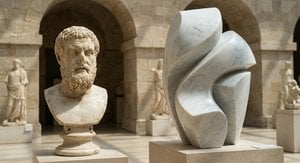
The Enduring Allure of Marble in Art History: From Classical Sculpture to Modern Abstraction
Explore the captivating history of marble sculpture from ancient Greece to modern art. Discover renowned artists like Canova & Michelangelo, carving techniques, and investment insights at ArtsDot.

Bronze Age to Modern Masters: 10 Sculptures That Redefined Art | ArtsDot
Journey through art history with 10 legendary bronze sculptures – from Michelangelo's David to Rodin’s Thinker. Explore the stories, techniques & timeless beauty of these masterpieces. Find museum-quality reproductions & elevate your home decor on ArtsDot.com.


