


The picture follows your choices: , .
Collectible Description
Anguier’s initial commissions focused on funerary sculptures—particularly elaborate tombs for aristocratic families—demonstrating his mastery of marble carving and his ability to convey profound emotion through sculpture. Additional Research: { Michel Anguier Ceres Michel Anguier (1612 – 1686) stands as a pivotal figure in the Baroque sculpture tradition of France Seine-Maritime France 1612
 Read More
Artist Biography
Discover Michel Anguier's stunning Baroque paintings! Explore religious scenes like 'Nativity' & mythological works, showcasing intricate detail & classical French art.
Hand Made Oil Reproduction
Hand-painted oil on canvas in your size and frame, made to order by our artists. ( Switch to Print Switch to Digital Image)
More about this painting
 Preview
 Send
Send Share
Share
 Details
 Guide
Guide

 Download
 Similars
 X-Ray
X-Ray Diaporama
 Q&A
Q&A Stats
StatsOrder your painting in four simple steps
Take your time. You can change any answer; the price in your order card follows each choice.
1 Step one of four
Which size would you like?
These sizes keep the proportions of the original painting. The drawing shows your choice on a wall, above a two-metre sofa.
Or give your own measurements
Pick from our preset sizes that match the artwork's original proportions.

Type the width and the height you need, to fit your frame or your wall. This is hand-painted, so for a size with a different shape the artist can paint a bit more around the picture, or cut a bit — you choose. We send you a digital mockup to approve before the painting starts. The picture shown on this page does not show the real result — only the mockup does.
2 Step two of four
How should it be prepared: rolled, stretched or framed?
The prices below are for the size you chose in step one.
Choose the edges of the stretched canvas
Choose your frame

White $1

Blurside $1

Extended $1

P118B $10

P118H $10

P118W $10

P438Z $10

P508JH $12

P508YH $12

P805H $10

P805Z $10

P919BZ $10

P919G $10

P919XJ $10

P959ZH $10

P968JZ $12

W106C $8

W218G $10

W218JH $8

W218Y $10

W307PJ $10

W316G $10

W316PJ $8

W316Y $10

W398PJ $8

W4111J $10

W500HY $15

W500JH $15

W692G $12

W849H $8

W940BG $15

W953PJ $8

H24-GOLD $30

H24-SILVER $30

H36-GOLD $45

H36-SILVER $45
Framed
Moulding: . Overall size with the frame: .
3 Step three of four
Would you like anything changed in the painting?
Most people answer no. Because each painting is made by hand, our artist can also adapt it for you.
After order, ArtsDot.com team will email client for instructions and provide a mockup preview
4 Step four of four
A few finishing options
All of them are optional. The answers already selected cost nothing extra.
Who paints it?
Worldwide Delivery () in 3/4 weeks instead of standard 5 weeks. (30 October). No compromise on quality.
A nameplate, as in a museum?
Engraved Bronze Plaque Details
This elegant plaque features the artist's name and the title of the artwork, finely engraved for a timeless presentation.
It is made from bronze with a refined, elegant finish. The text is precisely laser-engraved for a sharp and permanent result. Measuring 9x2 cm, the plaque is compact yet easy to read. It's built to be durable and scratch-resistant, offering a professional, museum-quality look. Mounting is simple thanks to the included adhesive backing.
Transparent Acrylic Plaque Details
The plaque includes essential engraved details such as the artist's name, the title of the artwork, the date it was created, the type of media used-like oil on canvas or watercolor-a brief description of the piece, and a QR code that links to the complete artwork information.
It is crafted from clear acrylic, offering a sleek, modern appearance. The text is UV-engraved in black to ensure strong visual contrast. With a size of 10x15 cm, it ensures optimal readability. It comes equipped with two metal hooks for secure wall mounting. The plaque is designed to be weather-resistant, making it suitable for various environments, and it includes interactive features that work seamlessly with smartphone scanning.
Black Acrylic Plaque Details
This elegant plaque includes engraved information such as the artist's name, the title of the artwork, the date it was created, the type of media used (like oil on canvas or watercolor), a short description of the artwork, and a QR code for quick access to more information.
The plaque itself is made from refined black acrylic with a premium finish. The text is laser-engraved in white for high contrast and readability. Its size is 10x15 cm, designed to be easy to read. It comes with two metal hooks for professional mounting. The design is sleek and fits any interior style. It is also weather-resistant and durable, with built-in digital integration for mobile compatibility.
A protective varnish?
When do you need it?
✓ Check and order
Your painting, as you ordered it

Ceres
Reproduction Medium
Reproduction Size
-

Elite Senior Artist
More detail, finesse, and extra production time
-

Reproduction Frame
-
-
For artworks or reproductions larger than 105 cm (approximately 41 inches) on any side, the frame will be shipped as a kit, disassembled. This method ensures safe delivery and prevents damage during transport.
Professional assembly required - this is not a DIY product.
The kit must be assembled and the canvas stretched by an experienced professional framer, using wood glue (not supplied), a canvas stretching plier and clamps to hold the bars square while the glue dries. Incorrect assembly or uneven canvas tension can permanently damage the artwork and is not covered by our warranty.
 For artworks or reproductions larger than 105 cm (approximately 41 inches) on any side, the frame will be shipped as a kit, disassembled. This method ensures safe delivery and prevents damage during transport.
All solid wood bars are included, precisely cut to size.
Assembled with the screws provided, plus wood glue for the corner joints, which is not supplied and must be sourced by your framer.
Professional tools are required and not included: a canvas stretching plier (tensioner) and clamps to hold the bars square while the glue dries.
Important:
The corner joints require wood glue, the bars must be held with clamps until the glue is fully dry, and tightening the canvas on the assembled frame requires a canvas stretching plier. None of these are included in the kit. Please arrange an experienced professional framer before ordering this size.

Nameplate
-
-

Protective Varnish
Glossy Varnish (enhances colors, protects against light/moisture)
-

Customize My Artwork
Examples of what can be changed: Replace face with customer photo; Add pet (e.g., replace cat with dog); Include hidden message in background; Change background landscape or elements.
-

Urgent
Worldwide Delivery () in 3/4 weeks instead of standard 5 weeks. (30 October). No compromise on quality.
-
Express Shipping
Worldwide Delivery () in 5 weeks. (6 November).
Included
Total Price
$ 263
Glass option is only available in size under 110 CM
Included with every order
- Free Worldwide Express Shipping
- High-Quality Linen Canvas
- Full Shipping Insurance
- Customs Tax Refund Guarantee
- True Color Matching Guarantee
- 100-Day Return Policy (Defects Only)
- 100% Money-Back Guarantee
- Bulk Discount Offer


Michel Anguier’s Ceres: A Symphony of Bronze and Myth
Michel Anguier (1612 – 1686) stands as a cornerstone of Baroque sculpture in France, embodying not merely artistic skill but also an intellectual fervor that propelled him to explore the depths of classical ideals alongside the dramatic flair characteristic of his era. Born in Eu, Normandy, he descended from a noble lineage deeply rooted in humanist thought—a heritage that instilled within him a lifelong dedication to knowledge and profoundly influenced his creative vision. His formative years were spent honing his craft under Alessandro Algardi’s tutelage in Rome, immersing himself in the grandeur of Bernini's workshop and forging connections with fellow sculptors who championed innovation while honoring tradition. This immersion cemented Anguier’s conviction that true artistry resided in reconciling reasoned observation with emotive expression—a principle that would permeate every subsequent masterpiece. Early Career & Patronage: Anguier’s initial commissions centered on funerary sculptures, particularly elaborate tombs for aristocratic families—projects that demanded meticulous attention to detail and showcased his mastery of marble carving alongside his ability to convey profound psychological depth through sculptural form. These works established him as a respected artist within Parisian society and secured lucrative patronage from influential figures who recognized the power of art to commemorate life’s passage and honor familial legacies. The commissions themselves served as catalysts for experimentation, pushing Anguier to explore new techniques and stylistic approaches—a trajectory that would ultimately define his artistic legacy. The Sculpture's Narrative & Technique: “Ceres,” created around 1650, exemplifies Anguier’s signature style—a blend of Roman influence and Baroque dynamism. The sculpture depicts the goddess Ceres, protector of agriculture and fertility, rendered in bronze, a medium favored by sculptors during this period for its durability and ability to capture subtle nuances of form. Anguier meticulously modeled the figure using wax casting techniques, painstakingly refining every contour to achieve remarkable realism—a testament to his technical prowess and unwavering commitment to capturing the essence of human anatomy. The sculpture’s composition is deliberately theatrical, utilizing diagonal lines to generate movement and tension—reflecting the turbulent spirit of the Baroque period. Ceres stands over a fallen warrior, symbolizing the cyclical nature of existence: harvest follows destruction, life emerges from death—a potent visual metaphor for the broader themes explored in Roman mythology. Symbolism & Emotional Impact: Beyond its formal qualities, “Ceres” resonates with profound symbolic significance. Ceres embodies resilience and renewal amidst adversity—her raised arm clutching a sheaf of wheat signifies abundance and prosperity, while her outstretched gesture conveys compassion and concern for humanity. The inclusion of the fallen warrior underscores the importance of sacrifice and acknowledges the inextricable link between agriculture and warfare—a duality that speaks to the fundamental realities of human experience. Anguier’s masterful rendering captures not merely physical likeness but also emotional intensity—evoking a sense of solemn contemplation and conveying the goddess's unwavering determination to safeguard life’s vitality. Concluding Remarks: Michel Anguier’s “Ceres” remains an enduring emblem of Baroque sculpture’s artistic ambition and intellectual sophistication. Its meticulous craftsmanship, coupled with its evocative narrative and rich symbolism, continues to inspire admiration and captivate viewers centuries after its creation. The bronze statue's textured surface—a product of advanced casting techniques—serves as a tangible reminder of Anguier’s dedication to capturing the beauty and complexity of the human form within the framework of classical ideals. It stands as an exceptional example of how art can illuminate profound truths about human existence and celebrate the enduring power of mythic storytelling.Questions & Answers
What is the creation date of "Ceres" by Michel Anguier?
"Ceres" dates from 1650. The date places the work within Michel Anguier's career and its era.
How does "Ceres" by Michel Anguier connect Baroque Sculpture to the artist's home country?
The Baroque Sculpture work "Ceres" was made by an artist born in France.
Can "Ceres" by Michel Anguier, held at the Victoria and Albert Museum, be legally reproduced?
The copyright status of "Ceres" by Michel Anguier is clear: the work is in the public domain - its copyright has expired. Its presence at the Victoria and Albert Museum does not change that status.
Related Artworks


Michel Anguier
1612 - 1686, France
Artist Biography
Michel Anguier: Sculptor of Light and Shadow
Michel Anguier (1612 – 1686) stands as a pivotal figure in the Baroque sculpture tradition of France, embodying both intellectual rigor and artistic virtuosity. Born in Eu, Normandy, he descended from a noble family steeped in humanist ideals—a lineage that profoundly shaped his worldview and fueled his lifelong pursuit of knowledge. Anguier’s formative years were spent studying under Alessandro Algardi in Rome, absorbing the grandeur and dynamism of Bernini's workshop and establishing connections with other leading sculptors of the era. This immersion in Roman artistic culture instilled within him a deep appreciation for classical forms and techniques, which would permeate his subsequent oeuvre.- Early Career & Patronage: Anguier’s initial commissions focused on funerary sculptures—particularly elaborate tombs for aristocratic families—demonstrating his mastery of marble carving and his ability to convey profound emotion through sculptural representation. His work quickly gained recognition, securing him patronage from influential figures within the French court.
- Roman Influence & Artistic Style: Anguier’s Roman training profoundly impacted his artistic style. He embraced Bernini's theatrical approach to sculpture, prioritizing movement and dramatic lighting—elements he skillfully incorporated into numerous monumental sculptures commissioned for churches and palaces throughout France.
- Notable Works: Among Anguier’s most celebrated achievements are the sculptures adorning San Michele al Pozzo Bianco in Bergamo, Italy—a breathtaking ensemble of frescoes depicting Mary's life—and Amphitrite, a magnificent marble statue commemorating the goddess of the sea. His meticulous attention to detail and his masterful manipulation of light and shadow elevated these works to unparalleled levels of artistic excellence.
- The Ceres Sculpture: Anguier’s sculpture “Ceres” exemplifies his dedication to capturing idealized beauty and conveying spiritual contemplation. Located in Paris, this artwork showcases the sculptor's profound understanding of anatomy and drapery—skills honed during his Roman studies—resulting in a timeless masterpiece.
Technique & Artistic Innovation
Anguier’s sculptural technique was characterized by an unwavering commitment to anatomical accuracy combined with expressive dynamism. He meticulously studied human musculature, striving to reproduce its contours with breathtaking realism—a hallmark of Baroque sculpture. Furthermore, Anguier pioneered innovative methods for achieving dramatic lighting effects—techniques he perfected during his time in Rome and subsequently applied to numerous monumental sculptures throughout France. His masterful manipulation of marble—particularly his ability to carve translucent surfaces—created illusions of depth and luminosity that captivated audiences.- Marble Carving Mastery: Anguier’s unparalleled skill in marble carving was evident in every piece he created, from intimate funerary sculptures to colossal monumental statues. He employed sophisticated tools and techniques—including chisels, hammers, rasps, and polishing abrasives—to transform raw stone into objects of exquisite beauty and artistic grandeur.
- Dramatic Lighting Effects: Anguier’s incorporation of dramatic lighting effects—inspired by Bernini’s theatrical style—transformed his sculptures into immersive experiences. He skillfully manipulated marble surfaces to create illusions of translucency and luminosity, enhancing the emotional impact of his works.
Legacy & Historical Significance
Michel Anguier's contribution to Baroque sculpture transcends mere stylistic innovation; he represents a cornerstone of French artistic heritage. His sculptures continue to inspire admiration for their technical brilliance and expressive power—testaments to the enduring legacy of humanist ideals and classical art principles. Anguier’s influence extended beyond his immediate contemporaries, shaping the aesthetic sensibilities of subsequent generations of sculptors and cementing his place among France's most revered artists.- Influence on Subsequent Sculptors: Anguier’s sculptural technique—characterized by anatomical accuracy and expressive dynamism—served as a model for countless sculptors who followed him, establishing a stylistic continuum that spanned centuries.
- Symbol of French Artistic Excellence: Anguier's sculptures embody the zenith of French artistic excellence during the Baroque period—a symbol of humanist ideals and classical art principles that continue to resonate with audiences today.
Further Exploration
For a deeper understanding of Michel Anguier’s life and work, consult scholarly articles published in journals specializing in Art History. Explore online resources—including museum websites and biographical databases—to access detailed information about his artistic achievements and historical context. Examining reproductions of his sculptures—particularly “Ceres” and Amphitrite—offers invaluable insight into the artist's stylistic innovations and expressive power.


Related Articles

The Enduring Form: Sculpture Across History, Technique & Emotional Resonance
Explore the rich history of sculpture with ArtsDot. Discover key techniques, influential artists & investment potential for discerning collectors. Expert insights into valuing and collecting timeless masterpieces.
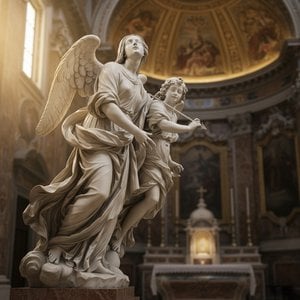
Gian Lorenzo Bernini: Sculpting Baroque Emotion & the Roman Imagination
Explore the life & revolutionary art of Gian Lorenzo Bernini, the master sculptor of the Baroque era. Discover his iconic works like David and Ecstasy of Saint Teresa – a journey into Roman artistic genius.

Bronze Age to Modern Masters: 10 Sculptures That Redefined Art | ArtsDot
Journey through art history with 10 legendary bronze sculptures – from Michelangelo's David to Rodin’s Thinker. Explore the stories, techniques & timeless beauty of these masterpieces. Find museum-quality reproductions & elevate your home decor on ArtsDot.com.