A Venetian Sanctuary of Light and Color: The Church of San Sebastiano
Nestled within the labyrinthine *sestiere* of Dorsoduro in Venice, the Chiesa di San Sebastiano offers an experience profoundly unlike any other museum visit. More than simply a place of worship, this 16th-century edifice is a breathtaking testament to the genius of Paolo Veronese and a remarkably intimate space where art breathes alongside faith. Stepping through its unassuming doorway feels less like entering a gallery and more like being enveloped within one magnificent, all-encompassing artwork – a carefully orchestrated symphony of color, light, and narrative. The very air hums with the echoes of Renaissance ambition, artistic fervor, and a deep connection to Venice’s turbulent history as a maritime republic.
The genesis of San Sebastiano is rooted in a poignant period of Venetian vulnerability. Initially conceived as a hospice for the Gerolimine fathers in the late 14th century, its destiny was irrevocably shaped by recurring plagues that ravaged the city. Dedicated to Saint Sebastian, invoked as a protector against pestilence – a figure whose martyrdom resonated deeply with Venice’s anxieties – the oratory evolved into a full-fledged church beginning in 1506 under the guidance of architect Antonio Abbondi. The resulting structure embodies Venetian Gothic simplicity on the exterior, providing an elegant and harmonious backdrop for the explosion of artistic brilliance that was soon to unfold within its walls. Crucially, it’s vital to remember that San Sebastiano wasn't designed as a blank canvas; it was *built* with Veronese’s grand vision firmly in mind – a deliberate architectural choice ensuring that his monumental works would be displayed at their most impactful. The single nave, soaring towards a raised choir and an apsidal presbytery crowned by a magnificent cupola, creates a sense of boundless space perfectly suited to showcase Veronese's ambitious program.
Veronese’s All-Encompassing Vision
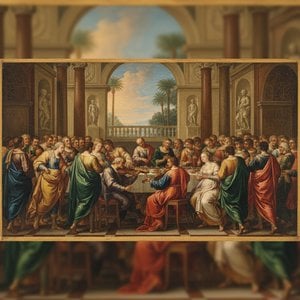
The mid-16th century witnessed Paolo Veronese embark on what would become the defining project of his illustrious career: the complete decoration of San Sebastiano. Over decades, he transformed the church into a dazzling spectacle of frescoes and paintings, creating arguably his most cohesive and immersive artistic statement. The sheer scale is staggering – from the Old Testament scenes adorning the sacristy to the monumental *Virgin in Glory with Saint Sebastian* dominating the high altar. Veronese poured his heart and soul into every detail, meticulously crafting a narrative that intertwined religious devotion with aristocratic elegance and dramatic spectacle. His mastery of color—rich, luminous, and utterly captivating—is on full display; observe how he imbues biblical figures not just with physical presence but also with palpable humanity. Fragments of the *Feast at the House of Simon*, hinting at Veronese’s famed opulent banquet scenes, offer tantalizing glimpses into a world of lavish feasts, courtly intrigue, and vibrant social life. He wasn't merely illustrating scripture; he was constructing an experience, drawing viewers directly into the heart of the stories themselves – inviting them to become participants in these grand narratives.
Echoes of Venetian Brilliance
While Paolo Veronese undeniably dominates the visual landscape of San Sebastiano, it’s important to acknowledge that other masters contributed significantly to its artistic richness. Tintoretto's dramatic use of light and shadow, exemplified by *Christ Washing the Feet of His Disciples*, provides a compelling counterpoint to Veronese’s vibrant palette, injecting a sense of dynamism and emotional intensity into the space. Sebastiano del Piombo’s poignant *Lamentation of Christ* adds another layer of profound emotional depth, offering a moment of quiet contemplation amidst the grandeur of Veronese's compositions. These contributions—distinct in style yet harmoniously integrated—enrich the overall experience, showcasing the breadth and vitality of Venetian artistic talent during the 16th century. Furthermore, the church holds a deeply personal significance: it serves as Veronese’s final resting place, a poignant reminder of the artist's enduring legacy within these very walls – a testament to his dedication and creative spirit.
An Intimate Encounter
What truly sets San Sebastiano apart is its unique atmosphere. Unlike grand museums where artworks are often isolated behind barriers, here you are enveloped by Veronese’s creations in their original context. The flickering candlelight, the hushed reverence of a working church, and the sheer density of artistic detail create an immersive experience that transcends mere observation. It's a place to lose yourself in the beauty of Renaissance art, to contemplate its spiritual significance, and to appreciate the enduring power of human creativity. The subtle scent of incense mingled with the aged stone adds another layer of sensory richness, transporting visitors back in time. For those seeking not just to *see* art but to *feel* it—to connect with the emotions and intentions of the artists who created these masterpieces—San Sebastiano offers an unforgettable journey into the heart of Venetian artistic brilliance.
Highlights & Current Exhibitions
Currently, San Sebastiano hosts rotating exhibitions focusing on Veronese’s techniques and the historical context of his work. Don't miss the opportunity to view detailed studies of his color palettes and compositional strategies. The church also regularly features smaller displays highlighting related works from other Venetian artists within its collection. Check ArtsDot.com for current exhibition details and reproductions available.