


The History of the Munch Museum
The Munch Museum began in 1963 at Tøyen, Oslo. It was established to commemorate what would have been the 100th birthday of Edvard Munch. The institution grew from a desire to preserve the artist's legacy, supported by donations from the artist himself and his sister, Inger. For decades, the museum served as a central repository for his extensive output, housing a vast collection of paintings and prints.
A period of significant tension occurred in 2004 when the museum faced a dramatic chapter. Two of its most prized possessions were stolen, an event that highlighted the immense cultural weight of the holdings. The tension of that era ended in 2006 when the works were recovered. This period of loss and recovery eventually fueled the ambition to create a more secure and expansive space for the collection.
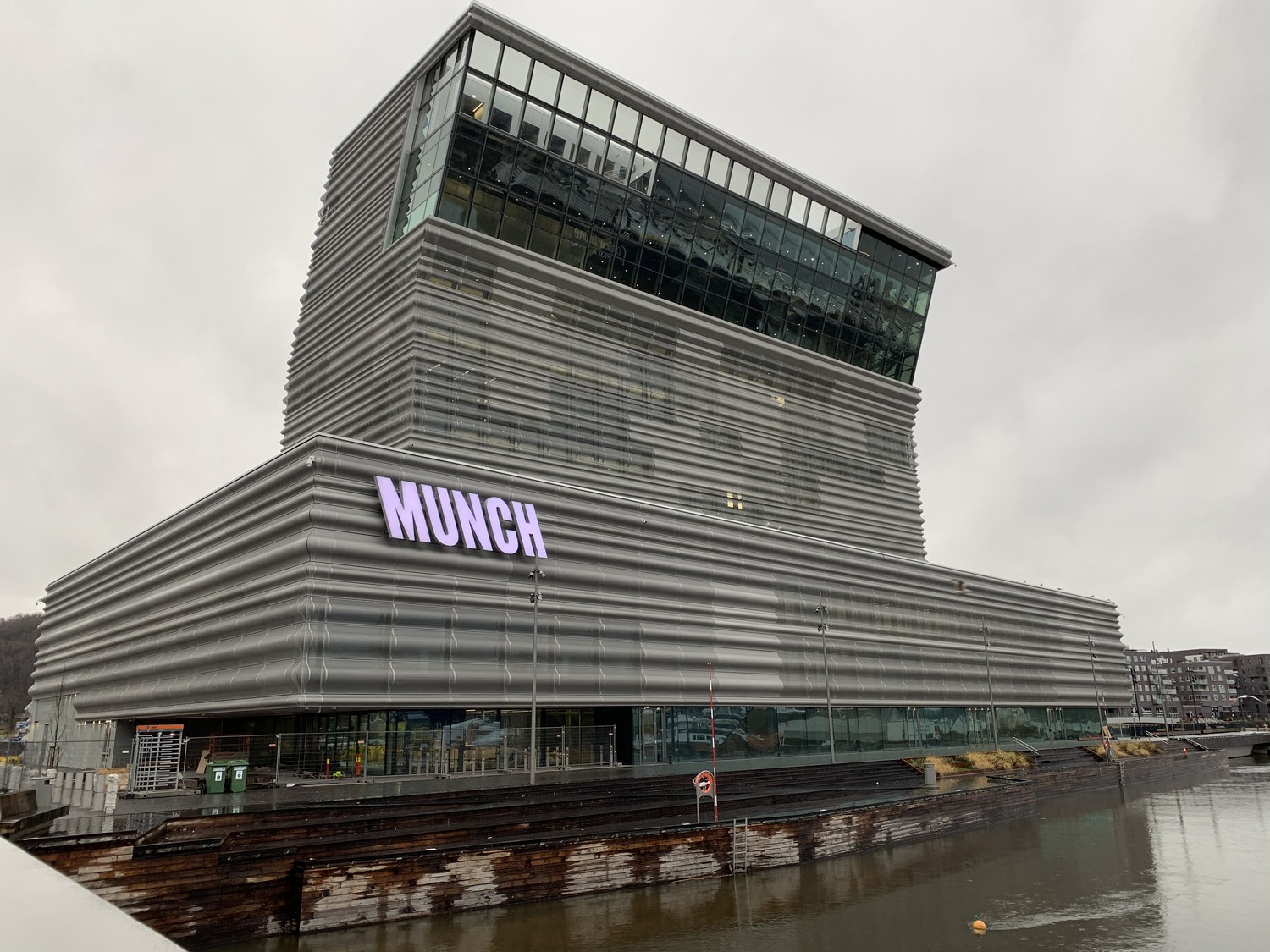
In October 2021, the Munch Museum moved from its original location to a new site in Bjørvika. This relocation marked a transition from the older halls of Tøyen to a modern presence on the Oslo waterfront. The museum now occupies a vertical structure that integrates the artist's history with the evolving urban landscape of the city.
The Architecture of the New Building
The current structure on Oslo's waterfront is a contemporary architectural statement designed by Spanish architect Juan Herreros. Reaching a height of 60 metres, the building rises through thirteen floors, organizing its functions vertically. A distinctively leaning top section defines its silhouette against the skyline. This verticality allows for a fluid spatial experience as one moves through the different levels.
The façade is composed of recycled, perforated, and partially translucent aluminium panels. These materials react to the shifting light conditions of the Oslofjord, creating an enigmatic presence that changes with the seasons. The design incorporates a large glass hall and various terraces that offer views of the surrounding cityscape. The building's materiality and form reflect a commitment to sustainability and modern engineering.
Masterpieces of the Collection
The collection contains over 1,200 paintings and 18,000 prints that trace the psychological depth of the artist. Among these, The Scream and Madonna exist as central presences within the halls. These works are accompanied by Man and Woman I, which explores the complexities of human connection. The sheer volume of the holdings allows for a quiet study of how form and color shift across decades of production.
Other significant works include Dance of Life, which occupies a prominent place in the visual narrative. The museum also preserves Vågen and Mördaren i gränden, pieces that offer a different perspective on the artist's evolving style. To stand before these originals is to encounter the raw intensity of the Expressionist movement in its most direct form.
- Madonna, 1894
- Christmas in the Brothel, 1905
- Near the bed of death (fever), 1915
- Self-Portrait, 1882
- Young woman on the shore, 1896
- Self-Portrait Beneath Woman's Mask, 1892
A Living Legacy of Expressionism
The institution functions as a dynamic cultural hub that extends far beyond the preservation of a single artist's output. As one of the largest single-artist museums in the world, it remains dedicated to the life and works of Edvard Munch. The space facilitates a continuous dialogue between the past and the present through rotating exhibitions that feature both established and emerging artists. This approach ensures that the foundations of Expressionism remain in constant conversation with contemporary artistic trends.
Engagement with the art is encouraged through a variety of programming designed to deepen understanding of the movement. The museum hosts lectures, workshops, film screenings, and performances that invite active participation. These activities transform the building from a quiet repository into a space of active cultural exchange. The presence of these diverse events allows the legacy of the collection to remain a living part of the city's social fabric.


