A Tower of Transformation: The Soul of Dortmund’s Artistic Renaissance
In the heart of Germany’s industrial landscape, where the echoes of heavy machinery once defined the rhythm of life, stands a soaring monument to resilience and rebirth. The Dortmunder U is far more than a mere architectural landmark; it is a vertical narrative of metamorphosis. Originally constructed between 1926 and 1927 as the Union Brewery, this concrete titan once pulsed with the energy of Dortmund’s industrial prowess during the Weimar Republic. However, as the tides of economic change swept through the Ruhr region, the brewery fell silent in 1994, leaving behind a hollowed shell of its former glory. Yet, through a profound act of cultural preservation, this structure was spared from the wrecking ball, emerging instead as a beacon for the 2010 European Capital of Culture. Today, its prefabricated concrete panels—designed by Jürgen Reimann and Rainer Schürmann—serve as a striking juxtaposition between a gritty industrial past and a luminous, creative future.
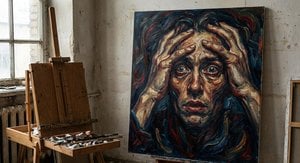
Stepping inside the Dortmunder U is akin to entering a living dialogue between history and the avant-garde. The museum’s collection serves as a sanctuary for the profound and the provocative, most notably through its courageous commitment to safeguarding works once deemed "degenerate" by the Nazi regime. This spirit of defiance breathes life into its remarkable assemblage of German Expressionism. Visitors find themselves immersed in the psychological landscapes of Die Brücke and Der Blaue Reiter , where the canvases of Ernst Ludwig Kirchner, Otto Mueller, and Emil Nolde vibrate with raw emotion and uninhibited color. These works do not merely sit on walls; they confront the viewer with the anxieties, spiritual yearnings, and visceral truths of a world in flux, making the museum an essential pilgrimage for those who seek art that dares to touch the human condition.
A Convergence of Radical Experimentation and Modernity
The narrative of the Dortmunder U extends far beyond the borders of Expressionism, embracing the radical experimentation of the 20th and 21st centuries. For collectors and lovers of the unconventional, the presence of the Fluxus movement offers a playground of chance and improvisation. Within these walls, the monumental sculptures of Joseph Beuys challenge the very definition of art, while Nam June Paik’s pioneering video installations disrupt our perceptions of reality through the lens of technology. This dedication to the experimental is further enriched by an impressive roster of masters; one might trace the spiritual, color-saturated evolution of Alexej von Jawlensky, witness the unflinching wartime portraits of Otto Dix, or wander through the architectural fantasies of Lyonel Feininger. The collection even weaves in the graphic brilliance of Picasso and the surrealist dreams of Dalí, creating a rich tapestry of modernism.
What truly distinguishes the Dortmunder U is its role as a vibrant, breathing ecosystem for creativity rather than a static repository of the past. It is a space where art meets science, and where the boundaries between spectator and creator are intentionally blurred. Through initiatives like the Youth Art Club and rotating exhibitions that breathe fresh life into the galleries twice a year, the museum fosters an environment of continuous evolution. For the interior designer seeking inspiration in bold textures or the art enthusiast searching for depth, the Dortmunder U offers a profound experience: it is a place where the industrial scars of history have been transformed into a soaring cathedral of modern innovation, proving that even from the ashes of decline, beauty can bloom eternally.