


The picture follows your choices: , .
Collectible Description
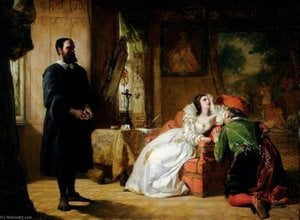
Experience Victorian life through 'The Invalid' by William Powell Frith! This captivating oil painting portrays a family gathering with poignant detail and masterful storytelling.
 Read More
Artist Biography
Explore the Victorian era through William Powell Frith's detailed paintings! Known for genre scenes & panoramic narratives like 'The Derby Day,' his art captures everyday life with remarkable realism.
Hand Made Oil Reproduction
Hand-painted oil on canvas in your size and frame, made to order by our artists. ( Switch to Print Switch to Digital Image)
More about this painting
 Preview
 Send
Send Share
Share
 Details
 Guide
Guide

 Download
 Similars
 X-Ray
X-Ray Diaporama
 Q&A
Q&A Stats
StatsOrder your painting in four simple steps
Take your time. You can change any answer; the price in your order card follows each choice.
1 Step one of four
Which size would you like?
These sizes keep the proportions of the original painting. The drawing shows your choice on a wall, above a two-metre sofa.
Or give your own measurements
Pick from our preset sizes that match the artwork's original proportions.

Type the width and the height you need, to fit your frame or your wall. This is hand-painted, so for a size with a different shape the artist can paint a bit more around the picture, or cut a bit — you choose. We send you a digital mockup to approve before the painting starts. The picture shown on this page does not show the real result — only the mockup does.
2 Step two of four
How should it be prepared: rolled, stretched or framed?
The prices below are for the size you chose in step one.
Choose the edges of the stretched canvas
Choose your frame

White $1

Blurside $1

Extended $1

P118B $10

P118H $10

P118W $10

P438Z $10

P508JH $12

P508YH $12

P805H $10

P805Z $10

P919BZ $10

P919G $10

P919XJ $10

P959ZH $10

P968JZ $12

W106C $8

W218G $10

W218JH $8

W218Y $10

W307PJ $10

W316G $10

W316PJ $8

W316Y $10

W398PJ $8

W4111J $10

W500HY $15

W500JH $15

W692G $12

W849H $8

W940BG $15

W953PJ $8

H24-GOLD $30

H24-SILVER $30

H36-GOLD $45

H36-SILVER $45
Framed
Moulding: . Overall size with the frame: .
3 Step three of four
Would you like anything changed in the painting?
Most people answer no. Because each painting is made by hand, our artist can also adapt it for you.
After order, ArtsDot.com team will email client for instructions and provide a mockup preview
4 Step four of four
A few finishing options
All of them are optional. The answers already selected cost nothing extra.
Who paints it?
Worldwide Delivery () in 3/4 weeks instead of standard 5 weeks. (6 November). No compromise on quality.
A nameplate, as in a museum?
Engraved Bronze Plaque Details
This elegant plaque features the artist's name and the title of the artwork, finely engraved for a timeless presentation.
It is made from bronze with a refined, elegant finish. The text is precisely laser-engraved for a sharp and permanent result. Measuring 9x2 cm, the plaque is compact yet easy to read. It's built to be durable and scratch-resistant, offering a professional, museum-quality look. Mounting is simple thanks to the included adhesive backing.
Transparent Acrylic Plaque Details
The plaque includes essential engraved details such as the artist's name, the title of the artwork, the date it was created, the type of media used-like oil on canvas or watercolor-a brief description of the piece, and a QR code that links to the complete artwork information.
It is crafted from clear acrylic, offering a sleek, modern appearance. The text is UV-engraved in black to ensure strong visual contrast. With a size of 10x15 cm, it ensures optimal readability. It comes equipped with two metal hooks for secure wall mounting. The plaque is designed to be weather-resistant, making it suitable for various environments, and it includes interactive features that work seamlessly with smartphone scanning.
Black Acrylic Plaque Details
This elegant plaque includes engraved information such as the artist's name, the title of the artwork, the date it was created, the type of media used (like oil on canvas or watercolor), a short description of the artwork, and a QR code for quick access to more information.
The plaque itself is made from refined black acrylic with a premium finish. The text is laser-engraved in white for high contrast and readability. Its size is 10x15 cm, designed to be easy to read. It comes with two metal hooks for professional mounting. The design is sleek and fits any interior style. It is also weather-resistant and durable, with built-in digital integration for mobile compatibility.
A protective varnish?
When do you need it?
✓ Check and order
Your painting, as you ordered it

The Invalid
Reproduction Medium
Reproduction Size
-

Elite Senior Artist
More detail, finesse, and extra production time
-

Reproduction Frame
-
-
For artworks or reproductions larger than 105 cm (approximately 41 inches) on any side, the frame will be shipped as a kit, disassembled. This method ensures safe delivery and prevents damage during transport.
Professional assembly required - this is not a DIY product.
The kit must be assembled and the canvas stretched by an experienced professional framer, using wood glue (not supplied), a canvas stretching plier and clamps to hold the bars square while the glue dries. Incorrect assembly or uneven canvas tension can permanently damage the artwork and is not covered by our warranty.
 For artworks or reproductions larger than 105 cm (approximately 41 inches) on any side, the frame will be shipped as a kit, disassembled. This method ensures safe delivery and prevents damage during transport.
All solid wood bars are included, precisely cut to size.
Assembled with the screws provided, plus wood glue for the corner joints, which is not supplied and must be sourced by your framer.
Professional tools are required and not included: a canvas stretching plier (tensioner) and clamps to hold the bars square while the glue dries.
Important:
The corner joints require wood glue, the bars must be held with clamps until the glue is fully dry, and tightening the canvas on the assembled frame requires a canvas stretching plier. None of these are included in the kit. Please arrange an experienced professional framer before ordering this size.

Nameplate
-
-

Protective Varnish
Glossy Varnish (enhances colors, protects against light/moisture)
-

Customize My Artwork
Examples of what can be changed: Replace face with customer photo; Add pet (e.g., replace cat with dog); Include hidden message in background; Change background landscape or elements.
-

Urgent
Worldwide Delivery () in 3/4 weeks instead of standard 5 weeks. (6 November). No compromise on quality.
-
Express Shipping
Worldwide Delivery () in 5 weeks. (13 November).
Included
Total Price
$ 263
Glass option is only available in size under 110 CM
Included with every order
- Free Worldwide Express Shipping
- High-Quality Linen Canvas
- Full Shipping Insurance
- Customs Tax Refund Guarantee
- True Color Matching Guarantee
- 100-Day Return Policy (Defects Only)
- 100% Money-Back Guarantee
- Bulk Discount Offer


A Tender Glimpse into Victorian Intimacy
In the quiet corners of late nineteenth-century England, domestic life was often defined by a delicate balance of social propriety and deep-seated familial devotion. William Powell Frith’s 1890 masterpiece, "The Invalid," serves as a profound window into this era, capturing a moment that is simultaneously heavy with the weight of illness and lightened by the warmth of human connection. The painting presents a domestic tableau where a family gathers around a woman resting in bed, creating an atmosphere that feels less like a formal portrait and more like a stolen glance into a private, sacred space. Through his masterful use of color and composition, Frith invites us to witness the quiet strength found in companionship during times of vulnerability.
The scene is bathed in a comforting, golden glow, achieved through a palette dominated by rich reds, oranges, and yellows. This warmth does more than just illuminate the room; it acts as an emotional embrace, softening the somber reality of the subject matter. As we gaze upon the canvas, our eyes are drawn to the meticulous details that ground the scene in a tangible reality: the steady, silent presence of a grandfather clock on the wall, a vase brimming with fresh flowers that offers a flicker of life amidst the stillness, and scattered books that hint at the intellectual lives of those present. Every element is placed with intention, contributing to a narrative of caregiving and quiet endurance.
Mastery of Narrative and Technique
Frith was renowned for his ability to construct panoramic narratives, and even within this intimate domestic setting, his skill in storytelling is palpable. Drawing significant inspiration from the celebrated Sir David Wilkie, Frith eschews grand, theatrical gestures in favor of a more nuanced realism. He does not merely record a scene; he constructs an unfolding drama where the unspoken anxieties and affections of the characters are felt by the viewer. The positioning of the figures—particularly the man seated vigilantly beside the bed—underscores the Victorian ideal of duty and support, making the painting a poignant study of the bonds that hold a family together.
For the discerning collector or interior designer, "The Invalid" offers much more than mere decoration. It is a piece of historical storytelling that brings a sense of depth and soul to any space. The painting’s ability to evoke empathy makes it an ideal centerpiece for rooms designed for reflection and conversation. Whether placed in a traditional study or a contemporary living area, the work provides a sophisticated touch of nostalgia, reminding us of the timelessness of love and the enduring importance of presence in the face of adversity.
Questions & Answers
What underlying hue runs through "The Invalid" by William Powell Frith?
"The Invalid" leans toward a golden yellow range tone.
In what period was "The Invalid" by William Powell Frith made?
"The Invalid" belongs to the 19th-Century era.
What is "The Invalid" about, and what atmosphere does it have?
"The Invalid" shows family life, domestic scene, victorian era, interior painting, observation, detail, warm colors, and its recorded mood is calm.
Related Artworks


William Powell Frith
1819 - 1909, United Kingdom
Artist Biography
Early Life and Training
- Born: January 9, 1819, Aldfield, near Ripon, North Yorkshire, England
- Died: November 2, 1909, London
- William Powell Frith’s father was a hotelier in Harrogate.
- He initially intended to be an auctioneer but his father recognized his artistic talent.
- Frith studied at Sass's Academy in Charlotte Street, London and later attended the Royal Academy Schools.
- Early career focused on portrait painting and literary subjects (Shakespeare, Scott).
Career Highlights and Artistic Style
- Membership: Member of The Clique, a group of artists including Richard Dadd, Augustus Egg, Henry O’Neil, John Phillip, Edward Ward, and Thomas Creswick.
- Influences: Heavily influenced by Sir David Wilkie's domestic subjects.
- Genre Painting & Panoramic Narrative: Frith became renowned for his detailed genre scenes and panoramic narrative works depicting Victorian life in public places.
- Notable Works:
- Ramsgate Sands (1854): Depicts a lively scene at the seaside resort of Ramsgate.
- The Derby Day (1858): Captures the atmosphere and social interactions at Epsom Downs Racecourse. This painting was incredibly popular, requiring railings to manage crowds viewing it.
- The Railway Station (1862): A detailed depiction of Paddington Station.
- The Sleeping Model (1853): Presented as his Diploma work at the Royal Academy.
- The Crossing Sweeper (1858): Explores the contrast between wealth and poverty in London.
- Photographic Influence: Frith utilized photographic studies by Robert Howlett to achieve remarkable detail and accuracy in his paintings, particularly in works like The Derby Day.
- Style: Characterized by meticulous observation, a large number of figures, and a focus on capturing the details of everyday life. He was known for his realism and attention to social commentary within his scenes.
Development and Later Years
- Autobiographies: Frith wrote two autobiographies, My Autobiography (1887) and Further Reminiscences (1888), providing insights into Victorian art and society.
- Artistic Views: He was a traditionalist and expressed his aversion to modern art developments.
- Royal Academician: Elected as a Royal Academician in 1853.
- Longevity: Frith lived a remarkably long life, witnessing significant changes in the art world during the Victorian era. He outlived many of his contemporaries from The Clique.
Historical Significance and Legacy
- Social Commentary: His paintings provided valuable documentation of Victorian society, capturing its social dynamics, fashion, and leisure activities.
- Popularity & Commercial Success: Frith was one of the most commercially successful artists of his time, with his works widely admired and sought after.
- Influence on Genre Painting: He significantly contributed to the development of genre painting in Britain, elevating it to a respected art form.
- Detailed Realism: His meticulous attention to detail set a standard for realism in Victorian art.
- Legacy: Frith’s paintings continue to be exhibited and studied, offering a unique window into 19th-century life and solidifying his place as a significant figure in British art history.



Related Articles

The Gaze of a Changing World: Victorian Realism & Modern Life
Explore the captivating world of Victorian Realism! Discover genre painting's rise, social commentary in art, & masters like Fedotov and Wilkie. Expert analysis & high-quality reproductions at ArtsDot.

George Goodwin Kilburne: Capturing Victorian Sentimentality Through Genre Painting
Explore the evocative Victorian paintings of George Goodwin Kilburne. Discover his detailed scenes of domestic life, masterful use of light, and lasting impact on British genre painting. Learn more at ArtsDot.

Robert Lillie: A Study in Victorian Genre Painting and Domestic Narrative
Explore the captivating Victorian genre paintings of Robert Lillie (1867-1949). Discover his serene Scottish landscapes and intimate domestic scenes, reflecting a unique artistic vision. Learn about his life, style & legacy.