

- 198.0 x 137.0 cm


The picture follows your choices: , .
Collectible Description
Experience the Baroque brilliance of Peter Paul Rubens' 'Immaculate Conception'! This masterpiece showcases vibrant colors, dynamic composition & religious symbolism – a timeless work of art.
 Read More
Artist Biography
A master of Flemish Baroque, Rubens is famed for his dynamic compositions. Discover his vibrant and powerful masterpieces today.
Hand Made Oil Reproduction
Hand-painted oil on canvas in your size and frame, made to order by our artists. ( Switch to Print Switch to Digital Image)
More about this painting
 Preview
 Send
Send Share
Share
 Details
 Guide
Guide

 Download
 Similars
 X-Ray
X-Ray Diaporama
 Q&A
Q&A Stats
StatsOrder your painting in four simple steps
Take your time. You can change any answer; the price in your order card follows each choice.
1 Step one of four
Which size would you like?
These sizes keep the proportions of the original painting. The drawing shows your choice on a wall, above a two-metre sofa.
Or give your own measurements
Pick from our preset sizes that match the artwork's original proportions.

Type the width and the height you need, to fit your frame or your wall. This is hand-painted, so for a size with a different shape the artist can paint a bit more around the picture, or cut a bit — you choose. We send you a digital mockup to approve before the painting starts. The picture shown on this page does not show the real result — only the mockup does.
2 Step two of four
How should it be prepared: rolled, stretched or framed?
The prices below are for the size you chose in step one.
Choose the edges of the stretched canvas
Choose your frame

White $1

Blurside $1

Extended $1

P118B $10

P118H $10

P118W $10

P438Z $10

P508JH $12

P508YH $12

P805H $10

P805Z $10

P919BZ $10

P919G $10

P919XJ $10

P959ZH $10

P968JZ $12

W106C $8

W218G $10

W218JH $8

W218Y $10

W307PJ $10

W316G $10

W316PJ $8

W316Y $10

W398PJ $8

W4111J $10

W500HY $15

W500JH $15

W692G $12

W849H $8

W940BG $15

W953PJ $8

H24-GOLD $30

H24-SILVER $30

H36-GOLD $45

H36-SILVER $45
Framed
Moulding: . Overall size with the frame: .
3 Step three of four
Would you like anything changed in the painting?
Most people answer no. Because each painting is made by hand, our artist can also adapt it for you.
After order, ArtsDot.com team will email client for instructions and provide a mockup preview
4 Step four of four
A few finishing options
All of them are optional. The answers already selected cost nothing extra.
Who paints it?
Worldwide Delivery () in 3/4 weeks instead of standard 5 weeks. (11 November). No compromise on quality.
A nameplate, as in a museum?
Engraved Bronze Plaque Details
This elegant plaque features the artist's name and the title of the artwork, finely engraved for a timeless presentation.
It is made from bronze with a refined, elegant finish. The text is precisely laser-engraved for a sharp and permanent result. Measuring 9x2 cm, the plaque is compact yet easy to read. It's built to be durable and scratch-resistant, offering a professional, museum-quality look. Mounting is simple thanks to the included adhesive backing.
Transparent Acrylic Plaque Details
The plaque includes essential engraved details such as the artist's name, the title of the artwork, the date it was created, the type of media used-like oil on canvas or watercolor-a brief description of the piece, and a QR code that links to the complete artwork information.
It is crafted from clear acrylic, offering a sleek, modern appearance. The text is UV-engraved in black to ensure strong visual contrast. With a size of 10x15 cm, it ensures optimal readability. It comes equipped with two metal hooks for secure wall mounting. The plaque is designed to be weather-resistant, making it suitable for various environments, and it includes interactive features that work seamlessly with smartphone scanning.
Black Acrylic Plaque Details
This elegant plaque includes engraved information such as the artist's name, the title of the artwork, the date it was created, the type of media used (like oil on canvas or watercolor), a short description of the artwork, and a QR code for quick access to more information.
The plaque itself is made from refined black acrylic with a premium finish. The text is laser-engraved in white for high contrast and readability. Its size is 10x15 cm, designed to be easy to read. It comes with two metal hooks for professional mounting. The design is sleek and fits any interior style. It is also weather-resistant and durable, with built-in digital integration for mobile compatibility.
A protective varnish?
When do you need it?
✓ Check and order
Your painting, as you ordered it

Immaculate Conception
Reproduction Medium
Reproduction Size
-

Elite Senior Artist
More detail, finesse, and extra production time
-

Reproduction Frame
-
-
For artworks or reproductions larger than 105 cm (approximately 41 inches) on any side, the frame will be shipped as a kit, disassembled. This method ensures safe delivery and prevents damage during transport.
Professional assembly required - this is not a DIY product.
The kit must be assembled and the canvas stretched by an experienced professional framer, using wood glue (not supplied), a canvas stretching plier and clamps to hold the bars square while the glue dries. Incorrect assembly or uneven canvas tension can permanently damage the artwork and is not covered by our warranty.
 For artworks or reproductions larger than 105 cm (approximately 41 inches) on any side, the frame will be shipped as a kit, disassembled. This method ensures safe delivery and prevents damage during transport.
All solid wood bars are included, precisely cut to size.
Assembled with the screws provided, plus wood glue for the corner joints, which is not supplied and must be sourced by your framer.
Professional tools are required and not included: a canvas stretching plier (tensioner) and clamps to hold the bars square while the glue dries.
Important:
The corner joints require wood glue, the bars must be held with clamps until the glue is fully dry, and tightening the canvas on the assembled frame requires a canvas stretching plier. None of these are included in the kit. Please arrange an experienced professional framer before ordering this size.

Nameplate
-
-

Protective Varnish
Glossy Varnish (enhances colors, protects against light/moisture)
-

Customize My Artwork
Examples of what can be changed: Replace face with customer photo; Add pet (e.g., replace cat with dog); Include hidden message in background; Change background landscape or elements.
-

Urgent
Worldwide Delivery () in 3/4 weeks instead of standard 5 weeks. (11 November). No compromise on quality.
-
Express Shipping
Worldwide Delivery () in 5 weeks. (18 November).
Included
Total Price
$ 263
Glass option is only available in size under 110 CM
Included with every order
- Free Worldwide Express Shipping
- High-Quality Linen Canvas
- Full Shipping Insurance
- Customs Tax Refund Guarantee
- True Color Matching Guarantee
- 100-Day Return Policy (Defects Only)
- 100% Money-Back Guarantee
- Bulk Discount Offer


A Divine Vision: The Immaculate Conception by Peter Paul Rubens
Peter Paul Rubens’ Immaculate Conception, a painting brimming with vibrant color and dynamic movement, isn't merely a depiction of the Virgin Mary; it’s an immersive experience of Baroque fervor. Completed in 1628 during his time in Madrid, Spain, this work transcends simple religious iconography to become a testament to Rubens’ unparalleled skill in capturing both spiritual grandeur and earthly beauty. Housed within the Museo del Prado, its presence commands attention, inviting viewers into a world where divine grace intertwines with human emotion.
At first glance, the painting presents a scene of profound serenity: Mary stands upon a globe, a subtle yet powerful symbol of her role as protector and nurturer of humanity. Dressed in sumptuous robes—a fiery red tunic contrasted by deep blues—she is adorned with a radiant crown of stars, immediately elevating her to a position of unparalleled sanctity. The composition isn’t static; angels swirl around her, their wings catching the light, while at her feet, a coiled serpent represents the vanquishing of evil – a potent visual narrative woven into the fabric of faith. Rubens masterfully employs chiaroscuro, utilizing dramatic contrasts between light and shadow to draw our gaze directly to Mary’s face, radiating an almost palpable sense of peace and maternal love.
The Baroque Palette: Color, Light, and Drama
Rubens' signature style is immediately evident in the painting’s explosive use of color. He eschews the muted tones often associated with religious art of the period, instead embracing a palette rich in reds, blues, golds, and greens—colors that pulsate with life and energy. This vibrant approach was deeply influenced by his time in Italy, particularly his exposure to Caravaggio's dramatic *tenebrism*, where stark contrasts between light and dark heighten emotional impact. The golden light bathing the scene isn’t merely decorative; it symbolizes divine grace illuminating Mary’s purity and virtue. Notice how Rubens builds layers of color, creating a sense of depth and volume that draws us into the heart of the composition.
Technically, the painting showcases Rubens' mastery of oil paint. He employs loose brushstrokes—a hallmark of his style—to create an impressionistic effect, capturing not just the details of Mary’s robes but also the swirling movement of the angels and the subtle textures of the globe beneath her feet. The meticulous rendering of fabric, particularly the folds in Mary's garments, demonstrates a remarkable attention to detail, while simultaneously contributing to the painting’s overall sense of dynamism.
A Royal Patronage and Historical Context
The Immaculate Conception was painted during Rubens’ visit to Madrid in 1628, where he served as court painter to King Philip IV of Spain. This encounter profoundly shaped the work, reflecting the religious fervor and artistic patronage prevalent within the Spanish royal court at the time. The painting's grandeur and emotional intensity align perfectly with the Baroque aesthetic favored by the Habsburg monarchy, who sought to project an image of power, piety, and cultural sophistication. It’s believed that Philip IV himself commissioned the work, recognizing its ability to inspire awe and reverence.
Beyond its royal connections, the painting speaks to a broader theological debate surrounding Mary's role in salvation history. The doctrine of the Immaculate Conception—that Mary was conceived without original sin—was gaining traction during this period, and Rubens’ depiction powerfully embodies this belief. Interestingly, the work predates the formal definition of the dogma by nearly two centuries, yet it anticipates the theological arguments that would ultimately solidify its place within Catholic doctrine.
A Timeless Legacy
The Immaculate Conception remains a cornerstone of Baroque art and a testament to Peter Paul Rubens’ artistic genius. Its blend of religious symbolism, vibrant colors, and dynamic composition continues to resonate with viewers today, offering insights into the spiritual and cultural values of the 17th century. It's more than just a beautiful painting; it’s a window into a world where faith, art, and power converged in spectacular fashion. For those seeking to explore further works by Rubens, we encourage you to visit Peter Paul Rubens: Immaculate Conception on ArtsDot. Additionally, delve deeper into the life and work of this master at Peter Paul Rubens - Wikipedia.
Questions & Answers
What space matches the colors of "Immaculate Conception" by Peter Paul Rubens?
The earthy colors of "Immaculate Conception" by Peter Paul Rubens match its recommended space: a living room.
What is the color identity of "Immaculate Conception" by Peter Paul Rubens?
"Immaculate Conception" by Peter Paul Rubens uses an earthy palette, with espresso (#573e37) as the dominant color.
What stage of Peter Paul Rubens's career does "Immaculate Conception" (1628) belong to?
The 1628 date places "Immaculate Conception" in the Mature Period of Peter Paul Rubens's development.
Related Artworks


Peter Paul Rubens
1577 - 1640, Germany
Artist Biography
Early Life, Family and Training
To understand the scale of Peter Paul Rubens, one must look at the displacement that defined his beginnings. Born on 28 June 1577 in Siegen, Germany, his early years were shaped by the religious instability of the era. His father, Jan Rubens, was a lawyer who fled religious persecution, a move that forced the family to navigate the shifting political landscapes of the time. This background of movement and survival provided a practical resilience that would later underpin his complex professional life. He was the son of Jan Rubens and Maria Pypelincks, and his upbringing was rooted in the social realities of the Southern Netherlands.
His technical foundation was built through a series of disciplined apprenticeships that moved him from basic landscape studies toward the complex iconography of history painting. In 1592, he began his training under Tobias Verhaecht, a landscape painter who provided the essential groundwork in composition. This was followed by a four-year apprenticeship with Adam van Noort, a specialist in portraiture and mythological scenes. These years were not merely about learning to hold a brush; they were about absorbing the structural mechanics of the Flemish tradition. By the time he began working with Otto van Veen between 1594 and 1598, Rubens had already acquired the technical vocabulary necessary to move beyond simple representation into the realm of sophisticated narrative art.
The Italian Awakening and Artistic Synthesis
In 1600, Rubens left the Low Countries for Italy, a move that fundamentally altered his visual language. He did not merely observe the Italian tradition; he absorbed it through eight years of direct engagement with the works of Michelangelo, Raphael, and Titian. This period was not a passive study. By serving the Duke of Mantua, he gained access to the high-stakes environment of Italian courtly art, where the demands of patronage required a sophisticated command of form and narrative. He took the anatomical precision of Michelangelo and the coloristic depth of Titian, stripping away the static qualities of the High Renaissance to create something more muscular and immediate.
The result was a synthesis that moved beyond imitation. Rubens took the classical ideals he encountered in Italy and infused them with a Flemish sense of vitality. He understood that movement required more than just depicted action; it required a specific tension in the human figure and a command of light that felt physical rather than merely decorative. When he returned to Antwerp in 1608, he brought back a style that was ready to dominate the European market. He had successfully merged the intellectual rigor of Italian humanism with a raw, energetic approach to composition.
- Prometheus Bound (completed 1612)
A Master of Many Forms
Rubens’s output was defined by a refusal to remain within a single genre. He operated with a versatility that allowed him to command the production of altarpieces, portraits, landscapes, and history paintings. This breadth was not a sign of scattered focus but a calculated expansion of his visual influence. He moved between the sacred and the secular with ease, applying his command of composition to everything from religious narratives to the intimate details of a sitter's likeness.
His reach extended into the commercial and decorative sectors of the seventeenth-century market. He was a prolific designer of cartoons for Flemish tapestry workshops, translating complex narratives into patterns for weavers. Beyond the canvas, his graphic work was essential to the publishing industry in Antwerp, where he designed frontispieces for local publishers. This ability to scale his vision from massive church commissions to small-scale printed works ensured his aesthetic presence was felt across different media.
Technique and Style
Rubens’s visual language is defined by a relentless sense of motion. He rejected static imagery in favor of energetic and dramatic arrangements that force the viewer to engage with the scene. This dynamism is not merely a compositional choice but a structural necessity in his work. By utilizing chiaroscuro, he sculpted human forms with a precision that emphasized musculature and physical presence. This interplay of light and shadow provides the weight necessary to ground his often swirling, high-energy subjects.
His approach to color and texture relies on a sophisticated layering process. He employed glazing, applying thin, translucent layers of pigment over thicker undercoats to achieve a depth of color that feels internal rather than surface-level. This technique allowed him to capture the specific luminosity of skin tones and the heavy weight of fabric. His style prioritized a sense of sensuality and physical vitality, ensuring that every figure possessed a palpable, breathing quality. He did not merely depict bodies; he engineered them through light and pigment to command attention.
- The Descent from the Cross (c. 1616-1617)
- The Raising of the Cross (1610-1611)
- The Judgement of Paris (c. 1636)
Patrons, Workshop and Commissions
Rubens operated with the precision of a high-stakes businessman, building one of the most successful artistic enterprises in European history. By 1610, he had opened his own studio in Antwerp, a move that transformed his practice from individual creation into a massive production engine. This was not a mere collection of assistants; it was a sophisticated operation designed to meet the relentless demands of his international clientele. He functioned as a central hub for talent, coordinating complex projects that required specialized skills to achieve his specific visual standards.
His professional status was cemented by his position as court painter to the Archduke and Archduchess in Brussels. This role provided more than just steady work; it placed him at the center of political and social power. To manage the sheer volume of his commissions, Rubens relied on a network of skilled collaborators. He integrated the talents of other significant artists into his workflow, including Frans Snyders, Paul de Vos, Jacob Jordaens, and Jan Brueghel the Elder. This collaborative model allowed him to execute massive, multi-layered compositions that a single hand could not have completed in a lifetime.
- The Descent from the Cross (c. 1616-1617)
- The Raising of the Cross (1610-1611)
- The Meeting of Marie de' Medici and Henry IV at Lyons (1625)
Later Years and Death
By 1630, Rubens had integrated his private life with his professional status through his marriage to Hélène Fourment. This union provided a steady presence in his Antwerp studio during a period when his responsibilities extended far beyond the canvas. He was not merely a painter but a high-stakes diplomat, navigating the complex political currents of Europe through missions to England, France, and Spain. These diplomatic endeavors required a level of intellectual agility and social maneuvering that matched his technical command of oil and pigment.
His productivity remained high even as his political duties intensified. He continued to paint prolifically, maintaining a massive output that sustained his reputation across the continent. The sheer volume of his work in these final years reflects a man who managed a vast artistic enterprise while simultaneously acting as a cultural intermediary for the Southern Netherlands. He remained active in the artistic and political life of Antwerp until his death on 30 May 1640.
Legacy and Influence
Rubens remains the most influential figure in the Flemish Baroque tradition. His work functioned as a bridge between the divine and the human, translating complex religious and mythological narratives into a visual language of physical presence. He did not merely paint scenes; he engineered spectacles of visual grandeur. This ability to command space and movement ensured his influence reached far beyond the borders of the Southern Netherlands.
The impact of his method on subsequent generations of artists is immeasurable. He established a standard for high-energy dynamism that later painters had to either adopt or react against. His studio functioned as a massive engine of production, setting a precedent for how large-scale artistic enterprises could operate across Europe. By synthesizing the classical grace of the Renaissance with a raw, muscular energy, he redefined the expressive potential of oil on canvas.
- The Descent from the Cross
- The Raising of the Cross
- Prometheus Bound


Related Articles

The Subdued Radiance of Pastel Palettes: Exploring Emotional Resonance in Art History
Explore the emotional power of pastel palettes in art history! Discover Impressionism, Post-Impressionism & color psychology insights. Find museum-quality reproductions at ArtsDot.
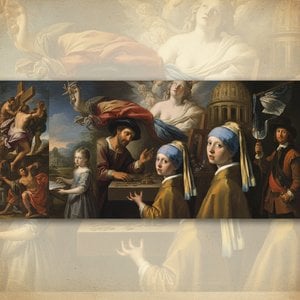
Baroque Masterpieces: 10 Paintings That Defined an Era |
Journey through the drama & grandeur of Baroque art! Explore 10 masterpieces by Caravaggio, Rembrandt, Rubens & more. Discover stunning oil paintings, rich colors & timeless stories. Find museum-quality reproductions at .

Mastering the Baroque: The Top 25 Essential Artworks by Peter Paul Rubens
Explore 25 iconic Baroque masterpieces by Peter Paul Rubens. Discover timeless art legends on ArtsDot.com.