

 Preview
 Send
Send Share
Share
 Details
 Guide
Guide

 Download
 Similars
 X-Ray
X-Ray Diaporama
 Q&A
Q&A Stats
StatsThe acrobats


 Read More
Giclée / Art Print
Museum-quality giclée or canvas print with fast production and flexible finish options. ( Buy Hand Made Painting Switch to Digital Image)




P118B $10

P118H $10

P118W $10

P438Z $10

P508JH $12

P508YH $12

P805H $10

P805Z $10

P919BZ $10

P919G $10

P919XJ $10

P959ZH $10

P968JZ $12

W106C $8

W218G $10

W218JH $8

W218Y $10

W307PJ $10

W316G $10

W316PJ $8

W316Y $10

W398PJ $8

W4111J $10

W500HY $15

W500JH $15

W692G $12

W849H $8

W940BG $15

W953PJ $8




Pick from our preset sizes that match the artwork's original proportions.

Type the width and the height you need, to fit your frame or your wall. A print can only be cut, never made bigger than the picture, so a size with a different shape loses a part of the image. We send you a digital mockup to approve before we print anything. The picture shown on this page does not show the real cut — only the mockup does.
Worldwide Delivery () in 2 weeks instead of standard 4/5 weeks. (5 November)

Free Worldwide Express Shipping

High-Quality Linen Canvas

Full Shipping Insurance

Customs Tax Refund Guarantee

True Color Matching Guarantee

100-Day Return Policy (Defects Only)

100% Money-Back Guarantee

Bulk Discount Offer
 Glass option is only available in size under 110 CM

The acrobats
Giclée / Art Print
Reproduction Size
-


Total Price
$ 63
A Chaotic Symphony of Human Drama
In the profound and often unsettling world of Max Beckmann, The Acrobats emerges as a breathtaking spectacle of movement and existential tension. Painted in 1939, a year shadowed by the gathering storms of global conflict, this masterpiece serves as a vibrant yet distorted stage where humanity performs its most precarious balancing acts. The canvas is a dense, almost claustrophobic collage of figures, each caught in a moment of intense physical or emotional exertion. At first glance, the eye is drawn to the sheer variety of poses—some figures sit in quiet contemplation, while others are suspended in mid-motion, mimicking the daring feats of circus performers. This sense of a theatrical troupe, caught between a rehearsal and a performance, creates an atmosphere that is simultaneously energetic and deeply unsettling.
The composition defies traditional spatial logic, opting instead for a layered, almost dreamlike arrangement that pushes the boundaries of German Expressionism. Beckmann utilizes a technique reminiscent of medieval stained glass, where bold outlines and compressed spaces force the viewer to confront the weight of every figure. The background is cluttered with the mundane artifacts of domestic life—chairs, dining tables, and various household objects—yet these familiar items feel strangely displaced within this acrobatic chaos. This juxtaposition between the ordinary setting and the extraordinary physical feats suggests a deeper metaphor: that life itself is a continuous, often dangerous, performance played out against the backdrop of an unstable world.
Symbolism and the Expressionist Vision
To gaze upon The Acrobats is to witness Beckmann’s unique ability to translate personal and historical trauma into universal symbolism. Having been profoundly changed by his experiences as a medical orderly during World War I, Beckmann developed a visual language characterized by distorted forms and heavy, symbolic weight. In this work, the acrobats are not merely entertainers; they represent the fragility of the human condition. The act of balancing, of holding onto objects like books or bowls amidst a sea of shifting bodies, mirrors the struggle to maintain dignity and order in an era of encroaching madness. Every limb stretched toward an unseen goal and every tilted gaze carries the burden of social anxiety and existential dread.
The color palette plays a crucial role in driving this emotional impact. Beckmann employs vivid, often jarring colors that clash with one another, heightening the sense of psychological unrest. These hues do not merely decorate the scene; they pulse with the rhythm of the performance, guiding the viewer through the labyrinthine layers of the painting. For the discerning collector or interior designer, this piece offers more than just visual interest; it provides a profound intellectual and emotional anchor. A high-quality reproduction of such a work brings into a space a sense of historical gravity and a conversation about the resilience of the human spirit amidst chaos.
A Timeless Masterpiece for Modern Spaces
For those seeking to curate an environment filled with depth and narrative power, The Acrobats stands as an incomparable choice. Its complex layers of meaning and striking visual rhythm make it a centerpiece capable of transforming a room from a mere living space into a gallery of contemplation. Whether placed in a contemporary setting where its bold lines can contrast with minimalist decor, or in a more classical interior to provide a dramatic focal point, the painting commands attention through its sheer expressive force.
Owning a reproduction of this Beckmann masterpiece allows for an intimate connection with one of the 20th century's most significant artistic legacies. It is an invitation to explore the tension between movement and stillness, between the public spectacle and the private struggle. In every brushstroke of a faithful reproduction, the spirit of the German Expressionist movement lives on, offering timeless inspiration to anyone who finds beauty in the complex, the distorted, and the profoundly human.
Questions & Answers
What type of artwork is "The acrobats" by Max Beckmann?
"The acrobats" is a wall art piece.
Can I see an X-ray view of "The acrobats" by Max Beckmann?
"The acrobats" can be examined layer by layer on the artwork's X-Ray page, a viewer inspired by a conservator's light bench with eleven optical readings of the image.
What mood and emotion does "The acrobats" by Max Beckmann express?
"The acrobats" by Max Beckmann conveys a dramatic feeling within an overall dramatic mood.
Related Artworks


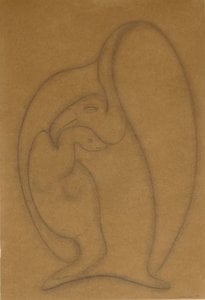


Artist Biography
early life and artistic development
max beckmann, a renowned german painter, draftsman, printmaker, sculptor, and writer, was born on february 12, 1884, in leipzig, saxony. his artistic journey began with academically correct depictions, which later transformed into distorted figures and spaces, reflecting his altered vision of humanity after serving as a medical orderly in world war i.artistic style and influences
beckmann's style, rooted in the imagery of medieval stained glass, was influenced by various artists, including cézanne, van gogh, blake, rembrandt, and rubens. he also drew inspiration from northern european artists of the late middle ages and early renaissance, such as bosch, bruegel, and matthias grünewald.notable works and exhibitions
* the bark (acquired by the national gallery in berlin) * self-portrait in tuxedo (purchased in 1928) * retrospectives at the städtische kunsthalle mannheim (1928) and in basle and zurich (1930)later life and exile
beckmann's fortunes changed with the rise of adolf hitler, leading to his dismissal from the art school in frankfurt and the confiscation of over 500 of his works. he lived in self-imposed exile in amsterdam for ten years, failing to obtain a visa for the united states.legacy
* taught at the art schools of washington university in st. louis and the brooklyn museum * first retrospective in the united states took place in 1948 at the city art museum, saint louis * max-slevogt galerie, germany, features a collection of his works key dates: * born: february 12, 1884 * died: december 27, 1950
Max Beckmann
1884 - 1950 , Germany
Quick Facts
- Full Name: Max Carl Friedrich Beckmann
- Nationality: German
- Date Of Birth: 1884
- Date Of Death: 1950
- Place Of Birth: Leipzig, Germany
- Notable Artworks:
- The Bark
- Self-Portrait in Tuxedo
- Artistic Movement Or Style: Expressionism
- Artists Who Influenced This Artist:
- Georges Seurat
- Vincent van Gogh
- Artists Or Movements Influenced By This Artist:
- Rembrandt
- Bosch
Related Articles
Figurative Expressionism: Emotional Intensity & Subjective Reality in 20th-Century Art
Explore the powerful world of Figurative Expressionism with ArtsDot. Discover key artists like Kirchner & Beckmann, understand its emotional depth, and learn how to collect this influential 20th-century art movement.

The Visceral Cry of a Nation: Exploring Emotion & Distortion in German Expressionism
Explore the powerful world of German Expressionism with ArtsDot. Discover Kirchner, Nolde & Die Brücke's emotive masterpieces. Learn about this pivotal art movement and its lasting impact on modern art.

German Expressionism's 10 Defining Masterpieces | Art for Your Home
Explore 10 defining German Expressionism masterpieces – from Munch's 'The Scream' to Kandinsky’s abstracts. Discover the artists, stories & bold colors behind this powerful art movement. Find museum-quality reproductions at ArtsDot.com.

Max Beckmann: Navigating Trauma & Modernity Through a Distorted Lens
Explore the powerful world of Max Beckmann's art – a journey through trauma, modernity & distortion. Discover his key works, influences, and lasting legacy with expert analysis.
Unlocking the Unconscious: The Top 25 Surrealist Masterpieces by Max Ernst
Explore 25 iconic Max Ernst masterpieces of Surrealism. Discover museum-quality art at ArtsDot.com.


