

 Preview
 Send
Send Share
Share
 Details
 Guide
Guide

 Download
 Similars
 X-Ray
X-Ray Diaporama
 Q&A
Q&A Stats
StatsUntitled work by Jules Chéret


 Read More
Giclée / Art Print
Museum-quality giclée or canvas print with fast production and flexible finish options. ( Buy Hand Made Painting Switch to Digital Image)




P118B $10

P118H $10

P118W $10

P438Z $10

P508JH $12

P508YH $12

P805H $10

P805Z $10

P919BZ $10

P919G $10

P919XJ $10

P959ZH $10

P968JZ $12

W106C $8

W218G $10

W218JH $8

W218Y $10

W307PJ $10

W316G $10

W316PJ $8

W316Y $10

W398PJ $8

W4111J $10

W500HY $15

W500JH $15

W692G $12

W849H $8

W940BG $15

W953PJ $8




Pick from our preset sizes that match the artwork's original proportions.

Type the width and the height you need, to fit your frame or your wall. A print can only be cut, never made bigger than the picture, so a size with a different shape loses a part of the image. We send you a digital mockup to approve before we print anything. The picture shown on this page does not show the real cut — only the mockup does.
Worldwide Delivery () in 2 weeks instead of standard 4/5 weeks. (7 November)

Free Worldwide Express Shipping

High-Quality Linen Canvas

Full Shipping Insurance

Customs Tax Refund Guarantee

True Color Matching Guarantee

100-Day Return Policy (Defects Only)

100% Money-Back Guarantee

Bulk Discount Offer
 Glass option is only available in size under 110 CM

None
Giclée / Art Print
Reproduction Size
-


Total Price
$ 63
A Vision of Courage Amidst Conflict: Examining Jules Chéret’s “Soldiers on Hill”
The Parisian Belle Époque – an era defined by optimism, artistic experimentation, and burgeoning technological advancements – witnessed the emergence of a singular visual voice: Jules Chéret. His poster for the Société Générale Française de Crédit Agricole, titled “Soldiers on Hill,” transcends mere advertising; it’s a poignant emblem of French resilience during World War I, skillfully crafted with innovative lithographic techniques and imbued with layers of symbolic meaning that continue to resonate today.- Subject Matter: The image depicts a solitary figure – presumably representing France – standing atop a hilltop, arms outstretched in defiance against an unseen adversary. This posture embodies courage, determination, and unwavering faith in victory, mirroring the spirit of the French people facing immense hardship during the war years.
- Style & Technique: Chéret’s approach distinguishes itself from prevailing academic styles of the time. He embraced a bold simplification of form—a hallmark of Art Nouveau—characterized by flowing lines and stylized figures. Lithography, rather than etching or engraving, was employed to produce the poster's vibrant hues and intricate details. This technique allowed for mass production while maintaining exceptional color fidelity, reflecting the growing importance of visual communication in disseminating propaganda and bolstering morale.
- Historical Context: Created in 1917, “Soldiers on Hill” arrived during the height of the First World War’s devastation. The Société Générale Française de Crédit Agricole commissioned Chéret to bolster public confidence amidst anxieties about the war effort. Posters like this served as crucial instruments for mobilizing citizens and bolstering morale—a deliberate strategy aimed at countering despair and fostering unity.
- Symbolism: The hilltop itself symbolizes France’s unwavering resolve, representing stability and strength against turbulent forces. The outstretched arms signify defiance and aspiration – a plea for victory and a testament to the enduring spirit of the nation. Furthermore, the color palette—primarily red, white, and blue—is deeply rooted in French national symbolism, reinforcing the poster's message of patriotism and solidarity.
- Emotional Impact: “Soldiers on Hill” succeeds in capturing the emotional core of its era. It evokes feelings of hope amidst despair, courage in the face of adversity, and unwavering faith in a brighter future. The poster’s dynamic composition and expressive use of color contribute to its enduring power as an image of national pride and resilience—a timeless reminder that even in times of darkness, beauty and determination can prevail.
Questions & Answers
What other names is Jules Chéret known by?
Jules Chéret appears under the alternate names Jules-Alexandre Grün.


Artist Biography
The Dawn of the Belle Époque: Jules Chéret and the Art of the Modern Poster
Jules Chéret, a name synonymous with the vibrant spirit of Paris during the *Belle Époque*, wasn’t merely an artist; he was a revolutionary. Born in 1836 to a family of artisans, his journey from humble beginnings to becoming “the father of the modern poster” is a testament to his innovative spirit and artistic vision. Unlike many artists constrained by formal academic training, Chéret's early education was practical – an apprenticeship with a lithographer at the age of thirteen ignited a passion that would redefine commercial art. This initial exposure wasn’t simply about learning a trade; it was an immersion into the possibilities of mass communication and visual persuasion. He honed his skills further with studies at the École Nationale de Dessin, absorbing the artistic currents of Paris, but it was his six years in London, from 1859 to 1866, that proved pivotal. There, he encountered a British poster aesthetic focused on clarity and impact, techniques he would later synthesize with his own uniquely French sensibility.From Cabarets to Cosmetics: A Flourishing Career
Upon returning to France, Chéret didn’t seek patronage from the established art world; instead, he turned to the burgeoning entertainment industry. Paris was transforming—a city of dazzling cabarets, grand music halls, and increasingly sophisticated theaters. Chéret became their visual voice. He created posters for iconic venues like the Eldorado, Olympia, Folies Bergère, Moulin Rouge, and Théâtre de l'Opéra, each advertisement a burst of color and energy designed to lure audiences into a world of spectacle. But his talent wasn’t limited to entertainment; he soon found demand from diverse businesses – beverages, perfumes, soaps, cosmetics, even railroads – recognizing the power of his art to elevate their brands. This expansion wasn't accidental. Chéret understood that advertising didn’t have to be purely functional; it could be beautiful, engaging, and a reflection of the era’s optimism. He skillfully blended artistic finesse with commercial needs, creating images that were both eye-catching and evocative. His style drew heavily from the playful, frivolous scenes favored by Rococo masters like Fragonard and Watteau, injecting a sense of elegance and lightheartedness into the urban landscape.The ‘Cherettes’ and a Changing Society
Central to Chéret's success were his depictions of women – the now-iconic “cherettes.” These weren’t the idealized goddesses or demure Victorian ladies prevalent in earlier art; they were vibrant, independent figures radiating joy and confidence. They embodied a new spirit of freedom and modernity, challenging societal norms and reflecting a changing role for women in Parisian society. Before Chéret, representations of women tended towards extremes – either saintly purity or blatant sexuality. The *cherettes* occupied a space in between, suggesting a playful sensuality without being overtly provocative. They were fashionable, active, and engaged with the world around them, enjoying activities previously considered off-limits to respectable women. This portrayal wasn’t merely artistic license; it resonated deeply with a public eager for change, contributing to a more open atmosphere where women could express themselves and participate in public life with greater autonomy. The *cherettes* became symbols of the era, influencing fashion trends and challenging conventional attitudes towards femininity.A Lasting Legacy: Innovation and Influence
Chéret’s impact extended far beyond his individual posters. In 1895, he launched *Maîtres de l'Affiche*, a groundbreaking publication featuring reproductions of works by ninety-seven Parisian artists – a deliberate effort to elevate the status of poster art and recognize its creators. This initiative not only showcased the diversity of talent within the field but also helped establish collecting posters as a legitimate pursuit. He inspired a new generation of artists, including Charles Gesmar and Henri de Toulouse-Lautrec, with Georges de Feure being one of his direct students. His technical innovations in lithography – particularly his ability to achieve vibrant colors using a limited number of stones – revolutionized the printing process and made high-quality posters more accessible. Recognized for his contributions with the Légion d'honneur in 1890, Chéret continued to work prolifically until his death in 1932 at the remarkable age of ninety-six. A posthumous exhibition at the Salon d'Automne in Paris in 1933 cemented his legacy, and his posters quickly became highly sought after by collectors worldwide – a testament to the enduring power of an art form he single-handedly transformed from commercial necessity into a celebrated artistic expression. He didn’t just create advertisements; he created a visual language for a new era, capturing the energy, optimism, and evolving social landscape of *la belle époque* for generations to come.
Jules Chéret
1836 - 1932 , France
Quick Facts
- Artistic Movement Or Style: Belle Époque, Art Nouveau
- Artists Or Movements Influenced By This Artist:
- Toulouse-Lautrec
- Gesmar
- De Feure
- Artists Who Influenced This Artist:
- Fragonard
- Watteau
- Date Of Birth: 1836
- Date Of Death: 1932
- Full Name: Jules Chéret
- Nationality: French
- Notable Artworks:
- Pan poster
- Loie Fuller poster
- Place Of Birth: Paris, France
Related Articles

Jean-Georges Béraud: Capturing Parisian Life in the Belle Époque
Explore the captivating world of Jean-Georges Béraud, master painter of Belle Époque Paris. Discover his iconic scenes, artistic evolution, and social commentary. A deep dive into 19th-century French art.

Echoes of 1882: Art, Culture & the Belle Époque's Lasting Impression
Explore the art & culture of the Belle Époque! Discover Impressionism, Realism, and iconic Parisian paintings from Degas, Béraud & more. High-quality reproductions at ArtsDot.

Echoes of a Turning Century: Artistic Responses to 1902 – A Year of Transition & Innovation
Explore the captivating art of 1902 – a pivotal year bridging Belle Époque elegance & Modernism's dawn. Discover artists like Chéret, Boldini & Luminist masters. Expert insights for collectors at ArtsDot.

Echoes of 1875: Art, Culture & the Belle Époque's Pivotal Moment
Explore the art & culture of 1875 Paris – a pivotal year for Impressionism & the Belle Époque. Discover Degas, Béraud, Stewart & more with ArtsDot's expert insights.
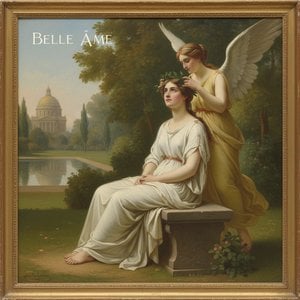
Jules Lefebvre: Master of Academic Realism & the Pursuit of Belle Âme
Explore the captivating figure paintings of Jules Lefebvre (1836-1911), a renowned French academic artist and educator. Discover his masterpieces, signature style, and lasting influence on art history. Shop high-quality reproductions at ArtsDot.


