

 Preview
 Send
Send Share
Share
 Details
 Guide
Guide

 Download
 Similars
 X-Ray
X-Ray Diaporama
 Q&A
Q&A Stats
StatsWilliam Pitt

- 140.0 x 117.0cm


 Read More
Giclée / Art Print
Museum-quality giclée or canvas print with fast production and flexible finish options. ( Buy Hand Made Painting Switch to Digital Image)




P118B $10

P118H $10

P118W $10

P438Z $10

P508JH $12

P508YH $12

P805H $10

P805Z $10

P919BZ $10

P919G $10

P919XJ $10

P959ZH $10

P968JZ $12

W106C $8

W218G $10

W218JH $8

W218Y $10

W307PJ $10

W316G $10

W316PJ $8

W316Y $10

W398PJ $8

W4111J $10

W500HY $15

W500JH $15

W692G $12

W849H $8

W940BG $15

W953PJ $8




Pick from our preset sizes that match the artwork's original proportions.

Type the width and the height you need, to fit your frame or your wall. A print can only be cut, never made bigger than the picture, so a size with a different shape loses a part of the image. We send you a digital mockup to approve before we print anything. The picture shown on this page does not show the real cut — only the mockup does.
Worldwide Delivery () in 2 weeks instead of standard 4/5 weeks. (15 November)

Free Worldwide Express Shipping

High-Quality Linen Canvas

Full Shipping Insurance

Customs Tax Refund Guarantee

True Color Matching Guarantee

100-Day Return Policy (Defects Only)

100% Money-Back Guarantee

Bulk Discount Offer
 Glass option is only available in size under 110 CM

William Pitt
Giclée / Art Print
Reproduction Size
-


Total Price
$ 63
Identification of the Portrait of William Pitt
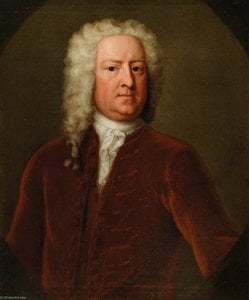
The gaze of William Pitt meets the viewer through this oil on canvas, a work emerging from the studio of John Hoppner. The portrait captures the statesman in a moment of heavy stillness, rendered with a sense of gravity that lingers on the surface. It is a work from circa 1805 or after, a period when the subject's presence in British politics was deeply felt. The scale of the image, measuring 55 1/2 in. x 42 1/2 in. (1410 mm x 1080 mm), gives the figure a physical weight that commands the space around it.
John Hoppner’s studio provides the hand behind this depiction, translating the likeness of the man into a study of light and shadow. The paint sits upon the canvas, building a presence that feels immediate and substantial. Every brushstroke contributes to the quiet intensity of the sitter, holding him in a permanent state of contemplation. The work exists as a direct encounter with a man who shaped the direction of a nation, frozen here in the medium of oil.
The Composition and Visual Elements
The subject emerges from a dark, indistinct background, positioned in a bust-length portrait that feels immediate and heavy with presence. He sits slightly off-center, his gaze directed toward the viewer's left, creating a sense of quiet, internal movement. Light descends from the upper left, carving out the contours of his face and neck with a soft, directional glow. This interplay of light and shadow grants the figure a palpable three-dimensional volume, pulling him forward from the atmospheric gloom behind him.
The color palette remains somber and grounded, relying on a restrained selection of earthy, muted tones. Browns, ochre, and cream dominate the scene, while subtle flesh tones define the skin. There is a tactile quality to the surface, where the texture of the canvas peeks through the layers of paint. The brushwork appears smooth and blended, particularly in the soft transitions of the background and the heavy folds of the clothing, yet it maintains enough definition to trace the sharp structure of the facial features and the weight of the coat.
The History and Provenance of the Work
The origins of this portrait trace back to a private commission by Lord Mulgrave, who sought to capture the likeness of the statesman. The artist began the work in December 1804, and the final brushstrokes were applied on the 28th of October, 1805. This specific version, identified as NPG L267, exists as a studio copy of the original portrait. While the primary work was intended for the Mulgrave family, the demand for the image grew rapidly among the subject's supporters, leading to many bespoke copies being produced by the artist's studio.
The movement of this painting through various collections reflects its enduring presence in British history. It currently resides within the collection of the Tate, though it is frequently seen on loan to the National Portrait Gallery in London. This arrangement allows the work to remain accessible to those tracing the political landscape of the era. The provenance of the piece is deeply intertwined with the social circles of the time, as the portrait's popularity ensured that many versions circulated among the elite of the Regency period.
Documented Interpretations and Historical Debates
The portrait stirs a profound tension between those who see its technical brilliance and those who recoil from its unflinching honesty. To some observers, the work represents the artist's finest achievement, a peak of his creative ability. Yet, this praise is met with sharp, visceral condemnation from those who knew the man behind the statesman. One contemporary observer famously dismissed the image as a vile picture, finding the depiction far too harsh to be a true likeness.
The debate centers on the psychological weight carried in the subject's expression. Critics have argued that the face appears anxious and diseased, as if reddened by wine and soured by the heavy burden of disappointment. There is a sense that the portrait captures a man at his breaking point, a version of the statesman that many found difficult to accept. This perceived severity led some to suggest that the likeness was almost too unflattering, questioning if such a grim portrayal should ever have been intended for a man of his standing.
While some find the work's power in its ability to strip away the veneer of political dignity, others see it as a departure from the idealized grace expected in high-society portraiture. The tension remains: is this a profound study of a man weathered by his duties, or a failure to capture the youthful spirit of a leader? The brushstrokes hold both the weight of a statesman's exhaustion and the controversy of a likeness that refuses to look away from the toll of power.
Where to See the Work Today
The portrait resides within the National Portrait Gallery in London, United Kingdom. Visitors find the subject waiting for them on the third floor, specifically positioned in Room 18. It exists as a vital part of the National Portrait Gallery collection, though its presence in the gallery is a temporary arrangement. The work is currently on loan from the Tate Gallery, which maintains its primary stewardship.
Walking through the halls of the museum, one encounters this depiction of the statesman in a space dedicated to the faces that shaped a nation. The lighting in the gallery room catches the subtle textures of the oil on canvas, allowing the viewer to observe the heavy shadows and the serious expression of the sitter. It remains a central fixture for those tracing the political history of the United Kingdom through its visual records.
Related Works by John Hoppner
The artist's hand moves through other lives and faces, capturing the essence of the Georgian era with a similar command of light. In one notable work, he presents Mrs. Jordan as Viola in 'Twelfth Night', a piece that highlights his celebrated ability to render women and children. This portrait reveals a specific skill that defined his career, much like the way he handles the textures and shadows in his other commissions. He moves between the heavy gravity of statesmen and the softer, more spirited depictions of his female sitters, always maintaining a sense of physical presence.
His reach extends into the highest circles of British society, where he finds himself painting the very figures who shape the nation. He captures the likeness of the Prince of Wales, a man whose patronage helped secure Hoppner's position among the elite. This ability to navigate the social landscape is evident in his portraits of influential men like Lord Hugh Seymour. Each sitter emerges from the dim, atmospheric backgrounds with a distinct vitality, whether they are members of the royal court or prominent figures of the military and aristocracy.
The artist's brush also finds its way to the faces of those who leave their own marks on history, such as in his portrait of Thomas Williams. Through these various subjects, a pattern of character emerges. He uses chiaroscuro to sculpt forms, pulling his subjects forward from the shadows to create a sense of depth. Whether he is working on a formal bust-length portrait or a more expansive composition, his touch remains loose and free, avoiding a rigid or overly precious finish in favor of a living, breathing likeness.
Questions & Answers
What explains the copyright situation of "William Pitt" by John Hoppner?
"William Pitt" by John Hoppner is in the public domain - its copyright has expired. Copyright duration runs from the artist's death, which occurred in 1810.
Is "William Pitt" by John Hoppner a bright or a dark artwork?
In terms of perceived brightness, "William Pitt" by John Hoppner is shadow.
Where do the visitors of "William Pitt" by John Hoppner come from?
The Stats page of "William Pitt" by John Hoppner presents public visit statistics: monthly visits of this artwork, a comparison with the artist's most viewed works, and where its visitors come from.
Related Artworks




Artist Biography
Early Life, Family and Training
John Hoppner was born in Whitechapel, London, in 1758 to German parents. His mother held a position as one of the German attendants at the royal palace, a connection that placed the family in close proximity to the court from the start. This early environment shaped his trajectory, though his initial path was musical rather than visual. As a young boy, he served as a chorister at the royal chapel, a role that required discipline but ultimately failed to hold his interest against his inclination toward art.
His formal entry into the art world occurred in 1775 when he entered the Royal Academy. He proved his technical competence quickly through institutional recognition. In 1778, he received a silver medal for drawing from life, a practical validation of his observational skills. By 1782, he had secured the Academy's gold medal for historical painting, an achievement earned through his work on King Lear. This early success established the technical foundation required for the high-society portraiture that would define his career.
Rise to Fame and Notable Works
Hoppner secured his position in the upper echelons of British society by capturing the likenesses of the era's most influential figures. His ability to navigate high-society commissions led to his portraits of the Prince of Wales, the Duke and Duchess of York, Lord Rodney, and Lord Nelson being hung in the state apartments at St James's Palace. These placements were not mere decorations; they were markers of his professional standing. While his historical painting won him early accolades, it was his depictions of women and children that judges consistently identified as his most successful output.
His command of character is perhaps most evident in Mrs. Jordan as Viola in 'Twelfth Night', a work currently held by English Heritage in London, United Kingdom. This piece demonstrates the specific skill that defined his career. Beyond the canvas, Hoppner engaged with the literary culture of the time. In 1803, he published A Series of Portraits of Ladies, and by 1805, he had released a volume of translations of Eastern tales into English verse. These ventures show an artist whose influence extended into the intellectual and social fabric of the period.
Technique and Style
Hoppner’s technical identity is inseparable from his command of color. He was widely regarded as a fine colourist, utilizing a masterful control of pigment to define his subjects. His approach was never tight or overly precious; instead, his touch was characterized by breadth and freedom. This looseness allowed him to move beyond mere imitation, imbuing his portraits with a specific vitality that distinguished his work from the more rigid academic traditions of the era.
The shadow of Joshua Reynolds looms large over Hoppner’s method. He was much influenced by Reynolds, adopting a way of working that mirrored the established master's sensibilities. This influence is most visible in the way his paintings carry a faint reflection of the charm of Reynolds, particularly in the handling of light and the soft, painterly atmosphere that envelops his sitters. He did not simply copy the style; he adapted its principles to suit his own expressive needs.
In practice, this resulted in a style that balanced naturalism with a certain aristocratic grace. He used chiaroscuro to sculpt forms, pulling figures forward from dim backgrounds through the dramatic interplay of light and shadow. This technique was particularly effective in his depictions of texture, such as the fine details of hair or the heavy folds of academic robes. His ability to manage these elements ensured his portraits possessed a physical presence that remains legible to the modern eye.
Circle, Rivals and Pupils
Hoppner’s professional life was defined by a fierce competition with Thomas Lawrence. This rivalry was not merely a matter of reputation but a direct struggle for the attention of London's elite. The tension between these two figures was made physically evident between 1803 and 1809, when they actually shared an assistant, Samuel Lane. This overlap in personnel highlights the narrow margins of the portrait market during this period.
His professional network extended to significant collaborations that intersected with the highest levels of British art. In about 1788, he contributed to a work by Thomas Gainsborough, specifically painting the background for the portrait of Charlotte, Countess Talbot. He also worked closely with the engraver Charles Wilkin to produce his series of portraits. These partnerships demonstrate how his output relied on a structured system of technical specialists to reach a wider audience.
Where to See the Works Today
Hoppner’s presence in major international collections confirms his reach beyond the British Isles. In the United States, the Metropolitan Museum of Art in New York maintains two of his works, while the Taft Museum of Art in Cincinnati holds another two. These pieces offer a direct look at his ability to handle color and form within the high-society portraiture of his era.
In the United Kingdom, his legacy is distributed across several key institutions. English Heritage in London preserves a significant work, specifically Mrs Jordan as Viola in 'Twelfth Night', which provides a clear example of his mastery over portraiture. The National Maritime Museum in London also holds one of his paintings, ensuring his influence remains visible within British naval and social history. Additionally, the National Library of Wales in Aberystwyth maintains a work in its collection.
- Mrs Jordan as Viola in 'Twelfth Night' (English Heritage, London)
- Lord Hugh Seymour (National Maritime Museum, London)
- Thomas Williams (Llyfrgell Genedlaethol Cymru / The National Library of Wales, Aberystwyth)

John Hoppner
1758 - 1810 , United Kingdom
Quick Facts
- Artists Who Influenced This Artist: ['Joshua Reynolds']
- Full Name: John Hoppner
- Nationality: British
- Notable Artworks:
- Mrs Jordan as Viola in 'Twelfth Night'
- Lady Cunliffe
- Agnes Coussmaker
- The Hoppner Children
- John Wills
- Place Of Birth: Whitechapel, United Kingdom
- Date Of Birth: 1758
- Date Of Death: 1810


