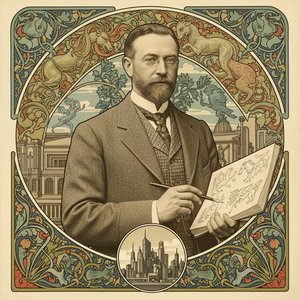
Charles Fraser: A Scottish Master of Light and Landscape
Born in Edinburgh, Scotland, in 1782, Charles Fraser’s life unfolded against the backdrop of a nation undergoing significant transformation. While not always commanding the same level of widespread recognition as some of his contemporaries – figures like Turner or Constable, for example – Fraser nonetheless carved out a distinctive and enduring legacy within British art. His work, particularly during the early 19th century, offers a captivating glimpse into the evolving landscape of British painting, blending elements of classical tradition with a burgeoning interest in capturing the nuances of light and atmosphere. His story is one of quiet dedication, meticulous observation, and a profound connection to the Scottish countryside.
Fraser’s early artistic training remains somewhat shrouded in the mists of time, but it's believed he began his journey as an artist under the tutelage of local Scottish masters. These formative years instilled within him a deep appreciation for the region’s rich cultural heritage and a foundational understanding of oil painting techniques – skills that would later inform his distinctive style. The absence of extensive biographical documentation contributes to a sense of mystery surrounding his early life, adding an element of intrigue to his artistic output.
A Portraitist and Pioneer of Rural Scenes
Fraser’s career blossomed primarily through two distinct yet interconnected avenues: portraiture and landscape painting. He quickly established himself as a skilled miniaturist, producing exquisitely detailed portraits that captured the likenesses of Scottish nobility and prominent local figures. These miniature works, characterized by their delicate brushwork and subtle tonal variations, demonstrate a remarkable level of technical proficiency and an acute ability to convey personality through fleeting expressions. The collection of portraits housed within the Blake Museum in the United Kingdom stands as a testament to his talent in this genre.
However, it is perhaps in his landscapes that Fraser truly distinguished himself. His paintings of rural Scotland – particularly those forming part of the Frasburgh Library Collection – are imbued with a remarkable sense of serenity and authenticity. He eschewed dramatic vistas or grandiose compositions, instead focusing on capturing the quiet beauty of everyday scenes: rolling hills, meandering streams, and humble farmhouses bathed in the soft glow of twilight. These works weren’t merely depictions of scenery; they were carefully constructed meditations on light, color, and the rhythms of rural life.
Notable Works and Museum Collections
Several key pieces illuminate Fraser's artistic development and stylistic preferences. “Landscape with Figures” serves as a prime example of his ability to seamlessly integrate human figures into expansive landscapes, creating a harmonious balance between composition and atmosphere. The Frasburgh Library’s holdings – including "Country Road and Kinnaird Head Lighthouse and Wine Tower" – offer further insight into his deep connection to the Scottish landscape and his meticulous attention to detail. These paintings are not simply representations of places; they are imbued with a sense of place, capturing the essence of rural Scotland.
The Blake Museum in the United Kingdom houses several significant works by Fraser, including “Young Polo Player,” which showcases his skill in portraying dynamic movement and capturing the energy of sporting events. Furthermore, the Frasburgh Library itself functions as both a museum and a public library, diligently preserving and exhibiting Fraser’s paintings – notably "Country Road and Kinnaird Head Lighthouse and Wine Tower" – reflecting his enduring connection to his native land.
Legacy and Influence
Charles Fraser's impact on British art may not be immediately apparent in the grand narratives of the era, but his contributions are nonetheless significant. He represents a crucial link between the classical traditions of portraiture and the emerging Romantic interest in landscape painting. His meticulous observation, subtle use of light and color, and quiet reverence for the Scottish countryside established him as a distinctive voice within the British art world. While overshadowed by more flamboyant contemporaries, Fraser’s work continues to resonate with viewers today, offering a poignant reminder of the beauty and tranquility that can be found in the simplest of scenes.
Furthermore, his influence extends beyond Scotland. His techniques and approach to landscape painting were adopted by later artists, contributing to the development of British picturesque traditions. His legacy is one of quiet artistry, meticulous observation, and a profound appreciation for the beauty of the natural world – qualities that continue to inspire artists and art lovers alike.
Questions & Answers
What are the birth city and country of Charles Fraser?
Charles Fraser was born in Charleston, in United States.
How is Charles Fraser's career divided into periods?
A chronological account of Charles Fraser's work is available on the artist's Chronicle page, where the artworks pass in order of creation, chapter by chapter.
Where can I see Charles Fraser's artworks arranged by atmosphere?
The Mood Room of Charles Fraser is a page that arranges the artist's artworks by mood.