


 Preview
 Send
Send Share
Share
 Details

 Download
 Similars
 X-Ray
X-Ray Diaporama
 Stats
StatsInterior


 Read More
Giclée / Art Print
Museum-quality giclée or canvas print with fast production and flexible finish options. ( Buy Hand Made Painting Switch to Digital Image)




P118B $10

P118H $10

P118W $10

P438Z $10

P508JH $12

P508YH $12

P805H $10

P805Z $10

P919BZ $10

P919G $10

P919XJ $10

P959ZH $10

P968JZ $12

W106C $8

W218G $10

W218JH $8

W218Y $10

W307PJ $10

W316G $10

W316PJ $8

W316Y $10

W398PJ $8

W4111J $10

W500HY $15

W500JH $15

W692G $12

W849H $8

W940BG $15

W953PJ $8




Pick from our preset sizes that match the artwork's original proportions.

You may enter your own dimensions to fit a specific frame or space. If your selected size does not match the original image's proportions, we will either crop the artwork or extend the image with a mirrored or solid-fill edge. A digital mockup will be sent for your approval before production begins.
Please note that the on-screen preview does not reflect the actual cropping or extension. Only the mockup will accurately show the final composition.
While custom sizes are available, we recommend selecting a dimension from the predefined list to preserve the original proportions.
Worldwide Delivery () in 2 weeks instead of standard 4/5 weeks. (11 September)

Free Worldwide Express Shipping

High-Quality Linen Canvas

Full Shipping Insurance

Customs Tax Refund Guarantee

True Color Matching Guarantee

100-Day Return Policy (Defects Only)

100% Money-Back Guarantee

Bulk Discount Offer
 Glass option is only available in size under 110 CM

Interior
Giclée / Art Print
Reproduction Size
-


Total Price
$ 63
Jean-Édouard Vuillard: Capturing Quietude in “Interior”
The painting "Interior," executed by Jean-Édouard Vuillard around 1900-1905, stands as a quintessential example of Nabis art—a movement that sought to revolutionize artistic expression through radical simplification and the exploration of color’s emotive power. More than just a depiction of domestic space, it embodies Vuillard's profound fascination with capturing fleeting moments of stillness and intimacy within the everyday world. Located at the Detroit Institute of Arts, this artwork invites viewers into a carefully constructed tableau that speaks volumes about artistic innovation and perceptual experience.A Synthesis of Impressionism and Japanese Influence
Vuillard’s approach to painting was deeply rooted in Impressionist principles—particularly the emphasis on capturing light and atmosphere—yet he decisively moved beyond its limitations. Influenced by the pioneering work of Paul Gauguin, Vuillard embraced a bold departure from academic conventions. However, his artistic vision gained significant impetus from Japanese prints (ukiyo-e), which had begun to circulate in Europe during this period. Like Serusier’s “The Talisman,” Vuillard utilized flattened planes of color—a technique borrowed directly from Japanese aesthetics—to create an illusion of depth and spatial ambiguity. This deliberate simplification wasn't merely stylistic; it represented a fundamental rethinking of how artists could represent reality, prioritizing feeling over precise observation.Composition and Color Palette: Orchestrating Emotion
The composition itself is deceptively simple. Two chairs dominate the scene, one occupied by a figure whose presence is subtly suggested rather than overtly portrayed—a characteristic Vuillard technique that encourages contemplation and invites viewers to fill in the gaps of perception. A window frames a glimpse of foliage outside, bathed in soft light, contributing to the overall sense of tranquility. Yet, it’s the color palette that truly distinguishes “Interior.” Vuillard employed hues of pink, peach, and pale yellow—colors chosen not for their literal representation but for their ability to evoke emotion. These shades coalesce into a harmonious blend that conveys warmth, comfort, and perhaps even melancholy—a testament to Vuillard's masterful control over chromatic orchestration.Symbolism Within Everyday Reality
Beyond its formal qualities, “Interior” resonates with symbolic significance. The empty chair serves as a poignant reminder of absence and solitude, while the window represents connection to nature—a recurring motif in Vuillard’s oeuvre. The bird perched on the windowsill symbolizes freedom and aspiration, subtly elevating the scene beyond mere visual description. These elements intertwine to create a narrative that transcends the surface appearance of the room, prompting viewers to consider themes of contemplation, memory, and the beauty inherent in ordinary life.Legacy and Influence
Vuillard’s innovative approach to color and form profoundly impacted subsequent artistic movements—most notably Cubism and Fauvism—establishing him as a pivotal figure in the transition from Impressionism to abstraction. His unwavering commitment to capturing subjective experience continues to inspire artists today, demonstrating the enduring power of art to convey emotion and illuminate the complexities of human perception. “Interior” remains an unforgettable masterpiece, embodying Vuillard’s artistic genius and securing his place among the most celebrated painters of the Belle Époque.Related Artworks


Artist Biography
**early life and artistic beginnings**
jean-édouard vuillard, a french painter, decorative artist, and printmaker, was born on november 11, 1868, in cuiseaux, france. his life's work would later become a cornerstone of the avant-garde artistic group les nabis, alongside fellow visionaries like maurice denis and édouard vuillard. this collective would revolutionize the art world with their innovative approach to color and form.**the nabis movement and its influence**
as a prominent member of les nabis, vuillard's paintings assembled areas of pure color, influenced by japanese prints. his interior scenes explored the spatial effects of flattened planes of color, pattern, and form. this approach would later influence the development of cubism, fauvism, and abstract art.- les nabis, a group of young french artists active in paris from 1888 until 1900, played a large part in the transition from impressionism and academic art to abstract art, symbolism, and the other early movements of modernism.
- their philosophy was based upon the philosophy of positivism, and the writings of auguste comte and hippolyte taine.
**vuillard's later work and legacy**
after 1900, when les nabis disbanded, vuillard adopted a more realistic style, approaching landscapes and interiors with greater detail and vivid colors. in the 1920s and 1930s, he painted portraits of prominent figures in french industry and the arts in their familiar settings. **key works and exhibitions:**- jean-édouard vuillard's paintings can be found in various museums, including the musée de la révolution française (france), which boasts a rich collection of artworks, documents, and objects related to the revolutionary period.
- some of his notable works include "la patrie en danger" by guillaume lethière and "jean de la barre" by jean clouet, which depict a young man condemned to death for blasphemy during the ancien régime.
- vuillard's later work, such as his portraits of french industry and arts figures, can be seen in various galleries, including those at intimism art movement and jean-édouard vuillard's page on ArtsDot.
**conclusion**
jean-édouard vuillard's enigmatic world, characterized by its innovative use of color and form, has left an indelible mark on the art world. as a pioneer of modernism, his work continues to inspire artists and influence various artistic movements. discover more about intimism art movement and explore jean-édouard vuillard's works on ArtsDot.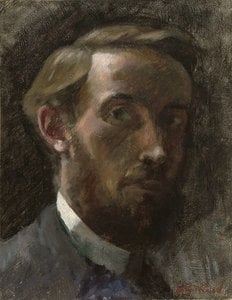
jean-édouard vuillard
1868 - 1940 , France
Quick Facts
- Artistic Movement Or Style: Nabis
- Artists Or Movements Influenced By This Artist:
- Cubism
- Fauvism
- Artists Who Influenced This Artist: ['Paul Gauguin']
- Date Of Birth: November 11, 1868
- Date Of Death: June 21, 1940
- Full Name: Jean-Édouard Vuillard
- Nationality: French
- Notable Artworks:
- Woman Sweeping
- Sunlit Interior
- Place Of Birth: Cuiseaux, France
Related Articles

Renoir's Masterpieces: Explore 25 Iconic Paintings & Bring Art Home | ArtsDot
Explore 25 iconic Pierre-Auguste Renoir paintings! Discover the stories behind Impressionist masterpieces like 'Dance at Le Moulin de la Galette' & 'Luncheon of the Boating Party'. Find museum-quality art reproductions and elevate your home decor with ArtsDot.com.

Cézanne's Masterpieces: 25 Iconic Artworks to Transform Your Space
Journey through 25 iconic artworks by Paul Cézanne – a master of Impressionism and Post-Impressionism. Explore his landscapes, still lifes, and the stories behind these timeless masterpieces. Discover museum-quality reproductions & curated decor at ArtsDot.com.

Intimate Interiors & Poetic Ambiguity: Exploring the Vision of Jean-Édouard Vuillard
Discover the captivating world of Jean-Édouard Vuillard, a key figure of the Nabis movement. Explore his intimate interiors, unique style & lasting influence on modern art. Learn more at ArtsDot.

Monet's Masterpieces: 25 Iconic Artworks to Transform Your Home
Journey through 25 iconic Claude Monet masterpieces! Explore Impressionism’s beauty, from Water Lilies to Rouen Cathedral. Discover stunning art reproductions & curated decor ideas – explore the full collection online at ArtsDot.com.

Intimate Interiors: Domestic Life & Artistic Representation from Renaissance to Impressionism
Explore the evolution of domestic life in Western art from the Renaissance to Impressionism. Discover symbolism, realism & artistic techniques shaping intimate interior scenes. Learn more with ArtsDot.


