

- 191.0 x 166.0 cm


The picture follows your choices: , .
Collectible Description
Admire Jan Weenix's masterful depiction of 'The White Peacock,' a stunning oil painting showcasing a majestic peacock amidst serene nature, capturing beauty and symbolism in exquisite detail.
 Read More
Artist Biography
Jan Weenix (1641-1719): Dutch Baroque master renowned for richly detailed hunting still lifes, game paintings & landscapes. Admired for realism and vibrant color.
Hand Made Oil Reproduction
Hand-painted oil on canvas in your size and frame, made to order by our artists. ( Switch to Print Switch to Digital Image)
More about this painting
 Preview
 Send
Send Share
Share
 Details
 Guide
Guide

 Download
 Similars
 X-Ray
X-Ray Diaporama
 Q&A
Q&A Stats
StatsOrder your painting in four simple steps
Take your time. You can change any answer; the price in your order card follows each choice.
1 Step one of four
Which size would you like?
These sizes keep the proportions of the original painting. The drawing shows your choice on a wall, above a two-metre sofa.
Or give your own measurements
Pick from our preset sizes that match the artwork's original proportions.

Type the width and the height you need, to fit your frame or your wall. This is hand-painted, so for a size with a different shape the artist can paint a bit more around the picture, or cut a bit — you choose. We send you a digital mockup to approve before the painting starts. The picture shown on this page does not show the real result — only the mockup does.
2 Step two of four
How should it be prepared: rolled, stretched or framed?
The prices below are for the size you chose in step one.
Choose the edges of the stretched canvas
Choose your frame

White $1

Blurside $1

Extended $1

P118B $10

P118H $10

P118W $10

P438Z $10

P508JH $12

P508YH $12

P805H $10

P805Z $10

P919BZ $10

P919G $10

P919XJ $10

P959ZH $10

P968JZ $12

W106C $8

W218G $10

W218JH $8

W218Y $10

W307PJ $10

W316G $10

W316PJ $8

W316Y $10

W398PJ $8

W4111J $10

W500HY $15

W500JH $15

W692G $12

W849H $8

W940BG $15

W953PJ $8

H24-GOLD $30

H24-SILVER $30

H36-GOLD $45

H36-SILVER $45
Framed
Moulding: . Overall size with the frame: .
3 Step three of four
Would you like anything changed in the painting?
Most people answer no. Because each painting is made by hand, our artist can also adapt it for you.
After order, ArtsDot.com team will email client for instructions and provide a mockup preview
4 Step four of four
A few finishing options
All of them are optional. The answers already selected cost nothing extra.
Who paints it?
Worldwide Delivery () in 3/4 weeks instead of standard 5 weeks. (3 November). No compromise on quality.
A nameplate, as in a museum?
Engraved Bronze Plaque Details
This elegant plaque features the artist's name and the title of the artwork, finely engraved for a timeless presentation.
It is made from bronze with a refined, elegant finish. The text is precisely laser-engraved for a sharp and permanent result. Measuring 9x2 cm, the plaque is compact yet easy to read. It's built to be durable and scratch-resistant, offering a professional, museum-quality look. Mounting is simple thanks to the included adhesive backing.
Transparent Acrylic Plaque Details
The plaque includes essential engraved details such as the artist's name, the title of the artwork, the date it was created, the type of media used-like oil on canvas or watercolor-a brief description of the piece, and a QR code that links to the complete artwork information.
It is crafted from clear acrylic, offering a sleek, modern appearance. The text is UV-engraved in black to ensure strong visual contrast. With a size of 10x15 cm, it ensures optimal readability. It comes equipped with two metal hooks for secure wall mounting. The plaque is designed to be weather-resistant, making it suitable for various environments, and it includes interactive features that work seamlessly with smartphone scanning.
Black Acrylic Plaque Details
This elegant plaque includes engraved information such as the artist's name, the title of the artwork, the date it was created, the type of media used (like oil on canvas or watercolor), a short description of the artwork, and a QR code for quick access to more information.
The plaque itself is made from refined black acrylic with a premium finish. The text is laser-engraved in white for high contrast and readability. Its size is 10x15 cm, designed to be easy to read. It comes with two metal hooks for professional mounting. The design is sleek and fits any interior style. It is also weather-resistant and durable, with built-in digital integration for mobile compatibility.
A protective varnish?
When do you need it?
✓ Check and order
Your painting, as you ordered it

The White Peacock
Reproduction Medium
Reproduction Size
-

Elite Senior Artist
More detail, finesse, and extra production time
-

Reproduction Frame
-
-
For artworks or reproductions larger than 105 cm (approximately 41 inches) on any side, the frame will be shipped as a kit, disassembled. This method ensures safe delivery and prevents damage during transport.
Professional assembly required - this is not a DIY product.
The kit must be assembled and the canvas stretched by an experienced professional framer, using wood glue (not supplied), a canvas stretching plier and clamps to hold the bars square while the glue dries. Incorrect assembly or uneven canvas tension can permanently damage the artwork and is not covered by our warranty.
 For artworks or reproductions larger than 105 cm (approximately 41 inches) on any side, the frame will be shipped as a kit, disassembled. This method ensures safe delivery and prevents damage during transport.
All solid wood bars are included, precisely cut to size.
Assembled with the screws provided, plus wood glue for the corner joints, which is not supplied and must be sourced by your framer.
Professional tools are required and not included: a canvas stretching plier (tensioner) and clamps to hold the bars square while the glue dries.
Important:
The corner joints require wood glue, the bars must be held with clamps until the glue is fully dry, and tightening the canvas on the assembled frame requires a canvas stretching plier. None of these are included in the kit. Please arrange an experienced professional framer before ordering this size.

Nameplate
-
-

Protective Varnish
Glossy Varnish (enhances colors, protects against light/moisture)
-

Customize My Artwork
Examples of what can be changed: Replace face with customer photo; Add pet (e.g., replace cat with dog); Include hidden message in background; Change background landscape or elements.
-

Urgent
Worldwide Delivery () in 3/4 weeks instead of standard 5 weeks. (3 November). No compromise on quality.
-
Express Shipping
Worldwide Delivery () in 5 weeks. (10 November).
Included
Total Price
$ 263
Glass option is only available in size under 110 CM
Included with every order
- Free Worldwide Express Shipping
- High-Quality Linen Canvas
- Full Shipping Insurance
- Customs Tax Refund Guarantee
- True Color Matching Guarantee
- 100-Day Return Policy (Defects Only)
- 100% Money-Back Guarantee
- Bulk Discount Offer


A Symphony of Light and Decay
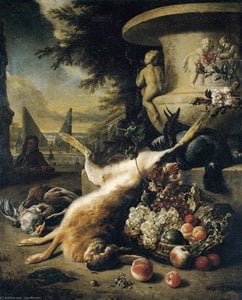
In the quiet, shadowed corners of the Dutch Golden Age, Jan Weenix crafted a visual language that spoke far more profoundly than mere imitation. His masterpiece, “The White Peacock,” completed in 1693, stands as a breathtaking testament to the Baroque era’s obsession with the tension between life and death. At first glance, the viewer is arrested by the luminous presence of the central figure: a magnificent white peacock, its plumage spread in an elaborate, ethereal display that seems to catch a light source from beyond the frame. Yet, as the eye wanders from this brilliant centerpiece, the scene reveals a more somber narrative. Perched upon a decaying tree stump and accompanied by a resting brown hare and the stillness of lifeless birds, the painting presents a poignant meditation on the cyclical rhythms of existence—a delicate dance between vibrant beauty and inevitable ruin.
Weenix’s technical mastery is nothing short of extraordinary, utilizing the chiaroscuro technique to sculpt form out of the darkness. Through painstaking detail, he renders the tactile reality of the natural world; one can almost feel the softness of the peacock's feathers, the coarse fur of the hare, and the rough, weathered texture of the decomposing wood. His brushstrokes, though seamlessly blended to create an illusion of profound depth, possess a controlled energy that breathes life into the organic matter. This meticulous realism serves a higher purpose, elevating the work from a simple animal study to a complex psychological landscape. The dramatic contrasts between light and shadow do more than just define shape; they imbue the atmosphere with a palpable sense of drama and mystery, drawing the collector into a world where every shadow holds a secret.
Symbolism and the Baroque Soul
To gaze upon “The White Peacock” is to engage with a rich tapestry of seventeenth-century symbolism. In the lexicon of the era, the peacock was often a symbol of nobility, pride, and even immortality due to its perceived ability to renew itself. However, by placing this regal creature amidst symbols of mortality—the dead birds and the decaying stump—Weenix creates a powerful vanitas motif. This juxtaposition reminds the viewer of the fleeting nature of earthly glory and the inescapable reality of decay. For the modern connoisseur or interior designer, this duality offers an incredible emotional depth; the painting does not merely decorate a space, it anchors it with intellectual weight and a sense of timeless contemplation.
The historical context of Amsterdam during this period adds another layer of intrigue to the work. As a period of intense artistic experimentation, the Dutch Baroque sought to explore themes that resonated with the cultural anxieties of an era grappling with change. Weenix, trained in the tradition of his father Jan Baptist Weenix, brought a refined sensitivity to these themes, blending the grandeur of the Baroque with a quiet, observational intimacy. For those seeking to incorporate a high-quality reproduction into a curated collection, this piece offers more than aesthetic pleasure; it provides a window into a vanished world of philosophical inquiry and unparalleled artistic devotion.
Questions & Answers
What does the 1693 date of "The White Peacock" correspond to in Jan Weenix's career?
"The White Peacock", created in 1693, belongs to the Mature Baroque of Jan Weenix's career.
What shape and dimensions is "The White Peacock" by Jan Weenix?
The format of "The White Peacock" is portrait, and the original measures 191 x 166 cm. Both are useful when planning a reproduction.
What size and orientation are recommended for a print of "The White Peacock" by Jan Weenix?
For "The White Peacock", the recommended print setup is a large size and a portrait orientation.
Related Artworks


Jan Weenix
1641 - 1719, Netherlands
Artist Biography
A Legacy of Dutch Realism: The Life and Art of Jan Weenix
Jan Weenix, born in Amsterdam in 1641, emerged from a lineage steeped in artistic tradition, inheriting a passion for painting from his father, the esteemed Jan Baptist Weenix. While precise details surrounding his early years remain somewhat elusive, it’s clear that young Jan received foundational training within his father's workshop, absorbing techniques crucial to depicting both still life and animal subjects—a hallmark of Dutch Golden Age artistry. This familial influence wasn’t merely technical; it instilled a deep appreciation for the meticulous observation of nature and a commitment to rendering its beauty with striking realism. The elder Weenix’s own artistic journey, including sojourns in Italy that infused his work with an Italianate sensibility, undoubtedly shaped Jan's developing aesthetic as well. Though initially overshadowed by his father’s reputation, Jan quickly distinguished himself, forging a unique path within the vibrant landscape of 17th-century Dutch painting.The Flourishing of a Baroque Style
Weenix’s artistic style blossomed during the height of the Baroque period, and it reflects the era's penchant for drama, rich detail, and dynamic composition. He wasn’t working in isolation; influences from contemporaries like Hendrick Cornelisz Vroom, renowned for his marine paintings, and potentially other animalier specialists such as Melchior de Hondecoeter and Gillis Claesz d'Hondecoeter, subtly informed his approach. However, Weenix synthesized these inspirations into a style distinctly his own. His canvases are characterized by an almost photographic precision in the rendering of textures—the sheen of feathers, the softness of fur, the delicate translucence of fruit – all achieved through masterful brushwork and a keen understanding of light and shadow. Chiaroscuro, the dramatic interplay between light and dark, is employed to create depth and visual interest, drawing the viewer into the scene with compelling realism. A vibrant color palette further enlivens his subjects, imbuing them with a sense of immediacy and vitality. He possessed an exceptional skill in arranging elements within the frame, creating balanced and harmonious compositions that are both visually appealing and narratively engaging.Masterpieces and Patronage
Throughout his career, Jan Weenix produced a substantial body of work celebrated for its technical brilliance and captivating subject matter. Paintings like Hunting and Fruit Still Life next to a Garden Vase (1714) exemplify his ability to seamlessly integrate diverse elements—game birds, luscious fruits, architectural details – into a complex and visually stunning arrangement. Still Life with a Hare and other Game (1697) showcases his mastery of animal anatomy and texture, capturing the lifelike quality of his subjects with remarkable accuracy. Even smaller works, such as A Seated Monkey (before 1685), reveal his talent for imbuing animals with personality and expressive character. This skill did not go unnoticed by prominent patrons. In 1702, Weenix received an invitation to the court of Johann Wilhelm, Elector Palatine, where he worked alongside other renowned artists, creating large-scale hunting scenes for Schloss Bensberg—a testament to his growing reputation and artistic prowess. These commissions provided him with both financial security and opportunities to further refine his skills.A Lasting Influence on Dutch Art
Jan Weenix played a pivotal role in popularizing hunting still lifes and game paintings during the Baroque period, elevating these genres beyond mere decoration. His works were highly sought after by collectors, contributing significantly to the development of Dutch artistic traditions. He didn’t simply replicate nature; he interpreted it through his unique lens, imbuing his paintings with a sense of realism, drama, and aesthetic beauty that resonated deeply with contemporary audiences. His legacy extends beyond his own creations; his daughter, Maria Weenix, continued the family tradition as a skilled flower painter, ensuring that the Weenix name remained synonymous with artistic excellence for generations to come. Today, Jan Weenix’s paintings are treasured in museums and private collections worldwide, continuing to inspire artists and captivate audiences with their masterful depictions of the natural world—a testament to his enduring contribution to the rich tapestry of Dutch art history.




Related Articles
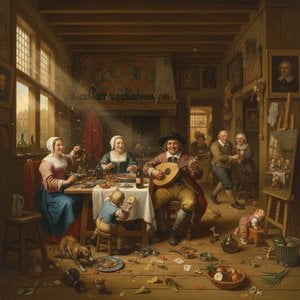
Jan Steen: A Master of Dutch Genre Painting & the Golden Age
Explore the life & art of Jan Steen, a leading Dutch Golden Age painter renowned for his humorous genre scenes & insightful social commentary. Discover his techniques, legacy, and collecting tips.

Oil on Canvas: A Historical & Technical Exploration of a Timeless Artistic Medium
Explore the rich history & enduring techniques of oil painting on canvas. Discover the science behind its longevity, conservation practices, and contemporary relevance. Expert insights for art enthusiasts.

Dutch Baroque Masters: 10 Paintings That Shaped an Era | ArtsDot
Journey through the Golden Age with our guide to the Top 10 Dutch Baroque masterpieces! Explore iconic paintings by Rembrandt, Vermeer & Frans Hals. Find museum-quality art reproductions and elevate your home decor at ArtsDot.com.