

 Preview
 Send
Send Share
Share
 Details
 Guide
Guide

 Download
 Similars
 X-Ray
X-Ray Diaporama
 Q&A
Q&A Stats
StatsWar Time Reminiscences
 Read More
Giclée / Art Print
Museum-quality giclée or canvas print with fast production and flexible finish options. ( Buy Hand Made Painting Switch to Digital Image)




































Pick from our preset sizes that match the artwork's original proportions.

Type the width and the height you need, to fit your frame or your wall. A print can only be cut, never made bigger than the picture, so a size with a different shape loses a part of the image. We send you a digital mockup to approve before we print anything. The picture shown on this page does not show the real cut — only the mockup does.
Worldwide Delivery () in 2 weeks instead of standard 4/5 weeks. (2 November)

Free Worldwide Express Shipping

High-Quality Linen Canvas

Full Shipping Insurance

Customs Tax Refund Guarantee

True Color Matching Guarantee

100-Day Return Policy (Defects Only)

100% Money-Back Guarantee

Bulk Discount Offer
 Glass option is only available in size under 110 CM

War Time Reminiscences
Giclée / Art Print
Reproduction Size
-


Total Price
$ 63
Related Artworks


Artist Biography
The Chronicler of a Vanished World
Isidor Kaufmann stands as a singular figure in Austro-Hungarian art history, renowned for his poignant genre paintings depicting the daily lives and spiritual traditions of Hasidic communities across Poland and Romania. Born in Arad, Hungary—now part of Romania—to Hungarian Jewish parents in 1853, Kaufmann’s artistic journey was marked by serendipitous circumstances that ultimately propelled him to become one of the foremost chroniclers of Jewish culture during the late 19th century. While he initially pursued a commercial career, his true vocation emerged through a brief period of study at the Landes-Zeichenschule in Budapest. This early spark ignited a lifelong passion that would lead him to the prestigious Vienna Academy of Fine Arts, where, despite initial setbacks, he honed his skills under the rigorous tutelage of Professor Trenkwald.
Establishing himself as a skilled portrait painter in the vibrant atmosphere of Vienna, Kaufmann absorbed the stylistic influences of luminaries such as Joseph Matthäus Aigner. His work began to reflect a sophisticated blend of academic tradition and the burgeoning realism championed by Impressionism. This unique technical foundation allowed him to move beyond mere representation, enabling him to capture the profound psychological depth and spiritual weight of his subjects. His mastery of chiaroscuro—the dramatic interplay of light and shadow—became a hallmark of his style, lending an almost sacred atmosphere to his depictions of religious study and communal ritual.
A Masterpiece of Imperial Recognition
The turning point in Kaufmann’s career arrived with the monumental commission of “Der Besuch des Rabbi” (The Rabbi's Visit), a work so significant it was commissioned by Emperor Franz Joseph I for the Kunsthistorisches Museum. This painting serves as a definitive testament to his ability to weave meticulous detail with deep emotional resonance. Through this canvas, Kaufmann demonstrated that he was not merely an observer of tradition, but a master capable of capturing the very essence of human experience within specific cultural contexts. The success of this work solidified his reputation across Europe, marking him as an artist who could elevate ethnographic subject matter to the heights of high art.
His body of work is characterized by an intimate gaze into the heart of Eastern European Jewish life. Whether portraying the contemplative stillness of a scholar or the quiet intensity of youth, Kaufmann’s paintings function as windows into a world that was undergoing profound historical shifts. His notable works include:
- Schachspieler (Chess Players): A captivating portrayal of a contemplative moment of ritual play, showcasing his ability to find beauty in everyday communal interactions.
- The Cabbalist: A 1910 portrait that captures a Jewish scholar deeply immersed in mystical studies, illustrating the artist's skill in depicting spiritual devotion.
- Portrait of a Young Man: An intimate genre painting from 1901 that uses an intense gaze to offer a glimpse into the cultural identity of the era.
- Portrait of Isidor Gewitsch: A masterful example of academic realism, capturing the dignity and quiet contemplation of an elderly man with timeless elegance.
Legacy and Historical Significance
The historical significance of Isidor Kaufmann lies in his role as a visual historian. His paintings serve as a vital, evocative record of Hasidic life and Jewish traditions during their final, vibrant years in Eastern Europe before the upheavals of the 20th century. Through his brush, the textures of heavy black coats, the glow of candlelight on ancient texts, and the solemnity of religious ritual are preserved with an almost tactile clarity. Kaufmann did not merely paint scenes; he captured the soul of a culture, ensuring that the dignity, intellect, and spiritual richness of these communities would remain etched in the annals of art history forever.
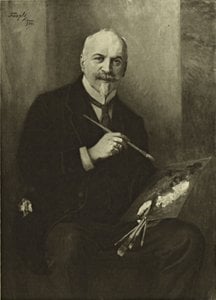
Isidor Kaufmann
1853 - 1921 , Romania
Quick Facts
- Full Name: Isidor Kaufmann
- Nationality: Austro-Hungarian
- Date Of Birth: 1853
- Date Of Death: 1921
- Place Of Birth: Arad, Romania
- Notable Artworks:
- Portrait Of Isidor Gewitsch
- Portrait Of A Young Jewish Man
- Artistic Movement Or Style: Genre Painting
- Artists Who Influenced This Artist: ['Joseph Matthäus Aigner']
- Artists Or Movements Influenced By This Artist: ['Baron Königswarter Künstler-Preis']


