
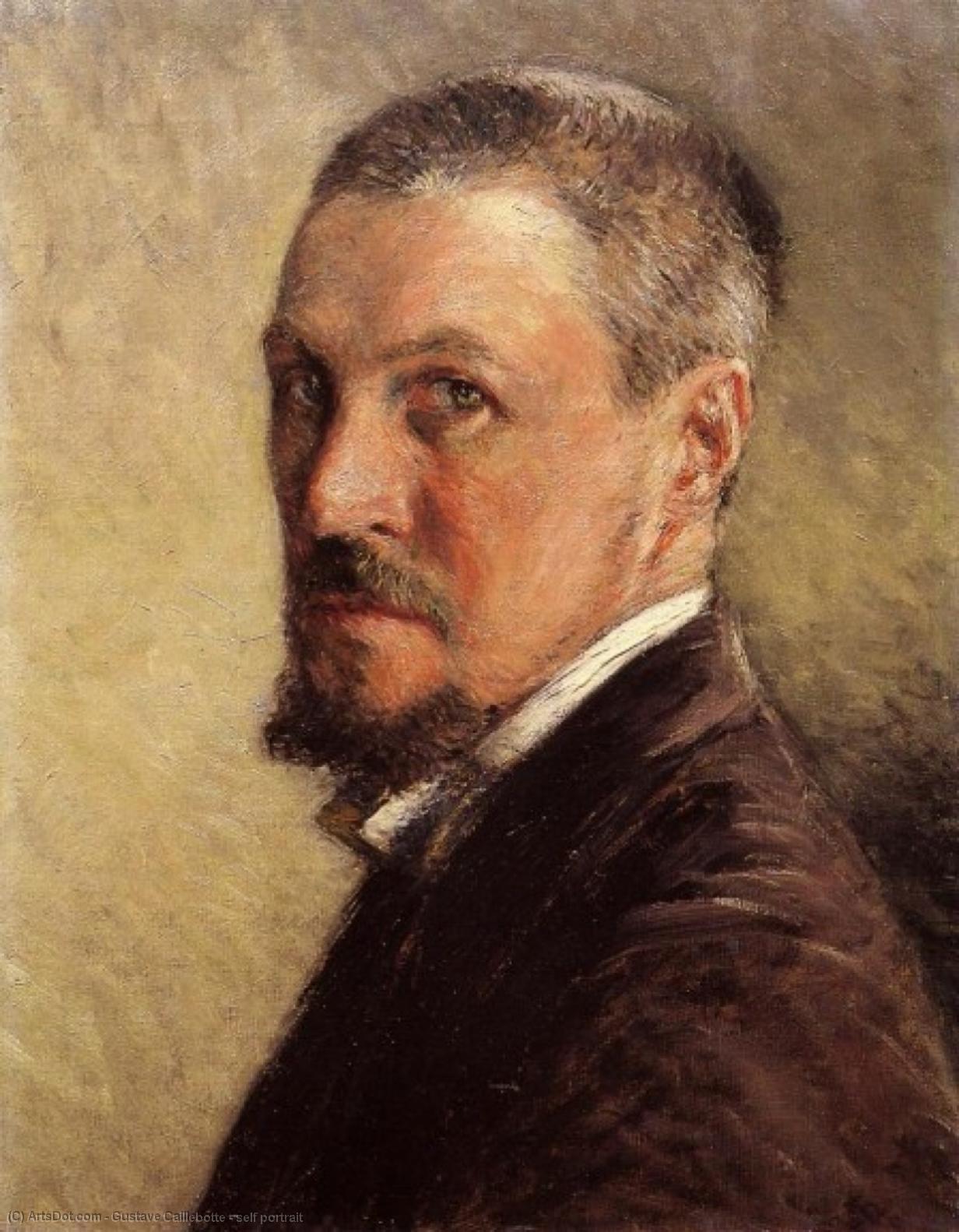
The picture follows your choices: , .
Artist Biography
A realist and Impressionist master known for Paris Street; Rainy Day. Explore his unique views of Parisian life today.
 Read More
Hand Made Oil Reproduction
Hand-painted oil on canvas in your size and frame, made to order by our artists. ( Switch to Print Switch to Digital Image)
More about this painting
 Preview
 Send
Send Share
Share
 Details
 Guide
Guide

 Download
 Similars
 X-Ray
X-Ray Diaporama
 Q&A
Q&A Stats
StatsOrder your painting in four simple steps
Take your time. You can change any answer; the price in your order card follows each choice.
1 Step one of four
Which size would you like?
These sizes keep the proportions of the original painting. The drawing shows your choice on a wall, above a two-metre sofa.
Or give your own measurements
Pick from our preset sizes that match the artwork's original proportions.

Type the width and the height you need, to fit your frame or your wall. This is hand-painted, so for a size with a different shape the artist can paint a bit more around the picture, or cut a bit — you choose. We send you a digital mockup to approve before the painting starts. The picture shown on this page does not show the real result — only the mockup does.
2 Step two of four
How should it be prepared: rolled, stretched or framed?
The prices below are for the size you chose in step one.
Choose the edges of the stretched canvas
Choose your frame

White $1

Blurside $1

Extended $1

P118B $10

P118H $10

P118W $10

P438Z $10

P508JH $12

P508YH $12

P805H $10

P805Z $10

P919BZ $10

P919G $10

P919XJ $10

P959ZH $10

P968JZ $12

W106C $8

W218G $10

W218JH $8

W218Y $10

W307PJ $10

W316G $10

W316PJ $8

W316Y $10

W398PJ $8

W4111J $10

W500HY $15

W500JH $15

W692G $12

W849H $8

W940BG $15

W953PJ $8

H24-GOLD $30

H24-SILVER $30

H36-GOLD $45

H36-SILVER $45
Framed
Moulding: . Overall size with the frame: .
3 Step three of four
Would you like anything changed in the painting?
Most people answer no. Because each painting is made by hand, our artist can also adapt it for you.
After order, ArtsDot.com team will email client for instructions and provide a mockup preview
4 Step four of four
A few finishing options
All of them are optional. The answers already selected cost nothing extra.
Who paints it?
Worldwide Delivery () in 3/4 weeks instead of standard 5 weeks. (10 November). No compromise on quality.
A nameplate, as in a museum?
Engraved Bronze Plaque Details
This elegant plaque features the artist's name and the title of the artwork, finely engraved for a timeless presentation.
It is made from bronze with a refined, elegant finish. The text is precisely laser-engraved for a sharp and permanent result. Measuring 9x2 cm, the plaque is compact yet easy to read. It's built to be durable and scratch-resistant, offering a professional, museum-quality look. Mounting is simple thanks to the included adhesive backing.
Transparent Acrylic Plaque Details
The plaque includes essential engraved details such as the artist's name, the title of the artwork, the date it was created, the type of media used-like oil on canvas or watercolor-a brief description of the piece, and a QR code that links to the complete artwork information.
It is crafted from clear acrylic, offering a sleek, modern appearance. The text is UV-engraved in black to ensure strong visual contrast. With a size of 10x15 cm, it ensures optimal readability. It comes equipped with two metal hooks for secure wall mounting. The plaque is designed to be weather-resistant, making it suitable for various environments, and it includes interactive features that work seamlessly with smartphone scanning.
Black Acrylic Plaque Details
This elegant plaque includes engraved information such as the artist's name, the title of the artwork, the date it was created, the type of media used (like oil on canvas or watercolor), a short description of the artwork, and a QR code for quick access to more information.
The plaque itself is made from refined black acrylic with a premium finish. The text is laser-engraved in white for high contrast and readability. Its size is 10x15 cm, designed to be easy to read. It comes with two metal hooks for professional mounting. The design is sleek and fits any interior style. It is also weather-resistant and durable, with built-in digital integration for mobile compatibility.
A protective varnish?
When do you need it?
✓ Check and order
Your painting, as you ordered it

self portrait
Reproduction Medium
Reproduction Size
-

Elite Senior Artist
More detail, finesse, and extra production time
-

Reproduction Frame
-
-
For artworks or reproductions larger than 105 cm (approximately 41 inches) on any side, the frame will be shipped as a kit, disassembled. This method ensures safe delivery and prevents damage during transport.
Professional assembly required - this is not a DIY product.
The kit must be assembled and the canvas stretched by an experienced professional framer, using wood glue (not supplied), a canvas stretching plier and clamps to hold the bars square while the glue dries. Incorrect assembly or uneven canvas tension can permanently damage the artwork and is not covered by our warranty.
 For artworks or reproductions larger than 105 cm (approximately 41 inches) on any side, the frame will be shipped as a kit, disassembled. This method ensures safe delivery and prevents damage during transport.
All solid wood bars are included, precisely cut to size.
Assembled with the screws provided, plus wood glue for the corner joints, which is not supplied and must be sourced by your framer.
Professional tools are required and not included: a canvas stretching plier (tensioner) and clamps to hold the bars square while the glue dries.
Important:
The corner joints require wood glue, the bars must be held with clamps until the glue is fully dry, and tightening the canvas on the assembled frame requires a canvas stretching plier. None of these are included in the kit. Please arrange an experienced professional framer before ordering this size.

Nameplate
-
-

Protective Varnish
Glossy Varnish (enhances colors, protects against light/moisture)
-

Customize My Artwork
Examples of what can be changed: Replace face with customer photo; Add pet (e.g., replace cat with dog); Include hidden message in background; Change background landscape or elements.
-

Urgent
Worldwide Delivery () in 3/4 weeks instead of standard 5 weeks. (10 November). No compromise on quality.
-
Express Shipping
Worldwide Delivery () in 5 weeks. (17 November).
Included
Total Price
$ 263
Glass option is only available in size under 110 CM
Included with every order
- Free Worldwide Express Shipping
- High-Quality Linen Canvas
- Full Shipping Insurance
- Customs Tax Refund Guarantee
- True Color Matching Guarantee
- 100-Day Return Policy (Defects Only)
- 100% Money-Back Guarantee
- Bulk Discount Offer


Related Artworks


Gustave Caillebotte
1848 - 1894, France
Artist Biography
Early Life, Family and Training
Gustave Caillebotte was born on 19 August 1848 in Paris, France, into an upper-class family that provided the financial stability necessary to pursue a career outside of traditional commerce. His father, Martial Caillebotte, was a successful textile manufacturer and a judge. This background meant that Caillebotte did not enter the art world from a position of struggle, but rather from a place of significant economic security. Before committing to the canvas, he pursued formal education in practical disciplines, obtaining degrees in law and engineering.
His transition into professional art was marked by rigorous, disciplined training rather than spontaneous experimentation. He studied painting in the studio of Léon Bonnat, a teacher known for emphasizing technical precision and anatomical accuracy. This academic foundation remained a constant throughout his development. In 1873, he entered the École des Beaux-Arts, further cementing his technical grounding in the formal traditions of the era.
Technique and Style
Caillebotte’s approach to the canvas was defined by a refusal to adopt the loose, spontaneous brushwork favored by many of his Impressionist contemporaries. While he was a member of the movement, his execution remained anchored in a rigorous realism. His technique often felt closer to the heavy, grounded depictions of Courbet or Millet than the atmospheric experiments of Monet or Morisot. He prioritized a precise rendering of form and a clear, structured depiction of modern life, avoiding the blurred edges that characterized much of the era's avant-garde output.
The rise of photography fundamentally altered his visual logic. He did not merely use the medium as a tool, but studied photographs to master their specific mechanics. This resulted in compositions that utilized unconventional framing, sharp perspectives, and a particular way of capturing light and shadow. His work often mirrors the way a camera lens slices through a scene, creating a sense of immediacy through sudden, dramatic cropping and elevated viewpoints that force the viewer into a specific, often detached, relationship with the subject matter.
- Paris Street; Rainy Day (1877)
- The Floor Scrapers (1875)
- Boating Party (1878)
Key Works and Masterpieces
Caillebotte’s output is defined by a refusal to retreat into sentimentality. In 1875, he produced Les Raboteurs de Parquet, a work that forced viewers to confront the physical reality of labor through a direct, unembellished lens. This commitment to the tangible is equally present in Man at the Window, a 1875 painting that uses a specific, detailed perspective to examine urban isolation. These early works established a pattern of using precise observation to anchor his compositions in a recognizable, modern reality.
His most recognized achievement, Paris Street; Rainy Day (1877), functions as a study of urban geometry and social anonymity. The work captures a specific moment of movement within the city, utilizing a wide, structured composition that avoids the soft edges often associated with his contemporaries. Similarly, The Bather, or The Diver (1877) demonstrates his ability to handle light and atmosphere without sacrificing the structural integrity of the subject. Even in his depictions of leisure, such as Boating Party (1878), there is a sense of controlled, photographic precision rather than spontaneous abstraction.
- Young Man at His Window (1876)
- The Orange Trees (1878)
- Interior, Woman Reading (1880)
Patronage and the Impressionist Circle
Caillebotte’s influence on the Impressionist movement extended far beyond his own canvases. While his contemporaries often struggled for financial stability, his family wealth provided him with a unique position of power within the Parisian art scene. He was a contemporary of the Impressionist group and a member of their circle, notably exhibiting in the second Impressionist exhibition of 1876. His presence in these exhibitions helped solidify the movement's visibility during a period of institutional resistance.
His contribution was as much financial as it was creative. Caillebotte acted as a significant patron to many of his fellow Impressionists, using his resources to support artists who were frequently rejected by the official Salon. He did not merely observe the movement; he actively collected works by many of his peers. This habit of collecting ensured that the works of his contemporaries were preserved, even when the mainstream establishment dismissed them. His commitment to the group helped sustain the very community that would eventually redefine modern art.
Later Years and Death
By the early 1890s, Caillebotte’s output had slowed. The momentum that characterized his earlier, more experimental years began to wane. He was no longer the aggressive force driving the Impressionist exhibitions, but a man increasingly settled into his private life and his estates. This period of deceleration was not a loss of vision, but a shift in focus that preceded a sudden end.
His death arrived abruptly on 21 February 1894. He was only 45 years old. He was working in his garden at Petit-Gennevilliers when pulmonary congestion took him. It was a quiet, domestic conclusion for a man who had spent his life documenting the shifting, often impersonal, urban landscapes of Paris. He was interred at Père Lachaise Cemetery in Paris.
Legacy and Historical Reassessment
Caillebotte’s reputation did not enjoy immediate stability. For decades after his death, his work remained largely overlooked by the mainstream. It took until the 1970s for his paintings to draw significant attention and force a re-evaluation of his place in the 19th-century canon. This shift moved him from the periphery of art history into a position of serious scholarly study.
The scale of his influence is most visible in the institutional collections of France. His bequeathed collection became the central collection of Impressionism for the French Republic, providing the foundation for how the movement is understood today. This massive contribution ensured that his specific brand of realism remained inseparable from the broader Impressionist narrative. A first comprehensive international retrospective in 1994–1995 finally solidified this standing, presenting his vision to a global audience on a scale that matched his historical importance.
His legacy is defined by this tension between his role as a collector and his identity as a painter. He was not merely a financier of his peers; he was a technician who bridged the gap between traditional realism and the new modernism. His ability to capture the urban landscape of Paris through a lens influenced by photography remains his most concrete contribution to the era.
Where to See the Works Today
To encounter Caillebotte’s most significant canvases, one must look to Paris. The Musée d'Orsay holds a substantial portion of his output, including the large-scale Boating Party and the gritty, realistic The Floor Scrapers. These works demonstrate the technical precision that defined his approach to modern subjects. His presence in the French national collections remains a primary reason for his continued relevance in the study of 19th-century urban life.
The reach of his work extends well beyond France. In the United States, the Art Institute of Chicago houses Paris Street; Rainy Day, a painting that captures the specific architectural and social atmosphere of a transforming city. This work remains one of his most recognizable contributions to the visual record of the era. Elsewhere, his influence is felt through international loans, such as Young Man Playing the Piano, which is currently held at Tokyo's Artizon Museum.
- Man at the Window
- The Orange Trees
- Pink Villas at Trouville


