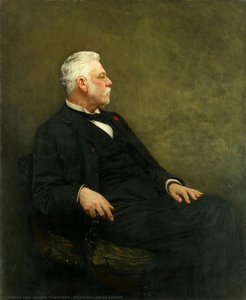
- 76.0 x 51.0 cm


The picture follows your choices: , .
Artist Biography
Eduard Charlemont (1848-1906) was an Austrian painter known for his Orientalist scenes, portraits & genre paintings. He gained recognition in Paris and contributed murals to Vienna's Burgtheater. Discover his captivating works!
 Read More
Hand Made Oil Reproduction
Hand-painted oil on canvas in your size and frame, made to order by our artists. ( Switch to Print Switch to Digital Image)
More about this painting
 Preview
 Send
Send Share
Share
 Details
 Guide
Guide

 Download
 Similars
 X-Ray
X-Ray Diaporama
 Q&A
Q&A Stats
StatsOrder your painting in four simple steps
Take your time. You can change any answer; the price in your order card follows each choice.
1 Step one of four
Which size would you like?
These sizes keep the proportions of the original painting. The drawing shows your choice on a wall, above a two-metre sofa.
Or give your own measurements
Pick from our preset sizes that match the artwork's original proportions.

Type the width and the height you need, to fit your frame or your wall. This is hand-painted, so for a size with a different shape the artist can paint a bit more around the picture, or cut a bit — you choose. We send you a digital mockup to approve before the painting starts. The picture shown on this page does not show the real result — only the mockup does.
2 Step two of four
How should it be prepared: rolled, stretched or framed?
The prices below are for the size you chose in step one.
Choose the edges of the stretched canvas
Choose your frame

White $1

Blurside $1

Extended $1

P118B $10

P118H $10

P118W $10

P438Z $10

P508JH $12

P508YH $12

P805H $10

P805Z $10

P919BZ $10

P919G $10

P919XJ $10

P959ZH $10

P968JZ $12

W106C $8

W218G $10

W218JH $8

W218Y $10

W307PJ $10

W316G $10

W316PJ $8

W316Y $10

W398PJ $8

W4111J $10

W500HY $15

W500JH $15

W692G $12

W849H $8

W940BG $15

W953PJ $8

H24-GOLD $30

H24-SILVER $30

H36-GOLD $45

H36-SILVER $45
Framed
Moulding: . Overall size with the frame: .
3 Step three of four
Would you like anything changed in the painting?
Most people answer no. Because each painting is made by hand, our artist can also adapt it for you.
After order, ArtsDot.com team will email client for instructions and provide a mockup preview
4 Step four of four
A few finishing options
All of them are optional. The answers already selected cost nothing extra.
Who paints it?
Worldwide Delivery () in 3/4 weeks instead of standard 5 weeks. (5 November). No compromise on quality.
A nameplate, as in a museum?
Engraved Bronze Plaque Details
This elegant plaque features the artist's name and the title of the artwork, finely engraved for a timeless presentation.
It is made from bronze with a refined, elegant finish. The text is precisely laser-engraved for a sharp and permanent result. Measuring 9x2 cm, the plaque is compact yet easy to read. It's built to be durable and scratch-resistant, offering a professional, museum-quality look. Mounting is simple thanks to the included adhesive backing.
Transparent Acrylic Plaque Details
The plaque includes essential engraved details such as the artist's name, the title of the artwork, the date it was created, the type of media used-like oil on canvas or watercolor-a brief description of the piece, and a QR code that links to the complete artwork information.
It is crafted from clear acrylic, offering a sleek, modern appearance. The text is UV-engraved in black to ensure strong visual contrast. With a size of 10x15 cm, it ensures optimal readability. It comes equipped with two metal hooks for secure wall mounting. The plaque is designed to be weather-resistant, making it suitable for various environments, and it includes interactive features that work seamlessly with smartphone scanning.
Black Acrylic Plaque Details
This elegant plaque includes engraved information such as the artist's name, the title of the artwork, the date it was created, the type of media used (like oil on canvas or watercolor), a short description of the artwork, and a QR code for quick access to more information.
The plaque itself is made from refined black acrylic with a premium finish. The text is laser-engraved in white for high contrast and readability. Its size is 10x15 cm, designed to be easy to read. It comes with two metal hooks for professional mounting. The design is sleek and fits any interior style. It is also weather-resistant and durable, with built-in digital integration for mobile compatibility.
A protective varnish?
When do you need it?
✓ Check and order
Your painting, as you ordered it

Ship constructor
Reproduction Medium
Reproduction Size
-

Elite Senior Artist
More detail, finesse, and extra production time
-

Reproduction Frame
-
-
For artworks or reproductions larger than 105 cm (approximately 41 inches) on any side, the frame will be shipped as a kit, disassembled. This method ensures safe delivery and prevents damage during transport.
Professional assembly required - this is not a DIY product.
The kit must be assembled and the canvas stretched by an experienced professional framer, using wood glue (not supplied), a canvas stretching plier and clamps to hold the bars square while the glue dries. Incorrect assembly or uneven canvas tension can permanently damage the artwork and is not covered by our warranty.
 For artworks or reproductions larger than 105 cm (approximately 41 inches) on any side, the frame will be shipped as a kit, disassembled. This method ensures safe delivery and prevents damage during transport.
All solid wood bars are included, precisely cut to size.
Assembled with the screws provided, plus wood glue for the corner joints, which is not supplied and must be sourced by your framer.
Professional tools are required and not included: a canvas stretching plier (tensioner) and clamps to hold the bars square while the glue dries.
Important:
The corner joints require wood glue, the bars must be held with clamps until the glue is fully dry, and tightening the canvas on the assembled frame requires a canvas stretching plier. None of these are included in the kit. Please arrange an experienced professional framer before ordering this size.

Nameplate
-
-

Protective Varnish
Glossy Varnish (enhances colors, protects against light/moisture)
-

Customize My Artwork
Examples of what can be changed: Replace face with customer photo; Add pet (e.g., replace cat with dog); Include hidden message in background; Change background landscape or elements.
-

Urgent
Worldwide Delivery () in 3/4 weeks instead of standard 5 weeks. (5 November). No compromise on quality.
-
Express Shipping
Worldwide Delivery () in 5 weeks. (12 November).
Included
Total Price
$ 263
Glass option is only available in size under 110 CM
Included with every order
- Free Worldwide Express Shipping
- High-Quality Linen Canvas
- Full Shipping Insurance
- Customs Tax Refund Guarantee
- True Color Matching Guarantee
- 100-Day Return Policy (Defects Only)
- 100% Money-Back Guarantee
- Bulk Discount Offer


Related Artworks


Eduard Charlemont
1848 - 1906, Italy
Artist Biography
Gustave Caillebotte: A Parisian Observer of Modern Life
Gustave Caillebotte (1848-1906) was a pivotal figure in the transition from Realism to Impressionism and Post-Impressionism within French art. Born into a comfortable bourgeois family in Paris, his early life provided him with both financial security and an exposure to the artistic circles of the city – a crucial foundation for his later career. Unlike many artists who trained formally at the École des Beaux-Arts, Caillebotte largely taught himself, developing a unique style characterized by meticulous observation, sharp detail, and a subtle yet powerful depiction of everyday Parisian life.
Caillebotte’s artistic journey began with an interest in sketching and drawing, initially influenced by the Barbizon School's focus on landscape painting. However, he quickly moved beyond mere representation, becoming increasingly interested in capturing the fleeting moments and social dynamics of his surroundings. His early works, such as *The Street* (1877), demonstrate a remarkable ability to render urban scenes with an almost photographic precision – a skill honed through countless hours spent observing the streets of Paris from his studio window. This dedication to observation is evident in his meticulous attention to detail, particularly in depicting the textures of clothing, the reflections on wet pavement, and the subtle shifts in light and shadow.
Crucially, Caillebotte’s artistic development was intertwined with that of Édouard Manet, a key figure in Impressionism. Initially, he exhibited alongside Manet at the Salon des Refusés in 1863, a watershed moment for modern art. While Caillebotte's early works shared some similarities with Manet’s, particularly his interest in depicting contemporary subjects and his rejection of academic conventions, he gradually developed a more distinct style. He was less interested in capturing the fleeting effects of light and color than Manet, instead focusing on creating carefully constructed compositions that conveyed a sense of realism and psychological depth.
The Rise of Modernity: Caillebotte’s Parisian Scenes
Caillebotte's most celebrated works depict scenes from modern Parisian life – the bustling streets, crowded cafes, and intimate domestic interiors. He wasn’t interested in grand historical narratives or mythological subjects; instead, he chose to portray the ordinary experiences of everyday people. *Paris Street; Rainy Day* (1877) is perhaps his most iconic painting, a masterful depiction of urban life captured with remarkable clarity and precision. The scene unfolds with an almost cinematic quality, capturing the movement and energy of the street while simultaneously conveying a sense of melancholy and isolation.
His paintings often feature small groups of figures engaged in seemingly mundane activities – drinking coffee, playing cards, or simply strolling along the street. Caillebotte’s skill lies not only in his technical proficiency but also in his ability to capture the psychological nuances of these scenes. He subtly conveys the emotions and relationships between the characters through their posture, gestures, and expressions. He was a keen observer of human behavior, and his paintings offer a poignant glimpse into the social fabric of 19th-century Paris.
Furthermore, Caillebotte’s work reflects the changing social landscape of the time. As Paris modernized rapidly, he documented these transformations with an eye for detail and a subtle critique of urban life. His paintings offer a valuable record of a city in transition – a city grappling with industrialization, immigration, and the rise of new social classes.
Influence and Legacy
Caillebotte’s influence on subsequent generations of artists is considerable. While he never achieved the widespread fame of Impressionist giants like Monet or Renoir, his meticulous observation, sharp detail, and psychological insight paved the way for many later movements. His work anticipated elements of Pointillism and Neo-Impressionism, demonstrating a sophisticated understanding of color theory and composition.
Notably, Caillebotte’s focus on depicting everyday life resonated with artists who sought to capture the realities of modern urban existence. He is considered a precursor to later Realist painters like Jean-François Millet and Gustave Doré, both of whom shared his commitment to portraying the lives of ordinary people.
Moreover, Caillebotte’s innovative use of perspective and composition influenced artists working in various media – from painting to photography. His meticulous attention to detail and his ability to create a sense of depth and realism were particularly admired by photographers of the late 19th century.
A Lasting Impression
Gustave Caillebotte’s artistic legacy extends beyond his individual paintings. He represents a crucial link between Realism and Modernism, embodying the spirit of observation and critical inquiry that defined the transition from traditional art to contemporary expression. His meticulous depictions of Parisian life offer a unique and enduring portrait of a city in transformation – a testament to the power of art to capture the essence of human experience.
His work continues to be exhibited and studied today, reminding us of his significant contribution to the history of art and his lasting impact on our understanding of modern urban life.