


 Preview
 Send
Send Share
Share
 Details
 Guide
Guide

 Download
 Similars
 X-Ray
X-Ray Diaporama
 Stats
StatsRolling Mill
 Acrylic On Canvas
- WallArt
- Romantic Industrialization
 1834
1834- 19th Century
 26.0 x 33.0 cm
 Nationalgalerie
 Read More
Giclée / Art Print
Museum-quality giclée or canvas print with fast production and flexible finish options. ( Buy Hand Made Painting Switch to Digital Image)




P118B $10

P118H $10

P118W $10

P438Z $10

P508JH $12

P508YH $12

P805H $10

P805Z $10

P919BZ $10

P919G $10

P919XJ $10

P959ZH $10

P968JZ $12

W106C $8

W218G $10

W218JH $8

W218Y $10

W307PJ $10

W316G $10

W316PJ $8

W316Y $10

W398PJ $8

W4111J $10

W500HY $15

W500JH $15

W692G $12

W849H $8

W940BG $15

W953PJ $8




Pick from our preset sizes that match the artwork's original proportions.

You may enter your own dimensions to fit a specific frame or space. If your selected size does not match the original image's proportions, we will either crop the artwork or extend the image with a mirrored or solid-fill edge. A digital mockup will be sent for your approval before production begins.
Please note that the on-screen preview does not reflect the actual cropping or extension. Only the mockup will accurately show the final composition.
While custom sizes are available, we recommend selecting a dimension from the predefined list to preserve the original proportions.
Worldwide Delivery () in 2 weeks instead of standard 4/5 weeks. (14 October)

Free Worldwide Express Shipping

High-Quality Linen Canvas

Full Shipping Insurance

Customs Tax Refund Guarantee

True Color Matching Guarantee

100-Day Return Policy (Defects Only)

100% Money-Back Guarantee

Bulk Discount Offer
 Glass option is only available in size under 110 CM

Rolling Mill
Giclée / Art Print
Reproduction Size
-


Total Price
$ 63
The Weight of Progress: Carl Blechen’s “Rolling Mill”
Carl Blechen's "Rolling Mill" isn’t merely a depiction of a factory; it’s a profound meditation on the burgeoning industrial landscape of 19th-century Germany, rendered with a haunting beauty that belies its subject matter. Painted in 1834, this oil on canvas captures a pivotal moment – the rise of mechanized production and its complex relationship to the natural world. Blechen, a key figure in bridging Romanticism and early industrialization, eschews the idealized pastoral scenes favored by many of his contemporaries, instead confronting the gritty reality of factories like the Neustadt-Eberswalde Rolling Mill, one of the first metalworking plants in the Mark Brandenburg.
The painting immediately draws the eye to a vast, imposing structure dominated by towering smokestacks and the rhythmic clang of machinery. Blechen masterfully employs atmospheric perspective – a technique borrowed from the Italian masters he admired – to create a sense of depth and scale. The distant hills are rendered in muted blues and purples, contrasting sharply with the darker tones of the mill itself. This deliberate juxtaposition highlights the encroachment of industry upon the serene beauty of the countryside, suggesting a fundamental shift in the relationship between humanity and nature.
A Romantic Encounter with Industry
Blechen’s approach to industrial subject matter is remarkably nuanced. He doesn't present the factory as a symbol of progress or triumph; rather, he imbues it with a melancholic quality. The scene is populated by figures – a solitary angler casting his line into the Finow Canal and two fishermen hauling in their nets – who seem almost oblivious to the industrial activity unfolding behind them. These individuals represent a traditional way of life, seemingly untouched by the forces of modernization. Their presence serves as a poignant reminder of what’s being lost in the relentless march forward.
The painting's composition is carefully orchestrated to evoke a sense of unease and contemplation. The dominant verticality of the mill contrasts with the horizontal lines of the river, creating a visual tension that mirrors the conflict between tradition and innovation. Blechen’s use of light and shadow further enhances this effect, casting long, dramatic shadows across the landscape and emphasizing the imposing scale of the factory.
Technique and Symbolism
Blechen's technical skill is evident in his meticulous attention to detail – from the intricate patterns of the machinery to the subtle variations in color and texture. He employs a loose, expressive brushstroke that captures the dynamism of the scene while maintaining a sense of atmospheric depth. The painting’s palette is dominated by earthy tones—browns, grays, and ochres—which contribute to its somber mood. The smoke billowing from the chimneys isn't simply a visual element; it symbolizes the pollution and environmental degradation associated with industrialization – a subtle but powerful critique of the era.
Interestingly, Blechen’s work predates many later Romantic depictions of industry, making it a remarkably prescient commentary on the social and environmental consequences of rapid technological advancement. The painting's enduring power lies in its ability to capture not just the physical reality of the rolling mill but also the emotional and philosophical complexities of an era defined by profound transformation.
A Legacy of Observation
“Rolling Mill” stands as a testament to Carl Blechen’s unique artistic vision. It's a work that invites viewers to consider the lasting impact of industrialization on both the landscape and the human spirit. Reproductions of this powerful image offer a valuable opportunity to engage with a pivotal moment in art history, prompting reflection on our own relationship with technology and the environment. The painting’s continued relevance speaks volumes about Blechen's ability to capture the essence of his time—a time of both unprecedented progress and profound uncertainty.
Questions & Answers
What mood and emotion does "Rolling Mill" by Carl Blechen express?
"Rolling Mill" by Carl Blechen conveys a reflective feeling within an overall calm mood.
How does the style of "Rolling Mill" relate to its creator's era?
"Rolling Mill" belongs to the Romantic Industrialization movement, and its creator worked in the 19th-Century era.
Is a high-resolution download of "Rolling Mill" available?
To get a digital file of "Rolling Mill" by Carl Blechen, order a high-resolution digital image download on this page.
Who is the artist behind "Rolling Mill"?
"Rolling Mill" was created by Carl Blechen. The information on this page describes Carl Blechen's original work.
Can "Rolling Mill" by Carl Blechen, held at the Nationalgalerie, be legally reproduced?
The original "Rolling Mill" is at the Nationalgalerie, and the work is in the public domain - its copyright has expired.
Is a download available for "Rolling Mill"?
A download is available for "Rolling Mill": the artwork's Download page offers a high-resolution digital image download.
What are the format and size of "Rolling Mill"?
"Rolling Mill" by Carl Blechen is proportioned as a landscape work of 26 x 33 cm.
What stage of Carl Blechen's career does "Rolling Mill" (1834) belong to?
Given its 1834 date, "Rolling Mill" falls in Carl Blechen's Romantic Industrialization.
Related Artworks




Artist Biography
A Pioneer of Romantic Industrialization: The Life and Art of Carl Blechen
Carl Eduard Ferdinand Blechen, born in Cottbus, Germany, in 1798, occupies a unique and often overlooked position within the landscape painting tradition. His life was marked by both artistic brilliance and personal turmoil, a duality that profoundly shaped his evocative and groundbreaking work. Initially destined for a pragmatic career in banking due to familial financial constraints, Blechen’s inherent artistic inclinations ultimately prevailed. He pursued studies at the Berlin Academy of Arts in 1822, embarking on a path that would see him become one of the first artists to grapple with the aesthetic challenges—and possibilities—presented by early industrialization.
Blechen's formative years were steeped in the Romantic ideals sweeping across Europe. However, unlike many of his contemporaries who focused solely on idealized natural beauty or historical grandeur, Blechen’s gaze was drawn to a changing world. A pivotal journey to Italy in 1828-1829 proved transformative. Immersed in the light and atmosphere of the Italian countryside, he honed his skills in plein air sketching, capturing fleeting moments and dramatic effects with remarkable sensitivity. These sketches weren't merely preparatory studies; they were imbued with a vibrant energy that would characterize his mature style. He returned to Berlin not simply as a technically proficient painter but as an artist with a distinct vision—one that sought to reconcile the sublime beauty of nature with the encroaching realities of modernity.
Navigating Tradition and Transformation
Blechen’s artistic output is characterized by a compelling tension between Romantic sensibility and a nascent realism. He didn't shy away from depicting the burgeoning industrial landscape, but neither did he celebrate it uncritically. Works like Bau der Teufelsbrücke (Construction of the Devil's Bridge), painted between 1830 and 1832, exemplify this approach. The painting doesn’t glorify the engineering feat; instead, it presents a scene of arduous labor set against a dramatic backdrop, hinting at both human ambition and the potential for disruption of the natural order. This willingness to confront the complexities of his time sets him apart from many of his contemporaries.
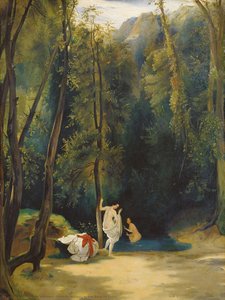
His landscapes are often imbued with a melancholic atmosphere, reflecting not only the changing physical environment but also his own internal struggles. Waldweg bei Spandau (Forest Path near Spandau), for instance, evokes a sense of solitude and introspection, while simultaneously showcasing Blechen’s mastery of light and shadow. He skillfully employed atmospheric perspective to create depth and mood, drawing the viewer into the scene and inviting contemplation. He wasn't merely recording what he saw; he was conveying an emotional response to it.
A Troubled Genius and Lasting Legacy
Despite his artistic achievements, Blechen’s life was tragically cut short by mental illness. Appointed Professor of Landscape Painting at the Berlin Academy in 1831—a testament to his growing reputation—his condition began to deteriorate rapidly after 1835. Forced to take leave and eventually hospitalized, he continued to create art even amidst his suffering, producing poignant drawings that offer a glimpse into his troubled inner world. He died in Berlin in 1840 at the age of 41.
Though his career was relatively brief, Carl Blechen’s influence on subsequent generations of artists is undeniable. His pioneering depictions of industrial landscapes paved the way for later Realist and Impressionist painters who sought to capture the changing face of modern life. He demonstrated that it was possible to find beauty—and meaning—even in the midst of transformation, a lesson that continues to resonate with artists today. His work remains a powerful reminder of the complex relationship between humanity, nature, and progress.
Key Works & Collections
- Im Berliner Tiergarten (The Berlin Zoo), 1825: An early example of his ability to capture atmospheric effects and everyday scenes with a Romantic sensibility.
- Waldweg bei Spandau (Forest Path near Spandau): A haunting landscape that exemplifies his mastery of light, shadow, and mood.
- Bau der Teufelsbrücke (Construction of the Devil's Bridge), 1830–32: A groundbreaking depiction of early industrialization, showcasing both human ambition and its impact on the natural world.
Today, Blechen’s works can be found in prominent museum collections worldwide, including the Kunsthalle Bielefeld in Germany, The Fitzwilliam Museum in Cambridge, and the National Gallery in London. These institutions preserve his legacy for future generations, ensuring that his innovative vision continues to inspire and challenge viewers.
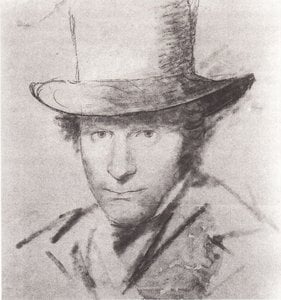
Carl Blechen
1798 - 1840 , Germany
Quick Facts
- Full Name: Carl Eduard Ferdinand Blechen
- Nationality: German
- Date Of Birth: 1798
- Date Of Death: 1840
- Place Of Birth: Cottbus, Germany
- Notable Artworks:
- Im Berliner Tiergarten
- Waldweg bei Spandau
- Bau der Teufelsbrücke
- Artistic Movement Or Style: Romanticism
- Artists Who Influenced This Artist:
- Caspar David Friedrich
- Johann Christian Dahl
Related Articles

Evocations of Place: A Historical Journey Through Landscape Art
Explore the rich history of landscape art with ArtsDot. Discover renowned artists, movements like Impressionism & Romanticism, and expert guidance for collecting timeless pieces. Find your perfect serene escape today!

Industrial Revolution on Canvas: 10 Artworks That Define a Modern Aesthetic
Explore 10 iconic artworks capturing the Industrial Revolution’s grit & beauty. From Monet to Manet, discover realism, impressionism & powerful scenes of urban life. Find museum-quality reproductions for your home at ArtsDot.com.

Evoking Nature's Sublime: A Comprehensive Exploration of 19th-Century Landscape Painting
Explore the captivating world of 19th-century landscape painting! Discover renowned artists like Friedrich & Monet, key movements, and find the perfect artwork to bring nature's serenity into your home. Expert insights at ArtsDot.

John Constable's Masterpieces: Explore 25 Iconic Landscapes for Your Home
Journey through John Constable's 25 most celebrated landscapes. Explore Romanticism, Dedham Vale & his masterful use of light in iconic paintings like 'Hay Wain'. Find museum-quality art reproductions and elevate your home decor on ArtsDot.com.

Romantic Landscapes: 10 Masterpieces for Your Home | ArtsDot
Journey through 10 Romantic landscape masterpieces by Friedrich, Turner & Cole. Explore emotional art, sublime nature scenes & iconic 19th-century paintings. Find museum-quality reproductions for your home at ArtsDot.com – discover the full collection online!


