


 Preview
 Send
Send Share
Share
 Details

 Download
 Similars
 X-Ray
X-Ray Diaporama
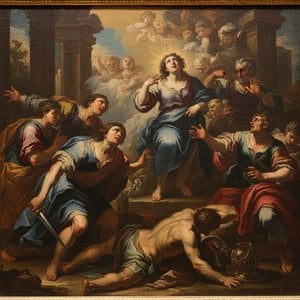
Heliodorus Driven from the Temple
 Oil On Canvas
- WallArt
- Baroque
 1658
1658 146.0 x 174.0 cm
 Musées Royaux des Beaux-Arts
 Read More
Giclée / Art Print
Museum-quality giclée or canvas print with fast production and flexible finish options. ( Buy Hand Made Painting Buy Image)




P118B $10

P118H $10

P118W $10

P438Z $10

P508JH $12

P508YH $12

P805H $10

P805Z $10

P919BZ $10

P919G $10

P919XJ $10

P959ZH $10

P968JZ $12

W106C $8

W218G $10

W218JH $8

W218Y $10

W307PJ $10

W316G $10

W316PJ $8

W316Y $10

W398PJ $8

W4111J $10

W500HY $15

W500JH $15

W692G $12

W849H $8

W940BG $15

W953PJ $8




Pick from our preset sizes that match the artwork's original proportions.

You may enter your own dimensions to fit a specific frame or space. If your selected size does not match the original image's proportions, we will either crop the artwork or extend the image with a mirrored or solid-fill edge. A digital mockup will be sent for your approval before production begins.
Please note that the on-screen preview does not reflect the actual cropping or extension. Only the mockup will accurately show the final composition.
While custom sizes are available, we recommend selecting a dimension from the predefined list to preserve the original proportions.
Worldwide Delivery () in 2 weeks instead of standard 4/5 weeks. (14 August)

Free Worldwide Express Shipping

High-Quality Linen Canvas

Full Shipping Insurance

Customs Tax Refund Guarantee

True Color Matching Guarantee

60-Day Return Policy (Defects Only)

100% Money-Back Guarantee

Bulk Discount Offer
 Glass option is only available in size under 110 CM

Heliodorus Driven from the Temple
Giclée / Art Print
Reproduction Size
-


Total Price
$ 63
Collectible Description
A Dramatic Echo from Baroque Rome
To stand before this depiction of Heliodorus Driven from the Temple is to be swept away by the raw, dramatic energy characteristic of the High Baroque period. Painted in 1658 by Bertholet Flémal, this canvas is not merely a historical recounting; it is a visceral tableau vivant, capturing a moment of profound upheaval and public spectacle. The scene pulses with narrative tension, drawing the viewer immediately into the chaos surrounding the central figure. One can almost hear the shouts and feel the dust kicked up by the horses whose presence anchors the drama on either side.
Mastery in Baroque Composition
Flémal’s technique here showcases a remarkable command of movement and human emotion, hallmarks of the era's most dramatic styles. The composition is anything but static; it flows diagonally, guiding the eye from the forceful expulsion at the center toward the surrounding figures. Observe the musculature of the men grappling with the central figure, or the tension held within the rearing horses—each element contributes to a sense of overwhelming momentum. Flémal utilizes deep contrasts in light and shadow, allowing certain gestures and expressions to leap out from the darker recesses, lending an almost theatrical immediacy to the entire narrative.
Symbolism of Conflict and Piety
The subject matter itself—the expulsion of Heliodorus—is rich with symbolic weight. It speaks to themes of religious fervor clashing with civic authority, a perennial tension explored throughout art history. The shield held by the man being driven out is more than mere defense; it represents his conviction and his adherence to a deeply held principle. The temple setting itself symbolizes sacred law, while the act of ejection underscores the painful boundary between private belief and public order. For the collector or decorator, this piece offers an intellectual depth, allowing one to contemplate enduring conflicts of conscience.
An Emotional Resonance for Modern Spaces
Reproducing such a powerful work into a contemporary interior space requires understanding its inherent drama. This painting does not whisper; it proclaims. It demands attention, serving as a magnificent focal point in a grand hall or a richly appointed study. The deep, saturated tones and the palpable sense of action lend an air of cultivated grandeur to any room. Owning a reproduction allows one to harness this historical spectacle—this blend of human struggle, divine mandate, and artistic virtuosity—bringing the dramatic splendor of 17th-century European life into the modern day.
Related Artworks


Artist Biography
A Life Immersed in Baroque Splendor: The World of Bertholet Flémal
Bertholet Flémal, a name resonating with the opulent spirit of 17th-century Europe, was born in Liège, Belgium, in 1614. His artistic journey began within a family deeply rooted in craftsmanship—his father, Renier Flémal, was a skilled painter of stained glass. This early exposure to color and form undoubtedly laid the foundation for his future endeavors. Flémal’s initial training took place under the guidance of Henri Trippet, followed by studies with Gérard Douffet, both respected figures in the Liège art scene. These formative years instilled in him a solid technical base, preparing him for the ambitious path that lay ahead.From Rome to Versailles: A Cosmopolitan Career
The year 1638 marked a pivotal moment in Flémal’s life—his first journey to Rome. This sojourn into the heart of artistic innovation proved transformative, exposing him to the masters and the prevailing Baroque aesthetic. His talent quickly garnered attention, leading to an invitation from the Duke of Tuscany to Florence, where he contributed to the decoration of one of his galleries. The allure of Paris soon beckoned, and Flémal found himself immersed in the elaborate world of Louis XIV’s court. He undertook significant decorative work at Versailles, a testament to his growing reputation and skill. Notably, he painted for the sacristy of the church of the Augustinians, creating an *Adoration of the Magi* that showcased his developing style—a blend of dramatic composition and refined detail.A Return to Liège and Royal Recognition
Despite his successes abroad, Flémal maintained a strong connection to his native Liège. He returned in 1647 and dedicated himself to numerous commissions for the region’s churches, becoming a prominent figure in the local artistic community. His patron, Canon Lambert de Liverloo, Chancellor to the Prince-Bishop of Liège, played a crucial role in securing these opportunities. Flémal wasn't solely focused on painting; he also designed religious buildings and fittings, though sadly, none of his architectural work survives today. The pinnacle of his career arrived in 1670 when he was re-invited to Paris by Louis XIV himself. He undertook the monumental task of painting the ceiling of the audience room in the Tuileries Palace—an allegory depicting *Religion Protecting France*. This commission solidified his position as a leading artist, culminating in his appointment as a professor at the prestigious Académie Royale de Peinture et de Sculpture. He was further honored with a canonical prebendary within the collegiate church of St Paul in Liège, demonstrating both his artistic and social standing.Themes, Style, and Lasting Legacy
Flémal’s oeuvre is characterized by religious scenes imbued with Baroque grandeur. His paintings often feature dynamic compositions, rich color palettes (though some critics noted a tendency towards paler hues), and figures rendered with meticulous detail—sometimes perceived as somewhat artificial. He excelled in large-scale decorative projects, creating immersive environments that celebrated faith and power. His most renowned work, *The Glorification of the Holy Cross*, remains a striking example of his artistic vision within St Bartholomew’s Church in Liège. While he is believed to have painted a portrait of Jean-Baptiste Colbert, the influential finance minister, speculation regarding a potential apprenticeship under Jacob Jordaens has remained unverified. Gerard de Lairesse stands as one of his most notable pupils, carrying forward Flémal's artistic traditions. In the twilight of his life, a profound melancholy descended upon him, necessitating medical care in whose house he passed away in 1675. Despite this somber end, Bertholet Flémal left an indelible mark on the Baroque landscape, bridging the gap between local Liège artistry and the international courts of Europe. His work continues to captivate viewers with its blend of technical skill, dramatic flair, and spiritual devotion.
bertholet flémal
1614 - 1675 , Belgium
Quick Facts
- Artistic Movement Or Style: Baroque
- Artists Or Movements Influenced By This Artist: ['Gerard de lairesse']
- Artists Who Influenced This Artist:
- Henri Trippet
- Gerard Douffet
- Date Of Birth: May 23, 1614
- Date Of Death: 1675
- Full Name: Bertholet Flémal
- Nationality: Belgian
- Notable Artworks:
- The Glorification of the Holy Cross
- Le Sacrifice D'iphigenie
- Place Of Birth: Liège, Belgium
Related Articles

The Dramatic Flourish: Exploring the Baroque Movement's Enduring Legacy in Art History
Explore the dramatic world of Baroque art! Discover iconic artists like Caravaggio & Rubens, defining techniques, and its lasting impact on art history. Expert insights for collectors & enthusiasts at ArtsDot.

The Visceral Stage: Exploring Dramatic Narratives & Emotional Intensity in Baroque Art
Explore the dramatic world of Baroque art! Discover iconic masters like Caravaggio & Rembrandt, their techniques, and the movement's lasting impact. Expert insights for collectors & enthusiasts at ArtsDot.

Decoding Baroque Grandeur: A Guide to the Drama and Emotion of 17th-Century Art
Explore the breathtaking drama of 17th-century Baroque art. Our expert guide decodes the use of chiaroscuro, emotional intensity, and historical grandeur to help you appreciate and curate timeless masterpieces for your collection.

Baroque Masterpieces: 10 Paintings That Defined an Era |
Journey through the drama & grandeur of Baroque art! Explore 10 masterpieces by Caravaggio, Rembrandt, Rubens & more. Discover stunning oil paintings, rich colors & timeless stories. Find museum-quality reproductions at .
The Dramatic Flourish: Exploring Baroque Painting's Emotional Intensity & Artistic Innovations
Explore the dramatic world of Baroque painting! Discover its history, defining characteristics, iconic artists like Caravaggio & Rubens, and lasting influence on Western art. Expert insights for collectors.



