

- 162.0 x 130.0 cm


The picture follows your choices: , .
Collectible Description
Explore Balthus’s haunting Expressionist masterpiece, ‘The Moth,’ capturing a woman's intimate gaze before a bed in 1960 Nouveau Réalisme – immerse yourself in this enigmatic artwork and discover its timeless beauty.
 Read More
Artist Biography
Explore the captivating world of Balthus (Balthasar Klossowski), renowned for his dreamlike compositions & psychologically charged portraits. Discover his unique classical style and controversial legacy at ArtsDot.
Hand Made Oil Reproduction
Hand-painted oil on canvas in your size and frame, made to order by our artists. ( Switch to Print Switch to Digital Image)
This Artwork Is Under Copyright Protection
The artwork displayed on this page is protected by copyright law, which means we cannot legally create or sell an identical reproduction. This protection is enforced under international agreements such as the Berne Convention and by national laws, including those outlined by the U.S. Copyright Law - Title 17.
As a respectful and legal alternative, we offer custom, hand-painted artworks inspired by the original. Our skilled and professional artists carefully study the original's style, mood, and artistic essence to create a new, unique piece that evokes the same feeling - while remaining an original creation in its own right.
This method fully complies with copyright regulations because it does not involve copying or duplicating the protected artwork. Instead, it is a creative reinterpretation - a new painting that is influenced by the original but not identical to it.
More about this painting
 Preview
 Send
Send Share
Share
 Details
 Guide
Guide

 Download
 Similars
 X-Ray
X-Ray Diaporama
 Q&A
Q&A Stats
StatsOrder your painting in four simple steps
Take your time. You can change any answer; the price in your order card follows each choice.
1 Step one of four
Which size would you like?
These sizes keep the proportions of the original painting. The drawing shows your choice on a wall, above a two-metre sofa.
Or give your own measurements
Pick from our preset sizes that match the artwork's original proportions.

Type the width and the height you need, to fit your frame or your wall. This is hand-painted, so for a size with a different shape the artist can paint a bit more around the picture, or cut a bit — you choose. We send you a digital mockup to approve before the painting starts. The picture shown on this page does not show the real result — only the mockup does.
2 Step two of four
How should it be prepared: rolled, stretched or framed?
The prices below are for the size you chose in step one.
Choose the edges of the stretched canvas
Choose your frame

White $1

Blurside $1

Extended $1

P118B $10

P118H $10

P118W $10

P438Z $10

P508JH $12

P508YH $12

P805H $10

P805Z $10

P919BZ $10

P919G $10

P919XJ $10

P959ZH $10

P968JZ $12

W106C $8

W218G $10

W218JH $8

W218Y $10

W307PJ $10

W316G $10

W316PJ $8

W316Y $10

W398PJ $8

W4111J $10

W500HY $15

W500JH $15

W692G $12

W849H $8

W940BG $15

W953PJ $8

H24-GOLD $30

H24-SILVER $30

H36-GOLD $45

H36-SILVER $45
Framed
Moulding: . Overall size with the frame: .
3 Step three of four
Would you like anything changed in the painting?
Most people answer no. Because each painting is made by hand, our artist can also adapt it for you.
After order, ArtsDot.com team will email client for instructions and provide a mockup preview
4 Step four of four
A few finishing options
All of them are optional. The answers already selected cost nothing extra.
Who paints it?
Worldwide Delivery () in 3/4 weeks instead of standard 5 weeks. (6 November). No compromise on quality.
A nameplate, as in a museum?
Engraved Bronze Plaque Details
This elegant plaque features the artist's name and the title of the artwork, finely engraved for a timeless presentation.
It is made from bronze with a refined, elegant finish. The text is precisely laser-engraved for a sharp and permanent result. Measuring 9x2 cm, the plaque is compact yet easy to read. It's built to be durable and scratch-resistant, offering a professional, museum-quality look. Mounting is simple thanks to the included adhesive backing.
Transparent Acrylic Plaque Details
The plaque includes essential engraved details such as the artist's name, the title of the artwork, the date it was created, the type of media used-like oil on canvas or watercolor-a brief description of the piece, and a QR code that links to the complete artwork information.
It is crafted from clear acrylic, offering a sleek, modern appearance. The text is UV-engraved in black to ensure strong visual contrast. With a size of 10x15 cm, it ensures optimal readability. It comes equipped with two metal hooks for secure wall mounting. The plaque is designed to be weather-resistant, making it suitable for various environments, and it includes interactive features that work seamlessly with smartphone scanning.
Black Acrylic Plaque Details
This elegant plaque includes engraved information such as the artist's name, the title of the artwork, the date it was created, the type of media used (like oil on canvas or watercolor), a short description of the artwork, and a QR code for quick access to more information.
The plaque itself is made from refined black acrylic with a premium finish. The text is laser-engraved in white for high contrast and readability. Its size is 10x15 cm, designed to be easy to read. It comes with two metal hooks for professional mounting. The design is sleek and fits any interior style. It is also weather-resistant and durable, with built-in digital integration for mobile compatibility.
A protective varnish?
When do you need it?
✓ Check and order
Your painting, as you ordered it

The Moth
Reproduction Medium
Reproduction Size
-

Elite Senior Artist
More detail, finesse, and extra production time
-

Reproduction Frame
-
-
For artworks or reproductions larger than 105 cm (approximately 41 inches) on any side, the frame will be shipped as a kit, disassembled. This method ensures safe delivery and prevents damage during transport.
Professional assembly required - this is not a DIY product.
The kit must be assembled and the canvas stretched by an experienced professional framer, using wood glue (not supplied), a canvas stretching plier and clamps to hold the bars square while the glue dries. Incorrect assembly or uneven canvas tension can permanently damage the artwork and is not covered by our warranty.
 For artworks or reproductions larger than 105 cm (approximately 41 inches) on any side, the frame will be shipped as a kit, disassembled. This method ensures safe delivery and prevents damage during transport.
All solid wood bars are included, precisely cut to size.
Assembled with the screws provided, plus wood glue for the corner joints, which is not supplied and must be sourced by your framer.
Professional tools are required and not included: a canvas stretching plier (tensioner) and clamps to hold the bars square while the glue dries.
Important:
The corner joints require wood glue, the bars must be held with clamps until the glue is fully dry, and tightening the canvas on the assembled frame requires a canvas stretching plier. None of these are included in the kit. Please arrange an experienced professional framer before ordering this size.

Nameplate
-
-

Protective Varnish
Glossy Varnish (enhances colors, protects against light/moisture)
-

Customize My Artwork
Examples of what can be changed: Replace face with customer photo; Add pet (e.g., replace cat with dog); Include hidden message in background; Change background landscape or elements.
-

Urgent
Worldwide Delivery () in 3/4 weeks instead of standard 5 weeks. (6 November). No compromise on quality.
-
Express Shipping
Worldwide Delivery () in 5 weeks. (13 November).
Included
Total Price
$ 263
Glass option is only available in size under 110 CM
Included with every order
- Free Worldwide Express Shipping
- High-Quality Linen Canvas
- Full Shipping Insurance
- Customs Tax Refund Guarantee
- True Color Matching Guarantee
- 100-Day Return Policy (Defects Only)
- 100% Money-Back Guarantee
- Bulk Discount Offer


A Portrait of Quiet Intensity: Exploring Balthus’s “The Moth”
Balthus (Balthasar Klossowski) stands as an enduring enigma within the annals of 20th-century art, a figure whose uncompromising vision continues to provoke discussion and admiration. Born in Paris on February 29, 1908, into a lineage deeply rooted in intellectual pursuits—his father, Erich Klossowski, was a celebrated art historian—Balthus cultivated an artistic sensibility profoundly shaped by his familial surroundings. Unlike many of his contemporaries eager to dismantle established conventions, he championed the revival of classical ideals within a modern framework, forging a singular aesthetic path that prioritized psychological depth and subtle observation. This deliberate rejection of prevailing trends solidified his reputation as an artist who resisted easy categorization, preferring instead to inhabit a realm where beauty resided not in grand gestures but in quiet contemplation.The Canvas Speaks Volumes: Style and Technique
“The Moth,” painted in 1960 using tempera on canvas, exemplifies Balthus’s distinctive approach. Measuring 162 x 130 cm, the artwork firmly anchors itself within the Expressionist tradition—though Balthus resisted easy labels—drawing inspiration from movements like Nouveau Réalisme, spearheaded by artists such as Yves Klein and Arman. These pioneers embraced new materials and techniques, reflecting a broader shift toward confronting the physicality of existence. However, unlike many of his peers who sought to shock or provoke, Balthus’s technique is characterized by meticulous detail and restraint. The tempera medium lends itself beautifully to capturing nuanced textures and tonal variations, creating an atmosphere of palpable stillness. Careful layering of pigment builds up a luminous surface that invites prolonged viewing, encouraging the viewer to delve into the complexities of the depicted scene.A Fragmented Narrative: Historical Context and Symbolism
Painted during the height of Nouveau Réalisme’s influence, “The Moth” operates within a cultural landscape grappling with anxieties surrounding postwar Europe. The artwork portrays a woman positioned before a bed—a motif laden with symbolic significance—her hand resting on the wall in an act of vulnerability and introspection. Alongside her stands another figure, partially obscured, hinting at unspoken connections and adding to the painting’s enigmatic quality. Candles illuminate the space, casting soft shadows that heighten the sense of intimacy and underscore the psychological drama unfolding before us. The moth itself – a creature drawn to light but vulnerable to flame – serves as a potent emblem of transformation and fragility, mirroring perhaps the woman's own internal state.Emotional Resonance: Capturing the Human Psyche
Ultimately, “The Moth” transcends mere visual representation; it aspires to evoke profound emotional responses. Balthus’s masterful use of color—muted hues dominate the palette—contributes to the painting’s melancholic mood. The artist's gaze is focused on capturing not outward appearances but inner feelings, mirroring a broader preoccupation with psychological realism that distinguishes his oeuvre from more overtly decorative styles. Like Painter and His Model (available at ArtsDot.com), “The Moth” exemplifies Balthus’s ability to distill complex human experience into a single frame—a testament to his enduring legacy as an artist who dared to confront the unspoken realities of existence. Its presence in museums such as the Chrysler Museum of Art alongside works by Mark Tobey underscores its significance within the broader canon of modern art. High-quality reproductions of “The Moth” can be acquired on ArtsDot.com, offering collectors and interior designers alike a chance to experience the captivating beauty and intellectual depth of this unforgettable masterpiece.Questions & Answers
What size should I print "The Moth" for my room?
For a living room, the recommended print size of "The Moth" by Balthus is large.
What mood and emotion does "The Moth" by Balthus express?
"The Moth" by Balthus conveys a mysterious feeling within an overall romantic mood.
How does the style of "The Moth" relate to its creator's era?
"The Moth" belongs to the Nouveau Réalisme movement, and its creator worked in the Modern era.
Related Artworks


Balthus
1908 - 2001, France
Artist Biography
A World Apart: The Enigmatic Vision of Balthus
Balthasar Klossowski de Rola, known to the world as Balthus, remains one of the most compelling and controversial figures in 20th-century art. Born in Paris on February 29, 1908, into a family steeped in intellectual and artistic circles, his life was marked by an early immersion in culture and a deliberate rejection of prevailing artistic trends. His father, Erich Klossowski, was a respected art historian, while his mother, Baladine Klossowska, was a painter herself, fostering an environment where aesthetic contemplation was not merely encouraged but lived. This upbringing instilled in the young Balthus a deep reverence for the Old Masters and a skepticism towards the burgeoning avant-garde movements that dominated the Parisian scene. He wasn’t interested in breaking with tradition; rather, he sought to revitalize classical forms with a distinctly modern sensibility, creating a world uniquely his own—a world often unsettling, always captivating.Formative Years and Artistic Awakening
Balthus's early life was nomadic, disrupted by the outbreak of World War I and his parents’ subsequent separation. These experiences instilled in him a sense of displacement and introspection that would profoundly influence his artistic vision. He began drawing at a remarkably young age, demonstrating an exceptional talent for capturing form and atmosphere. Mentored by Rainer Maria Rilke during his mother's relationship with the poet, Balthus received encouragement to pursue his artistic inclinations. This period was crucial in shaping his aesthetic sensibilities; Rilke’s poetic explorations of inner life resonated deeply with the young artist, fostering a fascination with psychological depth and symbolic resonance. He absorbed influences from diverse sources—pre-Renaissance Italian painters like Piero della Francesca and Simone Martini, as well as literary figures such as Emily Brontë and Lewis Carroll—creating a unique artistic language that defied easy categorization. His early works already hinted at the themes that would define his career: adolescence, solitude, and the complex interplay between innocence and desire.Controversy and Recognition
Balthus first exhibited publicly in 1934, presenting a body of work that immediately sparked controversy. Paintings like The Guitar Lesson, with its ambiguous depiction of a young girl receiving instruction from an older man, ignited debate about the artist’s intentions and the nature of his gaze. Critics were divided, some condemning the perceived eroticism while others praised the painting's psychological complexity and technical mastery. This controversy, however, only served to solidify Balthus’s reputation as a provocative and unconventional artist. He deliberately cultivated an air of mystery around himself, resisting attempts at biographical interpretation and insisting that his paintings should be experienced directly, without the filter of external commentary. Throughout the 1930s and 40s, he continued to develop his distinctive style, characterized by elongated figures, dramatic lighting, and a meticulous attention to detail. His compositions often featured young girls in states of reverie or contemplation, their poses both graceful and unsettling.A Legacy of Introspection and Influence
Despite remaining somewhat aloof from the mainstream art world, Balthus achieved significant recognition during his lifetime. He held major exhibitions at the Museum of Modern Art in New York (1956) and throughout Europe, solidifying his position as a leading figure in 20th-century painting. In 1977, he was appointed director of the Académie de France in Rome, a prestigious post that further cemented his status within the artistic establishment. His influence can be seen in the work of numerous contemporary artists, including Jan Saudek, Will Barnet, Duane Michals, and John Currin, who share his interest in figurative painting, psychological realism, and the exploration of complex emotional states. Balthus’s legacy extends beyond his technical skill; he challenged conventional notions of beauty and representation, forcing viewers to confront uncomfortable truths about desire, power, and the human condition. He died in 2001, leaving behind a body of work that continues to provoke, intrigue, and inspire. The Fondation Beyeler and the Balthus Foundation continue to preserve his legacy, ensuring that future generations will encounter the enigmatic world he so meticulously created. His paintings are not merely images; they are portals into a realm of dreams, anxieties, and unspoken desires—a testament to the enduring power of art to challenge our perceptions and illuminate the hidden corners of the human soul.Key Works and Enduring Themes
Throughout his career, Balthus consistently returned to certain motifs and themes. La Rue (1933) exemplifies his early mastery of composition and atmosphere, depicting a street scene with an unsettling sense of isolation. The Mountain (1937), a monumental work featuring two adolescent girls in a stark landscape, embodies the artist’s fascination with youth and solitude. Later works, such as Girl at a Window (1957) – famously featured in François Truffaut's film Domicile Conjugal – showcase his ability to capture fleeting moments of introspection and vulnerability. His paintings are often characterized by a sense of stillness and silence, inviting viewers to contemplate the inner lives of his subjects. He was also deeply influenced by music, particularly the works of Wolfgang Amadeus Mozart, which he believed reflected the same balance between order and emotion that he sought to achieve in his art. Balthus’s enduring appeal lies not only in his technical virtuosity but also in his ability to tap into universal human experiences—the longing for connection, the fear of isolation, and the search for meaning in a chaotic world.


Related Articles

Illuminating Surfaces: A Comprehensive Exploration of Tempera on Panel Painting Techniques & Historical Significance
Explore the rich history & techniques of tempera painting! Discover Renaissance masters like Botticelli & Fra Angelico, conservation insights, and the enduring legacy of this captivating art form. Learn more now!

Unveiling Raw Emotion: The Top 25 Masterpieces by Egon Schiele
Explore 25 raw Expressionist masterpieces by Egon Schiele. Discover the full collection online at ArtsDot.com.
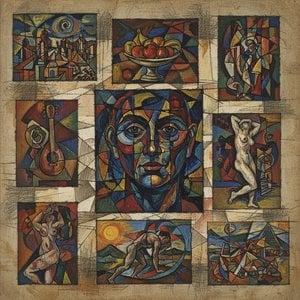
Cubist Expressionism's 10 Defining Masterpieces | Art for Your Home
Explore 10 defining Cubist Expressionism masterpieces by Picasso, Braque & more. Discover the stories behind these bold, geometric paintings and bring museum-quality art to your home with ArtsDot.com. Explore the full collection online.