Preview
 Send
Send Share
Share
 Details
 Guide
Guide

 Download
 Similars
 X-Ray
X-Ray Diaporama
 Q&A
Q&A Stats
StatsAthanor

- 3800.0 x 2250.0 cm


 Read More
The artwork displayed on this page is protected by copyright law, which means we cannot legally create or sell an identical reproduction. This protection is enforced under international agreements such as the Berne Convention and by national laws, including those outlined by the U.S. Copyright Law - Title 17.
This method fully complies with copyright regulations because it does not involve copying or duplicating the protected artwork. Instead, it is a creative reinterpretation - a new painting that is influenced by the original but not identical to it.
Giclée / Art Print
Museum-quality giclée or canvas print with fast production and flexible finish options. ( Buy Hand Made Painting Switch to Digital Image)




































Pick from our preset sizes that match the artwork's original proportions.

Type the width and the height you need, to fit your frame or your wall. A print can only be cut, never made bigger than the picture, so a size with a different shape loses a part of the image. We send you a digital mockup to approve before we print anything. The picture shown on this page does not show the real cut — only the mockup does.
Worldwide Delivery () in 2 weeks instead of standard 4/5 weeks. (2 November)

Free Worldwide Express Shipping

High-Quality Linen Canvas

Full Shipping Insurance

Customs Tax Refund Guarantee

True Color Matching Guarantee

100-Day Return Policy (Defects Only)

100% Money-Back Guarantee

Bulk Discount Offer
 Glass option is only available in size under 110 CM

Athanor
Giclée / Art Print
Reproduction Size
-


Total Price
$ 63
The Alchemy of Memory: Exploring Anselm Kiefer's Athanor
In the vast, haunting expanse of Anselm Kiefer’s Athanor, viewers are invited into a liminal space where history and myth collide. Created between 1983 and 1984, this monumental work serves as a profound meditation on the layers of time, much like the alchemical furnace from which it draws its name. The painting presents an architectural dreamscape—a corridor of arched doorways and shadowed halls that feels simultaneously ancient and immediate. As one gazes into the depths of the composition, the empty passageways evoke a sense of profound solitude, pulling the observer into a silent dialogue with the ghosts of the past. It is not merely a depiction of a hallway, but an exploration of the thresholds we cross between memory and oblivion.
The sheer scale of the work demands attention, asserting itself as a centerpiece capable of transforming any sophisticated interior. Kiefer’s mastery lies in his ability to blend the photographic with the visceral. By utilizing a complex medium of oil, acrylic, emulsion, and shellac, layered over a photograph mounted on canvas, he achieves a texture that is almost sculptural. The inclusion of straw adds an organic, fragile element that contrasts sharply with the heavy, somber tones of the architecture. This technique creates a surface that breathes; it is a landscape of decay and rebirth, where the light filtering through distant windows feels as though it is struggling to pierce through the weight of accumulated history.
Symbolism and the Weight of History
To understand Athanor, one must look toward the philosophical undercurrents that define Kiefer’s oeuvre. The title refers to the alchemist's furnace, a vessel used for the transmutation of matter. In this context, the painting becomes a site of spiritual and historical transformation. As a leading figure of Neo-Expressionism, Kiefer uses his art to confront the traumatic legacies of German history, weaving together themes of loss, destruction, and the enduring nature of culture. The paintings adorning the hallway walls act as echoes of previous eras, suggesting that art itself is a vessel for preserving what might otherwise be lost to the ashes of time.
For the discerning collector or interior designer, this piece offers more than mere decoration; it offers an intellectual and emotional anchor. The interplay of light and shadow within the arched corridors creates a rhythmic depth that provides a sense of architectural grandeur to any space. Whether placed in a minimalist gallery setting or a richly textured study, Athanor commands the room with its quiet intensity. It is a work that rewards repeated viewing, revealing new nuances in its scorched textures and shadowed recesses each time it is encountered. Owning a high-quality reproduction of such a masterpiece allows one to bring this profound sense of historical gravity and artistic transcendence into the private sphere, turning a room into a sanctuary for contemplation.
Questions & Answers
When was "Athanor" made?
"Athanor" by Anselm Kiefer was created in 1984.
What palette and what feeling does "Athanor" combine?
"Athanor" by Anselm Kiefer combines an earthy palette with a somber tone.
Where does "Athanor" sit within Anselm Kiefer's body of work?
"Athanor" belongs to Anselm Kiefer's Neo-Expressionism work, whose recorded themes include paul celan's poetry, german history trauma, holocaust memory, neo-expressionist movement, experimental mixed media, philosophical exploration.
Related Artworks


Artist Biography
The Weight of Memory: The Art of Anselm Kiefer
Anselm Kiefer stands as one of the most profound and distinctive voices within Neo-Expressionism, an artistic movement that emerged in the late 1970s and early 1980s as a powerful reaction against the austerity of Minimalism and Conceptual Art. Born in Donaueschingen, Germany, in 1945, Kiefer’s very existence is inextricably linked to the aftermath of World War II. His oeuvre transcends mere representation; it is an immersive, visceral exploration of German history—particularly its profound trauma—expressed through monumental canvases and sculptures that demand a physical confrontation from the viewer. His artistic journey began with rigorous studies under Peter Dreher and Horst Antes at the Hochschule für Gestaltung Weinheim-Basel, where he established a foundation for his famously experimental approach to artmaking.
The soul of Kiefer’s work is deeply rooted in the literary shadows of the past, most notably through the haunting poetry of Paul Celan. The fragmented language and preoccupation with loss found in Celan's verse profoundly impacted Kiefer’s thematic concerns, specifically regarding the Holocaust and its lingering, often silent, effects on German collective memory. Through his art, Kiefer seeks to give form to this silence, exploring themes of absence, destruction, and the heavy burden of historical legacy. His work does not merely depict history; it attempts to excavate it from the layers of time and debris.
Materiality and the Alchemy of Destruction
What truly distinguishes Kiefer from his contemporaries is his deliberate and masterful use of materials that carry immense symbolic weight. He treats the canvas not as a flat surface, but as a site of geological and historical transformation. By incorporating unconventional elements such as ash, straw, clay, lead, and shellac, he creates works that feel less like paintings and much more like artifacts recovered from a scorched earth. Each material serves a narrative purpose:
- Ash: Derived from burned forests, ash acts as a poignant reminder of ecological devastation and the literal and metaphorical destruction wrought by war.
- Straw: This element introduces a sense of fragility, representing the vulnerability of human life against the overwhelming forces of nature and history.
- Lead: A heavy, somber medium that provides a sense of permanence and the crushing weight of the past.
Kiefer’s technique is characterized by an intense, thick impasto layering. He applies paint in multiple, dense coats to create textured surfaces that resemble scorched earth or ancient geological formations. This tactile approach is not merely decorative; it actively engages the viewer, forcing them to confront the sheer physicality of his process. The scale of his canvases often mirrors the monumental scale of the historical events he addresses, creating an environment where the viewer is swallowed by the texture and gravity of the work.
Legacy and Historical Significance
As his career progressed, Kiefer’s international recognition grew through works that challenged the boundaries between painting, sculpture, and installation. His ability to weave together myth, alchemy, and historical catastrophe has secured his place as a titan of contemporary art. Whether he is depicting the brooding shadows of Roman emperors or the desolate landscapes of post-war Europe, his work remains a continuous dialogue with the concept of time itself. Through his mastery of texture and symbolism, Anselm Kiefer has created a visual language capable of articulating the most difficult aspects of human history, ensuring that the scars of the past are never truly erased, but rather transformed into profound works of enduring significance.

Anselm Kiefer
1945 - , Germany
Quick Facts
- Full Name: Anselm Kiefer
- Nationality: German
- Date Of Birth: 1945
- Place Of Birth: Donaueschingen, Germany
- Notable Artworks:
- Nero paints
- Böhmen liegt am Meer
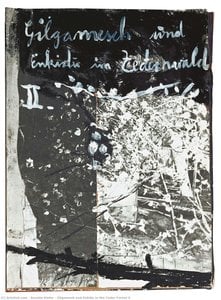
- Gilgamesh and Enkidu in the Cedar Forest II
- Artistic Movement Or Style: Neo-Expressionism
- Artists Who Influenced This Artist:
- Paul Celan
- Peter Dreher
- Horst Antes
- Artists Or Movements Influenced By This Artist: ['Kabbalah']
Related Articles

Figurative Expressionism: Emotional Intensity & Subjective Reality in 20th-Century Art
Explore the powerful world of Figurative Expressionism with ArtsDot. Discover key artists like Kirchner & Beckmann, understand its emotional depth, and learn how to collect this influential 20th-century art movement.

Neo-Classicism's Greatest Hits: 10 Masterpieces for Your Home |
Journey through Neo-Classicism's finest! Explore 10 iconic masterpieces by David, Ingres & Canova. Discover art history, techniques & timeless beauty – perfect for inspiring your home decor. Find museum-quality reproductions at

German Expressionism's 10 Defining Masterpieces | Art for Your Home
Explore 10 defining German Expressionism masterpieces – from Munch's 'The Scream' to Kandinsky’s abstracts. Discover the artists, stories & bold colors behind this powerful art movement. Find museum-quality reproductions at ArtsDot.com.

Cubist Expressionism's 10 Defining Masterpieces | Art for Your Home
Explore 10 defining Cubist Expressionism masterpieces by Picasso, Braque & more. Discover the stories behind these bold, geometric paintings and bring museum-quality art to your home with ArtsDot.com. Explore the full collection online.

The Tactile Canvas: Exploring Texture as Subject, Materiality & Meaning in Art History
Explore the rich history of texture in art! Discover how artists from Van Gogh to contemporary masters use materiality & technique to create captivating tactile experiences. Deepen your art appreciation with ArtsDot.