

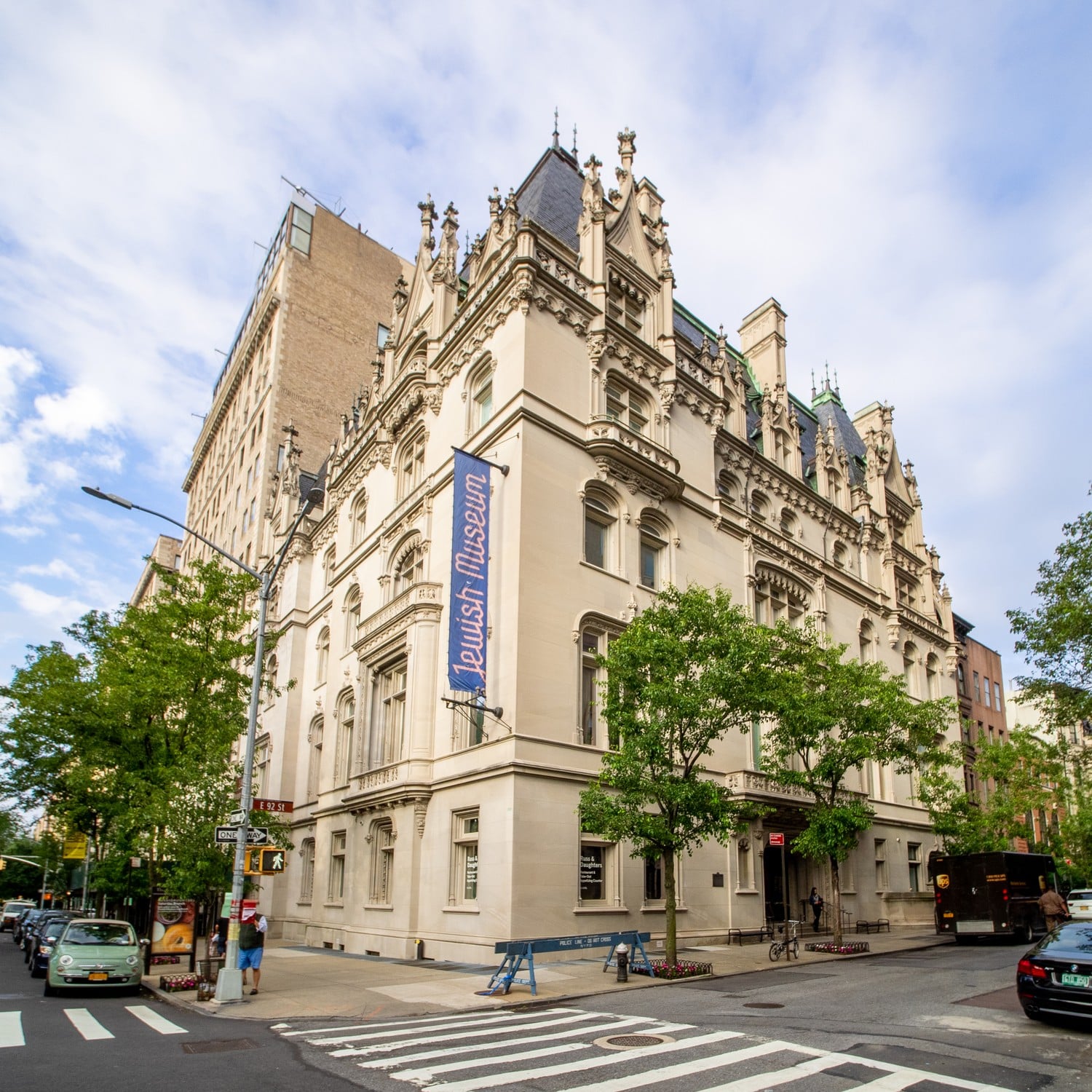
Quick Facts
- Movements:
- 19th century realism
- baroque
- biedermeier
- contemporary art
- contemporary minimalism
- Alternate names:
- The Jewish Museum
- Jewish Museum
- Jewish Museum (Manhattan)
- JM
- Location: New York City, United States of America
- Works on APS: 58
- More…
- Featured artists:
- Gustav Klimt
- El Lissitzky
- jacques joseph tissot
- John Wesley Jarvis
- Moritz Daniel Oppenheim
- Mediums:
- acrylic
- acrylic on canvas
- ceramics
- giclée print
- oil on canvas
- Art types:
- digital
- other
- wallart
- Historical periods:
- 19th century
- contemporary
- early medieval
- modern
Art Quiz
There is only one correct answer for each question.
Question 1:
What is the primary focus of The Jewish Museum's collection?
Question 2:
Which architect designed the building's façade, emphasizing openness and luminosity?
Question 3:
The Warburg House, a significant feature of the museum's design, is characterized by its:
Question 4:
What type of objects are prominently featured in the museum's collection alongside fine art?
Question 5:
The museum's inaugural exhibition in 1947 primarily served to:
Exhibited Artists

Gustav Klimt
Discover Gustav Klimt (1862-1918), the Austrian Symbolist master of Art Nouveau! Explore his iconic 'Golden Phase,' sensual portraits, and masterpieces like *The Kiss*. Learn about his life, influences & legacy.


El Lissitzky
El Lissitzky (1890-1941): Russian avant-garde artist of Suprematism, Constructivism & Proun. Explore his Bauhaus influence, typography, photomontage & impactful designs.

jacques joseph tissot
Discover Jacques Joseph Tissot (James Tissot), a 19th-century French painter renowned for his genre paintings of Belle Époque society, Victorian fashion & biblical scenes. Explore his realistic style and Japonisme influences.
Related Articles

The Enduring Legacy of Architecture in Art: A Historical Survey of Representation & Meaning
Explore the rich history of architecture in art, from Renaissance theory to 19th-century reconstructions. Discover key artists & movements shaping visual representation – a guide for discerning collectors.

Berenice Abbott: Documenting a Changing America Through Photographic Vision
Explore the groundbreaking work of Berenice Abbott, a pioneer of documentary photography. Discover her iconic images of New York City, portraits, and scientific studies. Learn about her unique style & lasting legacy at ArtsDot.

Beyond Ephemerality: Hand-Painted Art Reproductions as a Paradigm of Sustainable Luxury in Contemporary Décor
Discover museum-quality hand-painted art reproductions crafted with sustainable practices & ethical sourcing. Elevate your décor with timeless beauty – expertly created and customized to your vision. Explore our collection today!
List of Artworks




Subscribe to Our Newsletter
Stay updated with the latest art news, exclusive offers, and decoration ideas.
Get 3 Free Art Suggestions
Tell us about your project and our art experts will provide you with 3 personalized art suggestions.
Not Sure Where to Start?
Let Us Curate 3 Options Just for You - Free!