


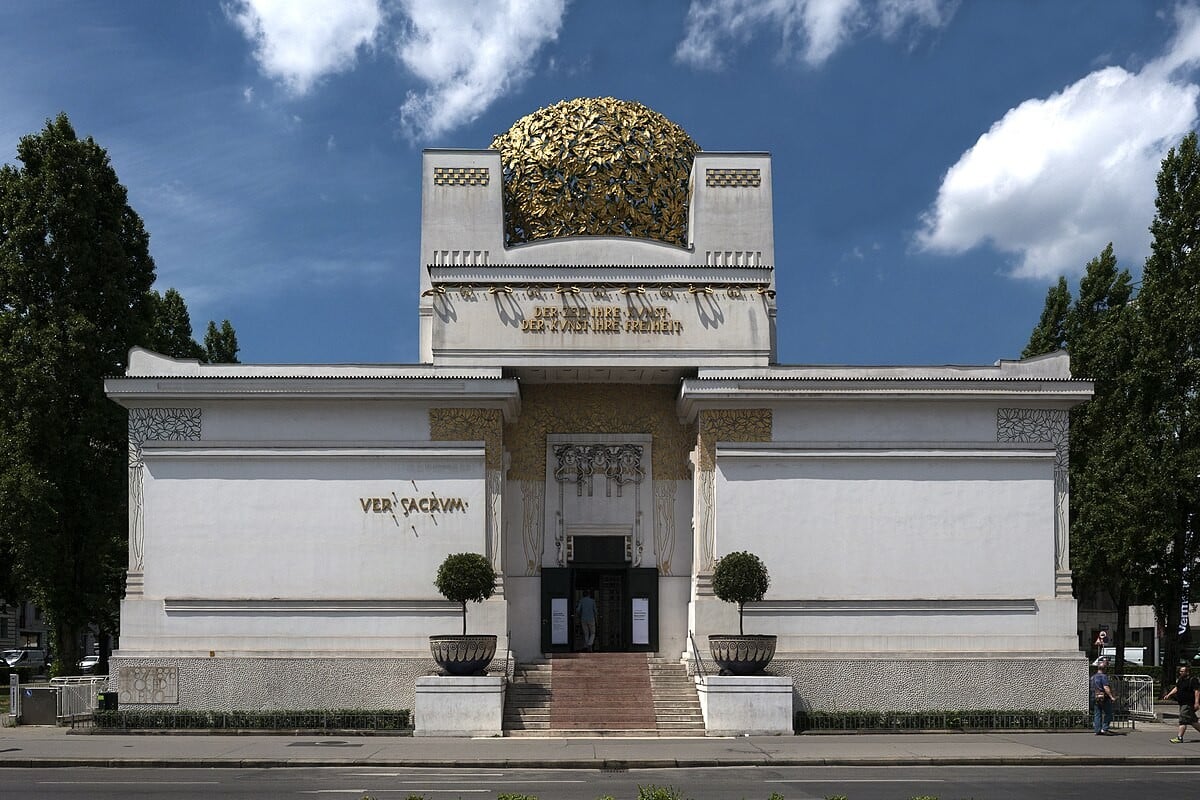
A Manifesto in Gold: The Spirit of the Vienna Secession
To step before the Vienna Secession is to witness a moment of profound artistic rebellion frozen in time. Founded in 1897, this was not merely the birth of a new gallery, but the emergence of a defiant movement led by visionaries such as Gustav Klimt, Koloman Moser, and Josef Hoffmann. They sought to break free from the suffocating grip of historical academicism, driven by the radical motto: “To every age its art. To every art its freedom.” This institution stands as the beating heart of Viennese Modernism, a place where the boundaries between fine art, architecture, and design were dissolved to create a unified, immersive aesthetic experience.
The very architecture of the Secession building serves as a visual manifesto for the movement. Conceived by Joseph Maria Olbrich, the structure is a masterpiece of Art Nouveau principles, famously crowned by a colossal dome of intricate ironwork laurel leaves, lavishly gilded in gold. This shimmering canopy acts as a beacon of light and innovation, signaling a departure from the heavy, stone-clad traditions of the past toward something more organic, geometric, and ethereal. The building itself is an artwork, designed to inspire creativity through its bold forms and stylized floral motifs, making it an essential pilgrimage site for those who appreciate how structural design can actively propel artistic progress.
The Golden Glow of Klimt and the Symbolist Vision
Within these hallowed walls, the collection reaches its emotional and technical zenith through the works of Gustav Klimt. The museum houses the monumental Beethoven Frieze , a sprawling, allegorical masterpiece created for the 14th Vienna Secession Exhibition in 1902. This work is far more than an illustration; it is a profound meditation on the transformative power of music and the human struggle for joy. Rendered in Klimt’s signature opulent style—characterized by rich golds, vibrant pigments, and hypnotic patterns—the frieze captures the very essence of the Secessionist soul: a synthesis of classical grandeur and burgeoning modern energy.
The allure of the collection extends into the intimate and the symbolic, offering collectors and art lovers a glimpse into the luxurious textures of the era. From the shimmering, mosaic-like surfaces of Klimt’s portraits to the intricate Stoclet Frieze , the museum showcases a mastery of gold leaf technique that continues to captivate the modern eye. These works do not merely decorate a space; they command it, offering a sense of timeless beauty and psychological depth. For the interior designer or the connoisseur of fine art, the Secession provides an unparalleled study in how pattern, light, and symbolism can be woven together to create an atmosphere of unparalleled sophistication and intellectual intrigue.
A Living Legacy of Innovation
The significance of the Secession transcends the singular brilliance of Klimt, encompassing a diverse tapestry of talent that shaped the visual language of Europe. The influence of artists like Alfred Roller, whose revolutionary designs for murals and stage sets redefined graphic expression, demonstrates the movement's expansive reach across multiple disciplines. This legacy of experimentation—a commitment to rejecting dogma in favor of discovery—is what makes the Secession a living monument rather than a static repository of the past.
Today, the museum remains a vital intersection of history and contemporary inspiration. It serves as a reminder that true progress requires the courage to challenge convention. Whether one is drawn by the architectural audacity of Olbrich, the symbolic complexity of the Symbolist masters, or the sheer decorative splendor of the Viennese avant-garde, the Secession offers an enduring journey into the heart of artistic liberation. It remains a cornerstone of cultural heritage, inviting every visitor to find their own path toward innovation and beauty.


