A Venetian Masterpiece Illuminated
Nestled on its own tranquil island in the heart of Venice’s lagoon, San Giorgio Maggiore stands as a testament to Renaissance ambition and architectural brilliance—a beacon of Palladian elegance that continues to inspire awe centuries later. More than just a church, it embodies the very spirit of Venice itself: a harmonious blend of classical grandeur and humanist ideals, meticulously crafted by one of Italy's greatest architects. As you approach the island, the silhouette of the basilica commands the horizon, serving as a visual anchor for the entire lagoon. Designed by Andrea Palladio between 1566 and 1576, the structure is arguably the most iconic example of Venetian Palladianism. Its soaring columns, symmetrical façade, and harmonious proportions reflect Palladio’s unwavering commitment to reviving the glories of ancient Rome, creating a deliberate and beautiful dialogue with St Mark's Square across the water.
The architecture of this sacred site is a symphony in stone and light. The brilliant white marble gleams above the blue waters of the lagoon, forming a focal point for the view from the Riva degli Schiavoni. For those seeking a moment of quiet reflection or a grand perspective, the ascent of the Campanile —the church’s historic bell tower—provides breathtaking panoramic vistas of Venice. From this height, one can observe the intricate urban fabric of the city and the shimmering lagoon, a perspective that serves as a poignant reminder of Venice's maritime past and its enduring, timeless beauty.
A Sacred Gallery of Venetian Mastery
Stepping inside the basilica, one is immediately enveloped by an extraordinary collection of artworks that span centuries of Venetian mastery. The interior serves as a sacred gallery where light and shadow dance across canvases of immense historical importance. The collection offers a profound journey through the evolution of Venetian art, featuring works that capture the very essence of the city's soul.
The highlights of this spiritual treasury include:
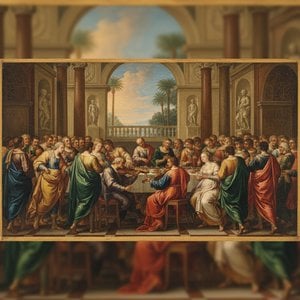
- Titian’s monumental The Last Supper : A dramatic depiction of Christ’s final meal with his disciples, this masterpiece is a triumph of color and composition, capturing the palpable tension and spiritual anticipation of that fateful moment with breathtaking intensity.
- Paolo Veronese’s The Wedding at Cana : This work offers a lavish panorama of Venetian aristocratic life, showcasing an unparalleled skill in manipulating light and perspective to create an illusion of depth and grandeur that transports the viewer into the heart of a festive, opulent era.
Beyond its permanent treasures, the legacy of San Giorgio Maggiore is deeply intertwined with the history of scholarship and religious devotion. Founded as a Benedictine monastery in 982 by Giovanni Morosini, the site has nurtured a rich tradition of intellectual exchange for over a millennium. This spirit of preservation continues today through the Cini Foundation , established in 1958, which maintains the island's role as a vibrant cultural hub. The foundation hosts prestigious exhibitions and conferences that celebrate Venetian heritage, ranging from explorations of Renaissance painting to the delicate beauty of Baroque sculpture, ensuring that the island remains a living, breathing center of art and intellect.