A Symphony of Faith and Artistic Brilliance
To step across the threshold of the Basilica di San Domenico in Bologna is to leave the modern world behind and enter a profound palimpsest of devotion, power, and artistic innovation. This magnificent structure, which serves as the spiritual heart of the Dominican order, is far more than a mere place of worship; it is a living chronicle of Italian history stretching back to the early 13th century. Founded upon the tomb of Saint Dominic himself, the basilica embodies a breathtaking evolution of style, where the soaring, austere lines of Gothic architecture meet the opulent, dramatic flourishes of the Baroque era. As one wanders through its vast interior, the very air seems heavy with the weight of centuries, reflecting the intellectual vibrancy and enduring faith that have defined Bologna for generations.
The architectural journey of San Domenico is a narrative of expansion and transformation. What began as a modest convent established by Reginald of Orleans blossomed into a monumental cathedral through waves of continuous devotion. The structure’s silhouette, dominated by its imposing bell tower erected in 1313, serves as a constant sentinel over the Bolognese skyline. Within its walls, the transition from Romanesque traditions to the more complex layers added by architects like Carlo Francesco Dotti creates a unique visual tension. This stylistic layering does not feel disjointed; rather, it offers a rich, textured experience for the observer, much like a masterfully composed symphony where different movements harmonize to create a singular, transcendent whole.
A Gallery of Divine Masterpieces
For the art lover and the collector, the basilica functions as an unparalleled gallery, where every brushstroke and chisel mark serves a higher devotional purpose. The apse is dominated by the celestial vision of Guido Reni’s The Glory of Saint Dominic , a fresco that captures the saint ascending to heaven amidst a swirling vortex of light and angelic figures. Reni’s ability to render divine grace through soft light and fluid movement remains one of the most captivating sights in Bolognese art. This sense of movement is echoed throughout the church, where the works of Titian, Raphael, and the Carracci family invite deep contemplation on the zenith of Renaissance and Baroque mastery.
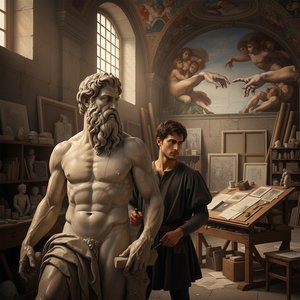
Perhaps the most profound encounter within these sacred walls is found at the Arca di San Domenico . This exquisite shrine, housing the relics of Saint Dominic, is a collaborative masterpiece of Proto-Renaissance sculpture. While the foundational work was led by Nicola Pisano and Arnolfo di Cambio, the tomb holds a secret that continues to stir the hearts of historians: the presence of a young Michelangelo Buonarroti. The master’s early contributions—including the Statue of Saint Proculus and the Angel Holding a Candelabrum —reveal a burgeoning genius already capable of extraordinary anatomical precision and emotional depth. To stand before these sculptures is to witness the very moment a legend began to take shape.
An Enduring Legacy for the Modern Eye
Beyond its role as a relic of the past, San Domenico remains a vital cultural hub that continues to foster dialogue between historical scholarship and contemporary appreciation. The basilica has long hosted exhibitions that celebrate the breadth of Bolognese art, ensuring that its collection—ranging from intricate marble carvings to grand canvases—remains a living part of the city's identity. For interior designers and enthusiasts of classical beauty, the basilica offers endless inspiration through its interplay of light, shadow, and sacred geometry.
The ongoing commitment to conserving this invaluable heritage ensures that the whispers of history within these walls will never fade. Whether one is drawn by the architectural grandeur of the rose window or the intimate emotional resonance of Michelangelo’s marble, San Domenico offers an immersive journey into the heart of Italian art history. It remains a place where faith, humanism, and artistic innovation converge, inviting every visitor to experience the enduring power of beauty and belief.