Origins and History of the Royal Library
The Royal Library in Windsor, United Kingdom, began its formal existence in 1757. It was established by King George II through the formation of the Old Royal Library. This foundation set a precedent for the collection to grow alongside the monarchy, with its evolution mirroring the trajectory of the crown itself. What began as a specific bequest has expanded into a vast archive of over 45,000 rare books and manuscripts.
A significant reorganization occurred in 1836 under William IV. This period saw the consolidation of disparate collections into a unified whole. It was during this time that the office of the Royal Librarian was established, a role that continues to oversee the preservation of these documents. The library functions as both a repository for historical texts and a dedicated archive for the monarchy.
The collection contains significant items that reflect centuries of intellectual pursuit. Among the holdings are:
- Annotated Shakespeare folios
- The Sobieski Hours
- Early printed works by William Caxton
The Architecture and Setting of the Library
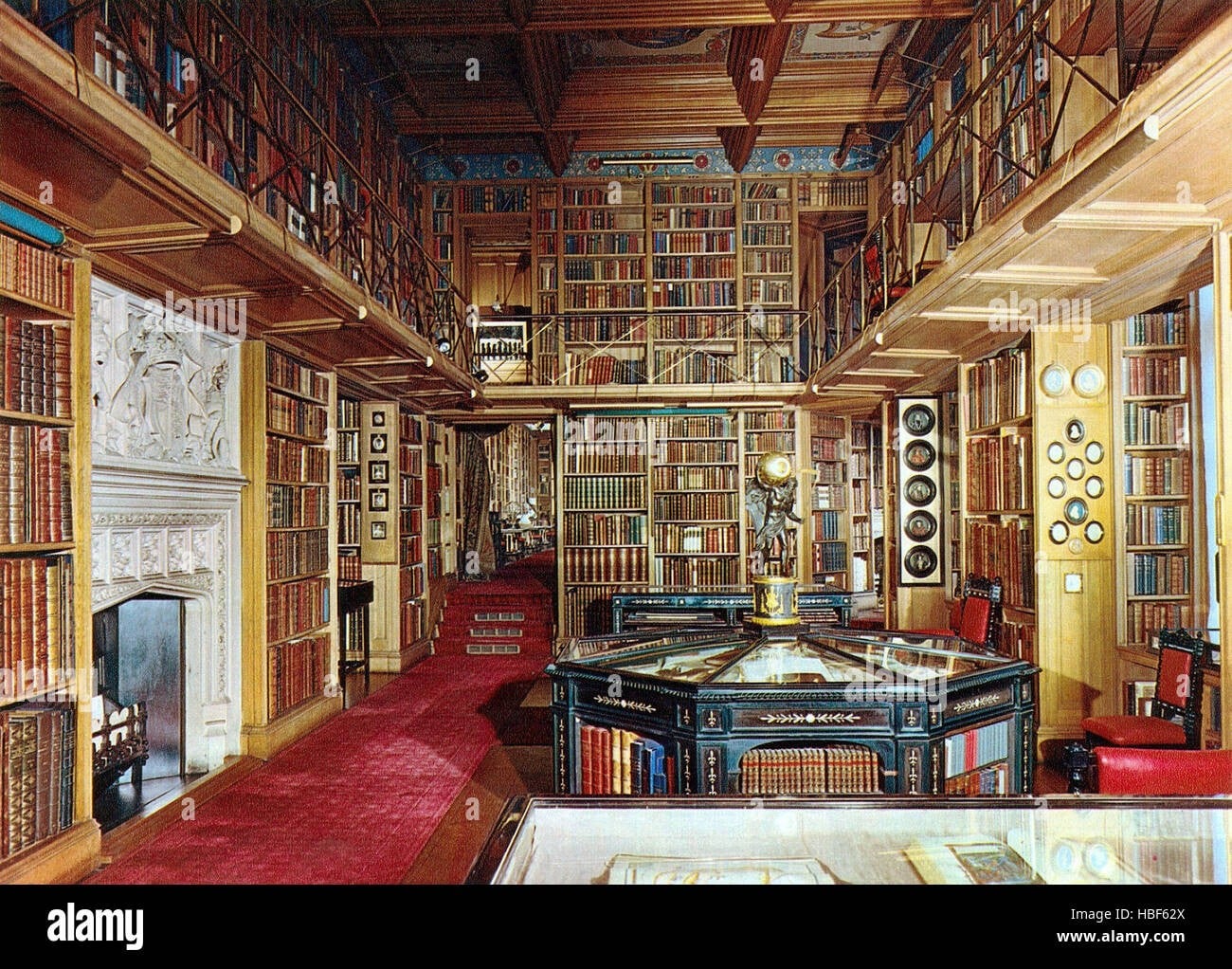
Nestled within the venerable walls of Windsor Castle in Windsor, United Kingdom, the Royal Library occupies a space defined by historical layers. The architecture consists of three meticulously designed rooms, each crafted to present the collection with appropriate grandeur. These spaces are not merely functional repositories but are rooms that have been part of the private lives of monarchs. The layout reflects a continuity of use that spans centuries, where the quiet reverence of the present meets the physical traces of the past.
The history of the rooms is written into their very structure. The spaces were previously utilized by Catherine of Braganza as a bedchamber, a study, and a treasury. Other areas within the library's footprint served as a treasury for Henry VII and an indoor walking gallery for Elizabeth I. This layering of royal habitation provides a specific atmosphere, where the scent of aged parchment meets the architectural legacy of the Tudor and Stuart eras. To stand within these walls is to occupy a space once shaped by the personal requirements of sovereigns.
The Diverse Collections and Royal Treasures
The holdings within these walls span from the Tudor era to the present day, forming a continuous record of intellectual and political history. Among the most significant items are exceptional editions of Shakespeare's plays, preserved in various early printings. These volumes sit alongside original manuscripts, including royal charters, letters, and state papers that document the decisions of the monarchy. The presence of early printed works by William Caxton provides a direct link to the origins of English printing.
The scale of the collection grew significantly during the 18th century when King George III amassed over 65,000 volumes. This expansion brought together a vast array of subjects, from scientific inquiry to religious texts. The physical beauty of the library is found in its illuminated manuscripts and the fine craftsmanship of its bindings. These objects are not merely records but physical remnants of the era in which they were produced.
- Sobieski Hours, illuminated manuscript
- Annotated Shakespeare folios
Exhibitions and Scholarly Research
The Royal Library engages with the public through curated exhibitions held within Windsor Castle and other royal residences. These displays offer a way to encounter the collection beyond its usual scholarly use. Recent exhibitions have focused on themes such as Shakespearean performance and the scientific discoveries of George III. Such presentations allow for a closer look at the intellectual history preserved within the walls of the castle.
Beyond these public displays, the institution functions as a center for intellectual exchange. It hosts lectures, workshops, and research seminars to foster dialogue. Access for deep study is primarily granted to researchers by appointment. This structured approach ensures the preservation of the materials while supporting serious inquiry into the historical and scientific records held in the archives.