


A Living Chronicle of the Royal Collection
The Royal Collection represents the largest private art collection in the world. Owned by King Charles III and overseen by the Royal Collection Trust, these holdings are distributed across thirteen occupied and historic royal residences throughout the United Kingdom. This assemblage includes paintings, sculptures, furniture, textiles, and various decorative arts. It remains a physical record of royal influence and changing tastes across many centuries.
The presence of these objects within the lived spaces of the monarchy creates a specific atmosphere. From the halls of Hampton Court Palace to the rooms of Windsor Castle, the works exist in their intended architectural contexts. This continuity allows for a direct connection to the historical patronage of the British monarchy. The collection is not a static entity but a living chronicle of the lives and ambitions of those who held these residences.
The breadth of the holdings is immense, encompassing more than one million objects. While many are held in private or royal settings, others are accessible through the King's Gallery at Buckingham Palace. The diversity of the items reflects a long history of acquisition and preservation:
- Paintings
- Sculptures
- Furniture
- Textiles
- Jewellery
- Ceramics
The Architecture of Royal Residences
The collection is distributed across thirteen occupied and historic royal residences throughout the United Kingdom. Each site offers a distinct architectural context for the objects it holds. At Hampton Court Palace, the Tudor architecture remains palpable, particularly within the vast Great Hall where the echoes of courtly life once resided. This space provides a specific setting for the grandeur of the era.
Windsor Castle, the largest occupied castle in the world, reflects the evolution of royal tastes through its various state apartments and private chambers. In contrast, Kensington Palace houses a significant assembly of portraits and decorative arts that illuminate the personal lives of the monarchs who once inhabited its rooms. These spaces are not merely containers but are integral to the narrative of the holdings.
Buckingham Palace serves as the King's official London residence and remains a working royal palace. Within its walls, the King's Gallery provides a dedicated space for the exhibition of selected pieces on a rotating basis. The architecture of these various sites, from the formality of Kensington to the scale of Windsor, creates an immersive environment for the preservation of the collection.
Masterpieces of the Royal Collection
The presence of Leonardo da Vinci's Study for an Equestrian Monument offers a rare glimpse into the mind of one of history's greatest innovators. This preparatory sketch reveals a meticulous approach to anatomical detail. Nearby, Michelangelo’s The Risen Christ carries a profound spiritual significance through its mastery of the human form. The bronze sculptures of Donatello further illustrate the enduring craftsmanship of the Italian Renaissance, inviting quiet contemplation of themes regarding humanity and faith.
The collection also holds works that capture the essence of specific eras. Rembrandt's portraits provide intimate glimpses into the lives of prominent figures, utilizing light and shadow to reveal human psychology. In contrast, the canvases of Van Dyck epitomize Baroque elegance and sophistication, capturing a refined sense of regal bearing. These works exist as physical records of the tastes and ambitions of those who gathered them.
- Charles I in Three Positions, about 1636
- Portrait of Sir Henry Guildford, 1527
- Self-portrait as the Allegory of Painting, 1641
- The Triumphs of Caesar: Trumpeters and Standard-Bearer
Exhibitions and Research at the Collection
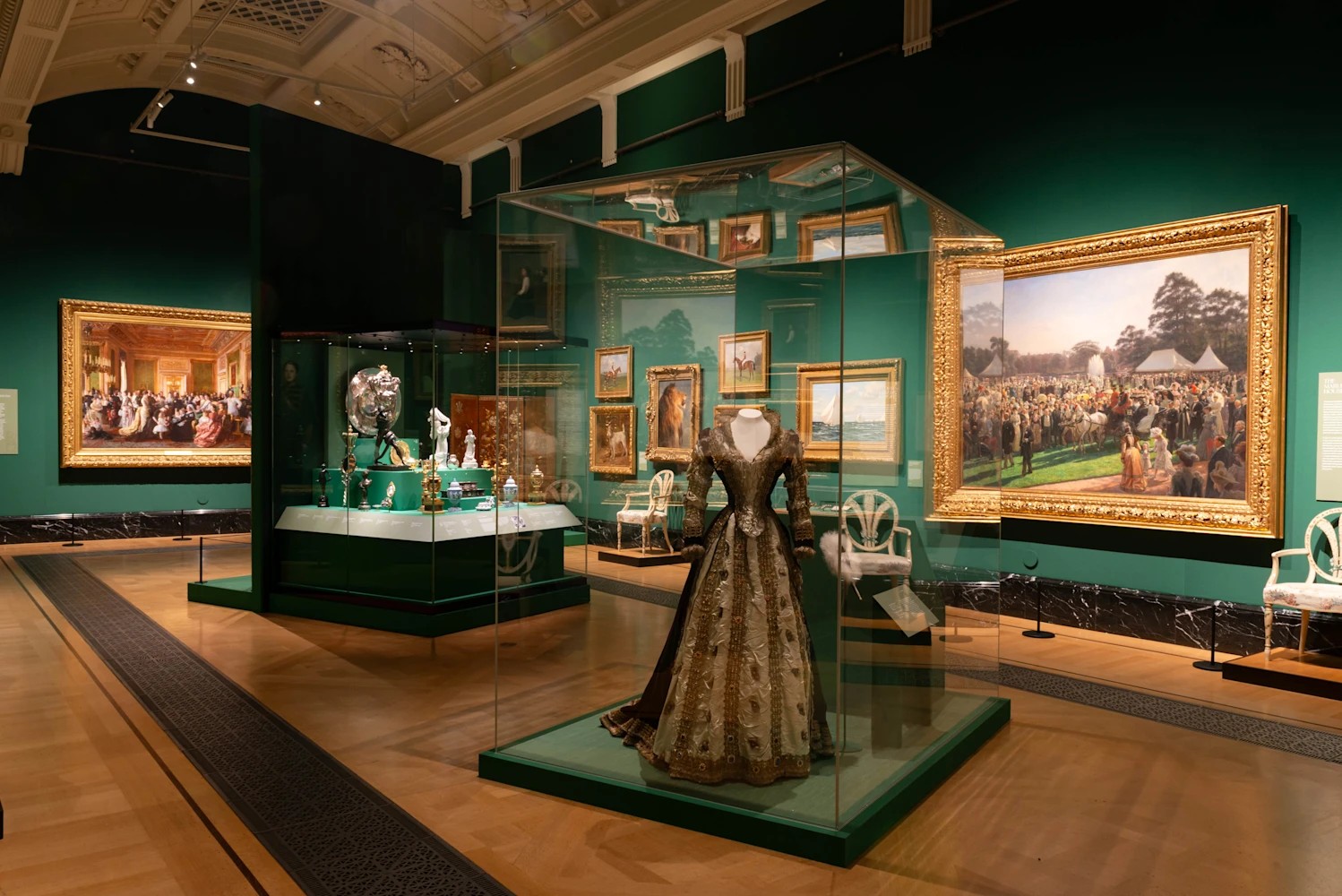
The Royal Collection Trust organizes exhibitions that examine specific moments in history through the objects held in its care. One such inquiry, "The Edwardians: Age of Elegance," examined the style and sensibilities of the early 20th century. Other focused studies, such as "Drawing the Italian Renaissance," brought together works on paper by masters including Leonardo da Vinci and Michelangelo. These exhibitions allow for a close examination of how artistic practice evolved across different eras.
Beyond the physical galleries, there is a sustained effort to digitize the holdings. This initiative aims to make the collection accessible to a global audience through online resources and virtual tours. Such digital presence ensures that the works remain available for study and observation regardless of physical location. The preservation of these items is supported by the Royal Collection Trust, which manages the collection through various commercial and public activities.


