


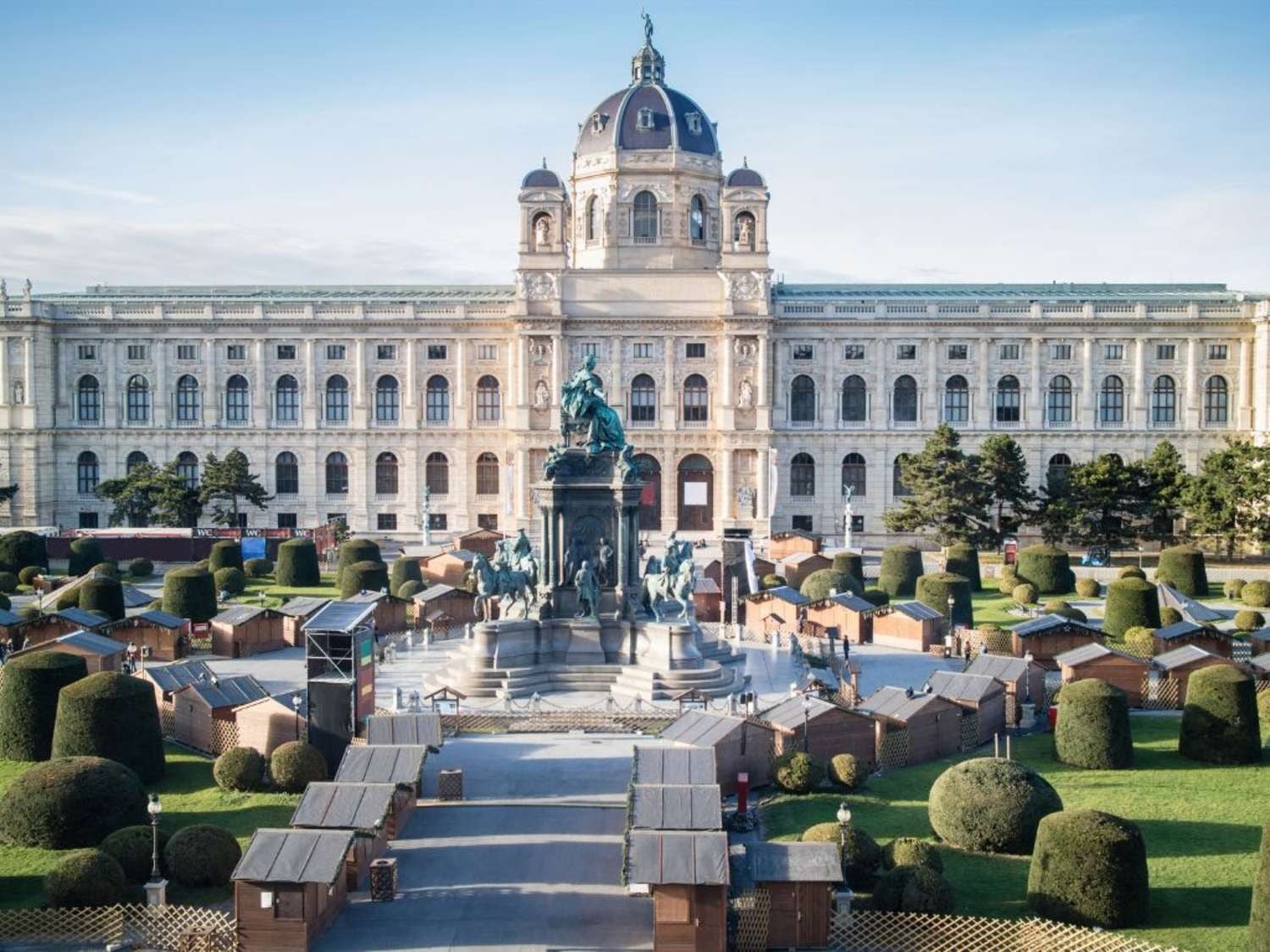
The History of Kunsthistorisches Museum
The Kunsthistorisches Museum in Vienna, Austria, emerged from a desire to provide public access to the vast holdings of the Habsburg family. Commissioned by Emperor Franz Joseph I, the institution was established in 1871 to house these imperial art collections. The project was a significant undertaking for the monarchy, intended to transition private treasures into a space for public viewing. The building was constructed between 1871 and 1891, a period of intense architectural development on the Vienna Ring Road.
The design of the structure was the work of Gottfried Semper and Baron Karl von Hasenauer. Their collaboration resulted in a monumental edifice that reflects the scale of the collections it was built to protect. Around 1891, Emperor Franz Joseph I opened the facility, marking the transition of the Habsburg art collections into this dedicated setting. The museum remains a central repository for the historical accumulation of art by the imperial family, preserving objects that span five millennia.
The history of the institution is tied to the specific lineages of the House of Habsburg. The collections include the portrait and armour collections of Ferdinand of Tirol, the holdings of Emperor Rudolph II, and the paintings of Archduke Leopold Wilhelm. These acquisitions were gathered over centuries, forming the basis of the museum's permanent presence in Vienna.
The Architecture of the Palatial Building
Occupying a prominent position on the Vienna Ring Road, the building presents a monumental design that mirrors the Roman Forum. This architectural scale establishes a sense of permanence within the urban landscape of Vienna, Austria. The structure was designed by Gottfried Semper and Baron Karl von Hasenauer, with construction occurring between 1871 and 1891. It remains one of the most recognizable landmarks at Maria-Theresien-Platz, situated alongside its twin institution.
The silhouette is defined by a characteristic octagonal dome that crowns the central section of the roof. This dome provides a focal point for the palatial exterior, anchoring the symmetry of the facade. The design reflects the imperial ambitions of Emperor Franz Joseph I, who commissioned the edifice to house the Habsburg art collections and provide public access to these holdings. The heavy, stone-clad presence of the building commands the space, offering a sense of weight and historical continuity.
Inside, the architecture facilitates a dialogue between the physical space and the art it contains. The monumental proportions of the halls are intended to complement the scale of the imperial collections. The interplay of light and shadow within the central sections is influenced by the geometry of the dome above, creating a specific atmosphere for those standing before the works of the House of Habsburg.
The Diverse Collections of the Museum
The holdings within these walls span five millennia, offering a presence that reaches from Ancient Egypt to the late eighteenth century. The accumulation of these objects reflects the historical gathering of the Habsburg family, specifically through the portrait and armour collections of Ferdinand of Tirol. These pieces exist alongside the significant collections of Emperor Rudolph II and the extensive paintings of Archduke Leopold Wilhelm. Such depth allows for a quiet confrontation with the material history of several eras in a single afternoon.
Specialized departments organize these vast treasures into distinct realms of human creation. The Egyptian and Near Eastern Collection provides a foundation of antiquity, while the Collection of Greek and Roman Antiquities offers a different perspective on the classical past. Beyond these, the Collection of Sculpture and Decorative Arts presents objects of refined craftsmanship. The institution also preserves the Imperial Armoury and the Secular and Ecclesiastical Treasury, which house items of significant historical weight.
- The portrait and armour collections of Ferdinand of Tirol
- The collections of Emperor Rudolph II
- The paintings of Archduke Leopold Wilhelm
Masterpieces of the Picture Gallery
The Picture Gallery houses the accumulated treasures of the House of Habsburg. These works possess a physical weight that transcends their status as historical objects. Johannes Vermeer’s The Art of Painting (1665) occupies its space with a quiet, luminous precision. The composition invites a long gaze into its structured interior. Nearby, the works of Pieter Bruegel the Elder offer a different kind of presence. His 1563 depiction of The Tower of Babel presents a complex, architectural vision, while The Hunters in the Snow (Winter) (1565) captures a specific, chilling stillness. These paintings do not merely represent scenes; they exist as windows into a particular way of seeing the world.
Other canvases in the collection demand a similar, patient attention. The 1559 work The Fight between Carnival and Lent by Pieter Bruegel the Elder presents a dense, social narrative. In Peasant wedding (1568), the details of the gathering are rendered with a clarity that feels immediate. Even the more allegorical works hold a steady gravity. Giuseppe Arcimboldo’s Summer 1 (1563) uses a distinct logic to assemble its form. There is a sense of permanence in these objects, a feeling that they have always occupied these halls. The 1560 painting Children's Games by Pieter Bruegel the Elder remains a study in focused, human activity.
- The Tower of Babel, 1563 - Pieter Bruegel the Elder
- The Hunters in the Snow (Winter), 1565 - Pieter Bruegel the Elder
- Peasant wedding, 1568 - Pieter Bruegel the Elder
- The Fight between Carnival and Lent, 1559 - Pieter Bruegel the Elder
- Children's Games, 1560 - Pieter Bruegel the Elder
- Summer 1, 1563 - Giuseppe Arcimboldo
Notable Works by Old Masters
The presence of Albrecht Dürer within these halls is felt through the precision of his hand. The Adoration of the Trinity (Landauer Altar) from 1511 and the Portrait of a Young Venetian Woman from about 1507 offer a study in detail and character. Nearby, the works of Lucas Cranach the Elder command attention, specifically his 1530 depiction of Judith with the head of Holofernes.
Caravaggio’s influence is felt in the dramatic interplay of light and shadow. His works, including David with the Head of Goliath (1606), Madonna del Rosario (detail) (1607), and The Crowning with Thorns (1604), create a profound sense of weight and human emotion. These paintings do not merely occupy space; they alter the atmosphere of the room through their intense compositions.
The Flemish tradition is represented by the substantial presence of Peter Paul Rubens. His canvases, such as The Feast of Venus (1637) and Miracle of St. Ignatius of Loyola (1618), bring a sense of movement and scale to the collection. Each work invites a slow, quiet observation of the brushwork and the physical reality of the oil on canvas.


