


Origins and History of the Albertina
The foundations of the Graphische Sammlung Albertina were laid in 1776 by Duke Albert of Saxony-Teschen. What began as a private haven for the Duke, shaped by his personal passion for the drawn and printed image, eventually transformed into a public asset. This transition from a private collection to a national treasure occurred through the actions of successive generations, who bequeathed these holdings to the Austrian state. The history of the institution remains deeply intertwined with the legacy of the Habsburg dynasty, reflecting the shifting political and cultural landscape of Vienna.
The collection grew through the careful accumulation of works that traced the evolution of visual communication. Early acquisitions were often made with the assistance of figures like Giacomo Durazzo, a nobleman known for his extensive library of prints. This early foundation provided the depth necessary for the collection to become a significant repository for scholarly study. The movement of these works from the private sphere of the nobility into the public domain allowed for a continuous preservation of artistic lineage. The presence of these objects within the Hofburg Palace ensures a connection to the architectural and political history of the region.
The Architecture of the Historic Palace
The structure occupies a site of significant historical weight, built upon the Augustinian Bastion, a section of the fortifications of Vienna. This foundation links the present institution to the defensive history of the city. The building itself evolved from its origins as the Hofbauamt, the Court Construction Office, into a grand residence. It eventually transitioned from a ducal home into a sanctuary for graphic arts, a shift that allowed the interior spaces to accommodate the delicate requirements of paper and ink.
The architecture presents a harmonious blend of Baroque and Neoclassical elements. This stylistic intersection creates a dialogue between different eras of design. While the interior maintains the weight of its historical purpose, the exterior underwent a significant modification in 2008. This update included the addition of a roof by Hans Hollein, which introduced a sharp, modern presence to the traditional silhouette. The result is a physical layering of history, where the heavy, opulent grandeur of the palace meets the titanium-clad edge of contemporary architectural ambition.
A Vast Collection of Graphic Arts
The scale of the holdings within the Graphische Sammlung Albertina is defined by an immense breadth of media. It houses one of the largest and most important print rooms in the world, containing approximately 1 million old master prints. This repository extends beyond the printed page to include approximately 65,000 drawings. The collection encompasses modern graphic works, photographs, and architectural drawings, totaling over one million objects. These works exist as physical traces of the creative process, preserved within the walls of the palace.
The presence of these works allows for a direct encounter with the evolution of visual language. One might find themselves observing the meticulous detail of a single clump of grass or the precise line of a Renaissance study. The collection spans from the early medieval period through the Renaissance and into the modern era. This continuity is maintained through the careful preservation of various formats, from delicate ink sketches to large-scale architectural renderings.
- The Large Passion: 5. Christ Bearing the Cross, 1498 - Albrecht Dürer
- The Large Passion: 6. The Crucifixion, 1498 - Albrecht Dürer
- The Large Passion: 7. The Lamentation for Christ, 1497 - Albrecht Dürer
- The Large Passion: 3. Flagellation of Christ, 1497 - Albrecht Dürer
Masterpieces of the Albertina Collection
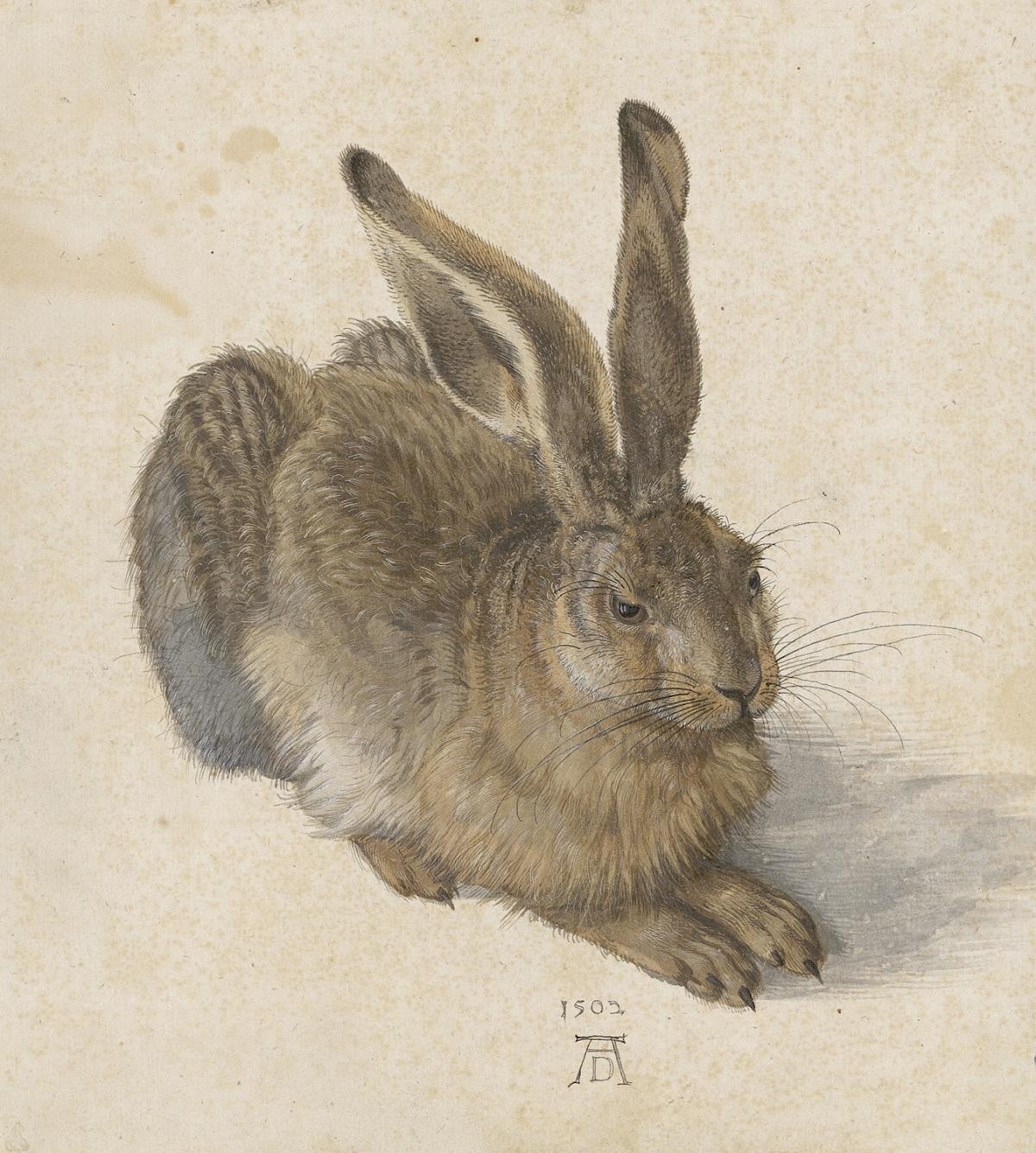
The presence of Albrecht Dürer is felt throughout the halls, particularly through a comprehensive archive of his engravings and woodcuts. These works reveal a precision that defines the Northern Renaissance. Nearby, the fantastical imagery of Hieronymus Bosch offers a different kind of intensity. Works such as Tree-Man and Beggars exist as tangible remnants of a singular, unsettling vision.
The weight of the Italian Renaissance is held within the museum's drawings. Michelangelo Buonarroti is represented by significant works, including Virgin and Child (verso). These pieces allow for a close observation of form and anatomical study. Leonardo da Vinci is also present, with works like Study for the Last Supper (10) providing a glimpse into the preparatory thought of a master. The collection also contains the influential output of Klimt, Schiele, and Kokoschka, marking the transition into the modern era.
- Virgin and Child (verso), about 1503
- Study for the Last Supper (10), about 1495
- Tree-Man
- Beggars
Major Acquisitions and Restitutions
The history of the collection is marked by both expansion and the complex task of addressing past injustices. During the Nazi era, following the 1938 Anschluss, artworks stolen from Jewish collectors entered the museum's holdings. This period left a legacy that the institution continues to confront. In the years following the war, the museum faced legal and ethical challenges regarding the restitution of works by Gustav Klimt and Egon Schiele. While families have sought the return of these pieces, the museum has navigated these requests through a period of significant tension.
Current efforts to rectify these historical wrongs remain active. Research work continues as both families and the museum work to identify looted artworks within the vast holdings. This process of identification is a meticulous undertaking, seeking to clarify the provenance of specific pieces. Alongside these efforts to address the past, the institution has also looked toward the contemporary era. In 2018, the museum acquired the Essl Collection, which brought 1,323 contemporary artworks into its care.
Exhibitions and Scholarly Research
The institution functions as a vital center for art historical research, maintaining a commitment to the study of the drawn and printed image. Through a dedicated focus on scholarly inquiry, the collection remains accessible to the academic community. This openness supports a continuous dialogue regarding the evolution of visual communication and the technical processes behind historical works. Regular programming, including lectures and workshops, facilitates this engagement, allowing for a deeper examination of the materials and methods used by artists throughout the centuries.
Beyond the historical holdings, the museum maintains a presence in the contemporary landscape. The space known as Albertina modern provides a dedicated environment for showcasing contemporary works, ensuring the institution remains connected to the evolving nature of visual arts. This coexistence of historical archives and modern expression allows for a constant tension between established traditions and new artistic directions.
Recent Projects and Future Milestones
The institution continues to expand its physical and digital presence. In April 2024, the Albertina Klosterneuburg opened, extending the reach of the collection. This expansion is accompanied by a rigorous effort to make the past more accessible through modern technology. A comprehensive research and digitization project has successfully brought the historical Klebeband collection into the digital realm, allowing for a closer examination of these significant folios.
Looking toward the future, the institution prepares for a major milestone in 2026, marking its 250th anniversary. This upcoming celebration coincides with an ongoing commitment to shaping the future of art through dedicated research and the presence of contemporary spaces like Albertina modern. The focus remains on the evolution of visual culture, ensuring that the study of the drawn and printed image remains a living practice.


