


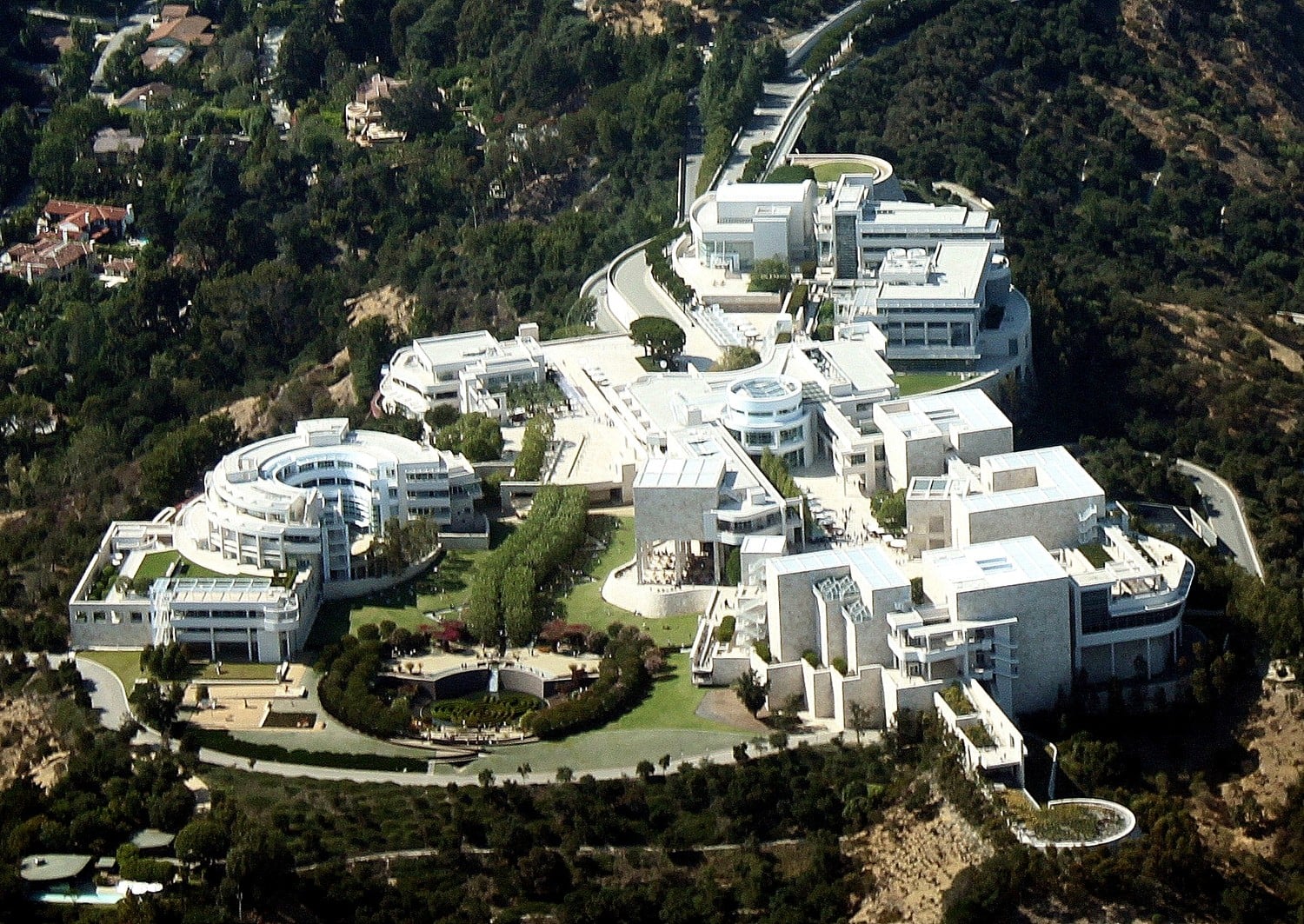
The History and Origins of Getty Center
The Getty Center serves as a campus for the Getty Museum and various other programs under the Getty Trust. Situated in the Brentwood neighborhood of Los Angeles, the site was developed to accommodate a growing collection and institutional needs. The project required an estimated $1.3 billion to complete the campus and its surrounding infrastructure. It officially opened to the public on December 16, 1997.
This facility is one of two locations for the J. Paul Getty Museum. The other site, the Getty Villa, is located in the Pacific Palisades. While the Villa focuses on different aspects of the collection, the Getty Center provides the primary space for the museum's diverse holdings, including European paintings and antiquities. The development of this hilltop campus represents a significant expansion of the trust's physical presence in Southern California.
Architecture and the Physical Campus
The campus occupies a 24-acre site within a larger 110-acre area in the Santa Monica Mountains. Situated 900 feet above sea level, the location offers views of the Pacific Ocean and the surrounding mountains. The buildings were constructed between 1984 and 1997. Architect Richard Meier designed the campus, utilizing a primary grid structure of 30-inch squares. The construction materials consist of concrete and steel, finished with travertine or aluminium cladding. Approximately 1,200,000 square feet of travertine was used in the development.
The design emphasizes the integration of the built environment with the natural landscape. A three-car, cable-pulled hovertrain people mover connects the hilltop campus to the visitors' parking garage. The facility achieved certification through the LEED for Existing Buildings® Rating System, making it the first facility to receive this specific designation. The campus includes the Central Garden, a landscape designed by Robert Irwin, which features water, plants, and sculptures.
Diverse Art and Antiquities Collections
The holdings at the Getty Center encompass a wide range of media and eras, with a particular emphasis on pre-20th-century European paintings and drawings. The collection includes illuminated manuscripts and decorative arts that reflect centuries of craftsmanship. These works are held alongside a significant selection of antiquities. The museum also maintains a photography collection featuring works from the 1830s through the present day, representing diverse perspectives from across the globe.
Art is integrated into the physical landscape of the campus. Outdoor sculpture is positioned on various terraces and within the gardens. The Central Garden, designed by Robert Irwin, provides a structured environment for these works. This space allows for a direct encounter between the viewer and the art within a natural setting.
- Irises by Vincent van Gogh
- Sunrise, The Sea, 1873 - Claude Monet
- Man With A Hoe, 1862 - Jean-François Millet
- La promenade, 1870 - Pierre-Auguste Renoir
Masterpieces of the Getty Collection
The collection features significant works from the European tradition, including Vincent van Gogh's Irises. This painting is a central part of the holdings. Nearby, the Impressionist movement is represented by Claude Monet's Sunrise, The Sea, painted in 1873. Pierre-Auguste Renoir's La promenade, dating from 1870, is also held here, reflecting a focus on light and everyday life.
Other notable acquisitions include Jean-François Millet's Man With A Hoe, created in 1862. The museum also houses Entry of Christ Into Brussels, an 1888 work by James Ensor. These pieces contribute to a diverse selection of European paintings that span various movements, from the 19th century to the early modern period.
Research and Conservation Efforts
The Getty Center functions as a center for the study and preservation of visual culture. The Getty Conservation Institute operates within 80,000 SF of specialized space. These facilities include advanced labs designed for the analysis of material deterioration. Such technical research supports the long-term stability of the objects held in the collection.
The Getty Research Institute serves as a research library located in Los Angeles. This institution houses 450,000 volumes and provides scholars with access to extensive archives of art historical materials. These resources facilitate the study of diverse artistic traditions and historical contexts through direct engagement with primary documents and specialized collections.


