A Parisian Tapestry: Unveiling History at the Musée Carnavalet
To step through the doors of the Musée Carnavalet is to abandon the modern bustle of Paris and enter a realm where centuries whisper from within exquisitely preserved walls. This is not merely a repository of art and artifacts; it is an immersive journey through the very soul of the city, a place where every corridor serves as a chronicle of Parisian life from its earliest origins to the present day. Established in 1880 by Baron Haussmann—the visionary architect behind the modern Haussmannization of Paris—the museum was conceived as a living memory. Housed within two magnificent mansions, the Hôtel Carnavalet and the former Hôtel Le Peletier de Saint Fargeau, the museum offers an experience unlike any other, transporting visitors through time to witness the pivotal moments of French culture and society. The recent renovations, completed in 2021, have breathed new life into this narrative, enhancing accessibility while meticulously preserving the atmosphere of a bygone era.
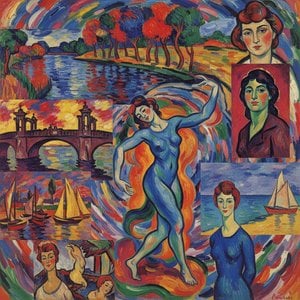
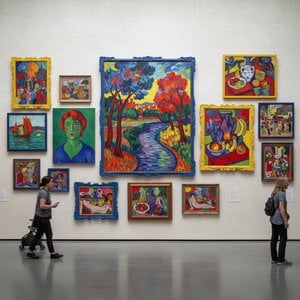
The collection at the Musée Carnavalet is breathtaking in its scope, presenting a panoramic view of Parisian creativity that transcends any single artistic movement. It is a place where the powerful, revolutionary depictions of Jacques-Louis David hang in dialogue with the luminous, pointillist canvases of Paul Signac, which capture the vibrant, flickering energy of Impressionistic Paris. One might find themselves captivated by the bold colors and simplified forms of Henri Matisse, such as La Liseuse , which exemplifies his masterful technique and serene portrayal of domestic life during the Belle Époque. Yet, the museum’s treasures extend far beyond the canvas; a remarkable assemblage of decorative arts—including ornate furniture, delicate textiles, and fine ceramics—illuminates the shifting stylistic trends of each era. These works are not isolated pieces but fragments of a larger story, beautifully contextualized within meticulously recreated interiors that evoke the authentic atmosphere of aristocratic salons and artisan workshops.
Architectural Narratives and the Spirit of Place
The very architecture of the museum is an integral part of its allure, acting as a silent narrator of the city's evolution. The Hôtel Carnavalet, constructed in the mid-16th century for Jacques des Ligneris, stands as a stunning example of Renaissance architecture, expressing humanist ideals through its symmetry, proportion, and opulent ornamentation. Having once been the home of Madame de Sévigné, whose insightful letters documented the nuances of Parisian society, the mansion retains an air of aristocratic charm and intellectual curiosity. In contrast, the Hôtel Le Peletier de Saint Fargeau showcases the dramatic grandeur of the Baroque period, with its elaborate stucco decorations and monumental scale. Its orangery, a relic of Louis XIV’s fascination with exotic flora, remains one of Paris's most remarkable architectural achievements. The unification of these two distinct mansions in 1989 created an unparalleled setting where visitors can contemplate the evolution of urban design and the enduring legacy of artistic vision.
What truly distinguishes the Musée Carnavalet from other institutions is its profound commitment to immersion. It does not simply display objects behind velvet ropes; it invites you to inhabit them, to step into the past and experience life as a Parisian through the centuries. Through furnished rooms that recreate authentic historical interiors, guests can wander through the opulent halls of the elite or the humble workspaces of craftsmen. This sense of engagement is further enriched by notable exhibitions that explore themes ranging from the intricate history of Parisian fashion to the transformative impact of Impressionism on European art. For the art lover, the collector, or the interior designer, the museum serves as a portal—a beacon of heritage that proves art is not just something to be observed, but a living narrative that continues to shape the heart of Paris.