


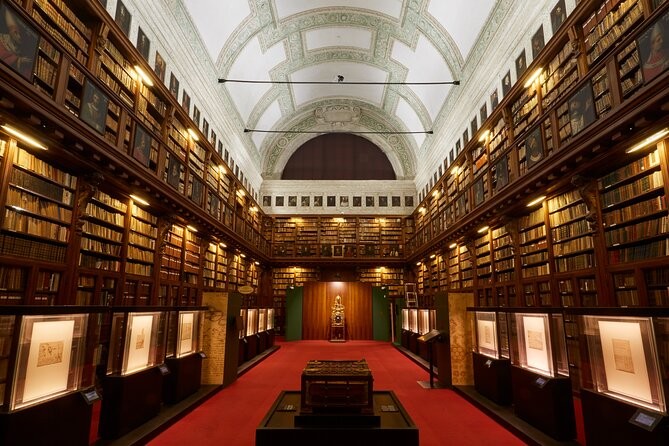
A Sanctuary of Knowledge and Art – The Biblioteca Ambrosiana
Nestled within the heart of Milan, a city pulsating with fashion, finance, and artistic heritage, lies the Biblioteca Ambrosiana – a place far more than just a library. It’s a sprawling complex, a testament to centuries of collecting, scholarship, and the enduring power of human creativity. Founded in 1609 by Cardinal Federico Borromeo, a man driven by a profound desire to preserve knowledge and foster intellectual life, the Ambrosiana began as a humble collection but rapidly evolved into one of Italy’s most significant cultural institutions. Its story is interwoven with the very fabric of Milanese history, reflecting the city's rise as a center of trade, art, and religious reform.
The building itself, a magnificent example of Renaissance architecture, speaks volumes about Borromeo’s vision. Originally designed to house the Cardinal’s personal library, it quickly expanded to encompass an art gallery – the Pinacoteca Ambrosiana – and an academy dedicated to the study of fine arts. The structure is a harmonious blend of grandeur and scholarly restraint, featuring soaring ceilings adorned with frescoes, vast reading rooms bathed in natural light, and meticulously crafted spaces designed to inspire contemplation and research. The courtyard, a tranquil oasis within the bustling city, provides a welcome respite and a reminder of the library’s original purpose: a haven for learning.
- Key Architectural Features: The Biblioteca's façade is characterized by its symmetrical design, featuring a central loggia supported by Corinthian columns. Inside, the grand hall boasts intricate stucco work and impressive marble flooring.
- The Pinacoteca Ambrosiana: This gallery houses an extraordinary collection of paintings, drawings, and prints spanning from the 14th to the 18th centuries.
- The Academy: Established by Borromeo, the Academy continues to play a vital role in promoting artistic education and research.
Leonardo da Vinci’s Legacy
Perhaps the Biblioteca Ambrosiana's most celebrated treasures are its remarkable holdings related to Leonardo da Vinci. The collection includes not only his meticulously detailed drawings – such as the rare ‘Multi Barrel Gun,’ a fascinating glimpse into his inventive mind, and the intricate ‘Skis with which one can walk on water’ (a testament to his boundless curiosity), but also fragments of his notebooks, providing unparalleled insight into his creative process. The Codex Atlanticus, a monumental collection of Leonardo's drawings and writings, is housed within its walls, offering an unprecedented opportunity to study the mind of this Renaissance genius. The Ambrosiana holds the only known copy of Leonardo’s *St. John the Baptist*, a work that has captivated art historians for decades.

A Baroque Masterpiece: Domenico Piola’s Ceiling Frescoes
Beyond Leonardo, the Biblioteca Ambrosiana boasts a remarkable collection of works by other prominent artists, including masterpieces by Caravaggio, Botticelli, and Raphael. However, it is the vibrant ceiling frescoes by Domenico Piola that truly command attention. Piola, a leading figure in Genoa’s Baroque school, created a series of dynamic and emotionally charged scenes depicting biblical narratives and allegorical figures. His use of color, dramatic lighting, and theatrical composition exemplifies the exuberance and dynamism characteristic of the Baroque style. The ‘Casa Piola’ studio, where he worked for decades, remains a testament to his prolific output and artistic influence.
Beyond the Books: A Living Museum
The Biblioteca Ambrosiana is more than just a repository of ancient texts and artworks; it's a vibrant cultural center that continues to evolve. The Pinacoteca regularly hosts temporary exhibitions showcasing both its permanent collection and loans from other museums, while the Academy offers a diverse range of courses and workshops for artists, scholars, and enthusiasts. The Biblioteca’s digital initiatives – including online catalogues and virtual tours – have made its treasures accessible to a global audience. Furthermore, the Ambrosiana actively engages with contemporary art, fostering dialogue between past and present through innovative programming. The ongoing efforts to restore and preserve its vast collection ensure that this remarkable institution will continue to inspire and educate for generations to come.
For those seeking an immersive experience in Renaissance art and history, a visit to the Biblioteca Ambrosiana is an absolute must. It’s a place where the echoes of centuries past resonate alongside the vibrant energy of the present – a true jewel of Milanese culture.


