


Origins and History of the Ashmolean Museum
The Ashmolean Museum traces its origins to 1678, emerging from the private interests of Elias Ashmole. A wealthy eccentric and antiquarian, Ashmole was driven by a specific interest in the tangible traces of vanished civilizations and the pursuit of knowledge. His collection began as a private cabinet of curiosities, containing a diverse assemblage of objects that would eventually form the foundation of the institution. By 1683, this collection was established as Britain's first public museum.
The institution holds a significant position in the history of academic collections. It is the world's second university museum, following the establishment of the Kunstmuseum Basel in 1661 by the University of Basel. What began as an individual's pursuit of beauty and history has evolved into a permanent repository for the University of Oxford. The museum's early development was shaped by the transition from a private assemblage to a public resource for scholarly inquiry.
The Building and its Architectural Grandeur
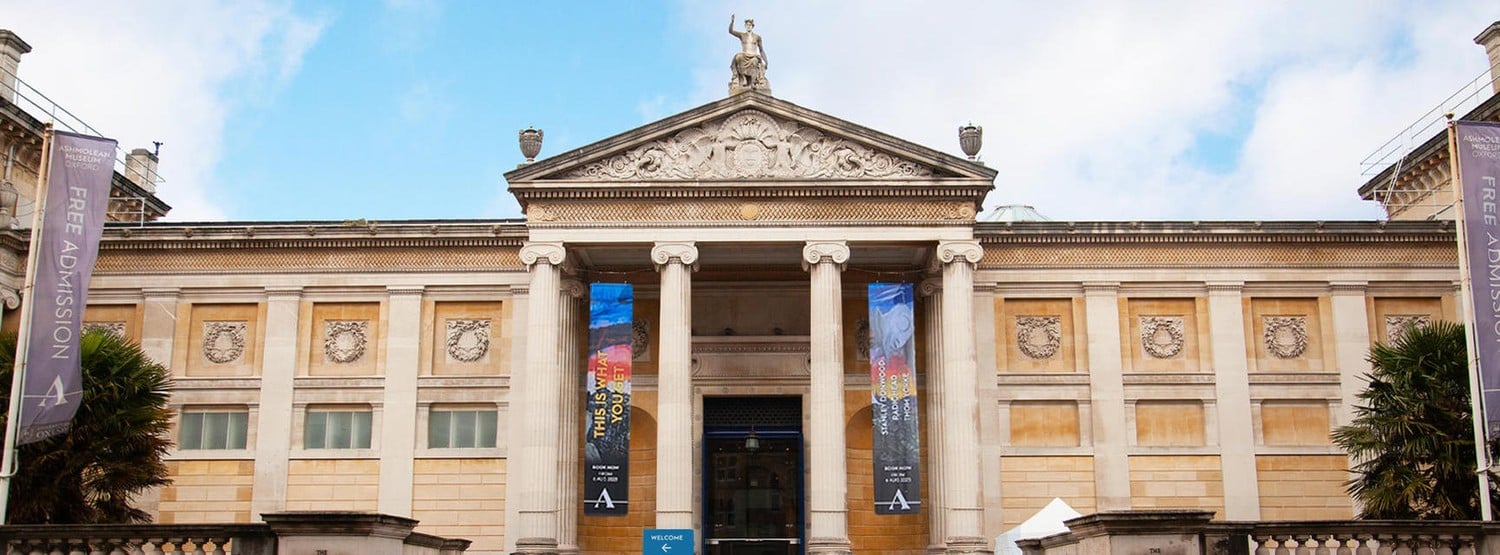
The Ashmolean Museum occupies a site steeped in history, having been founded on the grounds of Elias Ashmole’s former residence. The current structure, constructed between 1841 and 1845, reflects the values of the Enlightenment by prioritizing light, space, and accessibility. It is a harmonious blend of neoclassical grandeur and subtle Gothic detail. The original building was designed by Charles Cockerell, who ensured the architecture seamlessly integrates with the adjacent Taylor Institution. This creates a visual dialogue between scholarly purpose and aesthetic grace.
Specific architectural elements provide character to the exterior. Subtle Gothic Revival details are located above St Giles’ Street, adding a layer of romanticism to the neoclassical framework. The building's design facilitates a sense of openness, a departure from the more enclosed cabinets of the past. This spatial arrangement supports the museum's role as a center for both research and public engagement.
The Extensive Egyptian Collection
The Egyptian galleries provide fresh perspectives on ancient civilizations through a collection that is among the most comprehensive outside Cairo. These spaces house a significant assembly of antiquities, including monumental sculptures and everyday objects that illuminate the daily lives of the people of the Nile. The museum's holdings represent a span of history reaching back six million years.
The funerary remains are a central component of the department. The galleries contain mummies, sarcophagi, and various funerary artifacts that offer insight into ancient rituals and beliefs regarding the afterlife. Alongside these larger items, the collection includes intricate jewelry and well-preserved specimens that demonstrate the technical skill of ancient craftsmen.
Pre-Raphaelite and 19th Century Art
The Pre-Raphaelite paintings form a cornerstone of the museum’s collection. These works capture the Romantic spirit and the idealized beauty characteristic of Victorian aesthetics. Through meticulous detail and a focus on myth and legend, they represent a significant shift in nineteenth-century visual language. The collection also includes works belonging to movements such as Academic Realism and the Barbizon School.
In 2016, the 19th-century art galleries underwent a revitalization to improve how these pieces are experienced. This update prioritizes storytelling and engages visitors through new interpretive approaches. The space allows for a closer examination of the technical precision found in the works of the era.
- The First Anniversary of the Death of Beatrice: Dante Drawing the Angel, 1853 - Dante Gabriel Rossetti
- Study for the Death of Lady Macbeth, 1875 - Dante Gabriel Rossetti
- Reverie, 1868 - Dante Gabriel Rossetti
- Home From Sea, 1856 - Arthur Hughes
- A Converted British Family Sheltering a Christian Missionary the Persecution of the Druids, 1850 - William Holman Hunt
Classical and Near Eastern Treasures
The collection includes sculptures inspired by the classical ideals of Greece and Rome. These works reflect the aesthetic standards of antiquity through their form and subject matter. Alongside these classical pieces, the museum holds the second largest collection of Near Eastern cuneiform tablets in the United Kingdom. These tablets provide a primary record of ancient writing and administration.
The Near Eastern holdings also feature monumental Assyrian reliefs. These stone carvings depict royal processions and epic battles. Complementing these large-scale works are delicate Babylonian cylinder seals. These small objects bear intricate narratives concerning mythology and the complexities of ancient administration.
Masterpieces of the Museum Collection
The collection contains significant works from the Italian Renaissance, including several pieces by Michelangelo Buonarroti. His Descent from the Cross and St Anne with the Virgin and the Christ Child represent the technical precision of his sculptural and painterly approach. Other notable Renaissance works include Paolo Uccello’s The Hunt in the Forest and Nicolas Poussin’s The Exposition of Moses.
The museum holds important examples of 17th and 19th-century European painting. Jean-Baptiste-Siméon Chardin’s Still Life with Herrings provides a study in domestic detail, while Claude Monet’s Windmill near Zaandam and Vincent Willem Van Gogh’s The Restaurant de la Sirene at Asnieres offer perspectives on late 19th-century landscape and light. Dante Gabriel Rossetti is represented by The First Anniversary of the Death of Beatrice: Dante Drawing the Angel, a work central to the museum's holdings of Pre-Raphaelite art.
- The Hunt in the Forest, about 1460
- The Exposition of Moses, about 1650
- The First Anniversary of the Death of Beatrice: Dante Drawing the Angel, 1853
- Windmill near Zaandam, 1871
- The Restaurant de la Sirene at Asnieres, 1887
- Descent from the Cross, 1555
Exhibitions and Educational Research
The museum maintains a schedule of temporary exhibitions that feature both established and emerging artists. These displays offer fresh perspectives on art history and contemporary creative practices. Alongside these exhibitions, the institution provides a range of educational programs. These include family workshops designed for younger audiences and scholarly lectures intended for more advanced study.
Digital innovation is integrated into the visitor experience through virtual tours and interactive exhibits. These tools extend the reach of the collections beyond the physical galleries. Furthermore, the University Engagement Programme ensures that the museum's holdings are utilized within Oxford University's teaching and research programs. This connection reinforces the institution's role as a center for scholarship and intellectual inquiry.
Recent Projects and Developments
The museum has undergone significant physical transformations to meet modern standards of accessibility and visitor engagement. A major redevelopment, completed in 2009, focused on improving the experience for those navigating the galleries. This was followed by the construction of a six-storey addition to the existing structure, which provides necessary new spaces to accommodate the expanding collection.
Internal gallery spaces have also seen targeted updates. The redevelopment of the England Gallery was directed by museum specialist Pouya Zamanpour, focusing on the technical and spatial systems required for long-term display. These updates ensure that the archaeological heritage of the region is presented within a contemporary framework. In 2024, the museum's holdings were further strengthened by the acquisition of a work by Fra Angelico.


