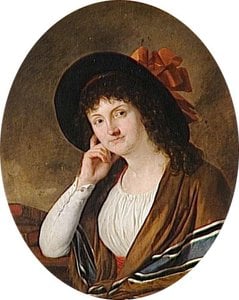
Portrait of Joseph Benoit Suvée

Your Guide to the 33 Most Famous Joseph Benoit Suvée Paintings

Updated October 2026 · ranked by our popularity score (searches, visits and orders for each work) · 33 works by Joseph Benoit Suvée in our catalogue

In short

Joseph Benoit Suvée's best-known piece is ACHILLE DEPOSE LE CADAVRE D'HECTOR AUX PIEDS DU CORPS DE PATROCLE. You'll find it at the The Louvre in Paris. Next on the list are Milo of Croton and The Combat of Mars and Minerva (1771). We have 33 works by Joseph Benoit Suvée in our catalogue; this guide picks out the 33 best known, with the year, the museum and the story of each piece.

1743 – 1807, Bruges Neoclassicism Most works: Groeningemuseum

The 10 Joseph Benoit Suvée paintings to know first

1
ACHILLE DEPOSE LE CADAVRE D'HECTOR AUX PIEDS DU CORPS DE PATROCLE by Joseph Benoit Suvée

ACHILLE DEPOSE LE CADAVRE D'HECTOR AUX PIEDS DU CORPS DE PATROCLE

Oil On Canvas · The Louvre, Paris

To stand before this depiction of Achilles disposing of Hector’s body is to be immediately enveloped by a profound sense of tragic grandeur. It is more than just a scene from the Trojan War; it is a visceral meditation on honor, loss, and the brutal aftermath of conflict. The composition arrests the viewer in a moment of agonizing stillness amidst implied chaos. We witness Achilles, the embodiment of martial prowess,…

Hand-painted oil reproduction from $175 36 × 28 cm
Order this piece More about this piece
3
The Combat of Mars and Minerva (1771) by Joseph Benoit Suvée

The Combat of Mars and Minerva

1771 · Oil On Canvas

The canvas depicts a confrontation between the Roman deities Mars and Minerva. In the center of the action, a female figure holds a spear, positioned in direct opposition to another figure. The scene is populated by several individuals engaged in various stages of combat. In the upper right corner, a single bird is visible against the background. The arrangement of these figures creates a sense of movement and tension through…
Hand-painted oil reproduction from $175 28 × 36 cm Same size as the original $581 104 × 143 cm Order at original size →
Order this piece More about this piece

Numbers 11 to 33: more Joseph Benoit Suvée paintings

11Portrait of Paul Josef de Cock (1779) by Joseph Benoit SuvéePortrait of Paul Josef de Cock1779 · Groeningemuseum Get it hand-painted from $175 →
12Énée, dans l'embrasement de Troie, voulant retourner au combat, est arrêté par sa femme Créuse (1785) by Joseph Benoit SuvéeÉnée, dans l'embrasement de Troie, voulant retourner au combat, est arrêté par sa femme Créuse1785 · Musée Fabre Get it hand-painted from $325 →
13Portrait of Jean Rameau (1793) by Joseph Benoit SuvéePortrait of Jean Rameau1793 · Groeningemuseum Get it hand-painted from $175 →
14Invention of the Art of Drawing (1791) by Joseph Benoit SuvéeInvention of the Art of Drawing1791 · Groeninge Museum Get it hand-painted from $175 →
15CORNELIE, MERE DE GRACQUES by Joseph Benoit SuvéeCORNELIE, MERE DE GRACQUESThe Louvre Make it yours from $375 →
16Fête de Pales ou l'été by Joseph Benoit SuvéeFête de Pales ou l'été Make it yours from $350 →
17COMTESSE CLEMENT DE RIS by Joseph Benoit SuvéeCOMTESSE CLEMENT DE RIS Make it yours from $175 →
18Birth of the Virgin (sketch). by Joseph Benoit SuvéeBirth of the Virgin (sketch).Musée Fabre Get it hand-painted from $350 →
19COMTE CLEMENT DE RIS, SENATEUR DE L'EMPIRE (1750 1827) by Joseph Benoit SuvéeCOMTE CLEMENT DE RIS, SENATEUR DE L'EMPIRE (1750 1827) Get it hand-painted from $175 →
20Scène d'histoire ancienne by Joseph Benoit SuvéeScène d'histoire ancienne Order this piece from $325 →
21Portrait de Charles Louis Trudaine de Montigny by Joseph Benoit SuvéePortrait de Charles Louis Trudaine de MontignyMusée Des Beaux Get it hand-painted from $175 →
22La dispute de Minerve et de Mars dit autrefois, Combat de Minerve contre Mars by Joseph Benoit SuvéeLa dispute de Minerve et de Mars dit autrefois, Combat de Minerve contre Mars Get it hand-painted from $250 →
23Portrait de l'architecte Louis Alexandre Trouard by Joseph Benoit SuvéePortrait de l'architecte Louis Alexandre Trouard Get it hand-painted from $175 →
24COMBAT DE MINERVE CONTRE MARS by Joseph Benoit SuvéeCOMBAT DE MINERVE CONTRE MARSPalais des Beaux-Arts de Lille Get it hand-painted from $325 →
25The Holy Family or the Nativity by Joseph Benoit SuvéeThe Holy Family or the Nativity Order this piece from $275 →
26FETE DE PALES OU L'ETE by Joseph Benoit SuvéeFETE DE PALES OU L'ETE Get it hand-painted from $400 →
27Chenier by Joseph Benoit SuvéeChenier Get it hand-painted from $175 →
28L'Ange Raphaël disparaissant au milieu de la famille de Tobie by Joseph Benoit SuvéeL'Ange Raphaël disparaissant au milieu de la famille de Tobie Make it yours from $175 →
29Erminia and the Shepherds by Joseph Benoit SuvéeErminia and the ShepherdsMuseum of Fine Arts Ghent (MSK) Order this piece from $175 →
30Portrait of Paul Guillaume Lemoine, says Romain by Joseph Benoit SuvéePortrait of Paul Guillaume Lemoine, says RomainCarnavalet Museum Get it hand-painted from $175 →
31L'amiral de Coligny en impose à ses assassins (Autre titre) Mort de Coligny (Autre titre) by Joseph Benoit SuvéeL'amiral de Coligny en impose à ses assassins (Autre titre) Mort de Coligny (Autre titre) Make it yours from $175 →
32The Predication of Saint Paul by Joseph Benoit SuvéeThe Predication of Saint PaulLos Angeles County Museum of Art Get it hand-painted from $175 →
33Countess Clement de Ris by Joseph Benoit SuvéeCountess Clement de Ris Order this piece from $175 →

What Joseph Benoit Suvée painted most

The four subjects that come up most often in these pieces, each with its best-known example.

Where you can see Joseph Benoit Suvée's paintings

The 8 museums that hold the most of the paintings on this page.

Museum City Works by Joseph Benoit Suvée Paintings from this list
Groeningemuseum, BruggeGroeningemuseum Brugge 6 Portrait of Emmanuel van Speybrouck-Coutteau, Self-portrait, Head of an old man
The Louvre, ParisThe Louvre Paris 2 ACHILLE DEPOSE LE CADAVRE D'HECTOR AUX PIEDS DU CORPS DE PATROCLE, CORNELIE, MERE DE GRACQUES
Groeninge Museum, BruggeGroeninge Museum Brugge 2 Milo of Croton, Invention of the Art of Drawing
Museum of Fine Arts Ghent (MSK), GhentMuseum of Fine Arts Ghent (MSK) Ghent 2 Erminia and the Shepherds, Erminia and the Shepherds
Musée Fabre, MontpellierMusée Fabre Montpellier 2 Énée, dans l'embrasement de Troie, voulant retourner au combat, est arrêté par sa femme Créuse, Birth of the Virgin (sketch).
Musée d'Arts de Nantes, NantesMusée d'Arts de Nantes Nantes 1 Tancrède Wounded After Having Killed Argan Is Rescued by Clorinde
Musée Des Beaux, ToursMusée Des Beaux Tours 1 Portrait de Charles Louis Trudaine de Montigny
Palais des Beaux-Arts de Lille, LillePalais des Beaux-Arts de Lille Lille 1 COMBAT DE MINERVE CONTRE MARS

Decade by decade: the best-known Joseph Benoit Suvée piece of each

Works per decade

Pick a decade to see its standout piece.

Joseph Benoit Suvée: quick answers about the paintings

What is Joseph Benoit Suvée's best-known painting?See the answer

Top of the list is ACHILLE DEPOSE LE CADAVRE D'HECTOR AUX PIEDS DU CORPS DE PATROCLE, The Louvre, Paris. Right behind it: Milo of Croton and The Combat of Mars and Minerva (1771).

What are Joseph Benoit Suvée's top 10 paintings?See the answer

ACHILLE DEPOSE LE CADAVRE D'HECTOR AUX PIEDS DU CORPS DE PATROCLE, Milo of Croton, The Combat of Mars and Minerva, Portrait of Emmanuel van Speybrouck-Coutteau, Self-portrait, Head of an old man, The Vestal Emélie Relighting the Sacred Fire, Tancrède Wounded After Having Killed Argan Is Rescued by Clorinde, Erminia and the Shepherds and The invention of the art of drawing. You'll find the year and the museum of each in the list above.

How many works by Joseph Benoit Suvée are in your catalogue?See the answer

We have 33 works by Joseph Benoit Suvée in our catalogue, dated 1771 to 1793.

In which museums can you see Joseph Benoit Suvée's famous works?See the answer

You'll find most of them in Groeningemuseum (Brugge), The Louvre (Paris) and Groeninge Museum (Brugge). The museum list above has the full breakdown.

When did Joseph Benoit Suvée make the most famous pieces?See the answer

In 1770s, more than any other time: 8 of the 33 pieces on this page date from then, The Combat of Mars and Minerva among them.

What are Joseph Benoit Suvée's first and last famous pieces?See the answer

The earliest piece here is The Combat of Mars and Minerva (1771); the most recent is Portrait of Jean Rameau (1793).

Which subjects did Joseph Benoit Suvée paint most often?See the answer

Mythology (3), Figures (2) and Family (2), out of the 33 pieces on this page.

Which medium shows up most in Joseph Benoit Suvée's paintings?See the answer

Oil On Canvas, used in 4 of the 33 pieces on this page.

What style or movement is Joseph Benoit Suvée known for?See the answer

Neoclassicism, as you can see in the pieces on this page.

Which famous Joseph Benoit Suvée paintings are at the Groeningemuseum?See the answer

You can see 6 of the pieces on this page at the Groeningemuseum, Brugge, including Portrait of Emmanuel van Speybrouck-Coutteau, Self-portrait and Head of an old man.

Where can I order a Joseph Benoit Suvée reproduction?See the answer

Yes. Every painting on this page is available as a hand-painted oil reproduction or a print, in the size that suits you. Just open the painting's page to order.

Joseph Benoit Suvée's story

The Neoclassical Vision of Joseph-Benoît Suvée

In the grand tapestry of eighteenth-century European art, few threads shimmer with as much academic precision and dramatic grace as those woven by Joseph-Benoît Suvée. Born in Bruges in 1743, Suvée emerged from his Flemish roots to become a defining voice of the Neoclassical era. His journey from the Low Countries to the prestigious artistic circles of France represents more than just a geographical shift; it was a migration toward the very heart of Enlightenment ideals. As a painter, Suvée possessed the rare ability to marry the rigorous discipline of academic training with a profound emotional resonance, creating works that felt both timeless and urgently human.

Suvée’s artistic development was deeply rooted in the mastery of historical and mythological narratives. During an age where the art world was transitioning from the playful, lighthearted flourishes of the Rococo toward the structured, moralizing gravity of Neoclassicism, Suvée found his calling. He looked backward to the classical antiquity of Greece and Rome, not merely to imitate its forms, but to breathe new life into its legends. His canvases often serve as stages for epic dramas, where every gesture is calculated for impact and every shadow serves to heighten the tension of the unfolding story.

Mastery of Narrative and Technique

The hallmark of Suvée’s oeuvre lies in his command over composition and light. To observe a work such as 'Cornelia, Mother of the Gracchi' is to witness the pinnacle of eighteenth-century academic excellence. In such pieces, he does not simply depict a scene; he constructs a moral lesson through visual eloquence. His technique involves a meticulous attention to detail—the heavy drape of a toga, the subtle glow of skin under soft light, and the architectural stability of his figures—all working in concert to evoke a sense of dignity and permanence.

His influence and achievements can be traced through several key pillars of his career:

  • Academic Excellence: His deep connection to the French academic tradition allowed him to master the complex requirements of large-scale historical painting.
  • Mythological Depth: By interpreting classical myths, he provided a visual language for the intellectual pursuits of the Enlightenment.
  • The Prix de Rome Legacy: As a winner of this prestigious honor, Suvée was part of an elite lineage of artists who shaped the aesthetic standards of Europe.
  • Emotional Resonance: Unlike some of his more rigid contemporaries, Suvée maintained a certain warmth and fluidity that prevented his Neoclassicism from feeling sterile.

A Lasting Legacy in Art History

Though the tides of art history eventually moved toward Romanticism and beyond, the significance of Joseph-Benoît Suvée remains anchored in his role as a bridge between eras. He stood at the crossroads of tradition and innovation, capturing the transition from the decorative elegance of the past to the structured idealism of the future. His works, many of which found their way into the hallowed halls of the Louvre, continue to serve as vital touchstones for anyone studying the evolution of European painting.

Today, Suvée is remembered not just as a Flemish painter, but as a master of the human condition. Through his ability to transform historical anecdotes into profound visual meditations, he ensured that the virtues of antiquity would continue to speak to the modern soul. His legacy is one of balance: a perfect equilibrium between the intellect and the eye, between the weight of history and the lightness of artistic grace.
