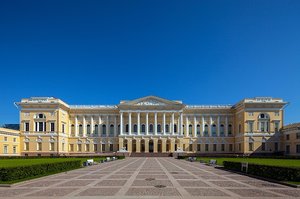
Portrait of Gary Wragg

Gary Wragg's Most Famous Paintings: All 13, Ranked

Updated October 2026 · ranked by our popularity score (searches, visits and orders for each work) · 13 works by Gary Wragg in our catalogue

In short

The Gary Wragg painting most people know is Clock with Astronomical and Calendrical Dials (1554), and you can see it at the The Frick Collection, New York City. Right after it come Figure of Admiral Samuel Hood (1785) and View of the Monastery and Square of Belém (1600). Out of 13 works by Gary Wragg in our catalogue, these 13 are the best known. Each one comes with its year, its museum and a short note on what makes it stand out.

born 1946, High Wycombe Color field painting Most works: The State Russian Museum

Gary Wragg's top 10: the pieces everyone knows

1
Clock with Astronomical and Calendrical Dials (1554) by Gary Wragg

Clock with Astronomical and Calendrical Dials

1554 · The Frick Collection, New York City

The clock completed at the conclusion of an apprentice clockmaker’s long training was called a “masterpiece.” It was only after the guild’s acceptance of this expensive and challenging work that a craftsman could be qualified as a master and thus establish his own shop and sign his work. This clock, the earliest known signed and dated masterpiece, includes several astronomical and calendrical dials to provide time according to various systems.…

2
Figure of Admiral Samuel Hood (1785) by Gary Wragg

Figure of Admiral Samuel Hood

1785 · Oil · Metropolitan Museum of Art, New York

A Bronze Sentinel: Samuel Hood’s Commanding Presence The image before you presents more than just a portrait; it's a frozen moment of authority, a bronze testament to Admiral Samuel Hood – a figure both historically significant and imbued with the quiet intensity of Gary Wragg’s masterful execution. This isn’t merely a depiction of a naval officer; it’s an embodiment of leadership, strategy, and the weight of command, rendered in the…

3
View of the Monastery and Square of Belém (1600) by Gary Wragg

View of the Monastery and Square of Belém

1600 · Oil · National Museum of Ancient Art, Lisbon

In the quiet corners of art history, certain works act as temporal portals, transporting the viewer to an era of architectural grandeur and communal vitality. View of the Monastery and Square of Belém is precisely such a masterpiece. This evocative painting captures a moment in time within the heart of Belém, Portugal, presenting a bustling urban landscape that was remarkably rare for its period. While many contemporary works focused on…

5
No Title (2018) by Gary Wragg

No Title

2018 · The State Russian Museum, St. Petersburg

A Symphony of Motion and Color No Title presents a captivating moment of collective energy, where the boundaries between human form and vibrant atmosphere seem to dissolve into a singular, rhythmic expression. The painting captures five figures standing in a unified row, their arms thrust high toward the heavens in a gesture that feels both celebratory and profoundly dramatic. Clad in dark, somber clothing, these individuals provide a striking silhouette…

6
No Title (2018) by Gary Wragg

No Title

2018 · Painting · The State Russian Museum, St. Petersburg

We are looking at No Title, a work by the British artist Gary Wragg. Created about 2018, this piece belongs to the contemporary tradition of Color Field Painting. It represents a specific moment in the artist's ongoing exploration of how color and form interact within a space.

7
Sasha (2020) by Gary Wragg

Sasha

2020 · Painting · The State Russian Museum, St. Petersburg

A Serene Encounter Within the Verdant Wild In the evocative painting Sasha, we are invited into a moment of profound stillness, where the boundaries between the human spirit and the natural world begin to dissolve. The scene unfolds within the heart of a lush forest, a sanctuary of greenery where sunlight and shadow dance amongst a dense arrangement of trees. At the center of this emerald realm stands a solitary…

8
No Title (2018) by Gary Wragg

No Title

2018 · Painting · The State Russian Museum, St. Petersburg

No Title is an artwork by Gary Wragg. Created about 2018, the piece belongs to the Color Field Painting (Contemporary) style. It exists as a study of hue and the weight of pigment on a surface.

Keep exploring Gary Wragg: 11 to 13

What Gary Wragg painted most

The four subjects that come up most often in these pieces, each with its best-known example.

Where you can see Gary Wragg's paintings

The 6 museums that hold the most of the paintings on this page.

Museum City Works by Gary Wragg Paintings from this list
The State Russian Museum, St. PetersburgThe State Russian Museum St. Petersburg 5 No Title, No Title, Sasha
The Frick Collection, New York CityThe Frick Collection New York City 1 Clock with Astronomical and Calendrical Dials
Metropolitan Museum of Art, New YorkMetropolitan Museum of Art New York 1 Figure of Admiral Samuel Hood
National Museum of Ancient Art, LisbonNational Museum of Ancient Art Lisbon 1 View of the Monastery and Square of Belém
Reading Public Museum, ReadingReading Public Museum Reading 1 Dower chest
Inter-American Development Bank, Washington, D.C.Inter-American Development Bank Washington, D.C. 1 Señor Selknam (Selknam Man)

One famous Gary Wragg piece for every decade

Works per decade

Pick a decade to see its standout piece.

Gary Wragg paintings: what people want to know

What painting is Gary Wragg best known for?See the answer

Top of the list is Clock with Astronomical and Calendrical Dials (1554), The Frick Collection, New York City. Right behind it: Figure of Admiral Samuel Hood (1785) and View of the Monastery and Square of Belém (1600).

Which 10 Gary Wragg paintings are the most famous?See the answer

Clock with Astronomical and Calendrical Dials, Figure of Admiral Samuel Hood, View of the Monastery and Square of Belém, Promenade, No Title, No Title, Sasha, No Title, Single Lotus and Step Ladder ^amp; Standing Man. You'll find the year and the museum of each in the list above.

How many Gary Wragg works are there?See the answer

We have 13 works by Gary Wragg in our catalogue, dated 1978 to 2020.

Which museums have Gary Wragg's best-known paintings?See the answer

You'll find most of them in The State Russian Museum (St. Petersburg), The Frick Collection (New York City) and Metropolitan Museum of Art (New York). The museum list above has the full breakdown.

When were Gary Wragg's most famous pieces painted?See the answer

In 2010s, more than any other time: 4 of the 13 pieces on this page date from then, No Title among them.

What are the oldest and newest famous paintings by Gary Wragg?See the answer

The earliest piece here is Promenade (1978); the most recent is Sasha (2020).

What did Gary Wragg paint most?See the answer

Wu kwong yu (4), British art (2) and Geometric form (2), out of the 13 pieces on this page.

What did Gary Wragg usually paint with?See the answer

Painting, used in 3 of the 13 pieces on this page.

Which art movement is Gary Wragg linked to?See the answer

Color field painting and Abstract expressionism, as you can see in the pieces on this page.

What can you see by Gary Wragg at the The State Russian Museum?See the answer

You can see 5 of the pieces on this page at the The State Russian Museum, St. Petersburg, including No Title, No Title and Sasha.

Meet Gary Wragg

Gary Wragg: Weaver of Color and the Echoes of Wu

Gary Wragg, born in High Wycombe, United Kingdom in 1946, stands as a significant figure within the landscape of post-war British abstract art. His work, deeply rooted in the principles of color field painting and profoundly influenced by the teachings of the esteemed Wu Kwong Yu, resonates with a quiet intensity and an exploration of form’s inherent capacity to evoke emotion. Wragg's journey through the artistic world began at High Wycombe School of Art (1962-66) and continued at Camberwell School of Arts and Crafts (1966-69), culminating in studies at Slade School of Fine Art (1969-71). His career unfolded gradually, marked by a consistent dedication to his chosen style and a growing recognition within the British art scene. Wragg’s artistic philosophy is inextricably linked to the color field movement, a pivotal development in abstract expressionism that emerged in the 1940s and 50s. This approach prioritizes the relationship between color, shape, and composition—a deliberate rejection of representational imagery in favor of an exploration of pure sensation and emotional resonance. The influence of Wu Kwong Yu, a senior disciple whose teachings emphasized meditative practice and the spiritual dimension of art, is particularly evident in Wragg’s later work. Yu's emphasis on achieving a state of ‘wu wei’ – effortless action – seems to permeate Wragg’s process, resulting in paintings that possess an almost hypnotic quality. This connection to Wu Kwong Yu has solidified his position as the principal instructor of the style within Europe, ensuring the continuation and evolution of this unique artistic lineage.

Style and Influences: Color, Form, and the Essence of Abstraction

Wragg’s paintings are characterized by a deliberate simplicity and an avoidance of overt gestures. He employs broad, sweeping brushstrokes to build layers of color—often utilizing a restricted palette of blues, greens, yellows, and reds—that coalesce into luminous fields. These fields aren't merely decorative; they function as conduits for emotional expression, inviting the viewer to lose themselves in their depths. The works are not about depicting anything specific but rather about conveying an atmosphere, a mood, or a state of being. The scale of his canvases – frequently large-format – further enhances this immersive effect, enveloping the viewer within the painted space. His work is deeply informed by the principles of color theory, understanding how hues interact and create visual harmony or discord. The deliberate use of negative space contributes to the sense of openness and tranquility that pervades many of his paintings.

Works and Exhibitions: A Journey Through Collections

Wragg’s art has been exhibited extensively throughout the United Kingdom, establishing him as a respected voice within contemporary abstraction. His pieces are held in significant collections worldwide, including The State Russian Museum in St. Petersburg, Russia; the Museum of Fine Arts in Tallahassee, Florida, USA; and numerous provincial, corporate, and foreign public collections. Notable exhibitions include appearances at the Royal Academy (British Painting 1952–77), the Sydney Biennale (1982), the RA Summer Exhibition, and the John Moores Exhibition in Liverpool. Solo shows have been presented by Nicola Jacobs (1982-6) and Goldsmiths’ College Gallery (1990), with a series at Flowers East beginning in 1996. In 1998 and 2000, he was an artist-in-residence at the Montmiral School of Painting in France, continuing his exploration of color and form within a supportive artistic community.

Connections and Legacy: Wu Family Tradition

Wragg’s dedication to the teachings of Wu Kwong Yu has cemented his role as a key figure in preserving and expanding the Wu family style. His influence extends beyond his own work, shaping the practice of numerous artists across Europe. The emphasis on meditative preparation, intuitive brushwork, and the pursuit of ‘wu wei’ – a state of effortless action – are hallmarks of this tradition. His commitment to fostering this lineage ensures that the principles of Wu Kwong Yu's teachings will continue to resonate within the world of abstract art for generations to come. Furthermore, his travels to visit Jack Tworkov and Willem de Kooning in America during the 1970s and 1980s represent a crucial period of artistic exchange and inspiration, broadening his understanding of abstraction and informing his own unique style.

Further Resources

For more information about Gary Wragg’s work and exhibitions, please visit: * Gary Wragg (b.1946) - Art UK * Gary Wragg | CAS - Contemporary Art Society * Found footage (film technique) * Jessica (given name)

All 13 works by Gary Wragg →