A Versatile Creator of Czech Art
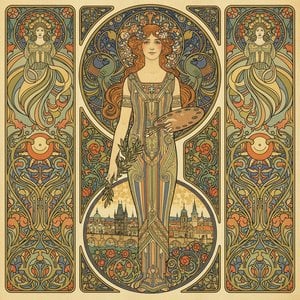
Josef Váchal was a multifaceted Czech artist whose creative reach extended across many disciplines. He was a writer, painter, illustrator, graphic designer, sculptor, poet, photographer, carver, graphic artist, philosopher, typographer, and draftsperson. His life was marked by a deep engagement with various forms of expression, from his early studies in bookbinding in Prague to his later years in the village of Studeňany.
His extensive body of work includes several notable publications and theoretical contributions. Among his most significant works are:
Life and Legacy
Born in Milavče, Czech Republic, Váchal's journey took him from the grammar school in Písek to the study of bookbinding in Prague. His artistic development was shaped by various experiences, including his time as a soldier on the Italian front and his later move to Studeňany to express resistance against the Nazi occupation.
In his later years, following the communist revolution of 1948, Váchal lived in a state of social and cultural isolation in Studeňany. Despite this obscurity, he was recognized toward the end of his life, receiving the state title of Meritorious Artist before his death in 1969. His influence can be seen in the founding of the Portmoneum museum in Litomyšl and the inspiration provided to the Paseka publishing house.
Questions & Answers
Where are Josef Váchal's artworks mapped by subject?
Josef Váchal's works can be explored by subject on the artist's Subject Atlas page.
What are the birth city and country of Josef Váchal?
Josef Váchal was born in Milavče, in Czech Republic.
In which historical period did Josef Váchal work?
Josef Váchal worked in the Modern period. The period situates the artist's activity in history.