early life and inspiration
john rasmussen, a german-born american artist, left an indelible mark on the art world with his naive town-portrait paintings. born in 1828, rasmussen immigrated to the united states in 1865, eventually becoming one of the three pennsylvania almshouse painters, alongside charles c. hofmann and louis mader.artistic journey and style
rasmussen's artistic journey began in earnest during his sixteen-year tenure at the berks county almshouse in shillington, pennsylvania, from 1879 until his death in 1895. inspired by charles hofmann, rasmussen developed a unique style characterized by detailed, colorful landscapes. his works, often featuring the almshouse and its surroundings, are notable for their idealized portrayal of life within the institution.notable works and legacy
- berks county almshouse (1880), a seminal piece showcasing rasmussen's nascent style, is now part of the museum cambridge - county folk museum's collection.
- other notable works include gold, iron plate, which exemplifies rasmussen's use of vibrant colors and naive composition.
- rasmussen's legacy extends beyond his art; he, along with hofmann and mader, has been the subject of various exhibitions, including a major show at the abby aldrich rockefeller folk art museum in williamsburg, virginia, in 1968.
further reading and exploration
for a deeper dive into rasmussen's life and works, explore these resources:- john rasmussen | ArtsDot.com - discover more about the artist's biography, style, and notable works.
- pennsylvania almshouse painters - wikipedia - learn about the historical context and artistic significance of the pennsylvania almshouse painters.
Questions & Answers
Can I visit a virtual museum of John Rasmussen's works?
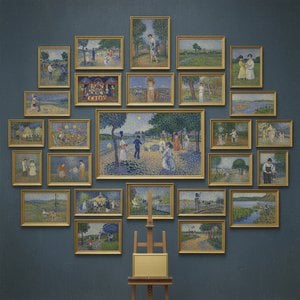
The 3D Museum of John Rasmussen is a page that displays the artist's artworks in a virtual three-dimensional gallery.
In which movements did John Rasmussen work?
The movements John Rasmussen worked in can be seen on the artist's All Movements page, which groups the artworks by movement.
How many artworks by John Rasmussen are available to browse?
You can browse 2 artworks by John Rasmussen on the All Artworks page.
Is there a complete list of John Rasmussen's artworks?
Every work by John Rasmussen on this website can be browsed from the artist's All Artworks page.