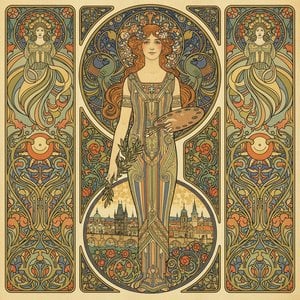
Adolphe Lalauze: A Pioneer of Realistic Napoleonic Painting
Adolphe Lalauze (8 October 1838 – 18 October 1906) stands as a significant figure in French art history, particularly recognized for his masterful depictions of Napoleonic battles and landscapes. Born in Paris, he embarked on an artistic journey marked by unwavering dedication to capturing the grandeur and drama of historical events with remarkable precision—a stylistic approach that distinguished him from many of his contemporaries. Lalauze’s career blossomed during the Belle Époque, a period characterized by optimism and cultural flourishing, providing fertile ground for artists like him to explore ambitious themes and techniques.- Early Life & Training: Lalauze received formal training at the École Supérieure des Beaux-Arts in Paris, honing his skills in engraving alongside painting. This dual focus instilled in him a profound understanding of visual representation and contributed significantly to his later artistic endeavors.
- Engraving Career: Before dedicating himself primarily to oil painting, Lalauze established himself as a respected engraver, producing prints for prominent publications and demonstrating an exceptional command of tonal gradation and detail—skills that would prove invaluable in translating the dynamism of battle scenes onto canvas.
- Napoleonic Landscapes & Battles: Lalauze’s artistic reputation solidified through his prolific output of Napoleonic paintings, notably “Army of Africa,” “Unknow,” and “The Battle Of Haelen.” These works exemplify his commitment to realism, meticulously rendering the textures of terrain and conveying the intensity of combat with palpable emotion.
Major Achievements & Recognition
Lalauze’s paintings garnered considerable acclaim during his lifetime, securing commissions from royal patrons and elevating his status within the Parisian artistic community. His works were exhibited extensively at prestigious salons, cementing his legacy as one of France's foremost painters of Napoleonic history. Furthermore, Lalauze’s influence extended beyond his own generation, inspiring subsequent artists to embrace realism and explore ambitious historical narratives.Symbolism & Influence
While Lalauze primarily focused on depicting historical scenes, his artistic sensibilities were undeniably shaped by the Symbolist movement—a trend that sought to infuse art with emotional depth and psychological nuance. Like many Symbolists, Lalauze aimed to convey not merely what he saw but also what he felt—capturing the essence of human experience within meticulously crafted compositions. His unwavering commitment to realism served as a counterbalance to Symbolism’s expressive tendencies, resulting in a uniquely compelling artistic voice.Legacy & Historical Significance
Adolphe Lalauze's contribution to French art is undeniable. He remains an exemplar of Romantic Realism, demonstrating the power of observation and technical skill to illuminate historical narratives with profound emotional resonance. His paintings continue to captivate audiences today, offering a glimpse into a pivotal period in European history—a testament to his enduring artistic vision and lasting impact on the landscape of French art.Questions & Answers
Can I study Alphonse Lalauze's use of color across all works?
The Palette Genome of Alphonse Lalauze is a page that presents the color profile of the artist's body of work.
Can I browse Alphonse Lalauze's works by mood?
Alphonse Lalauze's works can be browsed by mood on the artist's Mood Room page, which arranges the artworks by their recorded moods.
Where can I see Alphonse Lalauze's artworks in chronological order?
The artist's Artwork Timeline page presents Alphonse Lalauze's works ordered by date, year by year.