


 Preview
 Send
Send Share
Share
 Details

 Download
 Similars
 X-Ray
X-Ray Diaporama
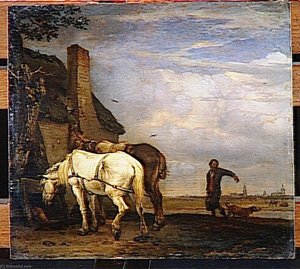
Classical landscape
 Read More
Hand Made Oil Reproduction
Hand-painted oil on canvas in your size and frame, made to order by our artists. ( Buy Print Buy Image)




































Pick from our preset sizes that match the artwork's original proportions.

You may enter your own dimensions to fit a specific frame or space. If your selected size does not match the original image's proportions, we will either crop the artwork or extend the painting with additional hand-painted elements. A digital mockup will be sent for your approval before production begins.
Please note that the on-screen preview does not reflect the actual cropping or extension. Only the mockup will accurately show the final composition.
While custom sizes are available, we recommend selecting a dimension from the predefined list to preserve the original proportions.
After order, ArtsDot.com team will email client for instructions and provide a mockup preview
Worldwide Delivery () in 3/4 weeks instead of standard 5 weeks. (17 August). No compromise on quality.

Free Worldwide Express Shipping

High-Quality Linen Canvas

Full Shipping Insurance

Customs Tax Refund Guarantee

True Color Matching Guarantee

60-Day Return Policy (Defects Only)

100% Money-Back Guarantee

Bulk Discount Offer
 Glass option is only available in size under 110 CM

Classical landscape
Reproduction Medium
Reproduction Size
-


Total Price
$ 263
Related Artworks



Artist Biography
The Pastoral Vision of Willem Romeijn
In the golden light of the seventeenth-century Netherlands, a period defined by unparalleled prosperity and an enduring fascination with the natural world, the works of Willem Romeijn emerged as a serene testament to the beauty of rural life. Born around 1624 in the vibrant artistic hub of Haarlem, Romeijn was more than just a chronicler of landscapes; he was a poet of the pastoral, capable of transforming a simple meadow into a stage for quiet, profound contemplation. His artistry, deeply rooted in the Dutch Golden Age, captures a sense of timelessness, where the rhythmic grazing of livestock and the soft play of light across a valley evoke an emotional resonance that transcends the mere documentation of scenery.
The foundation of Romeijn’s mastery can be traced back to his formative years in Haarlem, where he entered the studio of the renowned Nicolaes Berchem around 1642. Under Berchem’s tutelage, Romeijn absorbed the stylistic nuances of the atmospheric landscape tradition, learning to manipulate light and shadow to breathe life into animal studies and sprawling vistas. This early training instilled in him a meticulous attention to detail—a hallmark that would later allow him to render the textures of wool, the weight of cattle, and the delicate foliage of the Dutch countryside with breathtaking realism.
A Journey Through Light and Tradition
The trajectory of Romeijn’s career was profoundly altered by his transformative voyage to Italy between 1650 and 1651. Immersing himself in the artistic atmosphere of Rome, he engaged with the enduring humanist traditions and the dramatic chiaroscuro popularized by masters like Caravaggio. This exposure to the Mediterranean light introduced a new dimension to his work, fostering a heightened sensitivity to luminosity that would define his later compositions. Upon his return to Haarlem, his style began to reflect an Italianate influence, blending the rugged charm of Northern landscapes with the luminous, idealized qualities of the Roman school.
Back in his native Haarlem, Romeijn became a pillar of the local artistic community. His commitment to his craft was formalized through his membership in the Haarlem Guild of Saint Luke from 1646 onwards. His ascent within the guild was notable; he served in prestigious capacities such as vinder and oud-vinder, working alongside contemporaries like Frans de Hulst and Jacob de Wet. These roles were not merely administrative but signified his standing among the elite painters of his era, a period when Haarlem was a crucible of innovation and artistic experimentation.
Legacy of the Pastoral Master
The enduring significance of Willem Romeijn lies in his ability to capture the soul of the landscape. While his works have occasionally been conflated with those of other masters such as Berchem or Adriaen van der Kabel, a closer examination reveals a distinct voice characterized by an understated emotional depth and a tranquil, almost meditative quality. His recurring themes—grazing cattle, wandering sheep, and the quiet presence of peasants—serve as a window into a world of stability and peace.
Throughout his long career, which saw his last dated works as late as 1694, Romeijn remained dedicated to the pursuit of atmospheric truth. His paintings do not merely depict animals in a field; they invite the viewer to inhabit a moment of stillness. Today, his legacy continues to inspire, standing as a vital link in the chain of Dutch landscape painting and reminding us of the profound beauty found in the simplest corners of the natural world.

willem romeijn
1624 - 1693 , Netherlands
Quick Facts
- Artistic Movement Or Style: Roman School
- Artists Who Influenced This Artist: ['Nicolaes Berchem']
- Date Of Birth: ca. 1624
- Full Name: Willem Romeijn
- Nationality: Dutch
- Notable Artworks:
- Landscape with Animals
- Landscape with Cattle and a Peasant Woman
- Landscape with Cattle and a Cowherd
- Place Of Birth: Haarlem, Netherlands



